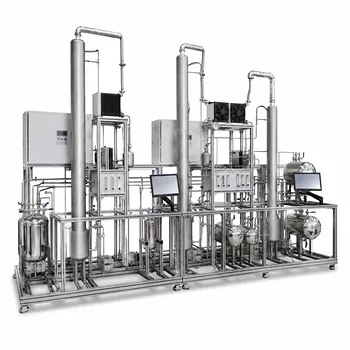
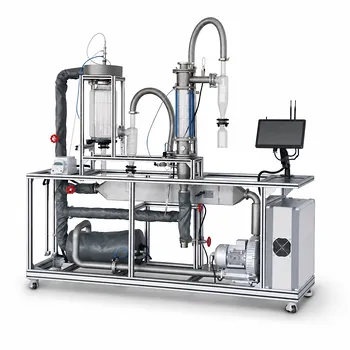
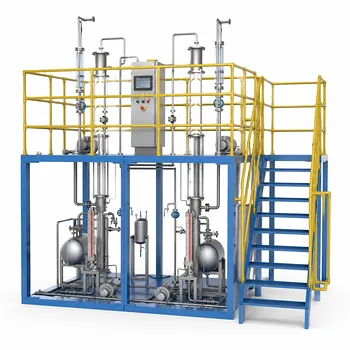
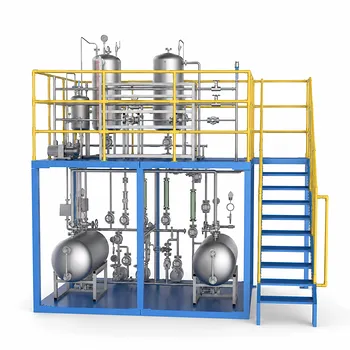
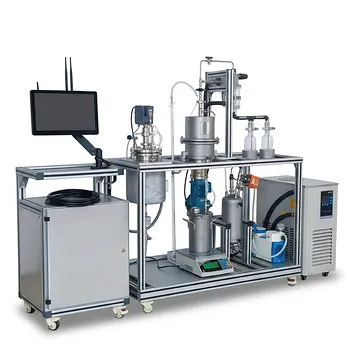
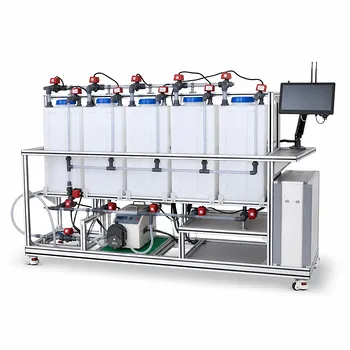
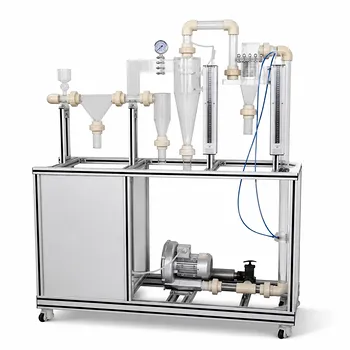
At its core, a desalting and dehydration pilot plant mimics industrial-scale crude oil purification by mixing, heating, and electrostatically separating a water-in-oil emulsion. A small volume of crude is blended with a controlled dose of demulsifier and wash water, heated to 80–120 °C (sometimes up to 150 °C), then passed through a high-voltage electrostatic coalescer. The electric field breaks the emulsion, causing salt-loaded water droplets to merge and settle out. By the end of the run, salt content can fall below 3 mg/L and water content below 0.2%—just like in a refinery.
Removing corrosive inorganic salts from crude oil is fundamentally a water-removal problem. A pilot plant simulates this by intentionally mixing oil with fresh wash water, dissolving the salts into that water, and then using heat, chemicals, and an electric field to break the emulsion and separate the now-salty water. The pilot system compresses a full-scale desalter into a manageable loop, enabling hands‑on training, parameter optimization, and chemical screening.
Why Salt Removal Matters
Crude oil contains sodium, calcium, and magnesium chlorides dissolved in tiny water droplets suspended in the oil. These salts are invisible troublemakers.
The Hidden Threat to Refinery Equipment
If those salts remain in the crude, they hydrolyze at high temperatures to form corrosive hydrochloric acid. That acid attacks heat exchanger tubes, furnace pipes, and distillation columns. Even modest salt carry‑over can lead to plugging, fouling, and catastrophic equipment failure. Removing salts before distillation is the single most effective defense.
The Water-Salt Connection
Salt does not dissolve in oil—it lives exclusively in the water phase. Every technique for removing salt therefore starts with getting water into the oil, and then getting that water back out. A pilot plant’s job is to show exactly how to break that stubborn water‑in‑oil emulsion.
How the Pilot Plant Recreates the Industrial Process
A unit‑operations pilot plant follows the same sequence as a refinery desalter, scaled down to bench‑top or floor‑mounted skid size.
Mixing Oil, Wash Water, and Demulsifier
The simulation begins by metering crude oil, then injecting wash water (often 3–10% of oil volume) and a demulsifier at a mixing point. Drop‑in static mixers or inline agitators create a fine dispersion of water droplets throughout the oil.
Temperature: The Emulsion Unlocker
Heating the mixture to 80–120 °C (and up to 150 °C for heavier crudes) does three things:
- Reduces oil viscosity, making it easier for water droplets to move.
- Lowers interfacial tension, helping water droplets coalesce.
- Accelerates salt dissolution into the wash water.
Pilot plants typically use an electric heating jacket or a small heat exchanger to hit and hold these temperatures.
Electrostatic Coalescence – The Core of the Simulation
The heated emulsion flows into a high‑voltage electrostatic coalescer. This is the defining step that separates a true desalting pilot plant from a simple settler.
- First stage: A strong electric field of 500–1000 V/cm polarizes water droplets, causing them to align and collide.
- Second stage: A gentler field of 150–300 V/cm promotes droplet coalescence and growth without re‑emulsifying the mixture.
Under these fields, the tiny, stable water droplets merge into larger drops. Gravity then causes the salt‑laden water to settle to the bottom of the vessel, while clean oil flows out the top.
Hitting the Target Specs
The primary reference confirms that this process can consistently reduce salt to less than 3 mg/L and water to under 0.2%. In commercial terms, that’s well below the common refinery spec of 10 lb of salt per 1000 barrels of oil.
The Role of Wash Water and Dilution Control
Getting salt concentration down is not just about how much water you use—it’s about the salinity of the water you add.
Why Inlet Water Salinity Matters
If the wash water itself already carries a high salt load, the final equilibrium will still leave too much salt in the oil. The supplementary references stress that the wash feed should be diluted to 1.0 lb of salt per barrel of water or less.
Simulating Fresh Water Injection
A well‑designed pilot plant includes a fresh water injection point before the settling chamber. Students or researchers can:
- Measure the salinity of the inlet water stream.
- Calculate dilution water requirements to bring the effective wash‑water salinity down.
- Observe how excess salinity immediately raises the salt content in the treated oil.
This turns the pilot plant into a hands‑on training tool for learning the salt‑material balance.
Investigating Key Parameters on a Pilot Scale
One core advantage of a unit‑operations pilot plant is the ability to isolate variables. Researchers can systematically change:
Wash Water Ratio
Increasing the volume of wash water increases salt removal—up to a point. Too much water can create over‑emulsification, making separation harder and eating energy.
Demulsifier Dosage
The amount of surfactant directly influences emulsion stability. Pilot runs quickly reveal the minimum effective dose for a given crude, saving chemical costs.
Temperature Profile
Different crudes need different heating. A pilot plant lets users find the optimal temperature that balances salt removal with energy use.
Residence Time in the Electric Field
How long the emulsion stays in the coalescer changes droplet growth. Shorter times lower throughput; longer times risk water re‑entrainment if turbulence develops.
Effluent Analysis
Because the process intentionally removes contaminants, the wastewater stream can be analyzed for residual oil, salt, and solids—insight critical for downstream water treatment design.
Understanding the Trade‑offs
Simulating an industrial desalter is powerful, but pilot‑scale work carries inherent limitations.
Scalability vs. Representativeness
A small vessel can faithfully reproduce the physics of electrocoalescence, but it cannot capture all the flow maldistribution or dead zones present in a full‑scale vessel. Direct scale‑up factors must be applied with care.
Emulsion Stability Varies with Crude Type
Some heavy, high‑asphaltene crudes form emulsions that are far more stable than typical light crudes. A pilot plant must be reconfigured for each crude type—what works in one run may not work for another.
Chemical Sensitivity
Demulsifier performance is highly specific to crude chemistry. A pilot plant can screen chemicals quickly, but lab‑confirmed dosing often needs field adjustment because real crude compositions change over time.
Safety at High Voltage
The 500–1000 V/cm fields are not trivial at small scales. Proper insulation and interlocks are mandatory. The simulation’s fidelity does not excuse shortcutting electrical safety protocols.
Making the Right Choice for Your Pilot Plant Objective
Your goal determines how you should run the simulation and what you measure.
- If your primary focus is operator training: Emphasize the fresh water dilution calculations and the step‑by‑step start‑up procedure. Let trainees see the direct link between inlet water salinity and final salt content.
- If your primary focus is process optimization: Vary temperature, water ratio, and demulsifier dosage systematically. Use the pilot plant to generate a response surface for the salt and water specs.
- If your primary focus is chemical screening: Introduce different crudes and test demulsifier candidates under identical conditions. The pilot plant’s repeatability is your greatest asset here.
- If your primary focus is troubleshooting: Simulate an “upset” by over‑salinizing the wash water or reducing residence time, and observe how rapidly salt carry‑over rises.
A well‑run desalting pilot plant does not just mimic a refinery—it empowers you to understand the physics so deeply that you can predict, prevent, and fix real‑world salt‑induced corrosion.
Summary Table:
| Process Step | Action & Conditions | Key Target / Spec |
|---|---|---|
| Mixing | Blend crude with 3-10% wash water & demulsifier | Dilute water salinity < 1.0 lb/bbl |
| Heating | Heat mixture to 80-120 °C (up to 150 °C) | Lower viscosity & interfacial tension |
| Coalescence | Apply electrostatic field (500-1000 V/cm) | Merge water droplets for gravity settling |
| Output Spec | Break emulsion and separate salt-laden water | Salt < 3 mg/L; Water content < 0.2% |
Accelerate Learning & Research with LABPARK Pilot Plants
Bring real-world industrial simulations into your laboratory. LABPARK provides state-of-the-art Educational and Vocational Unit Operations Pilot Plants in chemical engineering, bioprocess & biotech, and environmental & water treatment. Designed specifically for universities, research institutes, and enterprises, our systems offer safe, reliable, and highly customizable platforms to study processes like crude oil desalting.
Ready to upgrade your training or research capabilities? Contact us today for a custom solution!
Related Products
- Green Anhydrous Ethanol Purification Extractive Distillation Unit Operations Training Pilot Plant
- Dual-Mode Rectification Pilot Plant for Practical Training Unit Operations
- Multi-Modal Distillation Unit Operations Training Pilot Plant
- Multi-Functional Special Distillation Educational Pilot Plant
- Multimodal Absorption and Desorption Pilot Plant for Unit Operations Training
People Also Ask
- How can energy balance equations for condensers & reboilers be validated experimentally? Guide
- Fugacity vs Activity Coefficient: How to Choose VLE Models for Distillation Pilot Plants
- How can real-time carbon number prediction improve distillation pilot plants? Optimize control.
- Why run shortcut fractionation before rigorous distillation calculations? Optimize your pilot plant.
- How Reflux Ratio Affects Distillation Pilot Plant Separation Efficiency & Limits