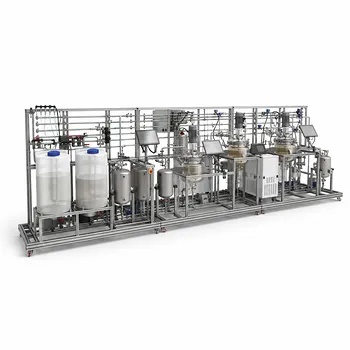
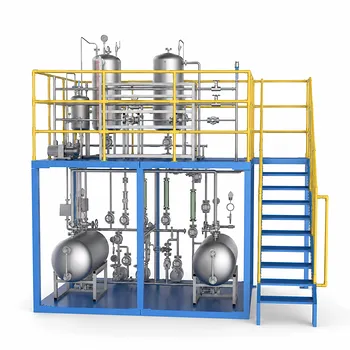
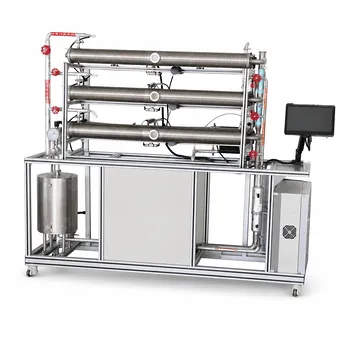
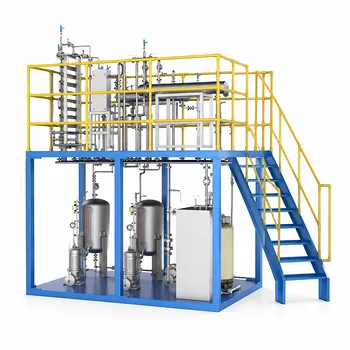
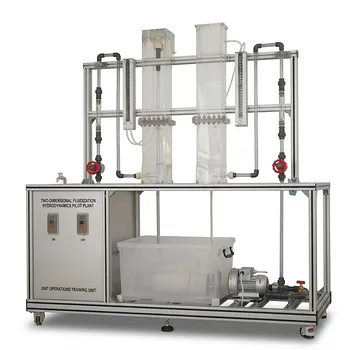
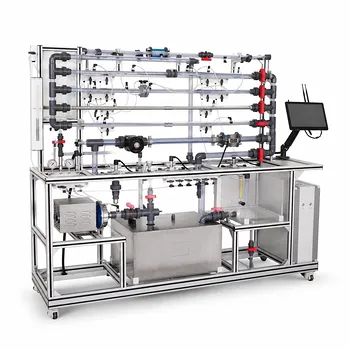
ABET accreditation is built on demonstrable student ability, not on paper syllabi. Vocational and educational unit operations pilot plants serve as the definitive platform to generate that evidence. They provide a scaled-down industrial environment where students design experiments, manipulate critical process variables, analyze real-time data, and troubleshoot safely — directly satisfying the core ABET student outcomes of experimentation, complex problem-solving, teamwork, and modern tool usage.
The true value of a pilot plant in ABET compliance lies in its unmatched ability to convert abstract engineering theory into a documented record of student performance. It is the most authentic way to show evaluators that your graduates can apply scientific principles to real chemical, biological, and environmental processes in a setting that mirrors professional practice.
Mapping ABET Outcomes to the Pilot Plant Floor
A well-designed unit operations lab directly addresses the student outcomes that ABET evaluators scrutinize most closely. By breaking processes into distinct stages — preparation, reaction, separation, and recovery — the plant creates a structured arena for learning and assessment.
Designing and Conducting Experiments
ABET requires students to design and conduct appropriate experiments, analyze data, and use engineering judgment to draw conclusions. A pilot plant makes this measurable.
- Students manipulate real process variables — flow rates, reflux ratios, temperatures — and observe the causal impact on product quality and yield.
- They plan and execute their own experimental runs, learning to define hypotheses, select sampling points, and manage operational constraints.
- The comparison of experimental results with theoretical process simulations becomes a direct artifact of data interpretation skills, far richer than a textbook problem.
Solving Complex Engineering Problems
Graduates must identify, formulate, and solve complex engineering problems by applying principles of mass and energy balances, thermodynamics, and transport phenomena. The pilot plant turns these concepts into immediate, hands-on challenges.
- Troubleshooting equipment malfunctions forces students to think like process engineers, diagnosing issues in pumps, sensors, or heat exchangers under time pressure.
- Performing plant-wide mass and energy balances on a live, recirculating system reveals the non-idealities of real-world operation that idealized models ignore.
- Identifying and controlling Critical Process Parameters (CPPs) teaches risk-based thinking; students learn how a fluctuation in one unit influences downstream separation or recovery, mirroring industrial Failure Mode and Effects Analysis (FMEA) approaches.
Building Effective Teamwork
Operating a pilot plant is inherently a team sport. ABET’s teamwork outcome is not easily satisfied through group homework alone.
- Distinct operational roles — board operator, field operator, data analyst — force structured communication and shared responsibility.
- Safety protocols and emergency procedures demand trust and clear coordination, embedding professional ethics and accountability.
- Post-run debriefs provide a natural setting to evaluate how students communicate findings and collectively improve their approach.
Using Modern Engineering Tools
The expectation to use modern engineering tools is fully met by the instrumentation and software integrated into a modern pilot plant.
- Data acquisition systems, PID controllers, and SCADA interfaces give students fluency in the automation backbone of industry.
- Process simulation software is no longer an abstract exercise; students validate their Aspen or CHEMCAD models against real plant data, learning the limits and calibration of simulation tools.
- Continuous automated control loops let students tune controllers and optimize conversion rates, providing tangible evidence of their ability to apply control theory.
Bridging the Gap to Tangible Assessment Data
Beyond teaching, the pilot plant solves the program-level challenge of collecting valid assessment evidence for ABET evaluators.
- The lab generates concrete, individual student artifacts — experimental plans, data logs, written reports, and live observation rubrics — that map directly to performance indicators.
- Safe, repeatable failure is a unique pedagogical advantage. Students can intentionally cause upsets or diagnose staged faults without risk, creating a portfolio of troubleshooting evidence that is simply impossible to obtain from lectures alone.
- The scaled-down industrial layout — covering raw material feed, reaction, purification, and waste treatment — ensures that graduates have encountered the full contextual chain of a chemical process, satisfying the "realistic constraints" aspect of engineering design.
Understanding the Trade-offs and Limitations
No single pedagogical tool is without its costs. A candid assessment of the challenges is essential for a defensible curriculum strategy.
- Resource intensity. Pilot plants demand significant capital, maintenance budgets, and dedicated technical staff. A poorly maintained plant undermines the very learning outcomes it is meant to support.
- Scalability of assessment. With limited run time and large cohorts, gathering individual-level performance evidence requires careful scheduling and a high faculty-to-student ratio. Without this, evidence can feel anecdotal rather than systematic.
- Curriculum integration depth. A standalone unit ops lab that is not spiraled back into design courses risks becoming a technical exercise rather than a true capstone of engineering judgment. The plant’s value for ABET is realized only when its data is used across multiple courses.
- Simulation vs. reality balance. Over-reliance on the physical plant without corresponding simulation work can leave students weaker in computational modeling. The strongest evidence of "modern tool use" comes from the direct comparison of both, not from one in isolation.
Making the Right Investment for Your Program’s Accreditation
The decision to build or upgrade a unit operations pilot plant must align with your program’s specific accreditation strategy.
- If your primary focus is rapid, defensible evidence collection: Structure every lab session around explicit performance indicators. Use pre-designed troubleshooting scenarios and standardized rubrics that capture individual student actions in team settings.
- If your primary focus is holistic student development: Emphasize open-ended, project-based experiments where students define the problem and the experimental plan. Accept that assessment will be richer but more time-consuming to standardize.
- If your primary focus is cost efficiency: Consider sharing facilities across disciplines (chemical, biological, environmental) or supplementing a smaller-scale pilot plant with high-fidelity digital twins. The key is to ensure the physical plant remains the source of primary data on which simulation work is validated.
- If your primary focus is reinforcing process safety and industrial culture: Mandate structured FMEA sessions before any non-routine operation and integrate shift handover communication into the assessment of teamwork.
A unit operations pilot plant, when intentionally designed and assessed, is not merely a teaching lab — it is the strongest, most authentic evidence of an engineering program’s commitment to graduating industry-ready, ABET-competent professionals.
Summary Table:
| ABET Student Outcome | Pilot Plant Practical Application |
|---|---|
| Experimentation & Data | Manipulating process variables, collecting real-time data, and interpreting results. |
| Complex Problem Solving | Troubleshooting equipment faults and performing mass/energy balances. |
| Teamwork & Safety | Collaborating on operational roles (field/board) and executing safety protocols. |
| Modern Tool Usage | Utilizing SCADA interfaces, PID controllers, and process simulation software. |
Elevate Your Engineering Curriculum with LABPARK
Are you looking to secure ABET accreditation and provide students with industry-grade, hands-on experience? LABPARK designs and manufactures premium Educational and Vocational Unit Operations Pilot Plants tailored for universities, research institutes, and enterprises.
Our advanced, curriculum-aligned systems cover:
- Chemical Engineering (distillation, absorption, reaction kinetics)
- Bioprocess & Biotech (bioreactors, fermentation, recovery systems)
- Environmental & Water Treatment (filtration, sedimentation, purification)
Help your students bridge the gap between engineering theory and real-world application. Contact LABPARK today to discuss your laboratory needs!
Related Products
- Multi-Functional Drying Educational Unit Operations Pilot Plant
- General Purpose Cosmetics Production Unit Operations Training Pilot Plant
- Dual-Mode Rectification Pilot Plant for Practical Training Unit Operations
- Multi-Reactor Educational Pilot Plant for Reaction Engineering Unit Operations
- Multimodal Absorption and Desorption Pilot Plant for Unit Operations Training
People Also Ask
- Why Use PTFE & Hastelloy in Chemical Pilot Plants? Prevent Corrosion & Ensure Safety
- How to study gasification in pilot plants? Compare exit gas composition & efficiency
- How do deviations in estimating latent heat impact pilot plant thermal systems? Avoid hardware mis-sizing.
- Why is the chemical plant startup schedule crucial? De-risk scale-up with pilot plants.
- When to transition from PID to adaptive control in pilot plants? Key process indicators.