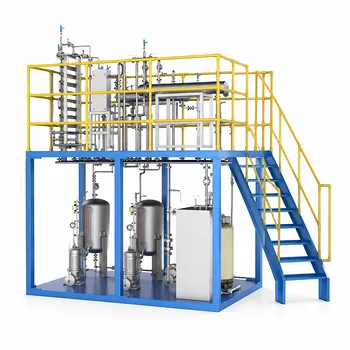
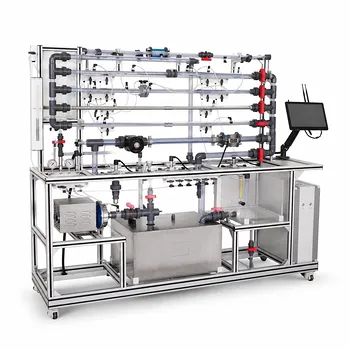
The devil in scale-up lies in what the lab never sees. Unit operations pilot plants reveal process pitfalls that initial laboratory-scale experiments routinely miss by enabling continuous, closed‑loop operation over extended periods. They expose the slow accumulation of impurities in recycle streams, chronic catalyst deactivation, and unforeseen thermal or kinetic bottlenecks—all of which remain invisible when relying only on short, idealized benchtop runs.
Lab‑scale studies give you a snapshot under perfect conditions; pilot plants deliver the full movie. The core insight is that scaling a chemical process is not a simple arithmetic of larger vessels but a transformation in how mass, heat, and time interact. Unit operations pilot plants bridge that gap by forcing hidden dynamics into the open—before you commit to a multi‑million‑dollar facility.
Why Laboratory Experiments Mask Critical Scale‑up Risks
Purity of Reagents Conceals Impurity Buildup
Initial lab‑scale work almost always uses ultra‑pure starting materials and single‑pass reaction setups. There is no recycle stream, so there is no way to observe how low‑level by‑products concentrate over time. In a real plant, even trace impurities can accumulate loop after loop, poisoning catalysts or forming fouling deposits that degrade performance.
Short Run Durations Hide Long‑Term Catalyst Deactivation
A benchtop experiment runs for hours and focuses on initial catalyst activity. It cannot capture the gradual coking, sintering, or poisoning that develops over days or weeks of continuous operation. In a pilot plant, extended closed‑loop campaigns reveal the true deactivation profile and mechanical stability of the catalyst under realistic feedstock and thermal cycling.
Idealized Conditions Ignore Real‑World Thermal and Kinetic Limits
Lab reactors are tiny, well‑insulated, and often operate with exotic heating systems. When you scale up, heat transfer area per unit volume plummets, making it impossible to remove heat as efficiently. Similarly, mass transfer limitations that are negligible at the milliliter scale can dominate at the liter or cubic‑meter scale. Pilot plants let researchers measure these shifts directly, capturing unforeseen local hot spots, runaway scenarios, or incomplete mixing that lab data alone cannot predict.
How Pilot Plants Expose the Hidden Dynamics of Scale
Continuous Closed‑Loop Operation Reveals Accumulation
By running a pilot plant with a recycle loop, you create the same enrichment effect that will occur in a commercial plant. Researchers can track the concentration of heavy by‑products in the recycle, identify exactly when they reach problematic levels, and then target the necessary purge or separation steps long before full‑scale design is locked in.
Extended Runs Expose Catalyst Aging Under Realistic Loads
Where the lab gives you a single‑point measurement of activity, a pilot plant running for weeks or months generates a time‑resolved story. This allows teams to measure deactivation rates, determine the effectiveness of in‑situ regeneration cycles, and collect the kinetic data required to design a commercial reactor that can operate stably between catalyst changeouts.
Physical Scale Uncorks Heat and Mass Transfer Mismatches
Scale‑up inherently changes transport phenomena. A pilot plant operates at a scale where heat transfer coefficients, Reynolds numbers, and mixing profiles more closely mirror commercial equipment. Researchers can observe how reaction yield shifts due to non‑isothermal conditions or how viscosity changes affect pumping and filtration. Such data are essential for sizing heat exchangers, agitators, and separation trains without over‑factoring safety margins.
Multivariate Data Collection Validates Models and Process Signatures
Supplementary references emphasize that true scale‑up is not a univariate comparison of endpoint quality. Pilot plants equipped with sensors enable multivariate tracking of the process path—mass and energy balances, pressure drops, temperature profiles, and residence time distributions. This empirical data allows researchers to validate and refine mathematical models, ensuring that process simulations (whether for reactor design or tech transfer) do not rely on assumptions that break down at scale. By deliberately introducing process upsets, operators can also pressure‑test failure modes and control strategies in a safe environment.
Understanding the Trade‑offs and Limitations
Pilot plants are not silver bullets. They come with their own set of challenges:
- Cost and Time: Building and running a pilot plant is significantly more expensive than lab‑scale work. The data are invaluable, but the investment must match the project’s stage and risk profile.
- Limited Exact Replication: Even a well‑designed pilot plant cannot perfectly mimic every aspect of a commercial facility—differences in pipe geometry, wall effects, or grade of construction materials can still leave gaps.
- Interpretation Risk: Without a structured experimental design and statistical rigor, pilot plant data can mislead as easily as it can illuminate. Poorly chosen operating conditions may mask a problem rather than uncover it.
- Scale‑Up vs. Scale‑Down: The most efficient approach often pairs scale‑down experiments (mimicking commercial conditions on a small scale) with targeted pilot plant runs, rather than relying solely on brute‑force scale‑up. Pilot plants then serve to validate the combined modeling and scale‑down strategy.
How to Apply These Insights to Your Project
- If your primary focus is early‑stage process validation: Use a pilot plant to run forced recycle campaigns that deliberately test impurity accumulation and catalyst lifetime under realistic conditions, not just benchmark activity at hour zero.
- If your primary focus is developing robust scale‑up models: Treat your pilot plant as a data factory. Collect time‑series data on mass and energy balances, pressure drops, and temperature profiles under a range of conditions to calibrate and challenge your computational models.
- If your primary focus is risk mitigation before construction: Design pilot plant experiments that include process upsets and failure mode testing—for example, hold times, residence time distribution shifts, or power failure simulations—to uncover vulnerabilities that modeling alone might overlook.
- If your primary focus is training future engineers: Use educational unit operations pilot plants to teach the discipline of multivariate process path analysis, ensuring graduates understand that scale‑up is a systems problem, not a batch recipe problem.
Remember, the pilot plant’s greatest gift is time‑compressed realism. It converts the silent uncertainties of small‑scale approximations into hard, actionable data that protect your commercial plant from the surprises the laboratory never knew existed.
Summary Table:
| Feature / Parameter | Lab-Scale Experiments | Unit Operations Pilot Plants |
|---|---|---|
| Run Duration | Short (hours); misses long-term effects | Extended (weeks/months); tracks catalyst aging |
| Reagent Purity | High-purity; single-pass (no recycle) | Realistic feedstocks; continuous closed-loop recycle |
| Heat & Mass Transfer | Idealized; high surface-to-volume ratio | Commercial-like; reveals hot spots & mixing limits |
| Data Output | Single-point endpoint analysis | Multivariate time-series data for model validation |
Scale Up with Confidence with LABPARK Pilot Plants
Don't let hidden scale-up bottlenecks compromise your project. LABPARK delivers high-quality Educational and Vocational Unit Operations Pilot Plants tailored for chemical engineering, bioprocess & biotech, and environmental & water treatment applications.
Whether you are a university training the next generation of engineers, a research institute validating complex chemical models, or an enterprise mitigating commercialization risks, our pilot plants provide the realistic, real-world data you need to scale safely and efficiently.
Contact our engineering experts today to find the perfect pilot-scale solution for your facility.
Related Products
- Multi-Functional Drying Educational Unit Operations Pilot Plant
- General Purpose Cosmetics Production Unit Operations Training Pilot Plant
- Dual-Mode Rectification Pilot Plant for Practical Training Unit Operations
- Multi-Reactor Educational Pilot Plant for Reaction Engineering Unit Operations
- Multimodal Absorption and Desorption Pilot Plant for Unit Operations Training
People Also Ask
- Why Use PTFE & Hastelloy in Chemical Pilot Plants? Prevent Corrosion & Ensure Safety
- How do deviations in estimating latent heat impact pilot plant thermal systems? Avoid hardware mis-sizing.
- Why is the chemical plant startup schedule crucial? De-risk scale-up with pilot plants.
- How to study gasification in pilot plants? Compare exit gas composition & efficiency
- When to transition from PID to adaptive control in pilot plants? Key process indicators.