The choice between a single-seated and double-seated control valve in a pilot plant is a structural decision that directly determines leakage integrity versus pressure-handling capability.
A single-seated valve uses one plug and one seat, providing excellent tight shut-off but creating an unbalanced force that limits it to low-pressure-differential, small-diameter applications. In contrast, a double-seated valve uses two counteracting plugs to balance fluid forces, enabling it to handle much higher pressure drops—though it leaks more because the two plugs cannot seal completely at the same time. Understanding this trade-off is essential for any chemical engineering unit ops pilot plant, where process integrity, safety, and data accuracy all hang in the balance.
The core mechanical difference—one plug versus two—creates a non-negotiable design spectrum: single-seated valves give you minimal leakage at the cost of force capacity, while double-seated valves trade leakage for high differential pressure capability. Your entire selection logic for a pilot plant must orbit around which side of this spectrum protects the process you need to run.
The Structural Difference That Defines Selection
Single-Seated Design and Force Unbalance
A single-seated valve has one plug that seats against a single orifice.
This simple, robust design means only one sealing surface needs to mate perfectly—resulting in very low leakage, often meeting Class V or VI shut-off requirements.
However, the fluid pressure acts on the entire area of the plug from one direction.
That creates a large unbalanced force that the actuator must overcome to move the plug. As the pipe size and pressure drop increase, the required actuator force quickly becomes impractical.
In a pilot plant, this naturally restricts single-seated valves to smaller lines (typically under 1–2 inches) and relatively low differential pressures.
Double-Seated Design and Force Balance
A double-seated valve uses two plugs connected to a common stem, one above the other, each seating in its own orifice.
Fluid flows through the first port, then between the plugs, and out the second port. The fluid forces on the two plugs act in opposite directions, canceling each other out.
This intrinsic force balance means the actuator only needs to overcome packing friction and minor imbalances.
The valve can therefore handle much larger pressure differentials and larger diameters without requiring a massive, expensive actuator.
The trade-off is that machining two seats to close at exactly the same time is nearly impossible: one plug will always seat slightly before the other, leaving a small but definite leakage path.
How These Differences Dictate Pilot Plant Selection
Leakage Class and Process Integrity
In a pilot plant, tight shut-off is often non-negotiable when handling hazardous intermediates, catalysts, or when accurate material balances are vital for scale-up calculations.
Single-seated valves are the default choice whenever you must guarantee minimal leakage—for example, isolating a batch reactor, protecting a vacuum system, or preventing cross-contamination between product grades.
Double-seated valves, with their inherent seat leakage, are unsuitable for those isolation duties.
However, many pilot-plant control loops (such as steam heating, cooling water return, or non-critical solvent transfer) can tolerate a small, known leakage. In these cases, the higher pressure capacity of a double-seated design becomes more valuable than perfect shut-off.
Pressure Differential and System Capacity
Pilot plants often replicate industrial high-pressure-drop scenarios, like flashing services, compressible gas letdown, or boiling heat transfer with large flow turndown.
When the process generates a pressure differential that would stall a single-seated valve’s actuator, the double-seated design becomes the practical solution.
Because the actuator doesn’t fight a large unbalanced force, you can select a smaller, more responsive actuator while still controlling the full flow range.
This directly affects sizing. The flow coefficient (Cv) selection method still applies, but a single-seated valve may need to be oversized to keep actuator forces manageable—which can push the operating Cv below 30% of maximum, degrading control.
A double-seated valve lets you maintain the desired Cv ratio without force-induced limitations.
Interaction with Flow Characteristics and Piping Distortion
The $s$ value—the valve-to-system pressure drop ratio—determines how the installed flow characteristic distorts.
In pilot plants with long, high-resistance distribution lines, a high pressure drop across the valve is required to maintain a healthy $s$ value (0.3–0.5) and keep the characteristic from collapsing toward quick-opening behavior.
A single-seated valve may not be physically able to take that much drop, forcing the system to operate with a low $s$ value and distorted, unstable control.
A double-seated valve can sustain the necessary pressure drop, preserving the intended equal percentage characteristic.
This matters enormously in education and research, where students and engineers must observe textbook flow characteristics—linearity and repeatability are essential for valid data.
Understanding the Trade-offs and Avoiding Pitfalls
The Leakage vs. Pressure Capacity Compromise
This is a classic pilot-plant trap: a single-seated valve is chosen for its tight shut-off, but the required pressure drop overloads the actuator, causing sluggish response and premature seat wear.
Conversely, a double-seated valve is sized for a high-pressure reactor feed line, but the constant seat leakage distorts the material balance and makes the pilot-plant mass closure untrustworthy.
The right path is to quantify the maximum allowable leakage for the specific stream under all operating modes and compare that against the valve’s leakage class—never assume.
Sizing Oversight and Rangeability Constraints
A single-seated valve, when forced into a large differential, often ends up oversized to reduce fluid forces.
An oversized valve operates at tiny openings under normal load, leading to severe throttling, noise, and oscillation. While split-range control (a small valve plus a larger valve) can rescue a poor selection, it adds complexity and cost that could have been avoided with a double-seated design from the start.
Also, pilot-plant lines are often cleaned by flushing; double-seated valve bodies have tortuous internal passages that can trap debris.
This makes them harder to purge and more susceptible to sticking—a maintenance headache in multi-campaign research settings.
Making the Right Choice for Your Pilot Plant Goal
Selecting the valve structure hinges on which process variable dominates your experiment’s success.
- If your primary focus is tight shut-off for safety, batch isolation, or accurate mass balances: Choose a single-seated valve—but only on streams where the pressure drop remains within the actuator’s force limit.
- If your primary focus is controlling high pressure drops (e.g., steam letdown, gas regulation, high-resistance distillation): Use a double-seated valve and accept the inherent seat leakage, while designing the system to tolerate it.
- If your pilot plant must demonstrate both tight isolation and wide pressure range in the same line: Split the duty—use a single-seated on/off isolation valve in series with a double-seated control valve, or implement a positioner-boosted actuator on a high-capacity single-seated body designed for the force.
The simplest structural element—the number of seats—defines whether your pilot plant valve can take the pressure or hold the seal. Match that structural choice to the process demand, and you ensure reliable data, safer operations, and a pilot plant that truly replicates industrial reality.
Summary Table:
| Feature | Single-Seated Valve | Double-Seated Valve |
|---|---|---|
| Sealing Design | 1 Plug, 1 Seat | 2 Plugs, 2 Seats |
| Leakage Class | Tight shut-off (Class V/VI) | Higher inherent leakage |
| Force Balance | Unbalanced (high actuator force) | Balanced (low actuator force) |
| Pressure Drop | Limited to low differential | Handles high differential |
| Best For | Safety isolation, mass balance | Steam letdown, gas regulation |
Need to optimize your lab's process control? LABPARK provides state-of-the-art Educational and Vocational Unit Operations Pilot Plants in chemical engineering, bioprocess & biotech, and environmental & water treatment. Serving universities, research institutes, and enterprises worldwide, we help you choose the right configurations—from valves to reactors—to ensure data accuracy and operational safety. Contact our experts today to discuss your pilot plant needs!
Related Products
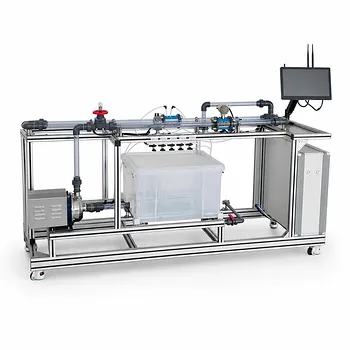
- Orifice and Venturi Flowmeter Calibration Educational Pilot Plant for Fluid Mechanics Laboratory
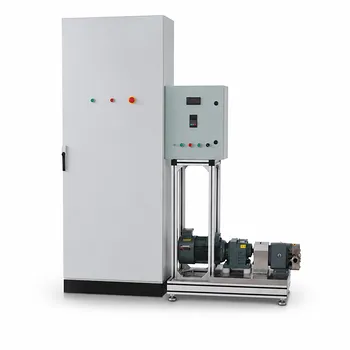
- Quantitative Dosing and Liquid Flow Control Educational Unit Operations Pilot Plant
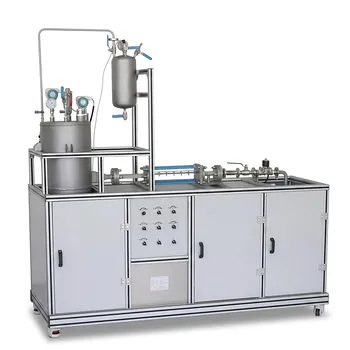
- Constant Pressure Filtration Educational Unit Operations Pilot Plant
- Cavitation Phenomenon Demonstration and Analysis Educational Unit Operations Pilot Plant
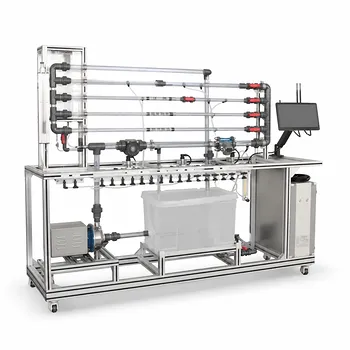
- Fluid Friction Resistance Determination Educational Unit Operations Pilot Plant
People Also Ask
- What is the difference between static and stagnation pressure? Master Pilot Plant Flow Measurement
- How do pilot plants demonstrate siphon pressure variations? Visualizing Bernoulli's Energy Balance
- How do fluid mechanics training pilot plants facilitate the visualization and calculation of laminar and turbulent flows?
- How to update chemometric calibration models in pilot plants? Best practices for process engineers.
- Why are the laws of similitude critical in fluid flow pilot plants? Scale Up Safely