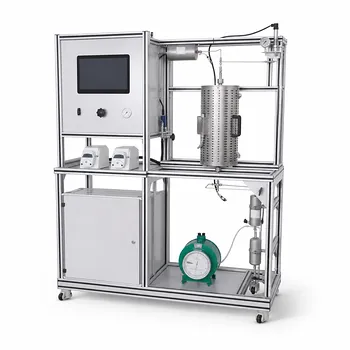
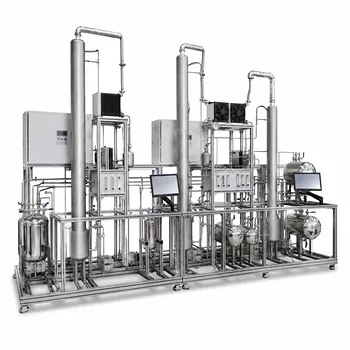
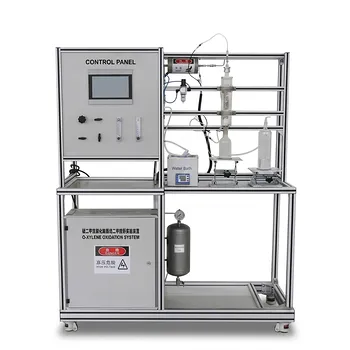
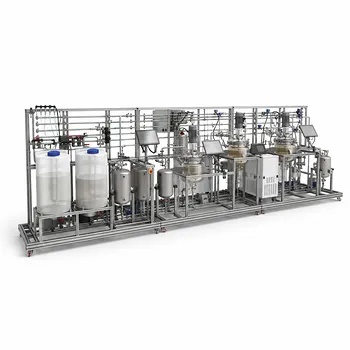
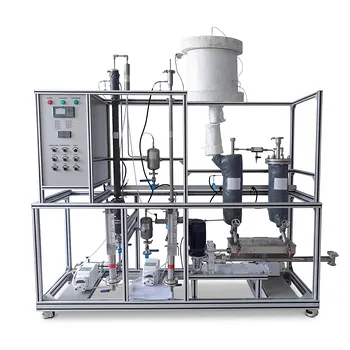
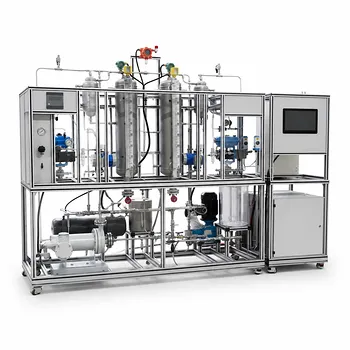
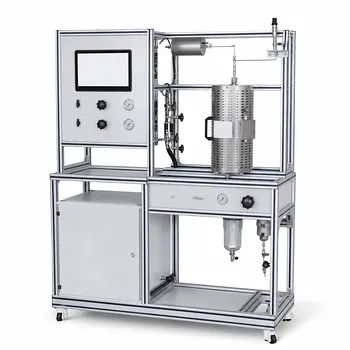
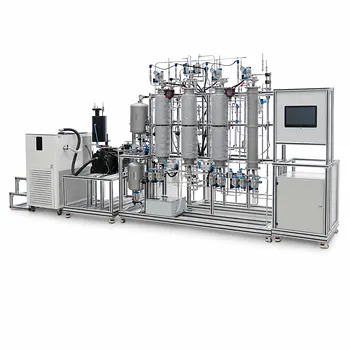
The efficiency and feedstock of acetic acid production aren’t just academic details—they define the economic and environmental viability of the world’s largest-volume organic acid. Four distinct routes demonstrate this evolution: from low‑efficiency ethanol fermentation (3‑6% acid) to the dominant methanol low‑pressure carbonylation, which achieves >99% yield. Acetaldehyde oxidation can reach 97% conversion but ties the plant to petroleum or coal, while butane oxidation suffers from severe corrosion and poor recovery. In educational unit operations, a methanol carbonylation pilot plant makes these contrasts tangible: students manipulate catalysts, pressures, and purification steps to see how modern industrial design maximizes output and safety, and a parallel syngas pilot unit reveals how upstream feedstock choices dictate the synthesis gas composition.
The shift from biological fermentation to catalytic carbonylation is a masterclass in process intensification. A pilot‑scale demonstration transforms textbook comparisons into hands‑on learning—students can run the Monsanto rhodium system against the Cativa iridium catalyst and witness how a 10% gain in carbon monoxide yield and a 20‑bar pressure reduction translate directly into lower capital and operating costs.
The Major Chemical Routes for Acetic Acid Production
Each route carries a unique fingerprint of raw materials, operating conditions, and efficiency. Understanding their differences is the first step toward grasping modern process selection.
Ethanol Fermentation: The Biological Path
This route uses a renewable, bio‑based substrate—ethanol—but at a steep cost in process efficiency.
The final product is a very dilute acetic acid solution (3‑6%), suitable only for food‑grade vinegar without extensive downstream concentration. Its low productivity and high water‑handling requirements make it wholly unsuitable for large‑scale industrial chemical production.
Acetaldehyde Oxidation: The Pre‑Petroleum Bridge
Acetaldehyde oxidation relies on a manganese acetate catalyst at a gentle 70‑75°C.
It achieves a high conversion of up to 97%, a clear leap over fermentation. However, its dependence on acetylene or ethylene derivatives ties the feedstock directly to petroleum or coal gasification, so it inherits the cost and carbon footprint of those sources without the modern efficiency of syngas‑based routes.
Butane/LPG Liquid‑Phase Oxidation: High Severity, Low Practicality
This pathway pushes temperatures to 170–180°C and pressures to 5.5 MPa.
Despite the aggressive conditions, it is plagued by severe corrosion and low recovery rates—meaning a significant portion of the feedstock ends up as unwanted byproducts or equipment degradation. The high severity also escalates material and maintenance costs, which is why it has largely been abandoned for new plants.
Methanol Low‑Pressure Carbonylation: The Modern Dominant Route
Methanol carbonylation operates at mild conditions (typically 175°C and 3.0 MPa) and delivers a yield exceeding 99% based on methanol.
The process uses a homogeneous noble‑metal catalyst dissolved in a liquid medium, reacting methanol with carbon monoxide in a true gas‑liquid‑solid (catalyst‑promoter) system. This combination of mild temperatures, moderate pressure, and near‑stoichiometric yield has made it the workhorse of the global acetic acid industry.
Feedstock Origins and Their Strategic Impact
Feedstock choice dictates not just the chemical path but also the plant’s location, economics, and sustainability profile.
Bio‑based vs. Fossil‑Derived Carbon Sources
Fermentation is the only inherently bio‑based route, using agricultural ethanol.
All other routes depend on fossil resources: acetaldehyde from ethylene or acetylene, butane from natural gas liquids, and methanol from syngas (typically natural gas or coal). The carbon footprint and raw material price volatility therefore differ dramatically between routes, and a pilot plant that couples syngas generation to downstream carbonylation lets students explore this link in real time.
The Syngas Connection
Methanol‑based carbonylation cannot be understood in isolation—its feedstock, methanol, is derived from syngas.
In educational settings, dedicated syngas unit operations pilot plants (steam reforming, partial oxidation, or gasification) demonstrate how the hydrogen‑to‑carbon monoxide ratio shifts with feedstock. Reforming natural gas produces an H₂/CO ratio near 3:1, while biomass gasification typically yields a ratio closer to 1:1. This ratio directly influences the methanol synthesis loop and, ultimately, the carbonylation unit’s CO efficiency. Running a biomass gasifier side‑by‑side with a steam‑reformer gives a visceral lesson in why the choice of primary energy source ripples through the entire acetic acid value chain.
Process Efficiency: Yield, Conditions, and Energy Demand
Efficiency is a multi‑factored metric. It isn’t just about conversion percentage; it is about energy intensity, corrosion management, and recovery.
Single‑Pass Conversion and Overall Yield
- Ethanol fermentation delivers only 3‑6% acid concentration—the lowest intensity.
- Acetaldehyde oxidation reaches up to 97% conversion, but the overall carbon yield is limited by the upstream petrochemical steps.
- Butane oxidation suffers from low recovery, meaning a large fraction of converted material is lost to side products.
- Methanol carbonylation not only achieves >99% methanol‑based yield but can reach carbon monoxide yields varying from 85‑90% (Monsanto Rh/HI system) to >94% (Cativa Ir/HI + Ru system), depending on the catalyst.
Operating Severity and Capital Cost
Butane oxidation requires high temperatures and pressures (170‑180°C, 5.5 MPa) plus exotic alloys to combat corrosion.
Methanol carbonylation operates at a mild 175°C and 3.0 MPa—but even within that route, catalyst selection changes the pressure envelope. The Monsanto process (Rh/HI) typically runs at 30‑60 bar, while the BP‑Cativa process (Ir/HI + Ru) lowers that to 20‑40 bar, reducing compressor and vessel costs. In a pilot plant, a direct side‑by‑side run makes the pressure‑reduction benefit instantly clear to students watching the power draw and safety‑relief settings.
Energy Integration and Purification
Modern methanol carbonylation plants achieve high thermal efficiency through heat integration, but the pilot‑scale unit strips this back to its essence.
Students observe how the product mixture is flashed, how the catalyst is recycled, and how distillation columns remove water and heavy byproducts. This hands‑on exposure to product purification steps reveals why even a >99% yield needs careful separation design.
Bringing These Comparisons into the Educational Pilot Plant
A well‑designed educational unit operations laboratory transforms abstract efficiency numbers into operational cause‑and‑effect.
Methanol Carbonylation Pilot Unit: A Microcosm of Industrial Design
This unit puts gas‑liquid‑solid catalytic systems under the student’s control.
They manage high‑pressure carbon monoxide safety, set temperature ramps, and sample the reactor for real‑time conversion analysis. The pilot plant’s automated shutdowns and interlock logic demonstrate the safety controls critical for any industrial carbonylation facility, teaching that efficiency gains are meaningless without robust hazard management.
Studying Catalyst and Process Optimization
By swapping between a rhodium‑based catalyst charge and an iridium/ruthenium‑promoted system, students quantify the trade‑off between noble metal cost and yield.
They measure how the Cativa catalyst achieves higher CO yield (>94%) at lower pressure, which reduces the energy needed per tonne of acid. This experiment solidifies the concept that a catalyst promotion strategy is often more effective than raising temperature or pressure—a cornerstone of sustainable process intensification.
Syngas Production Pilot Plants: Linking Feedstock to Synthesis Gas Quality
Before the methanol plant, a syngas pilot unit teaches the pivotal role of the steam‑to‑carbon ratio and feedstock type.
Students adjust reforming temperatures and compare natural gas with biomass. They see how the H₂/CO ratio moves and learn to handle the swing adsorption or membrane separation steps needed to adjust it. This closes the loop: the efficiency of acetic acid production is not determined in the carbonylation reactor alone; it is set by the entire chain from raw fuel.
Understanding the Trade‑offs
No single route wins on every axis. Honesty about limitations builds a deeper, more useful model.
- Fermentation is renewable but impossibly dilute and energy‑intensive to concentrate.
- Acetaldehyde oxidation is high‑converting but locked to petrochemical feedstocks.
- Butane oxidation appears to use a cheap feed but destroys plant equipment through corrosion and wasted recovery.
- Methanol carbonylation offers sterling yields, but the rhodium catalyst is extremely expensive, and the iridium alternative, while more efficient, creates a dependency on a scarcer metal.
- High‑pressure CO handling introduces toxicity and flammability risks that demand rigorous training—exactly what a pilot plant provides in a controlled setting.
- Catalyst deactivation and liquor separation require constant attention; the pilot plant’s scale makes these debottlenecking exercises manageable and instructive, rather than catastrophic.
Making the Right Choice for Educational Objectives
Your goal dictates which route and which pilot‑scale tool you emphasize.
- If your primary focus is teaching process evolution and sustainability: Start with the ethanol fermentation setup to establish the baseline, then move to the methanol carbonylation pilot plant to show how feedstock shifts and catalyst chemistry revolutionized the industry. Supplement with a syngas unit to illustrate the bio‑to‑synthetic bridge.
- If your primary focus is demonstrating catalyst optimization and economic trade‑offs: Run the Monsanto and Cativa catalyst systems back‑to‑back in the carbonylation pilot reactor. Have students measure yield, pressure demand, and cost per kilogram of product, then debate the merits of rhodium versus iridium.
- If your primary focus is safety and high‑pressure operations: Dial in on the methanol carbonylation pilot unit’s safety interlocks, emergency quench systems, and CO monitoring. Pair this with a syngas gasification unit to explore the whole chain of pressure‑containing design.
- If your primary focus is the entire value chain from raw resource to final acid: Combine the syngas pilot plant (with multiple feedstocks) with the methanol carbonylation unit. This end‑to‑end sequence reveals that true efficiency is the sum of many interdependent steps, not a single reactor’s conversion number.
The laboratory becomes a concentrated version of an industry—every temperature setpoint and catalyst choice teaches a lesson that no slide deck can match.
Summary Table:
| Route | Primary Feedstock | Yield / Conversion | Key Operating Conditions | Industrial Suitability |
|---|---|---|---|---|
| Ethanol Fermentation | Bio-ethanol | 3–6% acid concentration | Low temp & atmospheric pressure | Food-grade vinegar only |
| Acetaldehyde Oxidation | Ethylene / Acetylene | Up to 97% conversion | 70–75°C, mild pressure | Legacy petrochemical plants |
| Butane Oxidation | Butane / LPG | Low recovery / high byproducts | 170–180°C, 5.5 MPa | High corrosion, largely abandoned |
| Methanol Carbonylation | Methanol & CO (Syngas) | >99% (based on methanol) | ~175°C, 3.0 MPa | Modern dominant process |
Bring Industrial Chemistry to Life in Your Lab
LABPARK provides state-of-the-art Educational and Vocational Unit Operations Pilot Plants in chemical engineering, bioprocess & biotech, and environmental & water treatment. Designed specifically for universities, research institutes, and enterprises, our customizable pilot units—including syngas generation and methanol carbonylation systems—empower students and researchers to master process optimization, catalyst comparison, and safety systems in hands-on scenarios.
Ready to upgrade your engineering curriculum or research capabilities? Contact LABPARK today to design the perfect pilot system for your lab!
Related Products
- Ethyl Acetate Synthesis Unit Operations Pilot Plant for Practical Training
- Bio-fermentation Ethanol Production Practical Training Unit Operations Pilot Plant
- Methanol Synthesis and Catalyst Performance Evaluation Educational Unit Operations Pilot Plant
- Ethylbenzene Dehydrogenation Educational Unit Operations Pilot Plant
- Multi-Functional Special Distillation Educational Pilot Plant
People Also Ask
- How do pilot plants demonstrate esterification? Visualizing Chemical Engineering Equilibrium
- Why is the chemical plant startup schedule crucial? De-risk scale-up with pilot plants.
- When to transition from PID to adaptive control in pilot plants? Key process indicators.
- Why Use PTFE & Hastelloy in Chemical Pilot Plants? Prevent Corrosion & Ensure Safety
- Why Compare Predicted and Experimental Excess Enthalpy? Key to Accurate Pilot Plant Scale-up