For a process engineer facing a roiling tank of foam, a sticky polymer melt, or an abrasive slurry, selecting the right level instrument is a make-or-break decision. Foaming liquids are best served by RF admittance or capacitance level meters, while standard floats and differential-pressure cells falter. Viscous and sticky media demand non-contact radar (microwave) or RF admittance to avoid coating and clogging. Slurries call for non-contact ultrasonic/radar or robust contact devices like RF admittance, as mechanical floats quickly fail. The art is not in knowing every device, but in matching the physical sensing principle to the fluid’s disruptive behavior.
The central challenge is that bubbles, coatings, and suspended solids can fool instruments that rely on buoyancy, density, or mechanical displacement. The winning strategy is to either measure the liquid through the interfering layer (RF admittance) or to eliminate contact entirely (radar, ultrasonic), depending on the pilot plant’s constraints.
The Core Selection Logic: Let the Fluid Guide the Technology
Each problematic media type attacks a specific weakness in traditional level measurement. By understanding these failure modes, you can reverse-engineer the right choice.
Foaming Liquids: Why Bubbles Break Standard Measurements
Differential-pressure (DP) cells infer level from hydrostatic head, but foam has a wildly inconsistent and unknown density. The result is an erratic, unusable signal. Float-type meters fare no better—they bob at the gas-liquid interface but get trapped in the foam layer, giving a false reading.
RF admittance and capacitance probes overcome this by responding to the dielectric constant of the material, not its density. Foam, being mostly gas, has a very low dielectric constant compared to the bulk liquid. An admittance-based transmitter can be calibrated to ignore the thin, low-dielectric foam and track the true liquid surface, even when a stable froth layer sits above it.
Viscous and Sticky Fluids: The Coating Problem
In pilot plants handling polymers, heavy oils, or syrups, the level probe itself becomes a liability. Float switches and displacers stop moving as sticky material builds up. The coating insulates or mechanically arrests the sensor, leading to a dead signal or, worse, an incorrect “safe” reading.
RF admittance technology remains a top choice here because advanced circuitry can detect the difference between a thin coating on the probe and the bulk liquid. This “coating immunity” is a signature of active-shield probes. Even more reliable are non-contact methods: radar (microwave) and radiometric (gamma-ray) sensors beam from the vessel top or side, measuring the time-of-flight or radiation attenuation without ever touching the sticky mass. This eliminates the coating problem entirely.
Slurries and Dirty Liquids: When Solids Attack
Abrasive particles and settling solids wreck instruments with moving parts. Displacement and float-type meters are rated poorly because particulates jam linkages and abrade sealing surfaces. Even standard contact probes can fail if a solid crust forms.
The safest path is non-contact ultrasonic or radar. Ultrasonic transducers measure the echo time from the surface, while radar uses microwave pulses. Both sit above the vessel and are immune to abrasive wear. When a contact device is unavoidable, RF admittance stands out as a robust contact method, provided the probe is installed correctly. Its rugged construction and lack of moving parts let it survive in dirty, particulate-laden environments longer than any mechanical alternative.
Peeking Under the Hood: How Reliable Instruments Work
Understanding two core principles clarifies why some technologies thrive where others die.
Capacitance and RF Admittance: Reading the Dielectric
A capacitance-level probe forms an electrical capacitor with the vessel wall. As the liquid (with a higher dielectric constant than air) rises, the capacitance increases. RF admittance refines this by applying a radio-frequency signal and separating the measurement into capacitive (liquid level) and resistive (coating) components. This is why it can ignore a fouled probe and still report the true level—a critical advantage in viscous and slurry services.
Non-Contact Active Sensors: Time-of-Flight and Radiation
Ultrasonic and radar devices send a pulse toward the liquid surface and measure the echo’s return time. Since the speed of sound or light in the headspace is known, the distance to the liquid is immediate. These sensors avoid all material compatibility issues because they are outside the process. Radiometric instruments go further, mounting on the vessel exterior and measuring the attenuation of a gamma-ray beam through the entire contents. They require no opening at all, making them the ultimate solution for high-pressure, corrosive, or toxic slurries—but they come with regulatory complexity and cost.
Understanding the Trade-offs
No instrument is perfect. The engineer’s job is to weigh the compromises against the process need.
- RF admittance is versatile and affordable but remains a contact device. It may require periodic cleaning in extremely sticky services, and its performance depends on a stable dielectric contrast between the liquid and headspace.
- Non-contact radar offers exceptional reliability for sticky fluids and slurries but carries a significantly higher price tag. Internal tank obstacles or agitated surfaces can scatter the microwave beam, requiring careful installation.
- Ultrasonic transmitters are non-contact and lower-cost than radar, but they are sensitive to vapor, foam, or heavy dust in the headspace, which can absorb or distort the sound pulse. They are a poor choice for boiling or fuming vessels.
- Radiometric systems are virtually immune to any process condition inside the vessel but involve licensing, safety training, and higher overall cost. They are typically reserved for extreme applications where no other technology can survive.
- Simple floats and DP cells still dominate for clean, ambient-temperature aqueous solutions because of their low cost and simplicity. The key insight is to recognize immediately when the fluid becomes “challenging” and switch to a more robust solution.
Making the Right Choice in Your Pilot Plant
The specific goal of your unit operation study or training module will steer you toward one of these paths.
- If your primary focus is process reliability with foaming liquids: Prioritize RF admittance transmitters. They handle the gas-liquid interface elegantly and offer the broadest compatibility across surge tanks, reactors, and distillation columns.
- If your primary focus is handling viscous, coating-prone materials: Invest in a non-contact radar sensor. The total cost of ownership drops when you eliminate shutdowns for sensor cleaning, and radar remains accurate even as the fluid changes density or stickiness.
- If your primary focus is handling abrasive slurries on a tighter budget: Start with an RF admittance probe in an appropriate alloy. Pair it with a short, shielded installation to minimize wear from flowing solids, reserving non-contact radar for the most aggressive streams.
- If your primary focus is educational demonstration of measurement principles: Use a combination of DP cells on clean water tanks and a capacitance/admittance unit on a simulated “difficult” tank (e.g., aerated water or a viscous syrup). This contrast solidifies the core lesson: the instrument must be matched to the fluid’s physical behavior.
Empowered with a clear mapping of fluid challenges to sensing principles and their real-world trade-offs, you can move beyond datasheets and select the level instrument that will faithfully report the truth inside your pilot-plant vessels.
Summary Table:
| Media Type | Main Challenges | Recommended Technology | Key Benefit |
|---|---|---|---|
| Foaming Liquids | Erratic density, trapped floats | RF Admittance / Capacitance | Ignores low-dielectric foam; tracks true liquid level |
| Viscous & Sticky Fluids | Sensor coating, mechanical clogging | Non-Contact Radar / RF Admittance | No contact or active-shield coating immunity |
| Slurries & Dirty Liquids | Abrasive wear, settling solids | Non-Contact Radar or Ultrasonic | Immune to wear; no moving parts to jam |
Optimize Your Unit Operations with LABPARK
Designing a reliable pilot plant requires the right instrumentation for every challenging process fluid. LABPARK designs and supplies advanced Educational and Vocational Unit Operations Pilot Plants in chemical engineering, bioprocess & biotech, and environmental & water treatment.
We help universities, research institutes, and enterprises bridge the gap between theory and industrial reality with robust, teaching-ready pilot systems.
Ready to elevate your engineering lab? Contact our experts today to find the ideal pilot plant solution for your curriculum and research goals!
Related Products
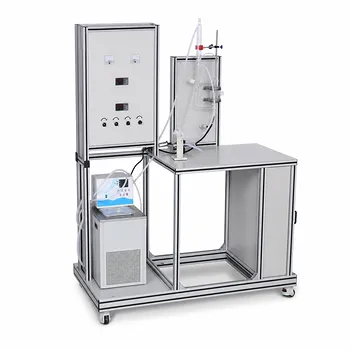
- Binary System Vapor Liquid Equilibrium Data Determination Educational Unit Operations Pilot Plant
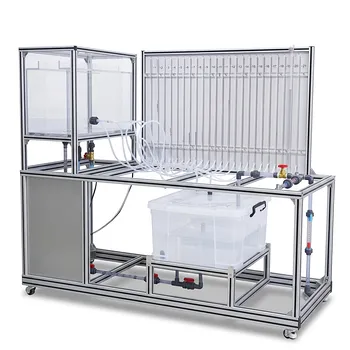
- Bernoulli Equation Demonstration Unit Operations Pilot Plant
- Educational Unit Operations Pilot Plant for Intraparticle Diffusion Effective Factor Measurement
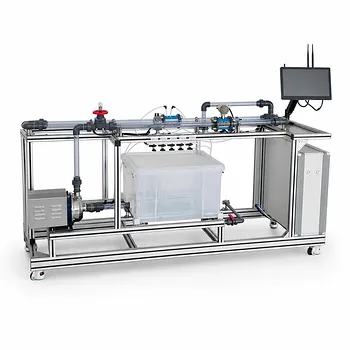
- Orifice and Venturi Flowmeter Calibration Educational Pilot Plant for Fluid Mechanics Laboratory
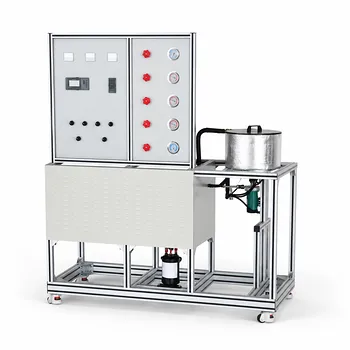
- Educational Compression Refrigeration Performance Determination Unit Operations Pilot Plant
People Also Ask
- For VLE Experiments: Fugacity vs. Activity Coefficient Method Selection Criteria
- Why correlate VLE pilot plant data using Wilson, NRTL, and UNIQUAC? Achieve Accurate Column Scale-Up
- How do pilot plants assist in teaching & researching non-ideal VLE? Bridge Theory & Physical Validation
- How to Model VLE for Supercritical & Unstable Components? Pilot Plant Methods
- Why is accurate VLE data critical? Optimize Unit Operations & Process Scale-Up