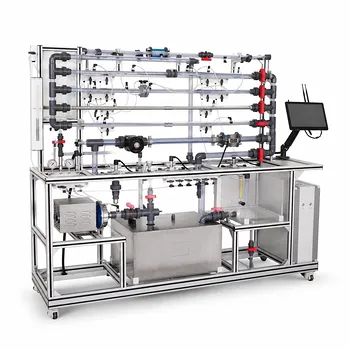
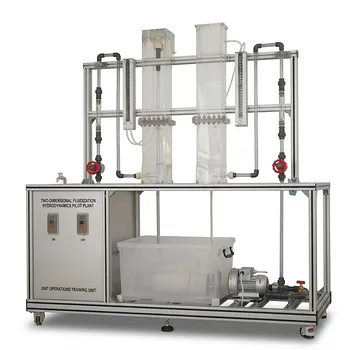
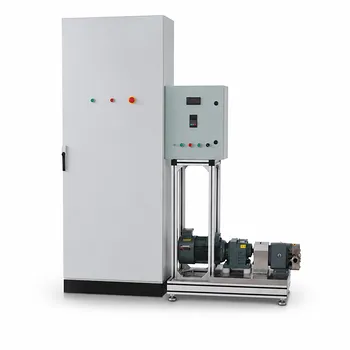
A modern educational pilot plant is the closest thing to a real chemical plant where failure is a lesson, not a catastrophe. Trainees can deliberately trigger cooling water failures, pressure spikes, or blockages, then conduct a Process Hazard Analysis (PHA) and watch as safety relief valves, rupture discs, and automated emergency shutdown systems kick in. This hands-on, risk-free environment converts abstract safety theory into lived, physical experience — giving future operators and engineers the judgment to prevent accidents before they happen.
The core value of an educational pilot plant lies not just in teaching what a hazard looks like, but in letting students identify, analyze, and experience the consequences of deviations under controlled conditions. When a trainee’s PHA correctly predicts a overpressure scenario and then sees the relief system activate exactly as designed, safety management moves from a checklist to an instinct.
From Theory to Practice: Bridging the Safety Gap
The classroom explains the “what” and “why” of process hazards. A pilot plant delivers the “how” under real dynamic conditions. This experiential foundation is what turns safety knowledge into operational discipline.
The Physical Sensation of a Process Deviation
In a real plant, a pressure buildup doesn't announce itself with a textbook pop-up — it presents as a rising pitch in a pump, a trembling gauge, or a hot pipe. Pilot plants replicate these subtle cues.
Students learn to correlate instrument readings with physical symptoms. A sudden cooling water failure, for example, becomes a tangible event: the temperature controller swings open, the column’s pressure climbs, and the relief valve’s simmer becomes audible. That multisensory feedback cements the link between a PHA worksheet and the behavior of actual equipment.
Deliberate Deviation as a Teaching Tool
Instructors can program controlled process upsets — a closed valve downstream, a failing steam trap, a deliberately disabled interlock. Students must then perform a structured hazard analysis, identify the potential outcomes, and compare their predictions to the plant’s actual response.
This cycle of predict–observe–reflect is far more powerful than rote memorization. When a group correctly foresees a vacuum collapse and watches the rupture disc burst, they internalize both the consequence severity and the reliability of passive safety layers. The primary reference underlines exactly this: students conduct a PHA, observe the physical system’s responses, and understand how safety devices prevent accidents.
Building a Proactive Safety Mindset through Hands‑On Hazard Analysis
Safety management isn’t just about equipment — it’s about a disciplined way of thinking. Pilot plants embed that mindset early by making structured risk assessment a natural part of every experimental run.
Conducting Job Safety Analyses and Evaluating SDS in Context
Before operating any unit, trainees perform a Job Safety Analysis (JSA). They break down each task, identify potential exposures, and study the relevant Safety Data Sheets. But unlike a bench‑top lab where hazards are often limited to a fume hood, the pilot plant introduces the complexity of process flow, thermal energy, and system interactions.
This context forces them to consider not just chemical toxicity but also pressure energy, thermal runaway, and domino effects — mirroring the layers of a real industrial hazard review.
Learning to Assess Severity and Likelihood at Scale
In a textbook, a runaway exothermic reaction is a curve on a graph. In a chemically‑capable pilot plant equipped with automatic dosing pumps, gas scrubbers, and real‑time calorimetry, it becomes a measured, enclosed event.
Students observe how a small error in reactant feed rate can cause a rapid temperature excursion. They then map that observation onto a risk matrix — assigning realistic severity and likelihood numbers. This tangible calibration of risk is something no lecture can deliver.
The Anatomy of a Safety System: Learning by Watching It Work
Every component in the primary reference — control valves, sensors, safety interlocks, ESD systems — serves a dual purpose: production first, protection always. The pilot plant reveals that second purpose through active demonstration.
Relief Valves, Rupture Discs, and the Last Line of Defense
When a pressure relief valve lifts, it’s often seen as a failure. In a training pilot plant, it’s a teachable moment. Trainees see exactly what caused the overpressure, calculate the required relief flow, and verify that the device opened at its set pressure.
They also witness the contrast between a relief valve’s reseating and a rupture disc’s permanent opening, understanding the different applications of each passive safeguard.
Automated Emergency Shutdown Logic
A well‑designed pilot plant includes an Emergency Shutdown (ESD) system — a hardwired, fail‑safe logic solver that triggers on low flow, high pressure, or manual activation. Students can design the trigger matrix during a HAZOP exercise and then test it.
When they push an E‑stop and watch all automated valves fail to their safe state within seconds, the abstract concept of “safety integrity level” becomes a clock‑measured, physical sequence.
Embodying Inherently Safer Design Principles
Modern educational plants aren’t just retrofitted with safety gear; they are designed to teach inherently safer design — minimizing hazards rather than controlling them.
Smaller Inventories, Smaller Consequences
By operating at a pilot scale, the total inventory of hazardous material is a fraction of what an industrial unit would hold. Students immediately grasp that a reduced equipment volume means a significantly lower maximum credible release.
This “hands‑on risk assessment” reinforces the first principle of inherent safety: eliminate the hazard if possible, minimize it if not.
Substituting Safely and Observing the Trade‑offs
Pilot plants allow side‑by‑side runs with different solvents or reactants. Students can measure the exotherm, gas evolution, and separation efficiency of a safer alternative solvent against a traditional choice.
This direct comparison teaches that inherent safety isn’t free — sometimes it costs yield or requires different operating conditions. But seeing the reduced thermal runaway potential makes the “safer” decision feel like engineering logic, not a constraint.
Real‑Time Monitoring and Advanced Control for Safety
A reactive safety system is good; a predictive one is better. Pilot plants integrate Process Analytical Technology (PAT) and real‑time data acquisition to teach proactive hazard management.
Using Inline Sensors as Early Warning Systems
Temperature, pressure, pH, and conductivity sensors feed live data to the control system. Trainees learn to recognize a parameter drift well before it hits an alarm limit. This mirrors modern continuous process verification, where the goal is to detect a developing problem while there is still time to intervene.
When a student adjusts a heat‑exchange flow in response to a subtle temperature drift and avoids a later overpressure trip, they’ve learned the essence of continuous safety oversight.
Understanding Critical Process Parameters and Control Loops
By tuning PID controllers and observing the interaction between steam pressure, feed flow, and product purity, trainees see how poor control can create a hazard. A poorly tuned column could flood, creating a sudden pressure surge.
This direct, physical experience with process dynamics embeds the understanding that safety and control are inseparable — and that a stable, well‑controlled plant is inherently a safer plant.
Preparing for the Future: Continuous Processes and Safety Cultures
Continuous manufacturing erases the batch cycle time but creates new steady‑state hazards. Vocational pilot plants configured for continuous distillation or continuous reaction prepare operators for this reality.
Steady‑State Dangers and Residence Time Thinking
In a batch reactor, hazards often peak during a specific phase. In a continuous unit, they are ever‑present. Trainees learn to manage residence time distribution and realize that a polymer plug in a continuous pipe can lead to a rupture just as surely as an exotherm spike.
Running a continuous pilot plant for hours teaches the vigilance required for “always‑on” hazard management — a critical mindset for the pharmaceutical and fine chemical sectors now transitioning to continuous processing.
Understanding the Trade‑offs and Pitfalls
For all their value, educational pilot plants are not perfect mirrors of industrial reality. Recognizing their limits is essential to avoid a false sense of competence.
The Scale‑Dependent Hazard Gap
A pilot‑scale runaway releases less energy and less toxic material than a full‑scale event. Students might underestimate the logarithmic increase in consequence when volumes scale up by a factor of 100 or 1,000.
Instructors must explicitly bridge this gap using simulation overlays, showing that while the protective layers worked at 10 liters, the same design would be challenged at 10,000 liters.
The Danger of Complacency in a “Safe” Environment
Because the plant is designed to fail safely, trainees can become cavalier. The deliberate, risk‑free nature of the training can erode the sense of chronic unease that keeps real‑world operators vigilant.
Good training programs counter this by demanding the same permit‑to‑work discipline, personal protective equipment (PPE), and management of change (MOC) procedures as a live plant, preserving the mental rigor even when physical risk is low.
Cost, Complexity, and Curriculum Integration
A fully instrumented, multi‑unit pilot plant with ESD is expensive to build and maintain. Institutions often face a trade‑off between broad unit operations coverage and deep safety‑specific equipment.
The key is to design a core train that covers raw material preparation, reaction, separation, and waste treatment — as the supplementary references suggest — while embedding safety interlocks at each stage. This maximizes both process understanding and hazard‑awareness per dollar spent.
Making the Right Choice for Your Training Goal
Your approach to using pilot plants for PHA and safety training should align with your specific educational or industrial outcome. Here’s how to focus your efforts:
- If your primary focus is deep PHA methodology: Select a plant that allows deliberate deviation exercises and includes hardwired ESD circuits. Demand students write HAZOP worksheets and then see the physical safeguards respond exactly to their identified scenarios.
- If your primary focus is operator‑level hazard response: Prioritize transparency — choose a plant with glass‑section columns and clear flow path visibility, so operators observe abnormal situations developing and learn to trust instrument readings against physical symptoms.
- If your primary focus is future‑ready process safety (continuous processing, PAT): Ensure the pilot plant includes inline sensors, data historians, and the ability to run steady‑state for extended periods. Trainees must learn to detect slow parameter drift and understand that a stable controlled process is fundamentally safer.
- If your primary focus is safety culture and organizational discipline: Integrate the pilot plant into a full safety management system simulation — require JSA, hot work permits, and MOC documentation for every lab. The hardware teaches hazards; the paperwork teaches the culture that prevents them.
When a trainee leaves the pilot plant, they should take with them not just a completed PHA checklist, but the hard‑won intuition that safety is a physical reality, not a compliance sentence. That intuition is what keeps plants running — and people unharmed — decades into a career.
Summary Table:
| Training Element | Physical Experience | Safety Competency Developed |
|---|---|---|
| Process Deviation | Witness cooling failures, pressure spikes, & blockages | Real-time hazard recognition & mitigation |
| Safety Safeguards | Activating relief valves, rupture discs, & ESD systems | Understanding passive & active safety layers |
| Risk Assessment | Conducting JSAs and chemical SDS reviews in context | Practical evaluation of risk severity & likelihood |
| Inherent Design | Operating at pilot scale with smaller chemical inventories | Applying inherently safer engineering principles |
Elevate Your Process Safety Training with LABPARK
Are you looking to bridge the gap between safety theory and hands-on operational excellence? LABPARK provides state-of-the-art Educational and Vocational Unit Operations Pilot Plants in chemical engineering, bioprocess & biotech, and environmental & water treatment.
Designed specifically for universities, research institutes, and enterprises, our pilot plants enable students and operators to master Process Hazard Analysis (PHA) and safety management in a controlled, risk-free environment.
Contact LABPARK Today to custom-design a pilot plant that meets your curriculum and safety training needs!
Related Products
- Multi-Reactor Educational Pilot Plant for Reaction Engineering Unit Operations
- Polymerization Granulation and Pellet Processing Educational Unit Operations Pilot Plant
- Multi-Functional Drying Educational Unit Operations Pilot Plant
- Comprehensive Fluid Mechanics Educational Unit Operations Pilot Plant
- Educational Unit Operations Pilot Plant for Intraparticle Diffusion Effective Factor Measurement
People Also Ask
- How do educational unit operations pilot plants address safety and waste management when scaling up?
- How do educational unit operations pilot plants bridge theory and design? Bridge the Engineering Gap
- Why Compare Predicted and Experimental Excess Enthalpy? Key to Accurate Pilot Plant Scale-up
- How to study gasification in pilot plants? Compare exit gas composition & efficiency
- Why Use PTFE & Hastelloy in Chemical Pilot Plants? Prevent Corrosion & Ensure Safety