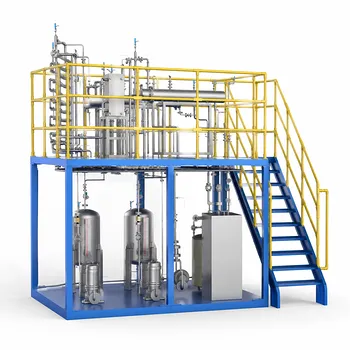
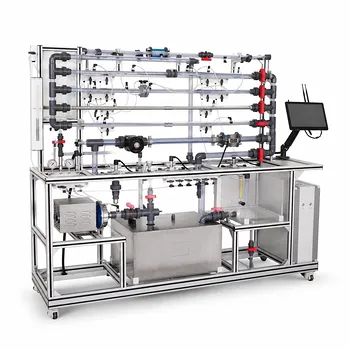
Budgeting for a chemical engineering unit operations laboratory isn’t just about the pilot plants.
The Inside Battery Limit (ISBL) cost covers the direct procurement and installation of the core educational equipment—distillation columns, heat exchangers, fluidized beds, and reactors. The Outside Battery Limit (OSBL) cost is everything required to make those units function safely: steam generators, cooling towers, compressed air lines, wastewater handling, and electrical upgrades. In a university setting, explicitly separating these two categories prevents budget overruns and ensures the lab is both operational and safe from day one.
For any unit operations lab, the visible pilot plants (ISBL) are only half the story. The supporting utility backbone (OSBL) typically adds 30% to 50% of the ISBL investment, and failing to ring-fence that amount early in budgeting is the single most common cause of cost blowout.
The Two Buckets of Capital Spend
What ISBL Actually Buys
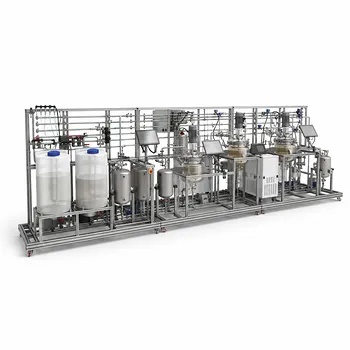
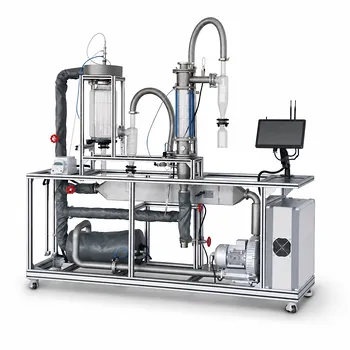
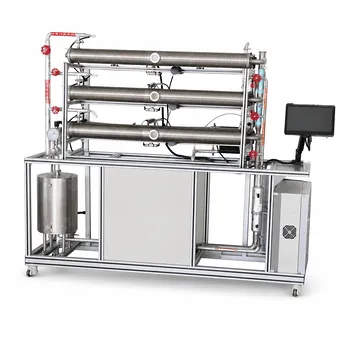
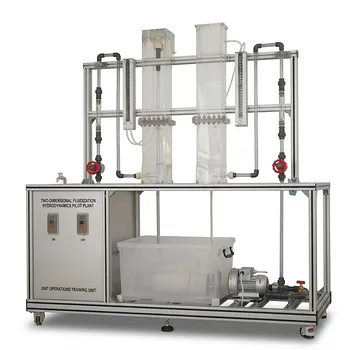
ISBL is the educational core. It includes the purchase price of pilot-scale unit operations, their internal piping, instrumentation, and the labor to install them on their designated skids or platforms. In academic budgeting, this is the equipment students will physically operate and analyze—the assets that appear in a curriculum brochure.
These direct capital costs are typically estimated using factor models. Starting from a carbon steel baseline cost for each major component, you apply installation factors for piping, electrical, civil works, and insulation, then adjust for material choices (e.g., stainless steel) with a material correction factor ( f_m ). A final addition for design, engineering, and contingency gives the total ISBL figure.
What OSBL Actually Buys
OSBL is the utility envelope. It covers the site-wide infrastructure needed to deliver heating, cooling, power, compressed air, and effluent treatment to the ISBL equipment. In a chemical engineering lab, this means steam boilers, cooling towers, chiller loops, air compressors, condenser water return lines, and the drains that handle process waste.
Crucially, OSBL also includes the connection costs—the pipework, ducting, and cabling from the central plant room to the individual pilot units. Even if your building already has a cooling water loop, the final hookup to each new distillation column or reactor is an OSBL expense.
Why the ISBL/OSBL Distinction Matters in Academia
The Surface Answer: Budget Accuracy
Academics often frame a lab’s cost around the price tag of “the equipment.” That number is almost always ISBL only. By mandating a separate OSBL estimate, you force a conversation about how that equipment will be serviced, creating a complete capital ask rather than an underestimate that later requires emergency funding.
The Deep Need: Program Viability and Safety
A unit operations lab that lacks adequate utilities is not just underfunded—it’s inoperable or unsafe. Universities invest in these labs to deliver hands-on chemical engineering education. If a reactor cannot reach reaction temperature because the steam supply is undersized, or if a distillation column cannot condense overheads due to insufficient cooling water, the pedagogical value collapses. Proper OSBL planning protects the integrity of the curriculum and ensures that laboratory safety systems (e.g., ventilation, spill containment) are fully integrated.
Translating Industrial Costing to a University Lab: A Practical Estimation Roadmap
Start with Educational Outcomes, Then Work Backwards
The ISBL/OSBL separation works best when you first define the teaching objectives. Map out which unit operations you need and their throughputs. Perform preliminary material and energy balances to determine the utility demands (steam loads in kg/h, cooling water flow rates, peak electrical kW). These engineering numbers drive the OSBL scope.
Apply Factor Estimation to the ISBL Pilot Plants
- Estimate purchase cost of each major piece of ISBL equipment using a carbon steel baseline from historical data or vendor quotes.
- Multiply by installation factors appropriate for the process type (liquid-handling plants often have lower piping factors than solid-handling ones).
- Apply material correction factors where educational requirements demand alloys (e.g., stainless steel for corrosive demonstrations).
- Add design, engineering, and contingency – typically a combined 30-40% on top of the factored equipment and installation costs for a first-of-its-kind academic installation.
This yields a robust ISBL budget that reflects the real cost of placing functioning pilot plants in the lab.
Calculate OSBL as a Proportional Allowance – Then Refine
In the absence of a fully engineered utility design, OSBL is estimated as a percentage of the factored ISBL cost. The supplementary references confirm a typical range of 30% to 50%.
- Use 30% when installing pilot plants into an existing facility that already has spare steam, cooling water, and electrical capacity, and where the equipment fits within the current floor layout without structural changes.
- Use 40-50% for greenfield labs, facilities with severe space constraints, or when you must add entirely new utility sources (e.g., a dedicated steam generator for high-pressure processes or biological containment for bioprocess units).
This percentage method gives an early-stage order-of-magnitude OSBL budget that can be refined once the utility P&IDs are developed.
Understanding the Trade-offs and Hidden Pitfalls
The Danger of “It’s Just a Hookup”
The most common mistake in academic budgeting is treating OSBL as trivial. A professor might think, “We just need a water line and a power socket.” In reality, a single distillation column may require a cooling water loop capable of removing hundreds of kilowatts, a condensate return system, a vacuum pump exhaust line, and a nitrogen purge. Each of these demands a dedicated utility tie-in that must be engineered, not just plumbed.
Upgrading Building Services Can Dominate the Budget
If the existing building’s electrical panel is at capacity, or the ventilation system cannot handle solvent vapors from a pilot plant, the OSBL cost can skyrocket. Upgrading a main switchboard or installing a new exhaust scrubber can easily exceed the cost of the ISBL equipment. Budget planners must decide between over-sizing utilities early for future flexibility (a higher initial OSBL) or accepting strict limitations on what can be installed later (a sunk opportunity cost).
The Illusion of “Existing Capacity”
A building may have a cooling tower, but its spare load might be half of what your proposed lab needs. Always ask for a formal utility capacity assessment before relying on an existing asset to offset OSBL. The cost of expanding a central utility can be politically complex and more expensive than a dedicated local utility, which then changes the OSBL percentage.
Making the Right Choice for Your Laboratory
Your budgeting strategy should match your institutional context and long-term vision. Use the following goal-based guidelines to shape the ISBL/OSBL split.
- If your primary focus is creating a new, standalone lab in a greenfield site: Plan for OSBL at 40-50% of ISBL from the outset. You’ll be paying for every meter of pipe and every utility source, so build that into the funding application. The extra capacity will serve future expansion.
- If your primary focus is retrofitting an existing facility with known spare utility capacity: Target an OSBL allowance of 30% of ISBL, but only after verifying the spare capacity with load tests and confirming that the existing plant can support the required peak demands simultaneously.
- If your primary focus is maximizing educational variety on a tight budget: Prioritize a few robust pilot plants with high pedagogical impact and leave headroom in the OSBL for common utility headers (steam, cooling water, compressed air). This lets you add cheaper ISBL units later without reworking the OSBL backbone.
- If your primary focus is future-proofing for research as well as teaching: Budget OSBL as a separate, phased project that installs oversized utility mains and a larger-than-necessary steam generator at the start. The short-term percentage may look high, but it will slash the cost of adding advanced pilot plants—and research rigs—in the following years.
A unit operations lab that is safe, fully functional, and inspiring to students requires both the visible pilot plants and the invisible utility web. Treating ISBL and OSBL as distinct, upfront budget lines is the single most reliable way to deliver that outcome.
Summary Table:
| Budget Category | Inside Battery Limit (ISBL) | Outside Battery Limit (OSBL) |
|---|---|---|
| Definition | Core educational equipment & direct installation | Supporting utilities & site-wide infrastructure |
| Examples | Distillation columns, reactors, heat exchangers, skids | Steam boilers, cooling towers, waste treatment, hookups |
| Cost Estimation | Factored equipment base cost + installation/material factors | Proportional allowance (30% to 50% of ISBL cost) |
| Primary Risk | Underestimating material upgrades (e.g., alloys) | Overlooking building utility limits & connection costs |
Build a Fully Operational Unit Operations Lab with LABPARK
Planning your university's next engineering lab doesn't have to lead to budget surprises. LABPARK designs and manufactures premium Educational and Vocational Unit Operations Pilot Plants in chemical engineering, bioprocess & biotech, and environmental & water treatment. We help universities and research institutes accurately balance both core equipment (ISBL) and utility integrations (OSBL) to deliver safe, curriculum-ready, and cost-effective labs.
Ready to design your lab with confidence? Contact our engineering experts today!
Related Products
- General Purpose Cosmetics Production Unit Operations Training Pilot Plant
- Multi Pump Fluid Transport Process Piping Unit Operations Training Pilot Plant
- Multi-Functional Drying Educational Unit Operations Pilot Plant
- Fixed-Bed Chemical Reaction and Gas Dust Tar Removal Unit Operations Pilot Plant
- 100L Continuous Loop Hydrogenation Educational Unit Operations Pilot Plant
People Also Ask
- Why is the chemical plant startup schedule crucial? De-risk scale-up with pilot plants.
- How do deviations in estimating latent heat impact pilot plant thermal systems? Avoid hardware mis-sizing.
- When to transition from PID to adaptive control in pilot plants? Key process indicators.
- Why Compare Predicted and Experimental Excess Enthalpy? Key to Accurate Pilot Plant Scale-up
- How to study gasification in pilot plants? Compare exit gas composition & efficiency