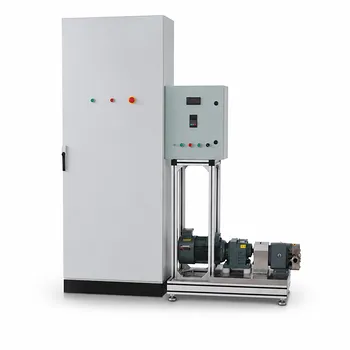
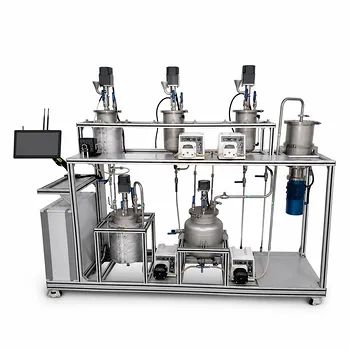
The true value of an educational pilot plant for safety training isn’t just teaching rules—it’s creating a visceral, unforgettable link between a decision made on paper and its immediate physical consequence in a risk-free environment. These scaled-down chemical processing units bridge the gap between abstract classroom theory and the high-stakes reality of industrial operations. They serve as a sandbox for catastrophe, where students can deliberately analyze hazards, identify potential failures, and even witness simulated accidents without endangering life, property, or the environment. This transforms safety management from a compliance exercise into a tangible engineering skill.
Safety training in pilot plants moves beyond memorizing regulations. It is a controlled simulation where students learn to internalize a proactive risk-mitigation mindset by physically interacting with the systems that can fail. The core lesson is that safety isn’t a document produced after design; it’s an inherent property of the system itself.
Bridging Theory and the Physical Reality of Risk
The fundamental advantage of a pilot plant is its physicality. Unlike a computer simulation where a pressure reading is just a number, a pilot plant has actual pipes that can vibrate, glass columns that can fog, and relief valves that audibly vent. This sensory feedback is critical for building deep understanding.
Simulating Danger Without the Danger
Pilot plants are designed with industrial-grade components, making their behavior analogous to full-scale commercial plants. This allows instructors to safely introduce process deviations that would be unthinkable in real life.
For example, an instructor might deliberately block a cooling water valve during an exothermic reaction. Students don't just calculate a theoretical temperature rise; they watch the actual temperature gauge climb rapidly. They hear the critical alarm sound and see the automated safety shutdown system engage. This experience hard-wires the principle of emergency procedures, answering the critical questions: "What does a runaway reaction physically feel like? How fast does it happen? Does the safety system respond quickly enough?"
From Job Safety Analysis (JSA) to Execution
A Job Safety Analysis (JSA) is not an abstract form when applied to a pilot plant. Students literally walk down the physical system. As they define each step of a standard operating procedure, whether starting a pump or opening a reactor, they can physically point to the valve or switch in question.
They can identify a burn hazard from a hot surface by feeling the radiant heat. They understand a pinch point because they can see the mechanical linkage move. This direct, tactile interaction ensures that the resulting risk assessment and mitigation steps, such as specifying a particular chemical glove or a lockout/tagout procedure, are rooted in a deep, personal understanding of the actual equipment.
A Systematic Approach to Hazard Identification
Educational pilot plants provide a structured environment to apply formal hazard identification methodologies in a way that reveals their purpose. The process moves from a simple understanding of the materials to a complex analysis of the entire system.
Starting with the Chemical Foundation
The first step in any safety assessment is understanding the inherent dangers of the materials. Students learn to go beyond a simple “chemical X is flammable” label. They must maintain a detailed inventory and, for each substance, critically review its Safety Data Sheet (SDS).
Operating a pilot plant forces a practical interpretation of an SDS. For a distillation column separating a flammable solvent, students don't just read the flash point; they must determine if a nearby pump motor is a potential ignition source and whether the column’s operating temperature could reach that point if the process control system fails. They learn that material properties are the non-negotiable boundary conditions for every other safety decision.
Applying a Structured Hazard Checklist
The physical layout of a pilot plant allows students to methodically work through a proven hazard identification checklist. This direct application transforms the list from a theoretical concept into a practical tool. Key steps physically executed on the unit include:
- Analyzing Process Chemistry: Inspecting the reactor setup to identify what happens if two incompatible chemicals mix due to a failed check valve.
- Inspecting Storage and Containment: Physically tracing the setup of solvent drums to ensure proper bonding and grounding and verifying secondary containment is leak-free.
- Identifying Ignition Sources & Explosive Atmospheres: Classifying the area around a reactor vent to determine if an explosive atmosphere could form and if all electrical devices have the correct hazardous-location rating.
- Evaluating Human Factors: Determining if a critical emergency shutdown button is clearly visible and easily accessible, or if a trainee could be trapped on the wrong side of a steam line during a leak.
This systematic inspection grounds safety management in the physical reality of the plant, ensuring that no hazard is purely hypothetical.
The Hands-On Education in Defensive Layers
The most profound lesson a pilot plant teaches is the concept of defense-in-depth. Students interact with the multiple protective layers that stand between normal operation and a catastrophic event. They learn that no single safety measure is sufficient.
The Hierarchy of Protection
A modern educational pilot plant is a physical manifestation of industrial loss prevention principles. As students perform a Process Hazard Analysis (PHA), they can map their findings onto the plant's layered safety concept:
- Inherent Safety (Process Design): The base layer. Students see this in the use of a smaller reactor, which, by design, limits the maximum potential energy of an explosion compared to a full-scale industrial vessel.
- Basic Process Control System (BPCS): The control system actively maintains safe operating limits. A student can observe how a proportional-integral-derivative (PID) controller modulates a cooling valve to keep the reactor temperature, a leading indicator, stable and well below the alarm setpoint.
- Critical Alarms and Human Intervention: When the BPCS cannot cope, an alarm activates on the control interface. This teaches the crucial distinction between control and safety. The student, in the role of operator, must then diagnose the problem and manually intervene.
- Automatic Safety Shutdown (Interlocks): If the operator fails to respond or the event is too fast, safety instrumented systems (SIS) take over automatically. A student can witness this when an independent high-pressure switch immediately cuts power to a feed pump, an action that is abrupt, definitive, and decoupled from the main controller.
- Pressure Relief Systems: The last physical barrier. If all else fails, a relief valve lifts or a rupture disc bursts to safely vent the excess pressure. Understanding the sizing criteria for these devices, which is done via calculation, is cemented by seeing them physically installed in the correct location on the vessel’s vapor space, not on a branch line.
Understanding the Trade-offs
A pilot plant is a powerful teaching tool, but its educational value for safety management can be compromised if its limitations are ignored. A critical part of the training is understanding what the simulation cannot fully replicate.
The Illusion of Control and Scale
A common pitfall is the ease with which a chemical spill of 50 milliliters is handled versus 5,000 liters. The sheer scale of a real industrial accident creates cascading failures, such as the overwhelming of a drainage system or the unmanageable vapor cloud, that a pilot plant simply cannot demonstrate. Students must be explicitly reminded that the consequences they see are dampened by a factor of a hundred or a thousand.
Cognitive Biases in a Learning Environment
In a lab, the focus is primarily on achieving a technical learning objective. This can lead to a cognitive bias where students prioritize system performance over safety protocol adherence. A leak might be tolerated to finish a batch and get good yield data, a decision path that would be unthinkable in industry. The instructor’s role is to enforce the hard stop, teaching that an unplanned release, no matter how small, is an unacceptable operational deviation that triggers a safety procedure. The lesson is that safety culture means stopping the process, even if it means losing the batch.
Making the Right Choice for Your Training Goal
The way a pilot plant is used for safety training should be tailored to the specific skill you want to develop. A design-focused course will use the equipment very differently than an operator-training workshop.
- If your primary focus is engineering inherently safer processes: Use the pilot plant as a design problem. Challenge students to modify the process by specifying a safer solvent, reducing the inventory of a toxic intermediate, or relocating a sensor to react faster, then test their modified design to see its tangible impact on the risk profile.
- If your primary focus is operational discipline and emergency response: Use the pilot plant as a flight simulator. Run planned drills that force operators to diagnose a blocked filter, manage a utility failure, or perform a controlled emergency shutdown. Evaluate them not on product purity, but on their systematic response to the alarm cascade.
- If your primary focus is hazard analysis and risk assessment: Use the pilot plant as a living case study. Have teams conduct a full Process Hazard Analysis (PHA) on the unit with nothing but the P&ID and SDS, then walk them to the physical unit to “verify” their findings. The gap between their paperwork and the physical reality is the most powerful teacher.
The ultimate goal is to move past a culture of mere compliance and into a culture of genuine safety, where every engineer and operator has a deeply personal, physical intuition for how to engineer the limits of a process.
Summary Table:
| Training Focus | Physical Experience & Simulation | Key Safety Concept Learned |
|---|---|---|
| Process Deviations | Simulating cooling failure & exothermic reactions | Emergency response & automated shutdown |
| Hazard Identification | Inspecting physical piping, valves, and electrical ratings | Applying SDS & safety checklists (JSA) |
| Defense-in-Depth | Interacting with BPCS, SIS, and physical relief valves | Layered protection & process safety limits |
Elevate Process Safety Training with LABPARK
Bridge the gap between theory and industrial reality. LABPARK provides state-of-the-art Educational and Vocational Unit Operations Pilot Plants in chemical engineering, bioprocess & biotech, and environmental & water treatment. Designed specifically for universities, research institutes, and enterprises, our systems offer hands-on, risk-free training environments to master hazard identification, risk assessment, and process safety.
Ready to enhance your lab's training capabilities? Contact LABPARK today to discover the perfect pilot plant solution for your institution.
Related Products
- Multi-Reactor Educational Pilot Plant for Reaction Engineering Unit Operations
- Polymerization Granulation and Pellet Processing Educational Unit Operations Pilot Plant
- Multi-Functional Drying Educational Unit Operations Pilot Plant
- Comprehensive Fluid Mechanics Educational Unit Operations Pilot Plant
- Electrolytic Hydrogen Production Educational Unit Operations Pilot Plant
People Also Ask
- How do educational unit operations pilot plants address safety and waste management when scaling up?
- How do educational unit operations pilot plants bridge theory and design? Bridge the Engineering Gap
- Why Compare Predicted and Experimental Excess Enthalpy? Key to Accurate Pilot Plant Scale-up
- Why Use PTFE & Hastelloy in Chemical Pilot Plants? Prevent Corrosion & Ensure Safety
- How to study gasification in pilot plants? Compare exit gas composition & efficiency