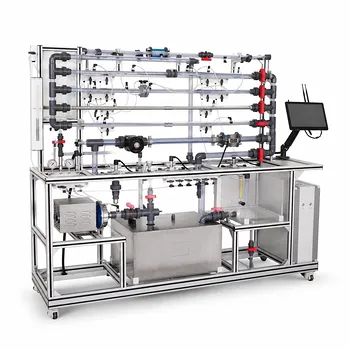
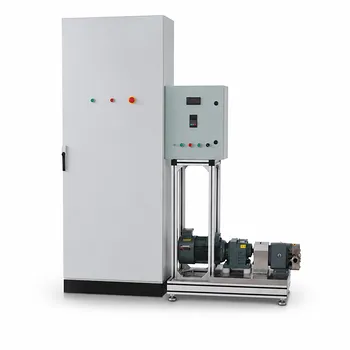
The answer is immediate and practical: Educational unit operations pilot plants transform abstract engineering concepts into physical, hands-on experiences. By operating scaled-down versions of industrial equipment, students and researchers directly manipulate variables like temperature, agitation, and flow rates and observe their impact on product quality. This active engagement cements the concept of a unit operation—an isolated processing step—and makes the identification of Critical Process Parameters (CPPs) a tangible, intuitive skill rather than a theoretical exercise.
Unit operations pilot plants are the essential physical bridge that connects textbook diagrams to real-world process control. They empower learners to run, break, and optimize processes in a safe environment, turning the vague notion of a “critical parameter” into a measured variable they can see, feel, and control, while directly applying industrial risk-assessment frameworks like FMEA and Quality by Design.
Deconstructing Processes into Tangible Stages
The primary learning breakthrough comes from physical separation. A chemical or bioprocess is a sequence of steps—mixing, reacting, separating, drying. A pilot plant forces users to run each step as a discrete piece of equipment, making the term unit operation physically real.
From Theory to Practice with Unit Operations
Textbooks list operations like extraction, filtration, and distillation. In a pilot plant, you physically load a Nutsche filter, prime a distillation column, or purge an extraction vessel.
This hands-on interaction exposes the practical realities that theory often omits. You learn that a pump is not just a symbol on a P&ID, but a device with a specific NPSH requirement that limits your vessel elevation.
Most importantly, you trace the product physically from one unit to the next. The process becomes a physical path, not just a block diagram, and you intuitively grasp the scheduling dependencies between batches.
Identifying Critical Process Parameters Through Direct Manipulation
A critical process parameter is a variable whose fluctuation changes product quality. In a pilot plant, you don’t just memorize a list—you turn the knob and see the consequence.
For an extraction process, you vary the agitation speed and directly measure the extraction yield. You swap filter membrane types in a filtration unit and observe the pressure drop and filtrate clarity.
This direct cause-and-effect observation burns the concept of a CPP into your understanding. You learn that something as seemingly minor as a 5 °C shift in jacket temperature can ruin a crystallization, a lesson no simulation can teach with the same gravity.
Applying Systematic Risk Analysis Frameworks
Beyond qualitative feeling, pilot plants teach structured risk analysis. Users apply industry-standard methodologies to the processes they are running, building a mindset of proactive control.
Categorizing Variables Using Quality by Design
In a pilot plant setting, students can apply Quality by Design (QbD) principles. They map input variables as controllable (C), noise (N), or experimental (X) using a Cause-and-Effect matrix.
For instance, they might designate agitation speed as a controllable factor, ambient humidity as a noise factor, and reaction temperature as a variable to investigate via Design of Experiments (DoE). Running these planned experiments on a real reactor yields sensitivity data that directly defines a robust design space, rather than a single, fragile operating point.
Using Failure Mode and Effects Analysis (FMEA) in a Live Setting
Pilot plants provide a safe sandbox to practice Failure Mode and Effects Analysis (FMEA). A student can ask, “What happens if the cooling water fails?” and then, under strict supervision, simulate that failure.
They witness the exotherm, see the safety interlock trigger, and understand the loop in a way a spreadsheet alone cannot provide. This live risk assessment bridges the gap between theoretical process design and the harsh realities of industrial control, exactly as the primary reference emphasizes.
Bridging the Gap Between Simulation and Reality
One of the deepest learning threads is reconciliation. Mathematical models and process simulators are indispensable, but they are simplifications. Pilot plants provide the empirical truth against which these models must be validated.
Validating Mathematical Models with Physical Data
A student can design a distillation column in Aspen Plus and then run a real batch in a pilot-scale column. They collect physical mass and energy balances, measure actual heat transfer coefficients, and determine real-world reaction kinetics.
The discrepancies are often shocking. A simulation may assume perfect mixing, but in the pilot tank, a swirling vortex creates a dead zone. This teaches the critical lesson that real-world constraints—fouling, heat loss, non-ideal fluid dynamics—require empirical correction that no first-principles model can fully predict.
Observing Scale-Dependent Phenomena
Unit operations are scale-dependent. A pilot plant sits between a bench-top glass flask and a 10,000-liter reactor. Here, you can actually see the mesoscale transition.
You observe how the surface-to-volume ratio changes, dramatically altering heat transfer. You feel the limitations of an impeller that worked perfectly in a 1-liter beaker but now struggles to suspend solids in a 50-liter pilot tank. This direct observation of micro-level kinetics manifesting as macro-level process variables provides the essential intuition required for successful scale-up.
Understanding the Trade-offs and Limitations
No educational tool is perfect. A pilot plant’s value is immense, but it comes with inherent constraints that students must recognize to avoid forming dangerous misconceptions.
The Cost and Safety Constraints of Pilot-Scale Learning
Pilot plants are expensive to build, operate, and maintain. While they allow risk-taking, that risk is bounded. A student may not be permitted to run a truly dangerous runaway reaction to its catastrophic conclusion at full scale.
The consequence is that the most extreme industrial failure modes must still be learned through case studies and videos, not direct experience. Furthermore, the sheer cost of raw materials and cleanup can limit the number of experimental trials, forcing a discipline of careful planning.
The Simplification Risk: When Pilot Plants Don't Capture Full Complexity
A pilot plant is itself a model of a larger plant. Some behaviors, like long-term degradation of a distillation tray or the complex fluid dynamics in a massive spray dryer, do not scale down perfectly.
Students must learn that a pilot plant’s success is a necessary but not sufficient indicator of full-scale performance. The real art is in understanding which critical parameters—like surface area-dependent crystallization kinetics—are faithfully represented, and which—like gas-liquid mass transfer in very tall columns—are not.
Making the Right Choice for Your Learning Goal
Your approach to using a pilot plant should be driven by what you specifically need to learn. The same unit can teach a process chemist something entirely different from what it teaches a controls engineer.
- If your primary focus is process design fundamentals: Use the pilot plant to physically map every unit operation and trace mass flows, building an intuitive grasp of the P&ID that a diagram alone cannot provide.
- If your primary focus is analytical QbD and risk assessment: Focus on systematically varying input parameters to build a DoE matrix, and practice formal FMEA on the live equipment to define a true proven acceptable range.
- If your primary focus is scale-up and manufacturing: Pay obsessive attention to the data that deviates from your model, specifically heat transfer limitations, mixing dead zones, and scheduling bottlenecks, as these are the hidden hurdles of commercial production.
- If your primary focus is process control and automation: Use the pilot plant to tune PID loops, witness the physical response of control valves, and understand the real-time behavior of a DCS, bridging the automation gap between theory and physical response.
In the end, the unit operations pilot plant is the only place where a chemical or bioprocess engineer’s knowledge is truly forged in heat, flow, and matter. It transforms the invisible into the visible, and the theoretical into the unforgettable.
Summary Table:
| Learning Objective | Physical Pilot Plant Application | Real-World Concept Mastered |
|---|---|---|
| Unit Operations | Operating physical distillation columns, filters, and pumps | Mass/energy balances, NPSH limits, and process scheduling |
| Critical Process Parameters (CPPs) | Manipulating variables (e.g., agitation, heat) to see immediate effects | Understanding sensitivity, defining robust design spaces (QbD) |
| Risk Analysis & Safety | Executing live FMEA and simulating supervised process failures | Identifying hazard consequences and testing safety interlocks |
| Model Validation | Comparing actual run data against Aspen/simulation software models | Realizing scale-up limits, heat loss, and non-ideal mixing |
Empower your students and researchers to master chemical and bioprocess engineering through hands-on experience. LABPARK designs and provides high-quality Educational and Vocational Unit Operations Pilot Plants specializing in chemical engineering, bioprocess & biotech, and environmental & water treatment. Designed to meet the rigorous training demands of universities, research institutes, and enterprises, our pilot plants turn theoretical textbooks into practical capability.
Ready to elevate your lab's training capabilities? Contact LABPARK today to discuss your customized pilot plant solutions!
Related Products
- Multi-Reactor Educational Pilot Plant for Reaction Engineering Unit Operations
- Polymerization Granulation and Pellet Processing Educational Unit Operations Pilot Plant
- Multi-Functional Drying Educational Unit Operations Pilot Plant
- Comprehensive Fluid Mechanics Educational Unit Operations Pilot Plant
- Electrolytic Hydrogen Production Educational Unit Operations Pilot Plant
People Also Ask
- How do educational unit operations pilot plants address safety and waste management when scaling up?
- How do educational unit operations pilot plants bridge theory and design? Bridge the Engineering Gap
- Why Compare Predicted and Experimental Excess Enthalpy? Key to Accurate Pilot Plant Scale-up
- Why Use PTFE & Hastelloy in Chemical Pilot Plants? Prevent Corrosion & Ensure Safety
- How to study gasification in pilot plants? Compare exit gas composition & efficiency