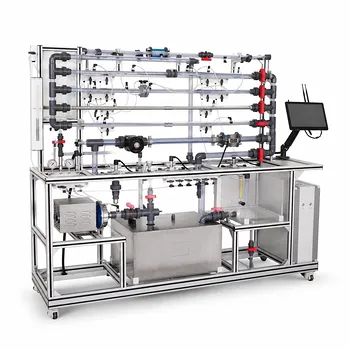
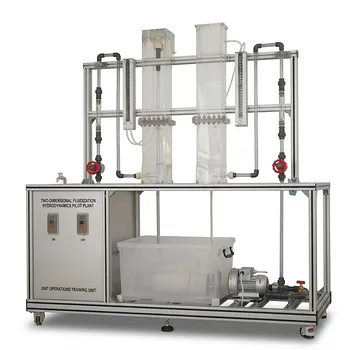
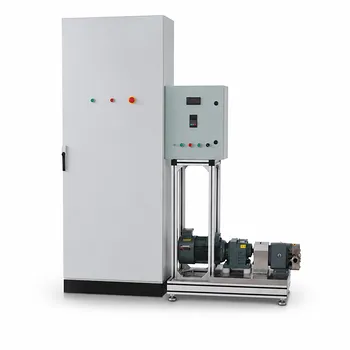
The biggest gap in any process design class isn’t the theory on the page—it’s knowing what happens when dirty, real-world feedstock hits the first piece of equipment. Educational unit operations pilot plants close that gap by letting students and engineers physically test feed preparation and impurities handling assumptions. Instead of guessing whether a particle-laden stream will destroy a control valve, they run the fluid, observe the erosion or clogging, and collect the data that converts a tentative PFD mark into a confident design decision.
Validating PFD choices for feed preparation and impurities handling requires more than a steady-state simulation. Pilot plants provide the empirical evidence to answer “what could go wrong?” by forcing raw material variability, fouling, and unplanned interactions to surface—long before capital is committed.
Turning a PFD Line into a Failable Experiment
Why Feed Preparation Is the Gatekeeper of Reliability
A PFD might show a simple feed tank feeding a pump and heat exchanger. But industrial feeds rarely cooperate. Suspended solids, dissolved salts, or off-spec raw materials silently sabotage performance. The core design challenge is invisible in a diagram: impurities accumulate where you least expect them, and their impact is often nonlinear.
Without physical testing, designers rely on generic safety factors—oversizing filters, adding redundant backup equipment, or accepting unknown risk. That approach either bloats capital cost or plants a ticking time bomb. Pilot plants provide the missing link between a clean line on a PFD and the gritty reality that determines uptime.
How a Pilot Plant Exposes the True Cost of a Missed Filter
The primary reference offers the perfect example: a filter before a control valve. On a PFD, it's a symbol; in a pilot plant, it's a decision with immediate consequences. Students can prepare feed streams with controlled particulate levels and directly observe the failure modes:
- Control valves sticking or seat erosion
- Pump impeller wear and reduced head
- Heat exchanger fouling that increases pressure drop and steals thermal efficiency
These aren't just theoretical warnings—they are measurable pressure spikes, flow degradation, and visible component damage. That visceral feedback transforms a PFD review from an abstract exercise into a risk-calibrated design habit. From that point forward, the question isn't "Is a filter needed?" but "What micron rating and redundancy level will protect this asset?"
Validating Pre-Treatment Strategies Beyond Filtration
Feed preparation rarely stops at particulate removal. Supplementary references reinforce that pilot plants replicate the full raw material preparation loop—including chemical treatment, degassing, or pre-heating—and demonstrate how they couple with downstream units. Students manipulate temperature, pH, or additive dosing and trace the ripple effects through the system:
- How far upstream does a contaminant propagate?
- Does a minor adjustment in feed quality shift the distillation column's flooding point?
- Are buffer tanks sized to dampen variability, or do they amplify it?
Physical testing reveals dynamic interactions no steady-state PFD can predict. A filter might solve one problem but create another if its backwash cycle starves the downstream system. Pilot plants let you run that scenario, gather the mass balance data, and redesign before a full-scale plant learns the hard way.
Understanding the Trade-offs and Limitations
The Scale-Down Interpretation Trap
Pilot-scale results are not miniaturized industrial guarantees. Fouling rates, shear forces, and residence time distributions can differ. A filter that works flawlessly at 20 L/min might blind prematurely at 200 m³/h. The educational value lies in teaching students to ask the right questions, not to masochistically duplicate exact industrial numbers. They learn to identify which mechanisms (e.g., cake filtration vs. depth straining) dominate, and then scale the solution using engineering fundamentals, not blind geometric ratio.
Cost and Time Constraints in a Curriculum
Running a physical pilot plant for every PFD decision is unrealistic, both in a university and an industrial design office. The true role of the educational pilot plant is to build intuition and experimental literacy. Once students have personally wrestled with a plugged heat exchanger or a hunting control valve caused by feed slugging, they can critically assess when a simulation is enough—and when only a physical test will do. The deep need isn't to test everything, but to develop the judgment to identify the handful of high-consequence PFD decisions that demand empirical validation.
The Simulation-Pilot Plant Duality
Supplementary references stress that mathematical models need empirical tuning. Pilot plants provide the mass and energy balance data that convert a hopeful simulation into a credible prediction. But the educational power is symbiotic: the PFD and simulation set the hypothesis, and the pilot plant interrogates it. When measured heat transfer coefficients deviate from clean textbook values, students don't just blame “fouling”—they quantify the fouling resistance, link it back to feed quality, and improve the PFD's pre-treatment specification. This cyclical loop is impossible with either tool alone.
How to Apply This to Your Project or Classroom
Any process design or teaching environment can extract maximum value from a unit operations pilot plant by matching the exercise to the goal:
- If your primary focus is teaching design logic: Create specific, controlled “failure” runs. Let students see a control valve’s performance degrade as feed particulate load increases. Then task them with redesigning the feed preparation section of the PFD—adding filtration, a bypass, or a cleaner feed source—and justify the added capital cost against avoided downtime.
- If your primary focus is de-risking a new industrial PFD: Identify the top three impurity-related failure modes from your flowsheet. Replicate the extreme (but credible) feed conditions in the pilot plant and measure the impact on critical assets (valves, heaters, membranes). Use that data to set firm specification limits for feed quality, rather than relying on vendor promises or generic industry heuristics.
- If your primary focus is bridging simulation and reality: Calibrate your process simulation with pilot plant data specifically for feed-dependent parameters like fouling factors, pressure drop coefficients, and heat transfer degradation rates. This transforms a theoretical PFD into a data-anchored model that can predict performance under varying feed scenarios.
- If your primary focus is teaching troubleshooting: Intentionally introduce trace impurities that can accumulate (e.g., a non-volatile salt in a recycle loop). Let students track concentration buildup, observe the moment of detectable process upset, and then design a bleed or purge stream into the PFD. They learn that impurity handling isn’t an add-on—it’s a fundamental part of the mass balance.
The pilot plant doesn't replace good PFD thinking; it infuses it with the hard-won evidence that makes designers both humble and effective. The moment a student watches a $50 valve seize because of a $0.10 contaminant, the lesson crystallizes forever: feed preparation isn't a cost—it's an insurance policy against the chaos inherent in real materials.
Summary Table:
| PFD Design Element | Real-World Risk & Failure Mode | Pilot Plant Validation Value |
|---|---|---|
| Feed Line & Filters | Clogging, valve erosion, pump wear | Determines exact micron ratings and filtration redundancy |
| Pre-Treatment Loops | Dynamic interactions, downstream upsets | Calibrates buffer tank sizing and chemical dosing |
| Steady-State Models | Unpredicted fouling & pressure drops | Provides empirical mass/energy data to tune simulations |
Elevate Your Process Engineering Training with LABPARK
Bridge the gap between process simulation and physical reality. LABPARK provides state-of-the-art Educational and Vocational Unit Operations Pilot Plants in chemical engineering, bioprocess & biotech, and environmental & water treatment. We empower universities, research institutes, and enterprises to train future engineers, validate complex PFD designs, and de-risk scale-up operations with robust, hands-on empirical testing systems.
Ready to enhance your lab's capabilities? Contact LABPARK today to find the perfect pilot plant solution for your curriculum or research goals!
Related Products
- Multi-Reactor Educational Pilot Plant for Reaction Engineering Unit Operations
- Polymerization Granulation and Pellet Processing Educational Unit Operations Pilot Plant
- Multi-Functional Drying Educational Unit Operations Pilot Plant
- Comprehensive Fluid Mechanics Educational Unit Operations Pilot Plant
- Educational Unit Operations Pilot Plant for Intraparticle Diffusion Effective Factor Measurement
People Also Ask
- What role do educational pilot plants play in scaling green chemistry? Bridging the Lab-to-Industry Gap
- How do educational pilot plants teach scale-up? Bridge the gap to commercial manufacturing.
- How do educational unit operations pilot plants address safety and waste management when scaling up?
- How do educational unit operations pilot plants bridge theory and design? Bridge the Engineering Gap
- Why Compare Predicted and Experimental Excess Enthalpy? Key to Accurate Pilot Plant Scale-up