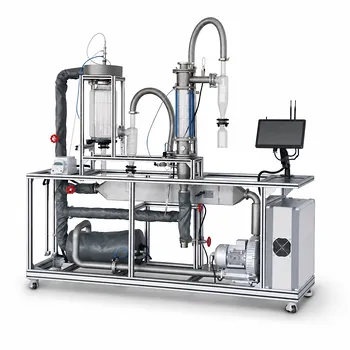
The corrosion mechanism defines your material and maintenance roadmap. In aqueous unit operations pilot plants, two distinct electrochemical pathways—oxygen-driven oxidation and acid-driven hydrogen evolution—govern how aggressively equipment degrades. The first dominates in neutral, oxygenated water and forms rust layers, while the second attacks metals in low-pH environments, releasing hydrogen gas. Your material selection and daily maintenance protocols must directly counteract the specific reduction reaction happening at the metal surface.
The central truth: pilot plant reliability begins with identifying whether the aqueous environment hosts dissolved oxygen, a surplus of hydrogen ions, or aggressive oxidizing agents. That insight alone points to the protective strategy—whether you need deaeration and cathodic protection, acid-resistant alloys and pH control, or non-metallic materials for hypochlorite loops—and defines the monitoring and treatment steps that keep equipment safe for students and researchers.
The Two Primary Corrosion Mechanisms Driving Equipment Failure
Oxygen Absorption Corrosion (Neutral/Alkaline Aerated Solutions)
When oxygen is abundant, iron-based materials follow a classic oxidation pathway. Iron releases electrons to become ferrous ions, while dissolved oxygen combines with water and electrons to form hydroxide ions.
The ferrous hydroxide then further oxidizes to ferric hydroxide, creating the familiar rust scale. This mechanism is oxygen‑reduction‑controlled—the corrosion rate depends directly on how much oxygen reaches the metal surface.
Material response: In oxygenated circuits, the immediate requirement is to block oxygen diffusion. Stainless steels form a passive chromium oxide layer that retards this reaction, but the protection remains vulnerable to chloride‑induced breakdown. Coatings that isolate the substrate from oxygen, such as paints or metallic overlays, directly address the root cause.
Maintenance response: Removing dissolved oxygen through deaeration and reducing electrolyte conductivity via ion‑exchange columns starve the corrosion cell. These water treatment unit operations are standard features in instructional pilot plants, teaching students how to chemically suppress the cathodic reaction.
Hydrogen Evolution Corrosion (Acidic Anaerobic Conditions)
In acidic environments, the corrosion mechanism shifts. Iron reacts directly with hydrogen ions to produce ferrous ions and hydrogen gas—no oxygen required. This reaction is thermodynamically aggressive and generates measurable hydrogen evolution, visibly accelerating metal loss.
Material response: Because the driving force is the high concentration of H⁺, materials must resist acid attack rather than oxygen penetration. Nickel‑copper alloys such as Monel excel here, as do acid‑resistant glass linings and fluoropolymer components. Standard carbon steel simply dissolves; even stainless steels may lose passivity.
Maintenance response: Neutralizing the acid is the frontline defense. Dosing systems for pH adjustment (adding a base) directly quench the hydrogen ion population. Removing dissolved electrolytes also lowers solution conductivity, reducing the current flow that sustains metal dissolution.
Beyond pH: Oxidizing Agents and Aggressive Ions
Why Standard Stainless Steel Fails with Hypochlorite
Sodium hypochlorite, common in disinfection and bleaching experiments, introduces a third electrochemical challenge. The hypochlorite ion (ClO⁻) is a powerful oxidizer that directly attacks metals through localized pitting and can promote chloride‑stress corrosion cracking. Thermodynamically, chlorine disproportionates into Cl⁻ and ClO⁻ in alkaline media, creating a chemically aggressive loop.
Material response: Stainless steels, even austenitic grades, suffer rapid pitting and crevice corrosion in hypochlorite service. The design must pivot to inherently resistant materials: PTFE, PVDF, titanium, or specialized glass. These materials remain inert because they do not participate in the electron‑transfer reactions that hypochlorite triggers.
Maintenance response: Because no passive film can self‑repair in this environment, the maintenance protocol is purely operational. After every run, thorough flushing with clean water prevents stagnant oxidizer from concentrating in crevices and joints, which would otherwise accelerate localized attack.
Materials That Match the Corrosion Mechanism
When to Choose Corrosion‑Resistant Alloys
For pilot plants handling variable chemistries, alloys are far more resistant than pure metals. Monel (nickel‑copper‑iron) offers broad protection against organic acids and saline solutions, making it ideal for pump cylinders, valves, and piston rods.
Stainless steel can serve reliably in neutral, oxygenated water—provided chloride levels are low—because its passive chromium oxide film blocks the oxygen reduction reaction. But the moment pH drops or hypochlorite appears, that film breaks down. The corrosion mechanism therefore dictates the alloy type and grade, not the other way around.
Protective Coatings and Non‑Metallic Options
Coatings isolate the metal substrate from the electrolyte, targeting both oxygen‑driven and acid‑driven pathways. For acidic or highly oxidative media, glass‑constructed equipment offers near‑universal chemical resistance, although it is reserved for cases where no other material can handle the hazard safely.
Fluoropolymers (PTFE, PVDF) bring the same inertness but with better mechanical toughness, allowing them to line vessels and piping in pilot‑scale loops handling aggressive disinfectants or bleach solutions.
Operational and Design Safeguards That Counteract Electrochemical Attack
Water Treatment: pH Adjustment, Deaeration, and Ion Exchange
Pilot plants demonstrate corrosion control through integrated water treatment unit operations. A dosing system for pH adjustment neutralizes acids before they reach vulnerable steel sections, directly interrupting the hydrogen evolution mechanism. Deaerators strip dissolved oxygen to starve the oxygen absorption reaction, and ion‑exchange columns remove electrolytes that would otherwise carry corrosion currents.
These steps map one‑to‑one onto the dominant mechanism: neutralize H⁺ for acid attack, remove O₂ for oxygen corrosion, and reduce conductivity for both.
Cathodic Protection: Sacrificial Anodes and Impressed Current
By supplying electrons to the protected steel, cathodic protection makes the entire structure a cathode where reduction (not metal oxidation) occurs. In pilot plants, sacrificial anodes of zinc or magnesium corrode preferentially, while impressed‑current systems use an external DC supply to maintain a non‑corrosive potential. Both are highly effective in neutral, aerated environments where oxygen reduction would otherwise drive the corrosion cell.
This technique provides a physical, hands‑on demonstration of electrochemistry, directly linking the external current to the suppression of the anodic reaction.
Stress Relief and Design Integrity
Stress corrosion cracking thrives when a susceptible alloy, a specific corrosive ion (like chloride), and tensile stress coincide. Pilot plant piping and vessels therefore undergo stress‑relief heat treatment during fabrication to reduce residual manufacturing stresses.
Additionally, corrosion‑resistant design avoids crevices and stagnant zones, while test loops with metal coupons allow operators to monitor real‑time corrosion rates and adapt maintenance intervals. This closed‑loop feedback aligns both material selection and operating procedures with the actual electrochemical threats observed.
Weighing the Trade-offs in Pilot Plant Material Selection
Choosing the most robust material is not always the right answer. Titanium and Monel provide exceptional corrosion resistance but drastically increase capital costs and can require specialized fabrication techniques. Glass equipment offers visibility and chemical inertness but is fragile and limited in pressure‑temperature range.
Coatings, while cheaper than solid alloys, demand meticulous surface preparation and can be abraded by slurries or high‑flow velocities. Over‑treating water—such as deep deaeration to sub‑ppb oxygen levels—adds energy and maintenance complexity that may be unnecessary for short‑duration educational runs.
For university and research pilot plants designed for student learning, a slightly higher corrosion allowance on replaceable components can be a deliberate educational choice, allowing users to witness corrosion mechanisms firsthand and then apply mitigation techniques in real time. The key is matching the protection strategy to both the chemical mechanism and the plant’s core mission—whether it is continuous production, research data integrity, or pedagogical demonstration.
How to Apply This to Your Pilot Plant
- If your primary focus is running neutral, oxygenated water with mild additives: Build around standard stainless steel, add a deaerator and ion‑exchange column, and install sacrificial anodes on the cold‑water piping. Monitor corrosion rates with test coupons rather than over‑specifying exotic alloys.
- If your primary focus is handling acidic solutions or pH‑cycling experiments: Select acid‑resistant alloys like Monel for wetted components, equip the plant with a reliable pH‑neutralization dosing skid, and inspect for hydrogen blistering. Glass‑lined vessels become a sensible investment when strong mineral acids are involved.
- If your primary focus is disinfection or oxidation studies with hypochlorite or similar chemicals: Eliminate stainless steel from all wetted parts. Use PTFE‑ or PVDF‑lined piping, titanium sensors, and glass reactors. After every run, flush thoroughly with clean water and air‑ dry to prevent stagnant pitting.
- If your primary focus is providing a hands‑on teaching platform for corrosion engineering: Design test loops with interchangeable metal coupons, integrate visible sacrificial anodes, and consider a controlled corrosion allowance that lets students measure thickness loss and relate it to the electrochemical mechanism they are studying.
By aligning every material choice and maintenance step with the specific electrochemical driving force—oxygen reduction, hydrogen evolution, or chemical oxidation—you transform corrosion from an uncontrolled failure mode into a predictable, manageable variable.
Summary Table:
| Corrosion Mechanism | Environment | Recommended Materials | Key Maintenance Action |
|---|---|---|---|
| Oxygen Absorption | Neutral/Alkaline Aerated | Stainless steel, coatings | Deaeration, ion-exchange |
| Hydrogen Evolution | Acidic Anaerobic | Monel, glass-lined, fluoropolymers | pH neutralization dosing |
| Chemical Oxidation | Hypochlorite/Oxidizers | PTFE, PVDF, Titanium, Glass | Post-run fresh water flushing |
Protect Your Investment with LABPARK's Corrosion-Resistant Solutions
Preventing equipment failure starts with the right design. LABPARK provides state-of-the-art Educational and Vocational Unit Operations Pilot Plants across chemical engineering, bioprocess & biotech, and environmental & water treatment. Specifically engineered for universities, research institutes, and enterprises, our pilot plants integrate advanced corrosion-resistant alloys, non-metallic linings, and automated dosing systems to ensure safe, long-lasting, and reliable operations.
Ensure your research and teaching labs are built to last—contact our engineering experts today to find the perfect configuration for your chemistry.
Related Products
- Multi Pump Fluid Transport Process Piping Unit Operations Training Pilot Plant
- Two-Dimensional Fluidization Hydrodynamics Educational Pilot Plant for Unit Operations Training
- Dual-Mode Rectification Pilot Plant for Practical Training Unit Operations
- 100L Continuous Loop Hydrogenation Educational Unit Operations Pilot Plant
- Comprehensive Fluid Mechanics Educational Unit Operations Pilot Plant
People Also Ask
- Why distinguish Newtonian & non-Newtonian fluids in pilot plants? Prevent design errors.
- Why is the chemical plant startup schedule crucial? De-risk scale-up with pilot plants.
- When to transition from PID to adaptive control in pilot plants? Key process indicators.
- How do deviations in estimating latent heat impact pilot plant thermal systems? Avoid hardware mis-sizing.
- Why Use PTFE & Hastelloy in Chemical Pilot Plants? Prevent Corrosion & Ensure Safety