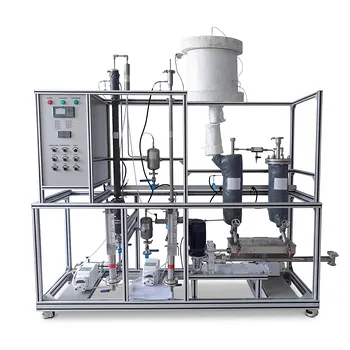
Leveraging academic journal databases is essential for building modern bioprocess and chemical engineering pilot plant curricula. Researchers and students can search ACS Publications, RSC, and ScienceDirect to find peer-reviewed papers on pilot-scale reactor design, process optimization, and analytical methods. This yields detailed experimental procedures, validation protocols, and troubleshooting guidelines, enabling the creation of robust teaching modules that mirror industrial practice.
These databases transform scattered bench-scale knowledge into scalable, industry-aligned educational experiments—but they must be used as curated starting points, not off-the-shelf recipes. The real value lies in extracting the underlying design logic and adapting it to your specific pilot plant’s capabilities and learning objectives.
Translating Database Research into Curriculum-Ready Modules
Identifying the Right Journals and Search Terms
The most productive approach is to target journals that consistently publish applied pilot-scale work. Key titles include Analytical Chemistry, Chemical Engineering Journal, and Biotechnology and Bioengineering—these regularly feature papers on reactor hydrodynamics, on-line monitoring, and scale-up validation.
When searching, combine broad process terms with your unit operation of interest. For example, use “continuous stirred-tank reactor + pilot scale + process analytical technology” instead of just “CSTR.” This filters out purely computational studies and delivers methods that are directly transferable to a teaching lab.
Extracting Actionable Methods, Not Just Results
A published paper rarely provides a ready-to-run student experiment. The skill lies in extracting the critical experimental spine: the equipment layout, sensor placement, sampling timeline, and control logic.
Look for these specific sections within a paper:
- Materials and methods – for exact reagent specifications, column packing, or membrane types.
- Setup and instrumentation diagrams – to replicate sensor loops and safety interlocks.
- Calibration and validation paragraphs – to teach students how to verify data quality before interpreting results.
By abstracting these elements, you can design a module where students not only run the process but also defend their measurements as they would in an industrial validation report.
Using Literature to Build Troubleshooting and Critical-Thinking Exercises
One of the deepest needs in pilot plant education is teaching what to do when a process deviates. Journal papers are goldmines for this.
For example, a study might describe how a drop in dissolved oxygen was traced to agitator shaft vibration at a specific rpm. You can turn this into a structured troubleshooting case: give students the raw trend data and have them propose diagnostic steps, just as the original researchers did. This moves learning beyond simple operation and into process understanding.
Connecting Database Findings to Physical Property Data
Modern curricula often require accurate physical constants for simulation and scale-up calculations. While journal papers may contain some data, they frequently rely on external references. Thus, after finding a promising reaction or separation protocol in a database, students should cross-check the required solubility, vapor pressure, and molecular weight in authoritative handbooks.
The CRC Handbook of Chemistry & Physics, Lange’s Handbook, and specialized chemical databases like Reaxys or PubChem become part of the workflow. Teaching students to seamlessly navigate from a journal’s kinetic model to the necessary thermodynamic data in a handbook creates a professional research habit that lasts beyond the classroom.
Incorporating Industry-Relevant Trends Identified in the Literature
Databases reveal not only established methods but also emerging industrial shifts. A noticeable trend in recent papers is the use of mathematical modeling and scale-down approaches to predict large-scale behavior, reducing costly trial-and-error.
When you bring these papers into the curriculum, you can design experiments that explicitly compare a simulated scale-up prediction against pilot plant data. This directly aligns with industry’s move toward predictive engineering and gives students experience in the modern “model first, test later” philosophy.
Understanding the Trade-offs and Limitations
Relying on journal databases as a primary source for curriculum development carries inherent risks. Recognizing these will keep the resulting modules both safe and educationally sound.
- Reproducibility gaps: A published method may use proprietary catalysts, custom-made columns, or analytical instruments unavailable in your lab. Always audit each paper for equipment and material transferability before building a module around it.
- Incomplete troubleshooting narratives: Papers often sanitize failures. What reads as a clean procedure may have required unreported backflushes or recalibrations. Supplement journal findings with vendor application notes and technical forums to uncover common practical snags.
- Static versus dynamic knowledge: A paper from 2015 may still be scientifically valid, but the field’s standard references and safety thresholds could have changed. Cross-verify any crucial safety or environmental limits with current industrial guidelines (e.g., TEMA, VMA standards).
- Overemphasis on novelty: Highly novel configurations may lack long-term proven reliability. For teaching, prioritize well-characterized, industrially mature processes found across multiple journals, reserving truly cutting-edge work for advanced projects or research.
Making the Right Choice for Your Curriculum Goal
Your ultimate aim is to produce graduates who can think and act as process engineers. Align your database strategy with the specific outcome you need.
- If your primary focus is core unit operations mastery: Search for papers that provide complete, reproducible setups for basic operations like heat exchange, distillation, or liquid mixing. Use the extracted manuals and calibration steps to create standardized standard operating procedure (SOP)-driven modules.
- If your primary focus is analytical method development: Target journals like Analytical Chemistry and search for on-line or at-line monitoring techniques validated on pilot-scale streams. Design modules around the validation sequence itself, teaching students to assess accuracy, precision, and sample line delay.
- If your primary focus is process scale-up and economic evaluation: Look for papers that share scale-down models, mass transfer correlations, and complete mass balances. Design an experiment where students run a pilot plant, fit their data to the kinetic models found in the database, and then calculate the reactor volume needed for a hypothetical commercial plant.
- If your primary focus is green chemistry and bioprocessing: Select papers on enzymatic catalysis or fermentation optimization from Biotechnology and Bioengineering. Structure modules to compare data from the paper’s optimal conditions with the students’ own runs, then discuss the economic viability of replacing a conventional chemical route.
By treating academic databases as a curated engineering library rather than a simple answer key, you equip students with the lifelong skill of translating research insight into practical, scalable process knowledge.
Summary Table:
| Curriculum Focus | Search Strategy & Database Focus | Key Learning Outcome |
|---|---|---|
| Unit Operations | Distillation, heat exchange, liquid mixing setups | Standard Operating Procedure (SOP) mastery |
| Analytical Methods | On-line/at-line monitoring validation in Analytical Chemistry | Validation sequence, precision, and delay assessment |
| Scale-up & Economics | Scale-down models, mass transfer correlations | Kinetic modeling and commercial reactor scale-up design |
| Bioprocessing | Enzymatic catalysis & fermentation in Biotech & Bioeng | Comparison of simulation predictions with pilot runs |
Elevate Your Engineering Curriculum with LABPARK
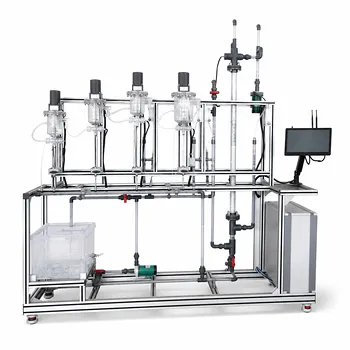
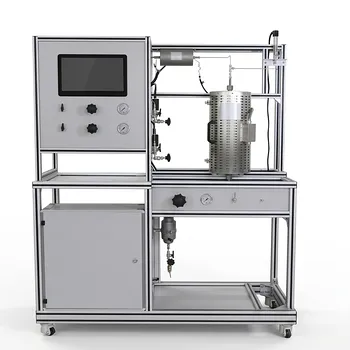
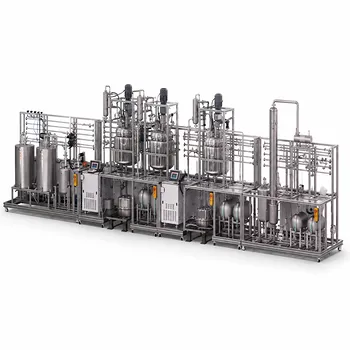
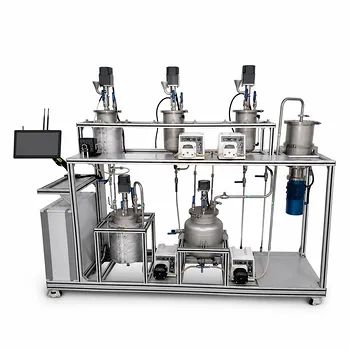
Ready to transform academic research into hands-on student success? LABPARK provides state-of-the-art Educational and Vocational Unit Operations Pilot Plants in chemical engineering, bioprocess & biotech, and environmental & water treatment. Designed specifically for universities, research institutes, and enterprises, our systems allow you to easily translate literature methods into safe, robust, and industry-aligned laboratory courses.
Empower your students with real-world scale-up, validation, and troubleshooting experience.
Contact LABPARK today to customize the perfect pilot plant solution for your lab!
Related Products
- Natural Product Extraction Unit Operations Training Pilot Plant
- Bio-fermentation Ethanol Production Practical Training Unit Operations Pilot Plant
- Ethyl Acetate Synthesis Unit Operations Pilot Plant for Practical Training
- Residence Time Distribution and Reactor Flow Characteristics Determination Educational Pilot Plant
- Multi-Modal Distillation Unit Operations Training Pilot Plant
People Also Ask
- How to Demo Solubility Sensitivity in SFE Pilot Plants? Practical Thermodynamics
- How do pilot plants differentiate physical vs chemical extraction? Enhance Chemical Engineering Training
- How are HTU and NTU applied to determine extraction column height? Guide to Pilot Plant Scaling
- How do fluid transport principles apply to pilot plant configuration? Optimize your unit operations.
- What are the limitations of acentric factor models? Avoid pilot plant errors with polar fluids.