The single most effective shift you can make is moving from reactive temperature and pressure readings to proactive acoustic listening. To prevent reactor clogging and lump formation in a fluidized bed granulation pilot plant, operators must replace slow, univariate sensors with acoustic chemometric monitoring. By using externally mounted high-temperature accelerometers, you can detect the unique vibration signatures of particle-wall impacts. This lets you identify the earliest stages of build-up on the distributor plate or inside the bed—often 30 minutes before a traditional sensor would signal a critical failure.
Operators face a hidden lag: by the time a thermocouple or pressure tap reveals a problem, the process is already seconds from a shutdown. The core insight is that acoustic chemometrics, combined with fundamental mechanical safeguards like proper distributor plate design, transforms your ability to sense and stop the trouble before it forms a hard clog or a destructive lump.
Why Traditional Sensors Fail to Protect Your Pilot Plant
Classical univariate measurements create a dangerous blind spot. They tell you a failure has begun, not that it is beginning.
The Lag Problem with Temperature and Pressure
Temperature and pressure probes inherently measure bulk averages, not dynamic particle behavior. Changes in fluidization, like a dead zone forming above the distributor, must become large and thermally distinct before they register.
By the time a pressure drop anomaly is clear, the bed may already have a cake of consolidated material. This is the fundamental delay that acoustic monitoring eliminates. You’re no longer watching the consequence; you’re listening to the cause.
The Cascade to Clogging and Lumps
Poor fluidization first manifests as dead spots where granules stop moving and begin sticking. When the gas bypasses these zones—a phenomenon known as channeling—you get uneven binder distribution and rapid localized growth.
These sticky nuclei then collide and fuse into lumps, or they settle onto the perforated bottom plate and harden. Once the plate is partially blocked, the remaining open area suffers a runaway increase in velocity, triggering slugging and violent bed disruption that accelerates the problem. The process quickly spirals toward a critical shutdown.
The Acoustic Chemometric Advantage
Instead of waiting for bulk symptoms, you tap directly into the mechanical "voice" of the process. This gives you a head start measured in tens of minutes.
How It Works: Listening to the Bed’s "Voice"
You mount high-temperature accelerometers securely on the reactor wall. These sensors capture the high-frequency vibrations generated every time a particle, granule, or agglomerate impacts the steel.
The acoustic signature is incredibly information-rich. Using Principal Component Analysis (PCA) on this data, you can build a real-time chemometric model that distinguishes a healthy, smoothly fluidizing bed from one where layering cake is forming or particles are becoming sticky. The statistical model learns what “normal” sounds like and flags any deviation immediately.
Early Warning: Gaining a Crucial 20+ Minute Head Start
Traditional process measurements might give you a warning just 10 minutes before an irreversible shutdown. In contrast, acoustic chemometric monitoring often detects the first signs of a developing dead zone or plate build-up 30 minutes or more in advance.
That extra 20+ minutes is your window for corrective action. You can reduce the binder spray rate, increase the fluidization air flow, or gently adjust the bed temperature—all to re-stabilize the particle dynamics before a lump forms or the distributor clogs. In a pilot environment where students or researchers are running the unit, this buffer prevents costly downtime and lost experimental batches.
The Foundation: Mechanical and Design Safeguards
Acoustics give you early warning, but certain physical design rules must not be violated. These are your first line of defense against the fluidization instability that breeds clogs and lumps.
Ensuring Uniform Gas Distribution with Your Distributor Plate
A common root cause of dead zones is a poorly designed distributor. The plate must force gas to distribute evenly across the entire cross-section. If the resistance is too low, the gas simply rushes through the path of least resistance, creating channels.
The critical rule of thumb: the pressure drop across the distributor must not be less than 10% of the total bed pressure drop. If it falls below this threshold, the plate loses its ability to self-correct flow maldistribution. The resulting channeling directly creates the stagnant regions where lumps nucleate and plates clog.
Controlling Bed Height to Prevent Violent Fluidization
When the bed height-to-diameter ratio is too high, large bubbles can coalesce and grow to the column’s diameter. This condition, known as slugging, causes the entire bed to surge violently as a piston. That mechanical trauma can crush particles and create erratic contact patterns that favor lump formation.
Maintaining a low bed height-to-diameter ratio suppresses slugging. This simple geometric constraint keeps the fluidization more homogeneous and reduces the destructive forces that turn small agglomerates into hard, plate-blocking lumps.
Understanding the Trade-offs
An honest assessment of the acoustic method reveals its strengths and where it requires complementary effort.
Acoustic Monitoring Requires Baseline Training
You cannot simply bolt on sensors and expect a green/red light. The PCA model must be trained on normal operating data, and the baseline “healthy” acoustic fingerprint can shift with different product formulations or operating conditions. This demands a structured commissioning phase.
It Complements, Not Replaces, Good Design and Operation
Acoustic chemometrics will not fix a distributor with a 3% pressure drop or a dangerously tall bed. It provides a superlative early warning system, but the root cause of instability is often mechanical. The best outcome comes from pairing the sensor intelligence with the 10% distributor rule and a conservative bed aspect ratio.
Making the Right Choice for Your Pilot Plant Goal
Your approach should match your immediate operational priority. Here is how to focus your effort:
- If your primary focus is maximizing experimental uptime: Prioritize the integration of acoustic chemometric monitoring with PCA. The 30-minute early warning is your most powerful tool to avoid unscheduled shutdowns and lost batches.
- If your primary focus is establishing a robust baseline before adding complexity: First verify that your distributor plate pressure drop meets the 10% rule and that your bed height-to-diameter ratio is low enough to prevent slugging. No sensor can compensate for a fundamentally unstable design.
- If your primary focus is developing a highly instrumented, data-rich process understanding: Combine both pillars. Build your acoustic PCA model on top of a mechanically sound fluidization setup to capture the precise, real-time dynamics of granule formation and agglomeration.
By listening to the bed’s true mechanical rhythm and respecting the irreducible design rules, you move from chasing failures to preventing them.
Summary Table:
| Strategy | Detection Window | Primary Benefit | Key Implementation Rule |
|---|---|---|---|
| Traditional Sensors | Reactive (<10 mins) | Measures bulk temperature & pressure averages | Standard T/P probes |
| Acoustic Chemometrics | Proactive (30+ mins) | Detects early particle-wall impacts & sticky zones | Accelerometers & PCA training |
| Mechanical Design | Continuous Prevention | Eliminates channeling, dead zones, & slugging | Distributor ΔP ≥ 10% of bed ΔP |
Optimize Your Chemical Engineering Lab with LABPARK
Ensure seamless unit operations training and research without the risk of costly process shutdowns. LABPARK provides premium Educational and Vocational Unit Operations Pilot Plants in chemical engineering, bioprocess & biotech, and environmental & water treatment. Engineered specifically for universities, research institutes, and enterprises, our systems combine robust mechanical safeguards with advanced monitoring to deliver reliable, hands-on learning and research outcomes.
Ready to upgrade your laboratory setup? Contact LABPARK today to find the perfect pilot plant solution for your institution!
Related Products
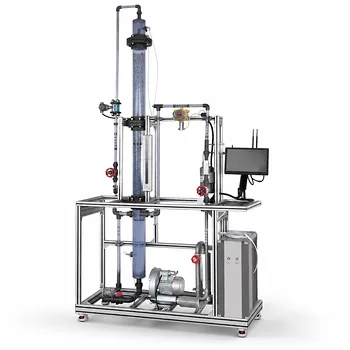
- Fluidized Bed Gas Solid Catalytic Reaction Educational Pilot Plant
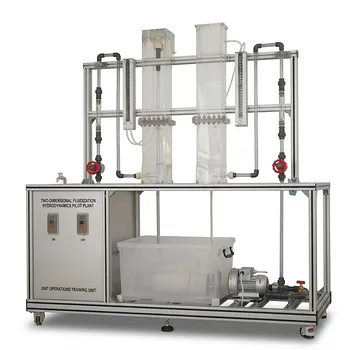
- Two-Dimensional Fluidization Hydrodynamics Educational Pilot Plant for Unit Operations Training
- Multi-Reactor Educational Pilot Plant for Reaction Engineering Unit Operations
- Multi-Functional Drying Educational Unit Operations Pilot Plant
- Multi Functional Catalytic Reaction and Reactor Evaluation Educational Unit Operations Pilot Plant
People Also Ask
- Why is the bed height-to-diameter ratio (L/dt) critical? Fluidized bed pilot plant selection guide.
- How is the minimum fluidization velocity (U_mf) determined and utilized? A Unit Operations Guide
- How does the Mears criterion evaluate transport resistance? Key Guide to Intrinsic Kinetics
- How do reactor pilot plants safely study gas-solid reactions? Master kinetics with thermal & flow control.
- How do pilot plants demonstrate fluidized-bed reactor advantages over fixed-bed? Find Out Now