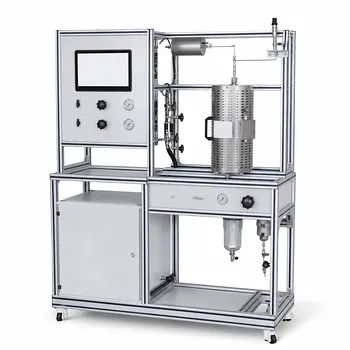
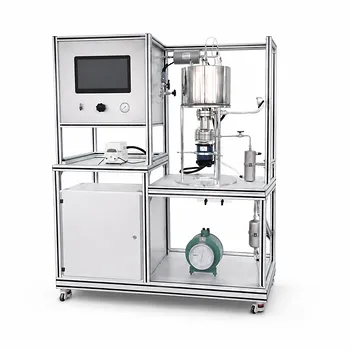
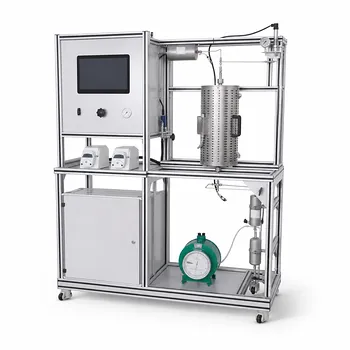
Keeping reactor temperatures strictly below the copper thermal stability limit and scrupulously purifying the syngas feed are the two foundational actions for preventing thermal sintering. In a methanol synthesis pilot plant, copper-based catalysts lose their active surface area irreversibly when metal crystallites grow on the porous support. This deactivation is triggered primarily by excursions above approximately 570 K and by chemical agents—especially chlorine and steam—that accelerate crystallite agglomeration. Successful prevention therefore demands precise multi-point temperature monitoring, robust gas purification units, and a deliberate, controlled catalyst reduction procedure right from the first moment reducing gas flows through the bed.
The deep need behind every sintering question is stability of the catalytic surface over time. You prevent sintering not by chasing a single temperature setpoint, but by creating a protective envelope: an activation protocol that avoids “flying temperature” during reduction, an operating window that never challenges the copper’s thermal tolerance, and a feed stream that eliminates the chemical poisons that make sintering far more aggressive.
The Thermal Sintering Mechanism and Why Temperature Control Is Everything
Understanding what sintering does at the microscopic level makes the operational limits concrete and non-negotiable.
How Sintering Destroys Active Surface Area
Copper catalysts for methanol synthesis are composed of finely divided metal crystallites dispersed on a porous alumina‑based carrier. Thermal sintering causes these small crystallites to migrate and coalesce into larger particles. The total metal surface area—the active site count—shrinks permanently, and with it, the methanol production rate.
Because sintering is a thermally activated process, its rate escalates dramatically once a threshold temperature is crossed. For typical Cu‑ZnO‑Al₂O₃ formulations, that stability limit sits around 570 K. Sustained operation above this value transforms a gradual, manageable activity decline into a sudden, catastrophic loss of active surface.
Practical Multi-Point Temperature Control in a Pilot Plant
A single thermocouple at the reactor inlet cannot capture the true thermal profile of the bed. During methanol synthesis, the reaction is exothermic, and hot spots can form in regions of high conversion. A pilot plant equipped with multiple internal axial or radial temperature probes allows you to:
- Detect temperature runaways early, before the hot spot reaches the sinter‑inducing range.
- Map the temperature profile after changes in syngas composition or flow rate.
- Verify that the heat‑removal system (jacket, cooling coils) is adequately matching the reaction rate.
Operator discipline here means setting a hard interlock on the control system: if any probe detects a temperature exceeding the catalyst’s safety margin, the control logic must reduce feed flow or increase cooling immediately.
The Hidden Danger: Feed Impurities That Accelerate Sintering
Temperature is the primary driver, but chemical contaminants can drastically lower the effective sintering threshold. The primary reference highlights chlorine and steam as aggressive sintering promoters.
Chlorine: A Persistent Surface Poison that Drives Crystallite Growth
Chlorine compounds, even at ppb levels, adsorb strongly on copper surfaces, forming mobile copper‑chlorine species. These surface complexes drastically enhance the rate of crystallite migration and coalescence. The damage is twofold: the active surface is directly poisoned, and the metal particles grow larger, accelerating the loss of total surface area. The only effective defense is an upstream guard bed or a chlorine‑removal adsorbent (often a zinc‑oxide‑based or high‑surface‑area alumina material) installed in the syngas feed line before the reactor.
Steam: The Self‑Inflicted Accelerant
Steam is a product of the methanol synthesis reaction itself, but additional water vapor in the feed gas magnifies the sintering rate. Wet syngas leads to superficial oxidation‑reduction cycles on the copper particles, which significantly enhances atomic mobility and particle growth. Ensuring a bone‑dry feed is non‑negotiable. This means placing driers (such as molecular sieves or anhydrous desiccants) downstream of the gas mixing point, and verifying the outlet dew point regularly.
The Activation Step: Setting the Stage for a Sinter‑Resistant Catalyst Bed
A copper‑based catalyst at the moment of loading is in the inactive oxide form (CuO). The very first chemical event—reduction to active metallic copper—can itself cause immediate, irreversible sintering if not managed with extreme care.
The Risk of “Flying Temperature” During Reduction
When the reducing gas (typically dilute hydrogen in nitrogen) contacts the oxide, the reaction is strongly exothermic. If the hydrogen concentration is too high or the gas flow rate too great, the bed temperature can spike uncontrollably (“flying temperature”), instantly sintering the newly formed copper crystallites before any synthesis run has even started. The pilot plant must have the capability to deliver a precisely blended, low‑hydrogen mixture—often starting at 0.5–1% H₂—and to ramp the concentration gradually as the reduction wavefront passes through the bed.
A Controlled Ramp: Space Velocity and Concentration Profile
The reduction protocol must limit the rate of heat release by controlling the gas space velocity and hydrogen concentration simultaneously. A typical safe practice is to start with a high‑inert flow (N₂) to establish uniform bed temperature, then introduce the dilute H₂/N₂ mixture while monitoring multiple bed thermocouples. The temperature front must move slowly through the bed, never exceeding the 570 K stability limit. Only after the water vapor by‑product has been purged and the temperature profile stabilizes should the hydrogen concentration be increased to full syngas levels. This step not only prevents initial sintering but also serves as an invaluable hands‑on training exercise in gas‑flow control, process safety, and the fundamentals of catalyst activation.
Operational Strategies for Prolonging Catalyst Life During Methanol Synthesis Runs
Once the catalyst is active and running, you still face slow, progressive deactivation. The way you compensate determines whether you accelerate or postpone the final sinter‑induced failure.
The Temperature‑Ramp Approach and Its Limits
A classic operating strategy is constant‑conversion variable‑temperature operation: as the catalyst loses activity, you gradually raise the inlet heating temperature to maintain the target methanol production. In a pilot plant, this allows you to map the deactivation kinetics and calculate the required temperature ramp profile. However, each upward step inches the bed closer to the 570 K stability ceiling. If the ramp is not carefully bounded, the attempt to compensate for normal activity loss will itself trigger a sintering cascade. The key discipline is to define a maximum allowable inlet temperature before the experiment, and to stop raising the temperature once that limit is reached—accepting the yield decline as the catalyst’s useful life endpoint.
Guard Beds for Irreversible Poisons
For irreversible poisons (such as sulfur, chlorine, or metal carbonyls) that cannot be removed by a simple ramp, the most reliable protection is a sacrificial guard bed installed just upstream of the main catalyst charge. This bed contains a material that selectively and irreversibly traps the poison while preserving the syngas specification for the synthesis catalyst. In methanol pilot plants, a high‑surface‑area zinc oxide or a special activated carbon guard bed is often employed. When the guard bed saturates, it can be replaced offline, extending the life of the far more expensive synthesis catalyst.
Understanding the Trade-offs and Pitfalls
Even the most careful prevention strategy involves compromises. Objectively acknowledging these builds confidence in your experimental design.
Short‑Term Yield Compensation vs. Long‑Term Catalyst Integrity
The temperature‑ramp technique trades time for activity—you get more data out of a single catalyst charge, but you push the material closer to its thermal limit. If the goal is to study a stable catalyst state, operating at a fixed, conservative temperature and accepting the natural activity decline yields more representative kinetic data. Conversely, if the goal is to demonstrate catalyst longevity or to train operators on deactivation compensation, a controlled ramp within strict safety margins is valuable. The critical mistake is letting the ramp become an uncontrolled drift: without a pre‑defined temperature ceiling, operators may walk the catalyst right into rapid sintering.
Refurbishing a Sintered Catalyst vs. Replacing It
Sintering is largely irreversible. Once copper crystallites have grown, no practical in‑situ regeneration can re‑disperse them. Reductive regeneration cycles can remove coke or adsorbed poisons, but they cannot restore lost surface area caused by particle growth. Therefore, the operational focus must be prevention, not cure. In pilot plants where deactivated catalysts are occasionally regenerated by controlled coke combustion, the same temperature‑management principles apply: oxygen concentration and flow rate must be limited to prevent the exothermic burn‑off from creating secondary sintering. This is a different mechanism—overheating from carbon combustion—but the result is the same permanent loss of active copper area.
How to Design Your Methanol Synthesis Protocol for Catalyst Longevity
Your specific experimental or educational goal will determine the balance between conservative operation and deactivation‑compensation strategies.
-
If your primary focus is generating long, stable kinetic data for catalyst characterization: Operate at a fixed, safely low temperature well below 570 K. Install a chlorine‑removal guard bed and a feed drier. Use high‑resolution multi‑point thermocouples, and end the experiment once the deactivation rate reaches a pre‑defined threshold—do not chase conversion with temperature.
-
If your primary focus is demonstrating industrial‑style deactivation and temperature‑ramping techniques: Implement a tightly instrumented constant‑conversion protocol. Pre‑define your maximum allowable inlet temperature before the run starts. Ramp the temperature in small increments while logging the deactivation rate, but halt the ramp instantly if any bed temperature crosses the 570 K safety line.
-
If your primary focus is training operators on catalyst handling and process safety: Start every training with a meticulously controlled reduction step using dilute hydrogen. Build a fault‑tree exercise around impurity ingress (chlorine slip, wet gas) and the temperature‑interlock system. Let learners see on‑screen how a small temperature excursion above the stability limit correlates with a permanent step‑drop in catalytic activity.
Preventing thermal sintering in a methanol synthesis pilot plant is not about micromanaging one variable—it’s about building a system of interlocks, purification, and disciplined temperature management that respects the copper crystallites’ stability limits from the very first hydrogen molecule to the very last data point.
Summary Table:
| Deactivation Driver | Safety Threshold / Critical Limit | Key Prevention Strategy |
|---|---|---|
| Thermal Overheating | Exceeding ~570 K | Multi-point temperature probes & hard control interlocks |
| Chlorine Impurities | ppb levels | Upstream ZnO or high-surface-area alumina guard beds |
| Steam / Water Vapor | Any moisture in feed | In-line molecular sieve driers & regular dew point checks |
| Reduction Spikes | Exothermic runaway during activation | Controlled gas ramp starting at 0.5–1% H2 in inert gas |
Advance Your Chemical Engineering Research and Training with LABPARK
Preventing catalyst deactivation requires highly precise process control and robust instrumentation. LABPARK designs and provides premium Educational and Vocational Unit Operations Pilot Plants in chemical engineering, bioprocess & biotech, and environmental & water treatment for universities, research institutes, and enterprises.
Whether you need to demonstrate complex reaction kinetics, train operators on catalyst reduction, or study process safety, our pilot plants deliver the reliability and precision your program demands.
Ready to elevate your laboratory capabilities? Contact our technical experts today to find the perfect pilot plant solution.
Related Products
- Methanol Synthesis and Catalyst Performance Evaluation Educational Unit Operations Pilot Plant
- Carbon Dioxide Hydrogen Methanol Synthesis Educational Unit Operations Pilot Plant
- Carbon Dioxide Hydrogenation Methanol Synthesis Educational Unit Operations Pilot Plant
- Methane Cracking Educational Unit Operations Pilot Plant
- Fixed Bed Gas Solid Catalytic Reaction Educational Pilot Plant
People Also Ask
- Why is a purge system necessary when operating a gas recirculation loop in a methanol synthesis pilot plant? (Guide)
- How do temp & pressure affect methanol synthesis pilot plants? Optimize equilibrium and catalyst performance.
- Why do modern methanol pilot plants operate at lower pressures? Catalyst & Feed Requirements Explained
- What are the operational requirements for catalyst activation? Safe Methanol Pilot Plant Operation
- Why Compare Predicted and Experimental Excess Enthalpy? Key to Accurate Pilot Plant Scale-up