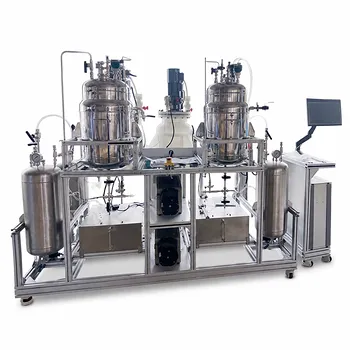
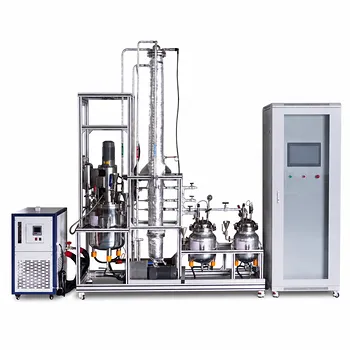
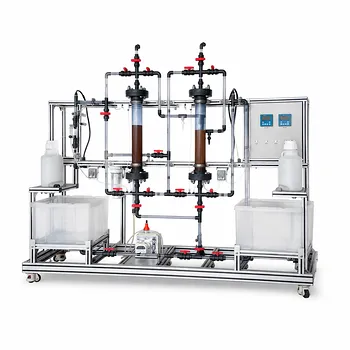
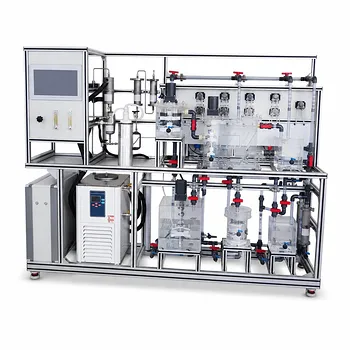
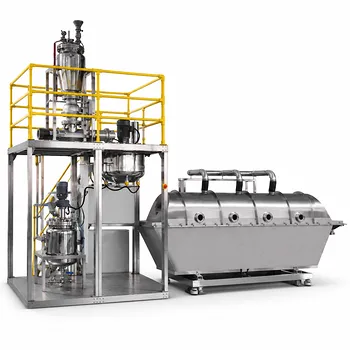
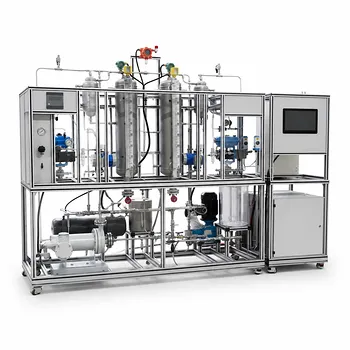
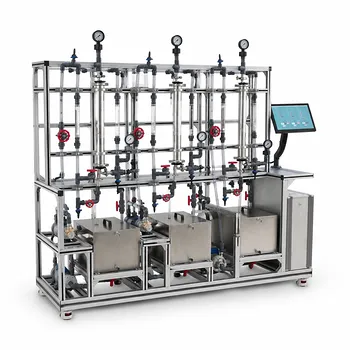
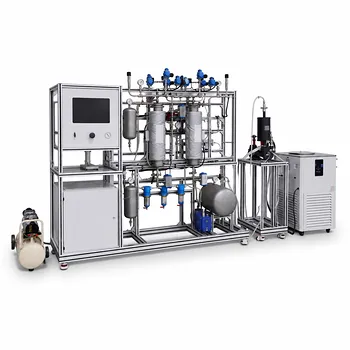
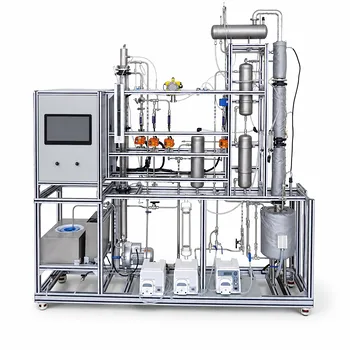
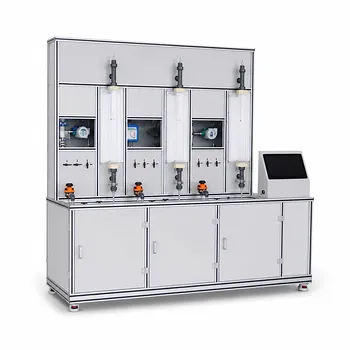
The theoretical abstraction of a recycle loop becomes a tangible, beatable challenge once students step up to an educational pilot plant. These scaled-down chemical engineering systems, equipped with reactors, separators, and recycle lines, let students physically sample the very stream that makes mass balances so complex. By measuring real flow rates and compositions, then applying iterative "tearing" methods or simultaneous equations, learners can calculate the entire material balance and directly compare their predictions against wet-lab data. This hands-on validation transforms an often-frustrating mathematical exercise into a profound lesson on process dynamics and simulation trustworthiness.
The core insight: Educational pilot plants with recycle loops don’t just demonstrate a process—they make the invisible logic of iterative mass balances visible. Students learn that a recycle stream’s composition is both an input and an output, forcing them to confront the assumptions and convergence techniques that underpin all industrial simulation. The result is a far deeper grasp of why models work, when they fail, and how real-world constraints like inert buildup and measurement errors shape their calculations.
The Unique Complexity of Recycle-Loop Mass Balances
A mass balance around a simple, once-through unit is straightforward. Feed goes in, product and waste come out—everything adds up in a linear fashion. Recycle loops shatter that linearity. The stream returning to the reactor carries unreacted material, solvents, or catalysts whose composition depends on the very downstream separation that the recycle is supposed to feed. This circular dependency turns a single balance into a multi-unit problem with multiple unknowns that must be solved simultaneously—or guessed iteratively.
Solving these balances on paper often leaves students with a correct answer but zero intuition about the process mechanics. The math works, but the physical behavior that produced the numbers remains a black box. Educational pilot plants specifically address this by making the recycle stream a physical object you can tap, measure, and analyze, so that the theoretical puzzle gains a concrete, sensory dimension.
How Pilot Plants Turn Theory into Tangible Skill
Sampling the Stream That Theory Treats as Abstract
The most direct pedagogical power of a recycle-equipped pilot plant is that students can draw physical samples from the recycle line. Instead of treating the recycle stream as a variable labeled “R,” they measure its actual temperature, flow rate, and composition using inline sensors or grab samples. This raw data becomes the foundation for calculation, not a textbook value.
When students hold a sample of the recycle stream in a vial, the conceptual loop transforms from a mathematical nuisance into a real fluid that is carrying valuable unreacted reactants back to the reactor. That visceral shift dramatically increases engagement and memory retention.
Comparing Measured Data to Iterative Models
Once flow and composition at key nodes—fresh feed, reactor effluent, separator overhead, recycle, purge—are known, students can construct a full-component mass balance. But before they validate, they use a calculation method like the tearing technique: they guess a recycle composition, calculate the downstream effects, and check if the resulting calculated recycle matches the guess. With pilot plant data in hand, they can then compare their converged model to the independently measured recycle composition.
This side-by-side comparison is where the deepest learning happens. Students discover that small measurement errors or unaccounted side reactions can push their model slightly off reality. They learn, firsthand, why industrial simulations build in safety factors and why validation against plant data is non-negotiable. The primary reference’s point about bridging physical data and calculation is exactly this: the pilot plant turns mass balances from an abstract proof into a testable hypothesis.
Making Iteration Physically Intuitive
The tearing method—assuming a value, calculating forward, then correcting—is conceptually similar to what the physical recycle loop does automatically. In a running pilot plant, the recycle composition reaches a steady state through countless real-time “iterations” governed by physics. Students can watch the system settle after a feed-rate change, measuring compositions every few minutes, and see how the loop’s dynamic behavior mimics the iterative steps they perform on a spreadsheet.
This parallel helps eliminate the “black box” feeling of numerical methods. The convergence they struggle to achieve in code is exactly what the plant achieves through mixing and steady-state operation. Students internalize that mass-balance iterations are not just a mathematical trick—they are a model of what nature does continuously.
Understanding the Inevitability of Purge and Inerts
A purely theoretical mass balance might ignore inert accumulation or assume perfect separation. In a real pilot plant recycle loop, students quickly see why a purge stream is mandatory. If a feed contains a small fraction of inert gas (like nitrogen in an oxidation process), the recycle loop acts as a concentrator. Without a purge, that inert would keep building until the system pressure or reaction kinetics become unmanageable.
When students calculate a component balance and find that nitrogen’s mass doesn’t close, they must add a purge flow to make the numbers work. This lesson sticks far better than any lecture slide—they witness that the need for a purge is not an arbitrary rule but a mathematical consequence of mass conservation in a loop.
Bridging Single-Pass and Overall Conversion
Pilot plants with recycle also let students measure and distinguish between single-pass conversion in the reactor and overall conversion across the entire process. By measuring reactor inlet and outlet streams, they compute:
- Single-pass conversion = (reactant in reactor feed – reactant in reactor effluent) / reactant in reactor feed. By sampling the fresh feed and the final product stream (after separations and purge), they compute:
- Overall conversion = (fresh feed reactant – net reactant leaving the process) / fresh feed reactant.
Seeing that overall conversion can approach 100% even when single-pass conversion is modest—because the recycle loop continually returns unreacted material—teaches the economic logic of recycling far more powerfully than any textbook diagram.
Applying the Core Calculation Methods with Pilot Plant Data
The Tearing (Iteration) Method in Practice
The tearing method forces students to guess the recycle stream composition, then calculate forward through the reactor and separator to see what recycle composition results. If the calculated values don’t match the guess, they adjust and repeat until convergence. With pilot plant measurements, the “guess” can start from a real lab analysis, and the convergence check becomes a comparison against that same analysis. Students discover that convergence tolerance matters—a 1% error on composition can cascade into a significant discrepancy when multiplied by the loop’s internal flow.
Simultaneous Equations and Real-Time Validation
For smaller systems, students can set up linear or non-linear component balances for all nodes and solve them simultaneously. The pilot plant provides the matrix of known flows and some measured compositions. After solving, students can verify the predicted recycle composition against the GC sample they took. Any mismatch prompts a valuable investigation: Was the sensor calibration off? Is there a leak? Did the separator efficiency assumption hold? This detective work mimics real troubleshooting in industrial settings.
Understanding the Trade-offs and Limitations
No educational tool is perfect, and pilot plants with recycle loops have limitations that instructors must address to keep the learning outcome genuine.
Scale Distortions and Industrial Relevance
A benchtop distillation column or small tubular reactor introduces heat losses and surface-area effects that are negligible at industrial scale. Students might measure a recycle composition that doesn’t perfectly match a steady-state model because ambient cooling creates internal reflux not accounted for in their simple balances. Recognizing this discrepancy teaches an essential lesson: scale-up is never linear.
Measurement Uncertainty and Data Quality
Pilot plants rely on flow meters, thermocouples, and online analyzers that drift and have measurement lag. Students who treat measured data as “truth” can become frustrated when a rigorous mass balance doesn’t close to zero. This frustration is valuable—it builds appreciation for data reconciliation techniques, error propagation, and the statistical reality behind all industrial measurements.
The Time Cost of Hands-On Iteration
Converging a recycle loop by trial and error on paper takes minutes. Running a pilot plant, stabilizing flow, taking samples, and running lab analyses takes hours. Instructors must balance the deeper learning against curriculum time pressure. One effective approach is to pre-stabilize the plant at one condition and let students focus on data collection and calculation.
Safety and Operational Complexity
Recycle loops often involve flammable solvents, elevated temperatures, or catalysts. Students must first master safe operational procedures, which can distract from the mass-balance learning objective if the plant design is unforgiving. However, well-designed educational rigs minimize these risks while still offering authentic complexity.
How to Integrate This into Your Teaching or Learning Program
A pilot plant with a recycle loop is a high-impact tool, but its effectiveness depends on how you frame the learning experience.
- If your primary focus is teaching the logic of iterative mass balances: Start with a theoretical exercise where students guess and iterate on paper. Then, let them run the plant near steady state, sample the recycle line, and check if their algorithm converged to a composition close to the measured value. Discuss any offset as a lesson in modeling assumptions.
- If your primary focus is process dynamics and control: Have students deliberately change the fresh feed rate or reactor temperature and track how the recycle composition evolves over time. Use this time-series data to discuss why steady-state models fail during transients and why dynamic simulation (with accumulation terms) is sometimes essential.
- If your primary focus is reinforcing economic and environmental principles: Use the pilot plant to compare overall conversion with recycle versus a hypothetical once-through design. Let students calculate raw material savings and the associated reduction in waste treatment, then validate those savings by integrating totalizer flow readings over a batch.
- If your primary focus is simulation validation: Challenge students to build a process model in Aspen, gPROMS, or Python, then match the pilot plant data by adjusting separator efficiency or purge ratios. Use the measured recycle composition as the definitive benchmark for model accuracy.
When students physically measure a stream that their textbooks treat as an algebraic unknown, they stop seeing mass balances as a chore and start seeing them as the language that translates physical reality into actionable engineering decisions.
Summary Table:
| Key Concept | Pilot Plant Application | Learning Outcome |
|---|---|---|
| Tearing Method | Physically sampling the recycle stream | Validates iterative mathematical models with real-world data |
| Purge & Inerts | Managing buildup in closed loops | Illustrates the physical necessity of purge streams |
| Conversion Rates | Comparing reactor vs. system streams | Clarifies single-pass versus overall process efficiency |
Elevate Chemical Engineering Education with LABPARK
Ready to transform abstract mass balance equations into hands-on engineering skills?
LABPARK provides premium Educational and Vocational Unit Operations Pilot Plants in chemical engineering, bioprocess & biotech, and environmental & water treatment for universities, research institutes, and enterprises. Our custom-engineered systems allow learners to physically interact with complex recycle loops, validate thermodynamic simulations, and gain invaluable practical experience.
Contact LABPARK today to discover how our pilot plants can enrich your laboratory curriculum and empower your students!
Related Products
- Solid Waste Pyrolysis and Refining Educational Pilot Plant for Unit Operations
- Residence Time Distribution and Reactor Flow Characteristics Determination Educational Pilot Plant
- Water Electrolysis Hydrogen Production and Storage Educational Pilot Plant
- Carbon Material Thermal Pretreatment Multiphase Separation Educational Pilot Plant
- Multi-Functional Special Distillation Educational Pilot Plant
People Also Ask
- How do educational unit operations pilot plants bridge theory and design? Bridge the Engineering Gap
- How do educational unit operations pilot plants address safety and waste management when scaling up?
- When to transition from PID to adaptive control in pilot plants? Key process indicators.
- Why is the chemical plant startup schedule crucial? De-risk scale-up with pilot plants.
- Why Use PTFE & Hastelloy in Chemical Pilot Plants? Prevent Corrosion & Ensure Safety