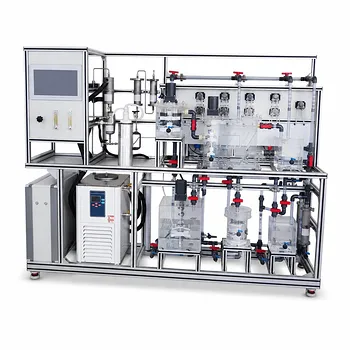
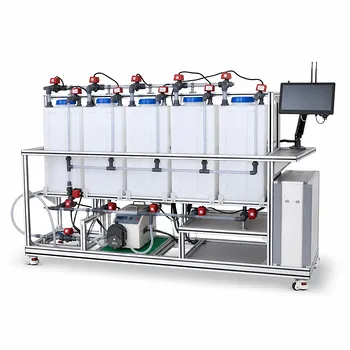
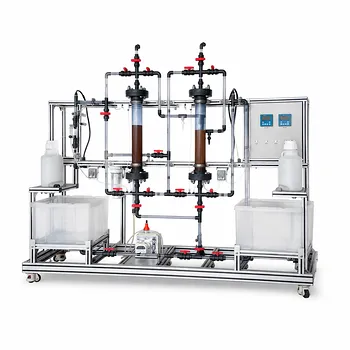
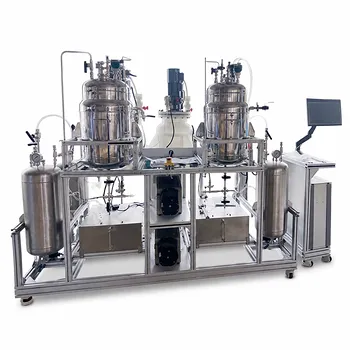
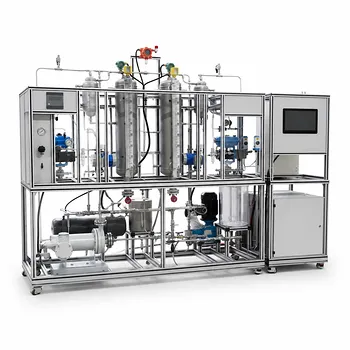
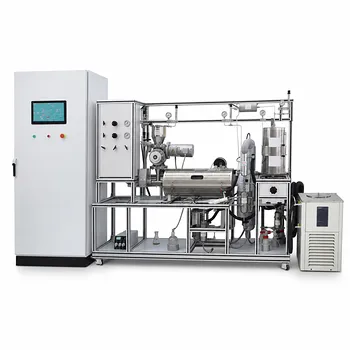
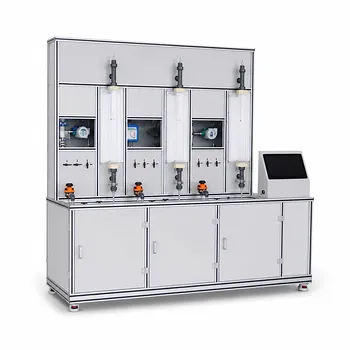
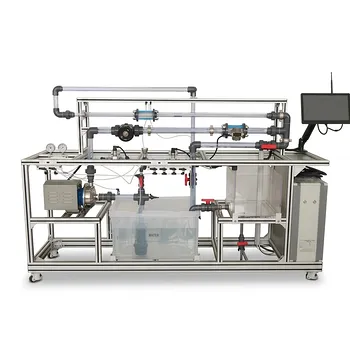
Hands-on pilot plants transform LCA from a desktop modeling exercise into a verifiable, data-driven investigation. By operating scaled-down water and environmental treatment units, students directly measure the energy consumption, chemical usage, and pollutant removal efficiencies that form the backbone of any lifecycle assessment. This practical data collection replaces generic database assumptions with empirical evidence, allowing a genuine cradle-to-grave evaluation of a treatment process’s environmental footprint.
While LCA standards like ISO 14040 provide the framework, the accuracy of any assessment hinges on the quality of input data. Educational pilot plants bridge the critical gap between theory and practice, giving students the power to generate that high-quality, process-specific data themselves—and, in doing so, internalize the true meaning of sustainability metrics.
From Theoretical Models to Real-World Data
A lifecycle assessment is only as credible as its life cycle inventory. Pilot plants transform this inventory from an abstract list into a tangible experiment.
Closing the Data Gap with Direct Measurement
In a traditional classroom LCA, students often rely on literature values or software databases that may not reflect the specific chemistry of a waste stream. A pilot plant changes this completely.
A student running an adsorption column to remove heavy metals can log the exact kilowatt-hours consumed by the pump, measure the precise volume of regenerant chemicals, and quantify the mass of spent adsorbent sent for disposal. This primary data eliminates guesswork and builds a rigorous, defensible inventory.
Observing the True System Boundaries
Defining the system boundaries—where an assessment starts and stops—is one of the most subjective steps in an LCA. Working on a pilot unit makes this decision far more concrete.
Students see that treating wastewater is not just about the reactor vessel. It includes the upstream manufacturing of the coagulant, the transport of that chemical to the lab, and the downstream fate of toxic sludge. Operating the equipment forces them to trace these material and energy flows physically, leading to more honest and complete scoping decisions.
Validating Treatment Performance Under Dynamic Conditions
Databases assume steady-state operation, but real processes fluctuate. A pilot plant introduces the variability of real-world operation, which profoundly affects environmental impact.
By intentionally varying the flow rate or contaminant load in a membrane filtration unit, students can observe how membrane fouling directly increases energy demand and cleaning frequency. This teaches a crucial lesson: an LCA based on a single, optimized data point can be dangerously misleading. The pilot plant reveals the importance of collecting data across a representative operating envelope.
The Anatomy of a Practical LCA Exercise
Using pilot plants reshapes the learning journey from passive reception of facts to active scientific inquiry. Here is how they facilitate a complete environmental evaluation.
Direct Impact Quantification
Pilot units are heavily instrumented, turning them into live data generators. Students measure water recovery rates, pollutant reduction percentages, and energy per cubic meter treated.
For an advanced oxidation process, a student can directly correlate the dosage of hydrogen peroxide and UV electricity input with the destruction of a model micropollutant. This transforms LCA from a black-box calculation into a transparent, cause-and-effect analysis where the environmental “cost” of removing a gram of pollutant becomes a calculated number, not an abstract figure.
Contextualizing Environmental Regulations
Regulatory compliance is often the practical driver behind environmental investment. Pilot plants let students experience this link between LCA and the law.
When treating a simulated industrial effluent to meet a discharge permit, students perform the treatment and then immediately evaluate the environmental “burden” incurred to reach that standard. They might discover that the final 5% of purification requires a disproportionate amount of energy, surfacing a powerful discussion about the trade-off between regulatory stringency, cost, and ecological benefit.
Developing Professional Intuition for Waste Minimization
The deepest insight comes from linking operating choices directly to LCA results. A poor choice in the lab becomes an immediate spike in an impact category.
If a student uses too much chemical in a neutralization step, the resulting increase in salinity and chemical oxygen demand is a direct learning moment. They see how over-dosing creates a secondary pollution problem, increasing the burden in categories like eutrophication or ecotoxicity. This builds an instinct for source reduction and process optimization that is impossible to gain from textbooks alone.
Understanding the Trade-offs of Pilot-Scale LCA
To use these tools credibly, students must also understand their limitations. A pilot plant is a model of a full-scale process, and that introduces specific analytical challenges.
The Problem of Scale-Up Extrapolation
A pump or heater on a pilot unit will almost certainly have a different efficiency curve than its industrial counterpart. Directly multiplying a pilot-scale energy reading by 100 can lead to significant errors.
An honest LCA exercise must include a sensitivity analysis on the scaling factor. The real educational value lies in identifying why the difference exists (e.g., thermodynamic efficiency, heat loss to surroundings) and modeling the impact of that uncertainty, rather than pretending the pilot data is a perfect proxy.
The Risk of Ignoring Scope 3 Embodied Impacts
The intense hands-on operation of a pilot plant naturally focuses attention on direct operational inputs. This can create a bias where students over-emphasize energy and consumables while neglecting the embodied burdens of the pilot plant equipment itself.
A comprehensive LCA must amortize the manufacturing impact of stainless steel vessels, sensors, and membrane modules over their functional lifespan. A critical exercise is to calculate how this capital burden compares to the operational burden, teaching when and why the choice of allocation method fundamentally changes a product’s environmental profile.
Managing a Manageable Data Volume
A pilot plant produces a rich but finite dataset, which is pedagogically valuable. The challenge is teaching students to distinguish between data precision and analytical completeness.
Students might meticulously measure the power draw of a control panel but not characterize the complex composition of a mixed waste stream being treated. The key educational moment is realizing that a precise but incomplete inventory is still inaccurate. This forces a structured approach to identifying hot-spots and prioritizing where to invest limited analytical resources for the greatest improvement in overall model quality.
How to Apply This to Your Project
The path from pilot plant operation to a robust LCA depends on your specific educational objective. Here is how to focus your efforts.
- If your primary focus is teaching LCA methodology: Use the pilot plant as a data source to validate and question database assumptions. Compare your measured inventory to a software library’s generic process and analyze the difference in final environmental impact scores.
- If your primary focus is process design and optimization: Structure the LCA as an iterative tool. Run baseline purification tests, calculate the impact, then task students with modifying one parameter (e.g., lowering temperature, switching a chemical) to measurably reduce the global warming potential or water footprint of the entire treatment train.
- If your primary focus is environmental compliance and engineering: Center the LCA on a specific regulation. Have students determine the lowest-impact process configuration that reliably meets a simulated discharge permit, explicitly calculating the environmental cost of compliance.
By generating their own life cycle inventory from a working process, students stop being passive consumers of environmental reports and become critical evaluators of the data behind them.
Summary Table:
| Feature | Theoretical LCA (Desktop) | Pilot-Scale LCA (Practical) |
|---|---|---|
| Data Source | Literature & database assumptions | Direct physical measurements (energy, chemicals) |
| System Boundaries | Abstract and simplified | Physical tracing of material & energy flows |
| Process Dynamics | Steady-state assumptions | Real-world fluctuations & membrane fouling |
| Learning Value | Passive calculation | Active process optimization & problem-solving |
Elevate Your Environmental Engineering Lab with LABPARK
Bridge the gap between theoretical lifecycle assessment (LCA) and hands-on environmental evaluation. LABPARK designs and manufactures premium Educational and Vocational Unit Operations Pilot Plants in chemical engineering, bioprocess & biotech, and environmental & water treatment.
We empower universities, research institutes, and enterprises to provide students and researchers with the tools to generate verifiable, real-world data and master sustainable process design.
Contact LABPARK today to find the perfect pilot plant solution for your institution!
Related Products
- Thermal Desorption Exhaust Gas and Tail Water Treatment Educational Pilot Plant
- Electrochemical Water Treatment Educational Unit Operations Pilot Plant
- Ion Exchange Water Purification Educational Pilot Plant for Engineering Unit Operations
- Water Electrolysis Hydrogen Production and Storage Educational Pilot Plant
- Alkaline Membrane Water Electrolysis Educational Pilot Plant Unit Operations Training System
People Also Ask
- How is P, M, and B alkalinity applied in pilot plants? Prevent Boiler Scaling & Corrosion
- What are inline fluorescence sensor risks, and how can they be managed? Key Strategies
- Lime-Soda vs. Cation Exchange Softening: How Do Effluent Characteristics Compare in Pilot Plants?
- How is iron concentration monitored to evaluate corrosion and filtration efficiency in water treatment pilot plants?
- How do anodic & cathodic inhibitors protect heat exchangers? Optimize Your Water Treatment Pilot Plant