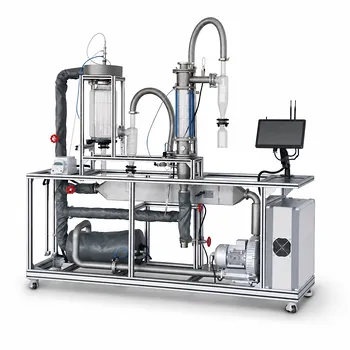
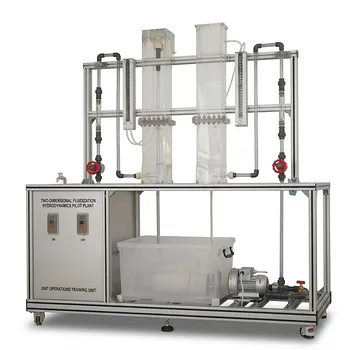
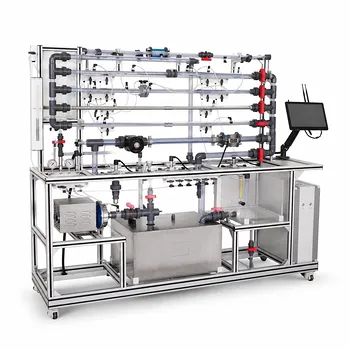
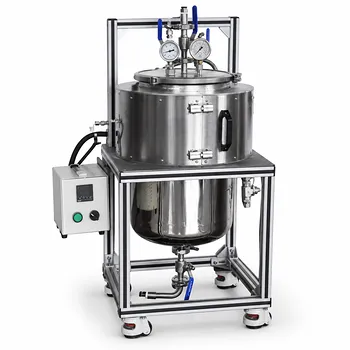
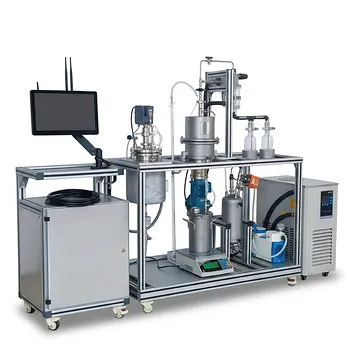
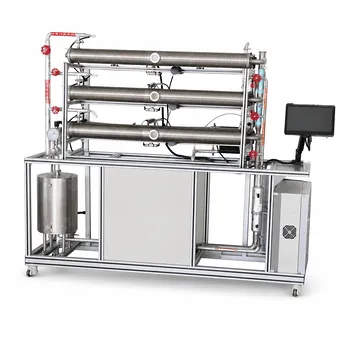
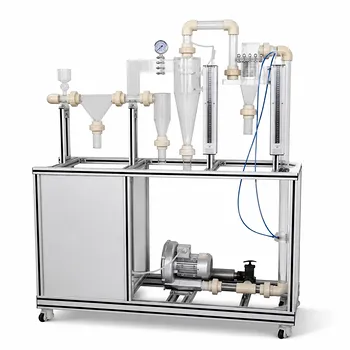
Scaling up granulation and drying processes without a sound engineering framework is a gamble. Pilot plants for fluid bed dryers and wet granulators transform this gamble into a science by enabling you to define a precise control volume and solve the core mass, momentum, and energy balances. These first-principle models, when combined with dimensional analysis of critical dimensionless groups like Reynolds, Froude, and Power numbers, create a predictive map for scaling. This moves you from expensive trial-and-error to a data-driven methodology that maintains product quality from laboratory bench to production floor.
The true power of a unit operations pilot plant is not just in making a batch—it’s in revealing the invisible transfers of mass, momentum, and energy that govern the process. By quantifying these through balances and nondimensional fingerprinting, you build a bridge that allows you to mathematically predict the operating conditions needed at a larger scale, turning scale-up from a mystery into a replicable engineering exercise.
The Foundation: Mass, Momentum, and Energy Balances in a Control Volume
A pilot plant is a controlled environment where theoretical conservation laws meet physical reality. The entire analysis starts by drawing an imaginary boundary around your fluid bed dryer or wet granulator—the control volume—and tracking everything that crosses it.
Defining the System Boundaries for Fluid Beds and Granulators
In a fluid bed dryer, the control volume encloses the product bowl and the air path above the distributor plate. For a wet granulator, the boundary contains the mixing bowl, impeller, and chopper, with the powder and binder liquid inside. By carefully defining these limits, you can account for the mass of solids entering, the binder liquid sprayed, the moisture evaporated, and the energy carried in and out by gas streams. This rigid accounting framework is the only way to avoid hidden losses that derail scale-up.
Mass Balances: Quantifying Flow Rates and Material Distribution
The mass balance tracks every kilogram. You measure inlet and outlet airflow rates, material feed rates, and the moisture content of incoming granules versus dried product. For fluid bed drying, the balance equation directly yields the mass of water evaporated and the consumption rate of dry air. In continuous wet granulation, it reveals the steady-state throughput and the liquid-to-solids ratio, a parameter that must be held constant across scales to preserve granule density and size.
Momentum Balances: Predicting Pressure Drops and Fluidization Behavior
Momentum balances become critical when designing air distribution systems. By accounting for the conductive and convective momentum transfers within a fluidized bed, you can calculate the pressure drop across the distributor plate and the bed itself. This directly predicts whether your air handling system can lift and suspend the granules without causing excessive attrition or channeling. For wet granulation impellers, a simplified momentum balance around the impeller blades helps estimate the shear forces applied to the wet mass, which dictate the resulting granule morphology.
Energy Balances: Managing Heat and Drying Efficiency
An energy balance is the backbone of any thermal operation. In a fluid bed coating or drying pilot plant, you measure the mass flow rate, temperature, and humidity of the inlet drying gas and compare it to the exhaust gas conditions. By applying the first law of thermodynamics, you can experimentally determine the exhaust gas temperature or the thermal load required, factoring in the latent heat of vaporization. This calculation yields the overall thermal efficiency—a number that typically changes with scale, making it a key metric for predicting heater sizing on a production unit.
From Balances to Scale-Up: The Power of Dimensional Analysis
Solving static balances is only the first step. True scale-up requires understanding which forces dominate the process, and dimensional analysis is the tool that distills this understanding into transferable, dimensionless groups.
Dimensionless Numbers as Process Fingerprints
Two fluid bed units of vastly different sizes will behave similarly only if the ratios of competing forces are identical. The Buckingham Pi theorem groups all process variables into a few controlling dimensionless numbers. For fluidized beds, the Reynolds number (inertial vs. viscous forces) at the distributor plate governs flow regime, while the Froude number (inertial vs. gravitational forces) relates bubble behavior to bed stability. Matching these numbers across scales creates a dynamic fingerprint that replicates fluidization quality.
Applying Reynolds, Froude, and Power Numbers to Wet Granulation
Wet granulation scale-up is notoriously sensitive to impeller speed. The Pseudo Reynolds number captures the ratio of inertial to viscous forces in the wet mass, while the Froude number compares centrifugal force to gravity. Most critically, the Power number relates the motor’s power draw to the impeller’s inertia, directly scaling to torque. By keeping the Power number and either the Reynolds or Froude number constant between a 5-liter lab bowl and a 600-liter production bowl, you mathematically predict the required impeller rotation speed and motor power, along with the proportion of binder liquid to add.
Using Pilot Plant Data to Build Multivariate Models
A single balance or dimensionless group can't capture the full process path. Advanced scale-up uses the pilot plant to collect a historical time-series of all sensor data—mass flows, temperatures, pressures—creating a rich process signature. With this data, you can build latent variable models (LVMs) that correlate the full multivariate input space to granule quality attributes. When transferring to a new scale, the model inverts the question: not “what will happen if I double the speed?” but “what parameters must I change to achieve identical quality?” This bridges the gap where perfect dynamic similarity is unachievable.
Common Pitfalls and Trade-offs
The elegance of these methods must be tempered with practical reality. Ignoring their limits will lead to flawed conclusions.
The Illusion of Perfect Similarity
It is a physical impossibility to keep all dimensionless groups constant during scale-up of a granulator. You must choose the one that governs your quality attribute, a decision that requires deep process insight. Choosing the Froude number to match dynamic flow might sacrifice equality of the Reynolds number, altering the local shear regime. This forced trade-off means pilot plant data should guide you to the most robust design, not an exact replica.
The Peril of Univariate Thinking
A major pitfall is comparing endpoint product quality on a single-variable chart, such as final granule size alone. This ignores that the entire process path differs at scale. A pilot plant enables you to track the transient evolution of size and moisture via balances, exposing issues like a longer drying time at large scale that leads to over-dried cores. Without a time-resolved balance, you are blind to the path that generated the endpoint.
Neglecting the Long Tail of Impurities
Lab-scale experiments often use pure reagents and run for minutes. Pilot plants can run continuously for days, revealing the accumulation of fines, moisture, or even chemical by-products in recycle loops. This directly impacts mass balance closures and thermal load predictions, and overlooking it during scale-up ruins the long-term stability of the production process.
How to Apply This to Your Scale-Up Project
Your specific scale-up challenge will dictate which lever you pull. The pilot plant’s dense data stream is your instruction manual.
- If your primary focus is drying capacity and efficiency: Prioritize the full energy and mass balances to measure the actual thermal efficiency of your pilot dryer. Use this number, not the theoretical maximum, to size the heaters and air handling for the production-scale fluid bed.
- If your primary focus is scaling a wet granulation formulation: Run a matrix of pilot-scale impeller speeds to regress the Power number against the Froude number for your specific powder-binder system. Use the constant Power number criterion as your primary scale-up rule to set the production impeller speed, and then adjust the liquid addition rate via a time-resolved mass balance.
- If your primary focus is troubleshooting quality inconsistencies across scales: Move beyond univariate endpoint checks. Build a latent variable model from historical pilot plant batches, capturing the time-series of mass and energy flows. Use this model to pinpoint which part of the process path— mixing, spraying, or drying—is diverging at scale, and then apply the respective momentum or energy balance to correct it.
Data from a pilot plant is not just for education; it’s the irreducible minimum of information you need to scale with confidence, informed by the uncompromising laws of physics.
Summary Table:
| Balance Type | Key Parameters Tracked | Primary Scale-Up Metric / Dimensionless Groups |
|---|---|---|
| Mass Balance | Moisture content, flow rates, binder liquid | Constant liquid-to-solids ratio, drying rate |
| Momentum Balance | Pressure drops, shear forces, bed fluidization | Reynolds, Froude, and Power numbers |
| Energy Balance | Thermal load, inlet/exhaust gas temperatures | Thermal efficiency, heater sizing calculations |
Optimize Your Process Scale-Up with LABPARK
Transitioning from lab bench to production scale requires absolute precision. LABPARK provides premium Educational and Vocational Unit Operations Pilot Plants in chemical engineering, bioprocess & biotech, and environmental & water treatment. Designed specifically for universities, research institutes, and enterprises, our advanced systems enable you to model critical mass, momentum, and energy balances accurately.
Ready to eliminate trial-and-error and scale your processes with confidence? Contact our technical experts today to find the ideal pilot plant solution for your institution.
Related Products
- Multi-Functional Drying Educational Unit Operations Pilot Plant
- Two-Dimensional Fluidization Hydrodynamics Educational Pilot Plant for Unit Operations Training
- Multi-Reactor Educational Pilot Plant for Reaction Engineering Unit Operations
- Fluidized Bed Gas Solid Catalytic Reaction Educational Pilot Plant
- Multi Functional Catalytic Reaction and Reactor Evaluation Educational Unit Operations Pilot Plant
People Also Ask
- How do deviations in estimating latent heat impact pilot plant thermal systems? Avoid hardware mis-sizing.
- Why is the chemical plant startup schedule crucial? De-risk scale-up with pilot plants.
- Why Use PTFE & Hastelloy in Chemical Pilot Plants? Prevent Corrosion & Ensure Safety
- How to study gasification in pilot plants? Compare exit gas composition & efficiency
- When to transition from PID to adaptive control in pilot plants? Key process indicators.