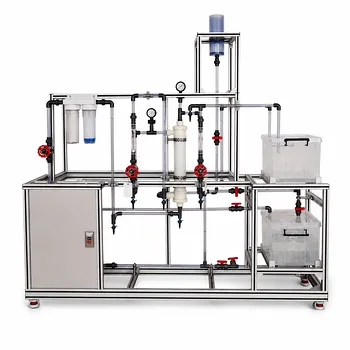
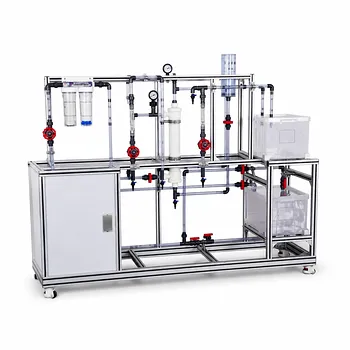
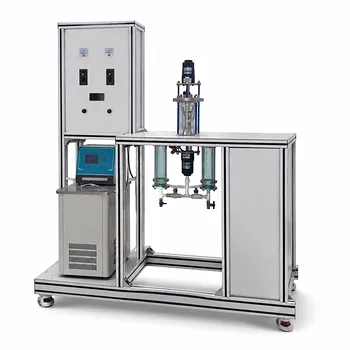
A membrane electrode assembly is not merely a component—it is the electrochemical engine where theory meets performance. In a chemical engineering pilot plant, students fabricate MEAs by comparing high-cost perfluorinated membranes with cost-effective alternatives like sulfonated PVDF, then deposit catalyst layers using hot pressing or spray-coating. Immediately afterward, they integrate these assemblies into a functioning cell to measure ionic transport resistance, cell voltage, and power efficiency, creating a direct, hands-on link between material choices and device output.
The true power of a pilot plant is its ability to turn abstract electrochemical principles into tangible, measurable outcomes. By guiding students through every step—from membrane treatment and catalyst deposition to performance testing—the lab module converts the MEA from a theoretical concept into an engineered device whose every fabrication decision is quantified in volts and milliwatts.
Why a Pilot Plant is the Ultimate Teaching Tool for MEAs
From Material to Component: The Fabrication Workflow
The educational journey begins with the membrane. Students can start with standard perfluorinated membranes (like Nafion) or, for a deeper dive into cost reduction, synthesize an alternative by radiation-grafting poly(vinylidene fluoride) (PVDF) and sulfonating it with chlorosulfonic acid. This illustrates polymer modification and the trade-off between ionic conductivity and material expense.
Next, they prepare the catalyst layer. A Pt/C catalyst is suspended in a polymer electrolyte solution and applied to carbon paper gas diffusion layers. Two primary techniques are practiced: hot pressing and spray-coating. Hot pressing sandwiches the catalyst-coated substrate and membrane under heat and pressure, creating a bonded assembly. Spray-coating deposits the catalyst ink in fine, uniform layers, offering greater control over electrode architecture. This hands-on step reveals how interfacial quality between catalyst and membrane directly governs subsequent performance.
The Electrochemical Test Cell: Measuring What Matters
Once fabricated, the MEA is placed into a controlled pilot plant cell. This cell supplies reactant gases (hydrogen/oxygen for fuel cell mode or water for electrolysis), maintains precise temperature, and collects electrical data. Students measure cell voltage as a function of current density, generating a polarization curve. From this, they calculate power efficiency and identify the dominant voltage losses.
Crucially, they can assess ionic transport resistance by analyzing the slope of the linear region or via electrochemical impedance spectroscopy. A transparent cell option—borrowing from classic electrolysis pilot plants—allows direct observation of gas evolution at the electrodes, linking the measured current to Faraday’s laws and making the electrochemical process visible. The setup transforms the MEA from a passive layer into a living element of a chemical reactor.
Navigating the Trade-Offs in MEA Design and Testing
Performance vs. Cost: The Membrane Dilemma
Perfluorinated membranes offer exceptional ionic conductivity and long-term chemical stability, but their high cost limits large-scale industrial adoption. In contrast, the radiation-grafted PVDF alternative dramatically lowers material expense, yet often shows higher ionic resistance and potentially shorter durability.
In the pilot plant, students generate side‑by‑side polarization curves for both membrane types under identical operating conditions. The difference in peak power density and area‑specific resistance becomes a concrete learning moment, tying economic analysis directly to measured electrochemical data.
Fabrication Method Matters: Hot Pressing vs. Spray-Coating
Hot pressing is simple and requires minimal equipment, but it can lead to uneven catalyst distribution and poor membrane‑electrode adhesion. This frequently translates to higher interfacial resistance and lower performance at high current densities. Spray-coating produces a thin, consistent catalyst layer with superior contact, yet demands more sophisticated hardware and longer processing.
When students test MEAs made with the same membrane but different deposition methods, the resulting cell voltage differences at a given current are a stark illustration of how processing dictates electrochemical function. It reinforces the principle that the electrode‑electrolyte interface is the critical stage for mass and charge transfer.
Observation and Safety: Learning from Classic Pilot Plant Design
Supplementary lab modules—such as the zinc chloride electrolysis pilot plant—provide a foundation for safe, visual learning. Their transparent vessels and gas collection tubes teach students to observe reaction products, verify electrochemical equivalence, and handle corrosive electrolytes properly.
These same design principles can be integrated into the MEA test station. A transparent cell body or a separate gas collection line permits students to see bubble formation on the electrodes during electrolysis, confirming that the reactions are proceeding as predicted. This direct observation bridges the gap between theoretical half-reactions and the physical world, reinforcing the importance of material integrity and cell sealing.
Making the Right Choice for Your Educational Goals
The specific setup of an MEA pilot plant should be guided by what you want students to learn. Tailor your lab module using these goal‑oriented recommendations.
- If your primary focus is teaching fundamental electrochemical principles: Start with a classic electrolysis module (e.g., zinc chloride) to anchor redox concepts, then transition to a PEM cell where students build and test MEAs, using transparent components to observe gas evolution and verify Faraday’s laws.
- If your primary focus is comparative membrane analysis: Equip the lab with hot‑pressing stations and a cell that allows rapid MEA swapping. Have students fabricate one perfluorinated and one sulfonated PVDF assembly, then generate full polarization curves and calculate area‑specific resistance to quantitatively compare ionic transport.
- If your primary focus is optimizing fabrication technique: Provide both a hot press and an ultrasonic spray‑coater. Assign teams to produce MEAs with each method using the same membrane, and test them under identical conditions to directly measure how electrode architecture influences power density and interfacial resistance.
- If your primary focus is bridging the gap to industrial practice: Integrate pilot plant modules that mimic manufacturing lines, such as continuous spray‑coating and automated pressing, then add quality‑control metrics like catalyst loading and resistance mapping.
When a student holds a self‑fabricated MEA, measures its performance, and links the voltage drop to a specific material or processing choice, the pilot plant has done its job—transforming a textbook concept into an unforgettable engineering experience.
Summary Table:
| Feature | Hot Pressing | Spray-Coating |
|---|---|---|
| Equipment Cost | Low | High |
| Process Complexity | Simple & fast | Complex & detailed |
| Catalyst Distribution | Less uniform | Highly uniform |
| Interfacial Resistance | Higher | Lower |
| Ideal Educational Focus | Rapid testing / basic concepts | Optimization / advanced research |
Empower Your Laboratory with LABPARK Pilot Plants
Are you looking to bridge the gap between electrochemical theory and hands-on engineering? LABPARK provides state-of-the-art Educational and Vocational Unit Operations Pilot Plants in chemical engineering, bioprocess & biotech, and environmental & water treatment for universities, research institutes, and enterprises.
Our custom-designed lab modules empower students and researchers to master Membrane Electrode Assembly (MEA) fabrication, catalyst coating, and real-time performance testing safely and effectively.
Bring industry-grade technology to your curriculum. Contact us today to find the perfect pilot plant solution for your institution!
Related Products
- Multi Functional Membrane Crystallization Educational Unit Operations Pilot Plant
- Ultrafiltration Membrane Separation Educational Pilot Plant
- Alkaline Membrane Water Electrolysis Educational Pilot Plant Unit Operations Training System
- Multi-Functional Membrane Separation Educational Pilot Plant for Unit Operations Lab
- Multifunctional Membrane Separation Educational Pilot Plant with Ultrafiltration, Nanofiltration, Reverse Osmosis
People Also Ask
- Control Crystallization Pilot Plant Secondary Nucleation: 4 Key Adjustments
- Why is precise temperature control critical in crystallization pilot plants? Key to Scale-Up Success
- What key factors should be considered when configuring a crystallization unit operations pilot plant?
- How Crystal vs Amorphous Solids Guide Crystallization Pilot Plant Objectives
- What are the benefits of integrating online PAT tools like ATR-FTIR into crystallization unit operations pilot plants?