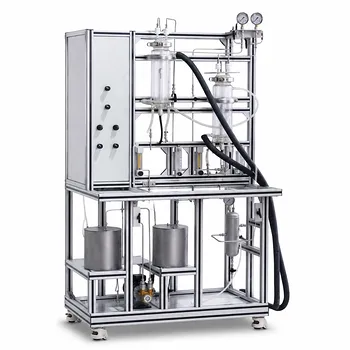
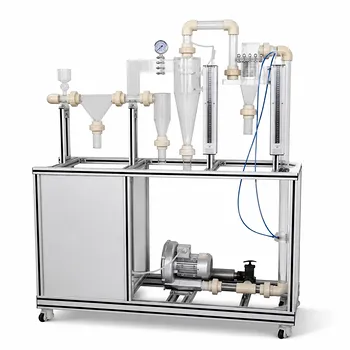
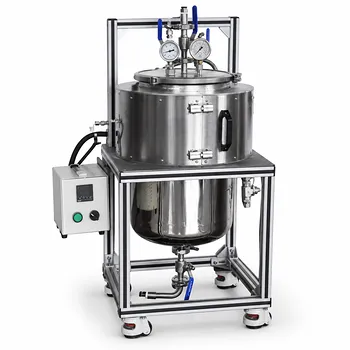
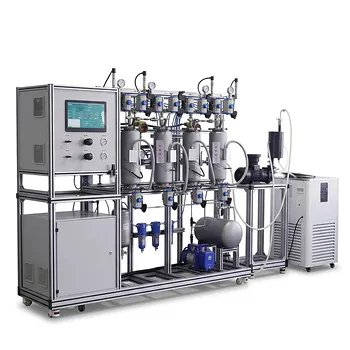
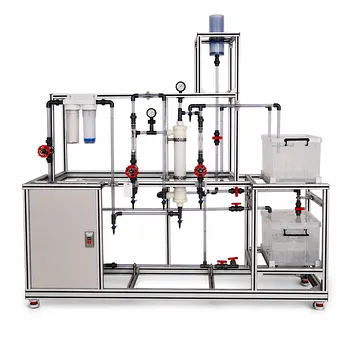
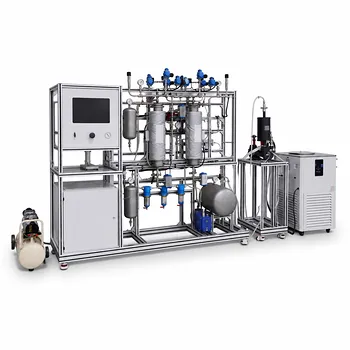
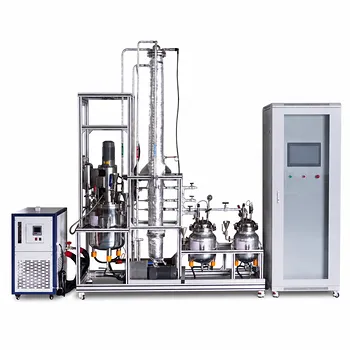
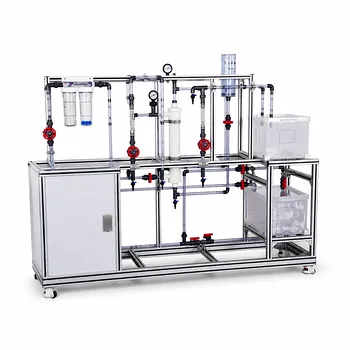
Model validation isn't a checkbox exercise—it's a hands-on battle between theory and reality. A simple flash separator makes this battle visible and winnable for students. By feeding a known mixture into the unit at a fixed temperature and pressure, learners directly measure the flow rates and compositions of the resulting vapor and liquid streams, then compare those hard numbers against the predictions of thermodynamic models like Peng-Robinson or NRTL. When the simulated outlet compositions match the pilot plant's physical measurements, the model earns trust for that system.
The flash separator transforms abstract thermodynamic models from black-box equations into testable hypotheses. Students learn that validation isn't about accepting a model's output, but about confronting it with experimental data—and understanding why it often falls short without properly tuned interaction parameters.
Why Thermodynamic Model Validation Matters
Simulators are packed with equations that promise accurate phase behavior, but those promises frequently break down when you move beyond the textbook. Validation closes the gap between a software's guess and a real mixture's performance.
The Hidden Assumptions in Every Model
Thermodynamic models rely on binary interaction parameters that describe how two molecules behave together. In many cases, these parameters are estimated or pulled from limited literature data, introducing a quiet but dangerous uncertainty into every process design.
When a Tiny Error Ripples Into a Big Failure
In a pilot plant, a 2% error in predicted vapor composition might seem trivial. In a full-scale distillation column, that same error becomes a massive miscalculation in energy use, tray count, and product purity. Teaching this cause-and-effect chain early builds a healthy skepticism toward unvalidated simulations.
The Flash Separator as a Hands-On Teaching Tool
A flash separator unit—a single-stage vessel that splits a feed into vapor and liquid—is the simplest possible VLE experiment. Its simplicity is exactly why it excels at teaching validation.
One Stage, All the Essential Physics
Students don't need a 50-tray column to see equilibrium at work. The flash separator achieves thermodynamic equilibrium in a single stage. The vapor and liquid leaving the unit ideally approach equilibrium compositions, making it a direct, clear test of any model’s VLE predictions.
Controlled Conditions, Repeatable Data
Vocational pilot plants offer precise control over temperature, pressure, and feed flow. Students can set a condition—say, distilling a methanol-water mixture at atmospheric pressure and a known feed composition—then measure the resulting streams. That control is essential because validation demands reproducible experiments, not one-off observations.
A Step-by-Step Process for Model Validation
The workflow is intentionally linear: operate, measure, simulate, compare. Each step embeds a critical lesson in engineering judgment.
1. Run the Unit to Steady State
Students start by establishing stable operation. They set the flash temperature and pressure, wait for temperatures to flatline, and ensure that liquid and vapor flow rates have stopped drifting. This teaches that steady-state data is a non-negotiable prerequisite for meaningful comparison.
2. Collect and Analyze Stream Samples
Once steady, students draw samples from the liquid and vapor outlets. They analyze these using a refractometer or gas chromatograph to determine mole fractions. This step forces them to confront measurement uncertainty, calibration, and sampling technique—realities that no simulator ever mentions.
3. Replicate the Flash in Simulation Software
In a process simulator (like Aspen Plus or DWSim), students set up the same flash conditions: feed composition, temperature, pressure. They then run the simulation with different thermodynamic property methods: one run with Peng-Robinson, another with Wilson or NRTL. The software outputs predicted vapor and liquid compositions.
4. Confront Prediction with Measurement
This is the moment of truth. Students overlay the measured compositions onto the simulation results. If the predicted outlet streams match the experimental data within an acceptable tolerance, the model is validated for that system. If not, they must investigate why—which is often the deeper lesson.
Understanding the Trade-offs and Pitfalls
Validation isn't about getting a perfect match. It's about knowing what can go wrong and how to diagnose it.
Garbage In, Garbage Out: The Parameter Problem
Many models fail not because the theory is weak, but because the default binary interaction parameters are unreliable. Supplementary research confirms that scarcity of high-quality interaction parameters causes large deviations. That’s why the pilot plant data often gets used to regress and optimize these parameters—turning validation into a model improvement loop.
Not Every Model Fits Every Mixture
Peng-Robinson may work wonderfully for a hydrocarbon system but struggle with highly polar, associating mixtures like ethanol-water. A student who watches their “trusted” model produce nonsense learns the most important lesson: model selection is contextual, and a validated model for one system is garbage for another.
Measurement Errors Can Masquerade as Model Failures
A poorly calibrated thermometer, a leaking vapor line, an air-contaminated liquid sample—these real-world gremlins distort the results. The flash separator teaches that discrepancies often have multiple parents: broken hardware, not just broken equations. Debugging both sides is the mark of an engineer.
Integrating This Into Your Educational Program
The flash separator isn't just a piece of hardware; it's a mindset-shaping device. The approach you take depends on the learning outcome you value most.
- If your primary focus is teaching core thermodynamics: Use the flash unit as a direct demonstration of vapor-liquid equilibrium. Have students hand-calculate ideal behavior, then show how much better a proper model performs.
- If your primary focus is building simulation proficiency: Use the plant data to challenge default software settings. Require students to test at least three property methods and justify which one they trust.
- If your primary focus is bridging theory and real operations: Extend the exercise into parameter regression. After seeing a poor match, let students use the experimental data to tune the binary interaction parameters, then re-run the simulation to see the improvement.
When a student measures a phase split with their own hands, they stop treating a thermodynamic model as a calculator and start treating it as a tool that must be sharpened against reality.
Summary Table:
| Validation Step | Action | Key Learning Outcome |
|---|---|---|
| 1. Steady State | Run unit at constant T & P | Understand requirements for reliable experimental data |
| 2. Sampling | Measure liquid & vapor fractions | Confront measurement uncertainty and calibration |
| 3. Simulation | Run PR/NRTL models in simulator | Compare different property methods and model limitations |
| 4. Comparison | Overlay measured vs. simulated data | Learn to regress and optimize binary interaction parameters |
Bring Hands-On Thermodynamic Validation to Your Engineering Lab
Teaching complex process simulation requires reliable, real-world verification. LABPARK provides state-of-the-art Educational and Vocational Unit Operations Pilot Plants in chemical engineering, bioprocess & biotech, and environmental & water treatment. Designed specifically for universities, research institutes, and enterprises, our systems bridge the gap between abstract equations and physical operations.
Ready to elevate your curriculum and engineering training? Contact LABPARK today to customize a pilot plant solution for your lab.
Related Products
- Supercritical High-Gravity Flash Evaporation Educational Unit Operations Pilot Plant
- Photocatalytic Membrane Separation and Degradation Unit Operations Pilot Plant
- Gas-Solid Heterogeneous Separation Demonstration Educational Unit Operations Pilot Plant
- Rising and Falling Film Evaporation Educational Unit Operations Pilot Plant
- Hot Filtration Educational Unit Operations Pilot Plant Laboratory System
People Also Ask
- How is the heat transfer area calculated for an evaporation unit operations pilot plant during experimental design? Guide
- How to select educational evaporator pilot plants for thermal & scaling solutions? Complete Guide
- What is the practical significance of Kb in pilot plant evaporation? Master process design.
- How do flash calculations relate to flash evaporation pilot plants? Bridge Theory and Practice
- Why Account for BPE in Evaporation Pilot Plants? Key Heat Transfer Design Impacts