By pairing highly accurate synthetic standards with real-time process spectra, a hybrid calibration strategy directly answers the surface-level challenge of improving online sensor accuracy in pilot plants. Instead of relying solely on historical run data (which is highly relevant but often has uncertain reference accuracy) or purely on lab standards (which are accurate but unrealistic), you combine both datasets during chemometric model building. This yields a robust predictive model that is both representative of the dynamic plant environment and anchored to true, known values—without an explosion in model complexity.
The core insight: Pilot plant online sensors suffer from a trade-off between data relevance and reference accuracy. A hybrid calibration strategy resolves this by leveraging the statistical strengths of two complementary data types—real process spectra for relevance and synthetic standards for absolute accuracy. This gives you a model that can detect outliers in historical data and deliver trustworthy real-time predictions.
Why Pilot Plant Sensor Calibration Is a Unique Challenge
The Double-Bind of Process Data
Online spectrometers like ATR-FTIR, NIRS, or UV-Vis probes in pilot plants generate highly relevant spectra because they reflect actual process dynamics, mixing effects, and temperature fluctuations. However, the accompanying offline reference measurements—grabbed from the reactor and analyzed in a lab—often suffer from poor accuracy. These reference values can be biased by sampling delays, incomplete reaction quenching, or moisture uptake, so the model you build correlates process spectra to unreliable targets.
The Limitations of Pure Synthetic Standards
At the other extreme, you can calibrate the same sensor exclusively with synthetic mixtures prepared in the lab. These offer near-perfect reference values because you weigh and blend components to known concentrations. But the spectra are collected under static, ideal conditions that fail to capture the optical noise, temperature swings, and matrix effects of a live process. A model built only on synthetic data will be inaccurate when deployed to a real pilot plant run because it has never seen the complex variation of a flowing, reacting stream.
The Hybrid Solution: Marrying Accuracy and Relevance
How the Dual-Dataset Approach Works
The hybrid strategy solves this dilemma by injecting precisely prepared synthetic mixtures directly into the online analyzer using a calibration apparatus. You then collect highly accurate reference spectra that the instrument sees under real flow-cell conditions, including any path length or detector noise specific to the installation. These synthetic scans are then combined with historical process spectra—the ones you’ve already collected from numerous runs—during chemometric modeling.
Leveraging Chemometric Pattern Recognition
You feed both datasets into techniques like Principal Component Analysis (PCA) and Partial Least Squares (PLS). The synthetic standards give the model an unshakable anchor to absolute truth, while the process data educates the model on the wide range of normal variability. As a result, the model can more effectively detect outliers in the historical process data—identifying samples where the lab reference value was almost certainly wrong. The final PLS model weights the trustworthy process points and the synthetic points, yielding a high-accuracy, high-relevance predictor without having to resort to complex nonlinear or neural network models.
The Practical Workflow in a Pilot Plant
- Automatic Calibration Cycles: Integrate a sequence into the control software that periodically switches from the process stream to a line carrying a series of known synthetic standards. This ensures the synthetic spectra are always recorded under the same pressure, temperature, and flow conditions as the process.
- Data Pooling: Combine the latest synthetic spectra with all stored historical process spectra taken from stable, representative periods.
- Model Refinement: Recalculate the PLS model, using the dual dataset to flag and optionally remove or down-weight process samples with high residuals or Q statistics.
- Validation: Check the new model’s predictive power on a hold-out set of both synthetic blends and recent process grab samples that were sampled with rigorous, consistent protocols.
Understanding the Trade-offs and Hidden Pitfalls
The Sampling Bias That No Sensor Can Fix
A hybrid calibration model can only be as good as the data it learns from. If the process samples used in the combined dataset were collected with flawed point-source probes or valve grab samples that only capture a fraction of the stream’s cross-section, they introduce Increment Delineation Error (IDE). This spatial heterogeneity bias produces an irreducible Root Mean Square Error of Prediction (RMSEP) that cannot be overcome by adding more synthetic standards or averaging more sensor scans. The online analyzer must be configured to view or be fed a complete, edge-parallel cross-stream segment; otherwise, even the hybrid model will inherit a systematic offset that limits its ultimate accuracy.
Unstable Samples Erode the Value of Process Spectra
In condensation polymerization or active bioprocess cultures, a sample pulled from the reactor continues to react, or it may lose/gain moisture before the lab measures it. This creates an offset between the actual inline composition and the reference value, which the hybrid strategy can mitigate—but not eliminate—by using synthetic standards to detect systematic biases. To make the most of the hybrid approach, you must enforce a strict quenching protocol immediately upon sampling and standardize the time between sampling and lab analysis. This minimizes the variance that might be falsely attributed to the sensor.
Drift Management vs. Model Rebuild
Over long-term runs (e.g., 140-hour cultivations), sensor fouling or minor cartridge binding-efficiency decline can cause a gradual slope and bias shift. The hybrid model can be preserved without a full recalibration by applying a post-processing slope and bias correction using the daily synthetic standard measurements. However, if process conditions fundamentally change (new media, different raw material batches), the model’s scope is exceeded, and a new hybrid calibration run with fresh synthetic standards becomes necessary. The trade-off is operational complexity: automated washing cycles with surfactants and buffer equilibration must be sequenced to keep the flow path clean enough for meaningful synthetic standard injection.
Making Hybrid Calibration Deliver for Your Specific Goal
The right implementation scales with your most urgent pilot plant objective.
- If your primary focus is minimizing offline lab work: Use the hybrid model to replace at least 80% of grab samples. Invest in a reliable autosampler/switching valve to inject synthetic standards daily and rely on the model’s real-time predictions for trending, while still pulling a few validation samples per run to confirm quench and IDE are under control.
- If your primary focus is detecting reaction endpoints with high precision: Calibrate the model with synthetic standards that bracket the endpoint concentration range tightly. Use the PCA outlier detection to throw out any process spectra that show unrepresentative path-length scatter, then trust the PLS prediction to trigger the stop signal.
- If your primary focus is long-term cultivation stability: Program a sequence that alternates measurement, standard calibration, and washing cycles. Use the daily synthetic standards to check for slope/bias drift and apply a simple correction to the output. Rebuild the hybrid model only if the Q statistic or Hotelling T² of the process spectra shows a new cluster that cannot be explained by residual fouling.
A hybrid calibration approach doesn’t require you to choose between the messy reality of your pilot plant and the clean accuracy of the lab—it lets you systematically merge both, giving your online sensors the clarity they need to drive real-time process control.
Summary Table:
| Calibration Method | Reference Accuracy | Process Relevance | Key Benefit |
|---|---|---|---|
| Synthetic Standards | High (precise lab mixtures) | Low (ignores flow/noise) | Perfect baseline reference |
| Process Data | Low (grab sample errors) | High (real plant dynamics) | Captures real-world noise |
| Hybrid Strategy | High (anchored to lab standards) | High (mapped to process variations) | Robust, outlier-resistant models |
Elevate Your Pilot Plant's Precision with LABPARK
Are you looking to optimize your bioprocess or chemical pilot runs? LABPARK provides state-of-the-art Educational and Vocational Unit Operations Pilot Plants in chemical engineering, bioprocess & biotech, and environmental & water treatment.
Designed specifically for universities, research institutes, and enterprises, our systems ensure maximum accuracy, reliable scaling, and seamless sensor integration.
Contact our experts today to find the perfect pilot plant solution for your facility!
Related Products
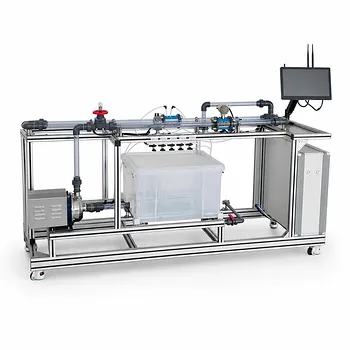
- Orifice and Venturi Flowmeter Calibration Educational Pilot Plant for Fluid Mechanics Laboratory
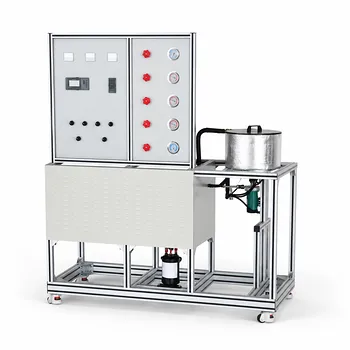
- Educational Compression Refrigeration Performance Determination Unit Operations Pilot Plant
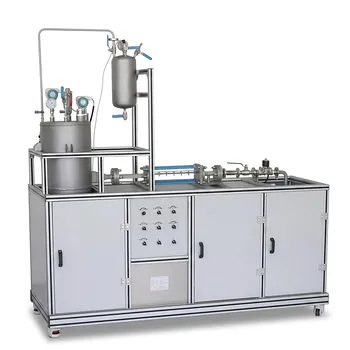
- Cavitation Phenomenon Demonstration and Analysis Educational Unit Operations Pilot Plant
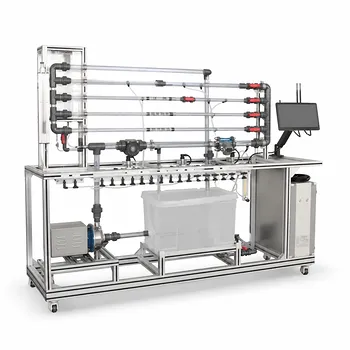
- Fluid Friction Resistance Determination Educational Unit Operations Pilot Plant
- Centrifugal Pump Performance and Orifice Flowmeter Calibration Educational Pilot Plant
People Also Ask
- What is the difference between static and stagnation pressure? Master Pilot Plant Flow Measurement
- How do pilot plants demonstrate siphon pressure variations? Visualizing Bernoulli's Energy Balance
- How do fluid mechanics training pilot plants facilitate the visualization and calculation of laminar and turbulent flows?
- How to update chemometric calibration models in pilot plants? Best practices for process engineers.
- Why are the laws of similitude critical in fluid flow pilot plants? Scale Up Safely