Knowledge Environmental and Water Treatment Education How are wastewater treatment stages modeled in pilot plants? Practical hands-on demonstration methods.
Author avatar

Tech Team · LABPARK

Updated 2 weeks ago

How are wastewater treatment stages modeled in pilot plants? Practical hands-on demonstration methods.


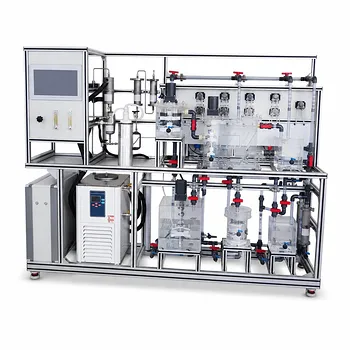
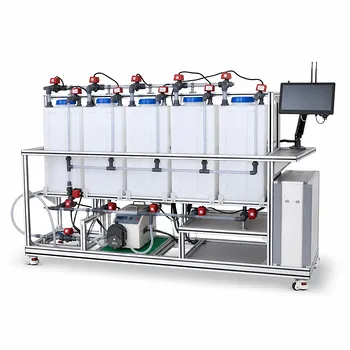
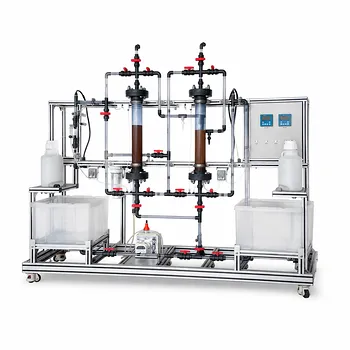
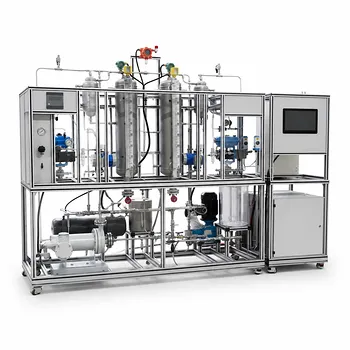
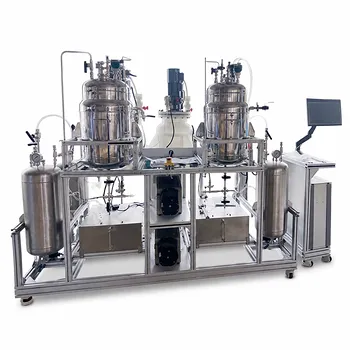
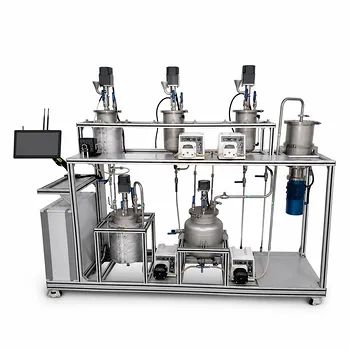
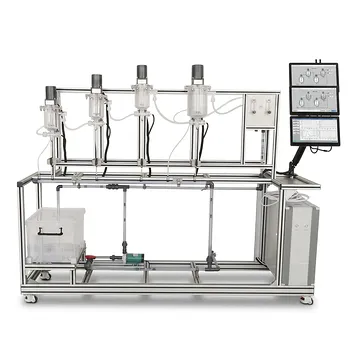
Pilot plants turn abstract theory into tangible reality. They model the three stages of wastewater treatment as a sequence of distinct, interconnected unit operations—physical, biological, and chemical—that can be operated, monitored, and optimized independently. This modular design lets students and researchers physically trace water’s journey from raw influent to polished effluent, manipulating each phase to see how it impacts overall performance.

A pilot plant mirrors a full-scale treatment train in miniature, but its real power is flexibility. Each stage becomes a transparent, controllable module where you can swap filtration media, tweak microbial conditions, or dial in chemical doses to discover what works—and why.

Deep Dive into the Three-Stage Model

How Primary Treatment is Demonstrated

In a pilot plant, the primary stage is all about physical separation. You’ll see tools like screen filters, grit chambers, and sedimentation tanks working to remove the large solids that make up up to 60% of the suspended material.

  • Filtration media experiments: Students can swap out mesh sizes or depth filter cartridges to compare how different physical barriers affect removal efficiency and head loss.
  • Sludge generation and management: The primary sludge collected becomes a visible, measurable by-product, highlighting waste minimization challenges right from the start.

The goal is to make visible the invisible process of particle settling and interception, laying a clean foundation for the biological work ahead.

How Secondary Treatment is Demonstrated

Here, the pilot plant houses biological reactor vessels—often activated sludge basins, trickling filters, or sequencing batch reactors—where a carefully maintained microbial community consumes dissolved organics.

  • Microbial culture management: Operators control aeration rates, temperature, and nutrient dosing. You can watch dissolved oxygen levels fluctuate and measure the drop in Biochemical Oxygen Demand (BOD) over time, directly correlating microbial health to treatment performance.
  • Process optimization: By adjusting parameters like sludge recirculation ratios or hydraulic retention time, you can induce bulking or pinpoint the ideal setting for maximum removal—bridging the gap between biochemical textbook concepts and real-world troubleshooting.

This stage shows that wastewater isn’t just dirty water; it’s a living ecosystem.

How Tertiary Treatment is Demonstrated

The final polishing step involves chemical and advanced physical modules designed to remove what biology leaves behind—nutrients, pathogens, or refractory organics. In a pilot plant, you’ll find dosing pumps for coagulants/flocculants, disinfection contactors (chlorine or UV), and sometimes advanced oxidation or membrane units.

  • Chemical dosing and reaction optimization: Varying the dose of alum or ferric chloride while measuring resulting turbidity teaches the delicate balance of coagulation science. Excess chemicals waste money and create sludge, so students learn to strike the economic sweet spot.
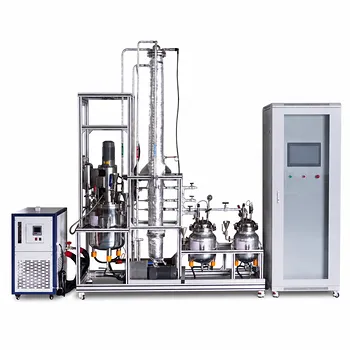
  • Advanced demonstrations for specific industries: Some pilot plants integrate gas stripping columns to remove dissolved ammonia or hydrogen sulfide, mimicking treatment of complex gas-liquor streams from industrial processes. This gives technicians hands-on experience with hazardous, odorous, and oily wastewaters before they encounter them in the field.

The tertiary stage proves that “clean” water requires precise chemical engineering, not just more biology.

Understanding the Trade-offs and Limitations

Pilot plants are immensely educational, but they have blind spots you must acknowledge to avoid drawing false conclusions.

  • Hydrodynamics don’t scale linearly: A perfectly mixed 200-liter bioreactor won’t reproduce the short-circuiting or dead zones of a 2-million-liter full-scale tank. What you optimize in the pilot may fail in reality without accounting for mixing energy and shear.
  • Chemical dosage precision can be misleading: Lab-grade dosing pumps and pristine chemicals behave more predictably than industrial systems filled with fouled lines and fluctuating loads. A perfect dose curve from a pilot can lead to under- or over-dosing at scale.
  • Biological stability is simplified: In a small pilot, you often feed synthetic or pre-settled wastewater, meaning the microbial community never faces the shock loads or toxic pulses of a real industrial sewer.

These aren’t flaws; they’re pedagogical design features. The pilot teaches core mechanisms, but you must leave with an appreciation for the complexity that scale introduces.

How to Apply This to Your Project or Teaching

The right pilot plant design depends entirely on what you need to learn.

  • If your primary focus is teaching fundamental principles: Look for a modular system with clear visual access and easy media swaps. The ability to let students physically see flocs form or measure BOD drop in real time is worth more than advanced sensors.
  • If your primary focus is industrial process optimization: Prioritize pilot units that can handle real, variable-strength wastewater and include robust chemical dosing and gas stripping capabilities. You need to test chemical resistances and fouling behavior, not just theory.
  • If your primary focus is waste minimization and water reuse: Ensure your pilot can close the loop, recycling tertiary effluent back to the front end. This lets you study the accumulation of recalcitrant compounds and the true cost of polishing for reuse.

Ultimately, a well-designed wastewater pilot plant is a sandbox for problem-solvers—it compresses a complex, invisible process into a sequence of visible, actionable steps, empowering you to not just learn how treatment works, but to figure out how to make it work better.

Summary Table:

Wastewater Stage Primary Mechanism Pilot Plant Demonstration Tools Key Focus & Parameters
Primary Treatment Physical Separation Screen filters, grit chambers, sedimentation tanks Mesh sizing, filtration media efficiency, sludge settling
Secondary Treatment Biological Degradation Activated sludge, trickling filters, SBRs Dissolved oxygen (DO), BOD reduction, microbial culture
Tertiary Treatment Chemical & Advanced Physical Dosing pumps, UV/chlorine contactors, gas stripping Coagulant dosing, disinfection, complex industrial streams

Elevate Your Environmental Engineering Lab with LABPARK

Bridge the gap between textbook theory and real-world application. LABPARK provides state-of-the-art Educational and Vocational Unit Operations Pilot Plants in chemical engineering, bioprocess & biotech, and environmental & water treatment.

Whether you are a university looking to enhance hands-on learning, a research institute scaling up processes, or an enterprise optimizing waste minimization, our high-quality, modular pilot plants deliver the transparency and control your projects require.

Contact our engineering experts today to find the perfect pilot plant for your facility!

Related Products

People Also Ask

Related Products

Solid Waste Pyrolysis and Refining Educational Pilot Plant for Unit Operations

Solid Waste Pyrolysis and Refining Educational Pilot Plant for Unit Operations

This pilot plant for solid waste pyrolysis and refining integrates pyrolysis, separation, distillation, and catalytic hydrogenation into one educational unit. It provides visual process observation, smart data logging, and industrial safety for hands-on learning of engineering unit operations.

Thermal Desorption Exhaust Gas and Tail Water Treatment Educational Pilot Plant

Thermal Desorption Exhaust Gas and Tail Water Treatment Educational Pilot Plant

Bench-scale educational pilot plant for treating thermal desorption exhaust gas and tail water integrates condensation, Fenton oxidation, precipitation, filtration, and carbon adsorption. Ideal for chemical engineering and environmental labs, teaching unit operations, process control, and real-time data analysis.

Electrochemical Water Treatment Educational Unit Operations Pilot Plant

Electrochemical Water Treatment Educational Unit Operations Pilot Plant

Enhance engineering education with this pilot-scale electrochemical water treatment plant. Designed for hands-on learning of efficient salt removal, electrolytic reactions, and real-time data acquisition. Features multi-mode control, corrosion-resistant PVC, low-voltage safety, and wireless connectivity for modern teaching labs.

Dual-Mode Rectification Pilot Plant for Practical Training Unit Operations

Dual-Mode Rectification Pilot Plant for Practical Training Unit Operations

Industrial-scale dual-mode rectification pilot plant for chemical engineering practical training. Features real-material and simulated-material operation modes, sieve-plate column with sight glasses for visual observation of hydrodynamics, and customizable SCADA control for safe, hands-on learning of unit operations and mass transfer.

Continuous Batch Extractive Distillation Educational Pilot Plant

Continuous Batch Extractive Distillation Educational Pilot Plant

Versatile pilot plant for continuous, batch, and extractive distillation training. High-borosilicate glass column for visualizing hydraulics, 15.6-inch touchscreen with data logging, precise reflux ratio control 1-99, and durable corrosion-resistant frame. Ideal for chemical engineering education and process research.

Multifunctional Membrane Separation Educational Pilot Plant with Ultrafiltration, Nanofiltration, Reverse Osmosis

Multifunctional Membrane Separation Educational Pilot Plant with Ultrafiltration, Nanofiltration, Reverse Osmosis

An integrated laboratory bench-scale membrane separation system for higher education engineering labs combining Ultrafiltration, Nanofiltration, and Reverse Osmosis processes. Features industrial PLC control with touch-screen HMI, transparent piping, and academic assessment software. Ideal for chemical and environmental engineering curricula.

Ion Exchange Water Purification Educational Pilot Plant for Engineering Unit Operations

Ion Exchange Water Purification Educational Pilot Plant for Engineering Unit Operations

This bench-scale ion exchange pilot plant trains engineering students in water purification. Dual transparent columns simulate industrial softening and demineralization. Students observe fluid dynamics, perform resin regeneration, and analyze breakthrough curves. The corrosion-resistant frame ensures durability in unit operations experiments.

Multi-Functional Special Distillation Educational Pilot Plant

Multi-Functional Special Distillation Educational Pilot Plant

Versatile multi-functional special distillation pilot plant for chemical engineering education. Supports continuous, vacuum, azeotropic, reactive, extractive distillation. Transparent glass columns enable real-time visual observation of hydrodynamics and separation processes.

Constant Pressure Filtration Educational Unit Operations Pilot Plant

Constant Pressure Filtration Educational Unit Operations Pilot Plant

Hands-on educational pilot plant for constant pressure filtration. Classic plate and frame filter press allows students to study kinetics, determine specific cake resistance, perform cake washing and evaluate washing rates. Ideal for chemical engineering curriculum. Mobile, customizable, safety-compliant design.

Fixed-Bed Chemical Reaction and Gas Dust Tar Removal Unit Operations Pilot Plant

Fixed-Bed Chemical Reaction and Gas Dust Tar Removal Unit Operations Pilot Plant

Integrated educational pilot plant for studying catalytic gas-solid reactions and downstream gas purification. Features dual fixed-bed reactor, three-stage heating, and touchscreen control for hands-on engineering training. Ideal for chemical and environmental engineering curricula.

Multi-Functional Membrane Separation Educational Pilot Plant for Unit Operations Lab

Multi-Functional Membrane Separation Educational Pilot Plant for Unit Operations Lab

The Multi-functional Membrane Separation Educational Unit Operations Pilot Plant is an integrated bench-scale laboratory system designed for teaching undergraduate engineering education. It features Ultrafiltration, Nanofiltration, and Reverse Osmosis modules in a compact, mobile unit for practical hands-on learning.

Natural Product Extraction Unit Operations Training Pilot Plant

Natural Product Extraction Unit Operations Training Pilot Plant

Integrated natural product extraction pilot plant for chemical engineering training bridges theory and industrial practice with modular extraction and evaporation/concentration units, hybrid touchscreen and manual control, realistic process simulation, and self-contained softened water and vacuum utilities.

Alkaline Membrane Water Electrolysis Educational Pilot Plant Unit Operations Training System

Alkaline Membrane Water Electrolysis Educational Pilot Plant Unit Operations Training System

Hands-on educational pilot plant for alkaline membrane water electrolysis hydrogen production, integrating unit operations training with industrial PLC control, real-time data logging, customizable design, durable 316L stainless steel construction, explosion-proof safety, and modern 5G connectivity for university laboratories.

Water Electrolysis Hydrogen Production and Storage Educational Pilot Plant

Water Electrolysis Hydrogen Production and Storage Educational Pilot Plant

Integrated pilot-scale training system for higher education engineering labs. Features AWE/PEM electrolysis, adjustable DC power, PLC controls, gas-liquid separation, and pressurized hydrogen storage. Hands-on learning in green hydrogen, process control, and safety, ideal for chemical and energy departments.

High-Gravity Emulsification and Mass Transfer Educational Pilot Plant

High-Gravity Emulsification and Mass Transfer Educational Pilot Plant

This integrated educational pilot plant utilizes rotating packed bed technology to demonstrate high-gravity emulsification and mass transfer, providing engineering students with hands-on experience in process intensification and unit operations through a modular, customizable design with digital monitoring.

Electrolyte Distillation Purification and Formulation Educational Pilot Plant

Electrolyte Distillation Purification and Formulation Educational Pilot Plant

Integrated bench-to-pilot scale educational pilot plant for electrolyte distillation, purification, and formulation with borosilicate glass construction, PLC automation, touchscreen HMI, and advanced industrial safety features for hands-on chemical process training, ideal for chemical engineering and materials science curricula.

Multi Functional Membrane Crystallization Educational Unit Operations Pilot Plant

Multi Functional Membrane Crystallization Educational Unit Operations Pilot Plant

Integrated bench-scale membrane crystallization pilot plant for engineering education. Provides hands-on training in advanced separation technologies, combining membrane distillation crystallization and process intensification. Features variable scaling vessels, industrial-grade flow control, and interactive digital data acquisition. Customizable for university labs.

Multi-Stage Stirred Tanks in Series Residence Time Distribution and Mixing Performance Determination Educational Pilot Plant

Multi-Stage Stirred Tanks in Series Residence Time Distribution and Mixing Performance Determination Educational Pilot Plant

Explore residence time distribution and mixing performance in series stirred tanks with this educational pilot plant. Real-time conductivity sensors, interactive 3D simulation, and industrial-grade PC for chemical engineering lab training. Customizable to curricula.

Carbon Material Thermal Pretreatment Multiphase Separation Educational Pilot Plant

Carbon Material Thermal Pretreatment Multiphase Separation Educational Pilot Plant

Educational pilot plant for carbon material thermal pretreatment and multiphase separation. Features jacketed agitated reactor, separation column, and modern controls for hands-on unit operations training in heat transfer, fluid flow, and process safety with industrial-grade materials and wireless data acquisition.

Ethyl Acetate Synthesis Unit Operations Pilot Plant for Practical Training

Ethyl Acetate Synthesis Unit Operations Pilot Plant for Practical Training

Modular and customizable pilot plant for ethyl acetate synthesis practical training. Integrates esterification reaction, liquid-liquid extraction, neutralization, and sieve-plate distillation unit operations. Bridging theory and real-world industrial processes. Designed for university chemical engineering labs


Leave Your Message