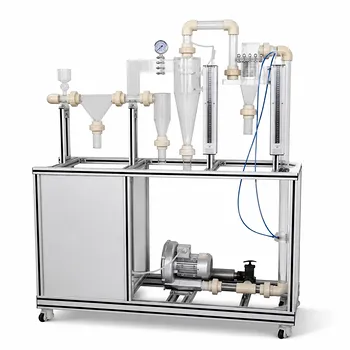
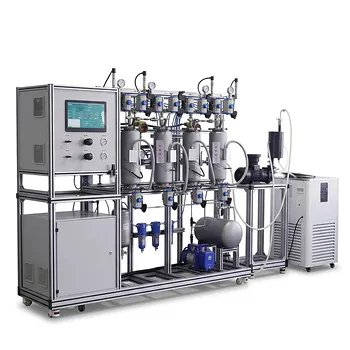
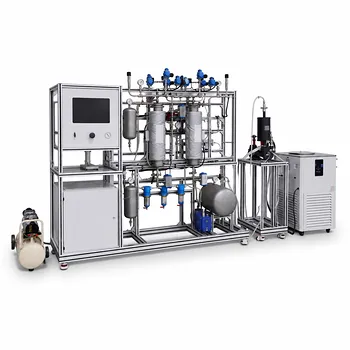
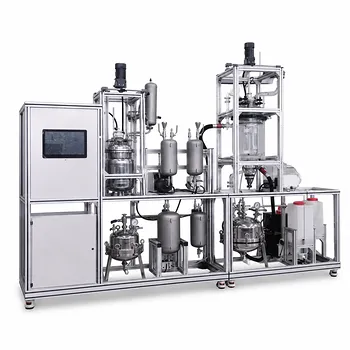
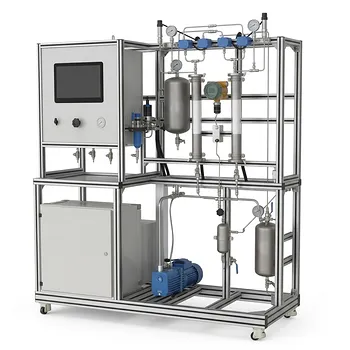
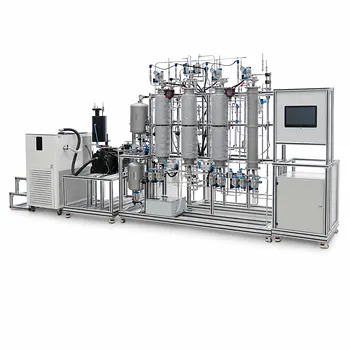
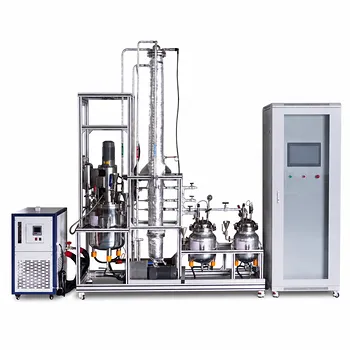
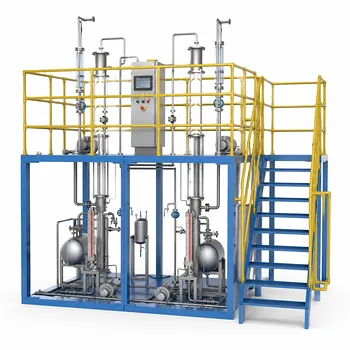
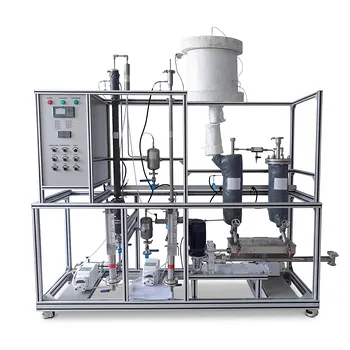
Pilot-scale unit operations are the bridge between textbook thermodynamics and the immense complexity of industrial gas plants. Specifically, these units—primarily fractional distillation columns and gas absorption systems—allow students and researchers to physically separate wet natural gas components like ethane, propane, and butane under controlled conditions. By manipulating parameters such as reflux ratios, feed tray locations, column pressures, and cryogenic condensation temperatures, users can directly observe changes in separation efficiency, measure phase equilibria, and quantify energy consumption, turning abstract theory into tangible, data-rich experimentation.
The core value of pilot-scale gas processing is not just miniaturizing equipment; it is providing a risk-managed, observable environment where the thermodynamic limits, multi-step process integration, and real-time optimization challenges of NGL recovery can be mastered safely—before tackling full-scale design.
Bridging Theory and Practice with Scaled-Down Separation
Hands-On Control of Critical Process Parameters
The primary reference clearly states that pilot plants simulate industrial gas processing through adjustable reflux ratios, feed tray locations, column pressures, and cryogenic condensation temperatures. These are not just textbook variables; they are the levers that control product purity and energy use. When a student increases the reflux ratio on a pilot distillation column, they instantly see the trade-off between higher separation efficiency and increased reboiler duty—a cost that dominates real-world NGL recovery economics.
Visualizing Vapor-Liquid Equilibrium and Thermodynamic Limits
Wet natural gas separation involves close-boiling mixtures that demand extreme conditions. Supplementary references highlight that isolating ethane from methane often requires cryogenic temperatures (below 273 K) and distillation columns with 80 to 150 trays. A pilot-scale column operating at these low temperatures, even with fewer stages, makes vapor-liquid equilibrium (VLE) behavior visible. Students sample liquid and vapor phases at different trays, plot actual composition profiles against equilibrium curves, and grasp why such tall columns are necessary without the danger of a full-scale cryogenic facility.
Integrating Separation Stages for Realistic Gas Processing
Real gas plants never rely on a single column. The supplementary sources describe how pilot units often combine absorption columns for acid gas sweetening, dehydration units, and fractional distillation systems in series. This integrated setup teaches that separating ethane, propane, and butane requires first removing H₂S and CO₂, then drying the gas to prevent hydrate formation, and finally using distillation to fractionate methane from NGLs. Research groups use these multi-step pilot plants to study cascaded refrigeration cycles and heat integration, mirroring the industry’s push toward energy-efficient fractionation trains.
Teaching Economic Trade-Offs Through Combined Unit Operations
One supplementary reference notes that pilot plants combining distillation columns with catalytic reactors demonstrate complex purification scenarios, such as ethylene recovery. This is directly applicable to NGL processing: separating close-boiling impurities sometimes requires a chemical reaction step (like selective hydrogenation) before physical fractionation. By operating such integrated systems, students and researchers learn that the optimal separation sequence is not always a single distillation column—it is a techno-economic decision balancing capital cost, energy, and purity requirements.
Deepening Research Through Parameter Manipulation
Optimizing Energy Consumption for NGL Recovery
The primary reference emphasizes energy consumption optimization as a key research outcome. In a pilot plant, researchers systematically vary reboiler duty, condenser cooling water flow, and feed preheating to map the energy landscape of a de-ethanizer or de-propanizer. Because the columns are instrumented with online sensors (as supplementary references confirm), researchers can collect high-resolution data to validate Aspen HYSYS or ProMax process simulations. The goal is to identify the minimum energy point where methane purity and NGL recovery meet specifications—an exercise that translates directly to design revamps in existing gas plants.
Validating Process Models for Multicomponent Mixtures
Wet natural gas is a multicomponent mixture where non-ideal interactions dominate. Supplementary references point out that pilot plants allow researchers to study thermodynamic behavior of hydrocarbons with CO₂ and H₂S. By injecting controlled impurity levels and measuring dew points, bubble points, and K-values across a distillation column, researchers refine equations of state (like Peng-Robinson or Soave-Redlich-Kwong). This model validation is critical for designing offshore or remote gas processing facilities where operational margins are razor-thin.
Studying Column Hydraulics and Tray Efficiency at Reduced Scale
Pilot columns are not just for thermodynamics; they also reveal hydraulic limitations. Supplementary references mention that students study column hydraulics, tray efficiency, and pressure drop. For separating ethane, propane, and butane, the correct vapor and liquid loadings must avoid weeping or flooding. Operating a pilot column with a partial condenser or cryogenic overhead system demonstrates how subcooled reflux affects tray performance, linking theoretical stage efficiencies to actual hardware.
Understanding the Trade-Offs of Pilot-Scale Experimentation
Scale-Down Distortions and Wall Effects
A pilot column, even with sophisticated design, cannot perfectly replicate an industrial column’s mass and heat transfer characteristics. Wall effects and smaller liquid holdups can skew tray efficiency numbers. Researchers must apply correction factors when scaling up data, especially for cryogenic separations where heat leak is a larger fraction of total duty. Recognizing these limitations prevents overconfident extrapolation.
Capital and Operating Costs of Pilot Facilities
Building a pilot plant that can handle cryogenic temperatures, high pressures, and hazardous hydrocarbons requires significant investment and safety infrastructure. While far cheaper than a full-scale plant, the cost can be prohibitive for some institutions. The trade-off is between representativeness of data and budget—using simpler, less-instrumented columns may reduce research fidelity.
Safety and Material Compatibility Constraints
Even at pilot scale, handling flammable hydrocarbons at low temperatures demands rigorous material selection (e.g., stainless steel for cryogenic brittleness) and explosion-proof enclosures. This teaches crucial safety culture but also limits the range of operating conditions that can be tested, as pilot units must avoid extreme tests that might trigger safety incidents.
Making the Right Choice for Your Educational or Research Goals
The configuration of a pilot-scale unit operation must align precisely with your learning objectives or research question.
- If your primary focus is teaching fundamental distillation principles: Use a simple binary distillation column to demonstrate how reflux ratio and feed location change top and bottom compositions, before moving to multicomponent mixtures that include ethane, propane, and butane.
- If your primary focus is researching energy optimization for NGL recovery: Select a pilot plant with integrated preheating, condensing, and reboiler systems, and ensure it is fully instrumented with temperature, pressure, and flow sensors to perform detailed energy audits.
- If your primary focus is demonstrating integrated gas plant operations: Invest in a multi-unit pilot setup that combines absorption, dehydration, and cryogenic distillation, allowing students to study the interaction between sweetening, drying, and fractionation steps as a continuous process.
- If your primary focus is validating thermodynamic models with real mixture data: Choose a pilot column that can handle sour gas (CO₂, H₂S) along with hydrocarbons, and equip it with on-line gas chromatography to capture non-ideal phase behavior under cryogenic conditions.
A well-designed pilot plant transforms the abstract challenge of separating ethane, propane, and butane from wet natural gas into a concrete, iterative learning experience that accelerates the journey from theoretical knowledge to safe, cost-effective industrial design.
Summary Table:
| Parameter / Operation | Educational & Research Value | Industrial Relevance |
|---|---|---|
| Adjustable Reflux & Feed | Teaches the trade-off between product purity and reboiler duty. | Direct impact on fractionation plant economics. |
| Cryogenic Condensation | Visualizes vapor-liquid equilibrium (VLE) in sub-zero conditions. | Essential for recovering ethane from methane. |
| Multi-Stage Integration | Demonstrates acid gas sweetening, drying, and distillation. | Simulates real-world continuous NGL recovery. |
| Hydraulic Flow Rates | Explores pressure drop, tray efficiency, weeping, and flooding. | Ensures safe and optimized physical column design. |
Bring Industrial-Scale Gas Processing into Your Lab
Bridging the gap between thermodynamic theory and industrial application requires robust, reliable equipment. LABPARK provides state-of-the-art Educational and Vocational Unit Operations Pilot Plants in chemical engineering, bioprocess & biotech, and environmental & water treatment.
Designed specifically for universities, research institutes, and enterprises, our pilot plants enable safe, hands-on experimentation with multicomponent mixtures, thermodynamic model validation, and energy optimization.
Ready to elevate your engineering curriculum or accelerate your research? Contact us today to discover how LABPARK can customize a pilot plant solution for your needs.
Related Products
- Gas-Solid Heterogeneous Separation Demonstration Educational Unit Operations Pilot Plant
- Multi-Component Gas Pressure Swing Adsorption Pilot Plant for Unit Operations Education
- Bench Scale Dual Column Gas Separation and Capture Educational Pilot Plant
- Gallium and Indium Selective Extraction Educational Pilot Plant
- Multifunctional Membrane Separation Educational Pilot Plant with Ultrafiltration, Nanofiltration, Reverse Osmosis
People Also Ask
- Why is pressure drop characterization critical in separation pilot plants? Key operational insights.
- What are the key thermodynamic considerations for gas mixture modeling? Expert Guide
- What are the primary operational objectives and physical requirements when running heterogeneous separation pilot plants?
- What are the trade-offs in olefin-paraffin separation? Optimize Pilot Plant Performance
- What are the material limitations of gas separation pilot plants? Key factors to consider.