When 316L stainless steel dissolves like sugar in hot acid, your pilot plant is no longer a research tool—it’s a safety hazard. In high-temperature, highly corrosive acid processes where standard stainless grades fail, the established solutions are nickel-based alloys like Hastelloy C-276 and, for the most severe conditions, tantalum. In specific halide-containing environments (such as those involving hydrogen iodide or bromine promoters), titanium also becomes a critical material of choice.
The core principle is material escalation: start with 316L for mild service, move to Hastelloy C-276 for strong oxidizing or reducing acids at elevated temperatures, then to tantalum when nothing else survives. Your specific acid type, temperature, and trace contaminants will dictate the exact boundary between these options.
Why Standard Stainless Steels Fail
The Passive Layer Collapses
Stainless steels like 304L and 316L rely on a thin, self-healing chromium oxide film to resist corrosion. This passive layer is chemically stable in many environments, but it breaks down rapidly in the presence of strong reducing acids (like hydrochloric acid) or oxidizing acids at high temperatures.
The Temperature Accelerator
Every 10°C rise in temperature can roughly double the corrosion rate. A stainless steel that survives for months in cold sulfuric acid may fail in hours at 200°C. Pilot plants often push these thermal boundaries, making seemingly “mild” acids aggressively destructive.
The Halide Attack
Chlorides, bromides, and iodides—common in acid catalysis and halogen-promoted reactions—are particularly vicious. They penetrate the passive film and initiate pitting and stress corrosion cracking. This is why processes like terephthalic acid oxidation (with bromine promoters) or carbonylation reactions (with hydrogen iodide) demand a step-change in metallurgy.
The First Line of Defense: Nickel-Based Alloys
Hastelloy C-276: The Universal Workhorse
When you need one material that handles the broadest range of corrosive acids, Hastelloy C-276 is the default answer. Its nominal composition (approximately 54% Ni, 17% Mo, 15% Cr) provides:
- Exceptional resistance to both oxidizing and reducing acids, including sulfuric, hydrochloric, and phosphoric acids at elevated temperatures.
- Outstanding pitting and crevice corrosion resistance in chloride-rich environments.
- Good fabricability, making it practical for reactors, heat exchanger tubes, and distillation components.
This alloy is the industry standard for pilot-scale halide-promoted carbonylation reactors and hot acid handling systems where 316L would quickly perforate.
Hastelloy B: Specialized for Hydrochloric Acid
For processes dominated by pure, hot hydrochloric acid without oxidizing impurities, Hastelloy B (65% Ni, 28% Mo) offers superior resistance. Its high molybdenum content is specifically tuned to resist reducing acids at temperatures that destroy nickel-chromium alloys. However, this specialization comes with a strict caveat.
Key Limitations of Nickel Alloys
- Hastelloy B is poisoned by oxidizing species. Even trace ferric or cupric salts will cause rapid attack. If your acid stream carries dissolved metal ions or aerated conditions, C-276 becomes mandatory.
- Cost. These alloys are significantly more expensive than stainless steel, and that cost flows into initial fabrication and spare parts.
- Galvanic concerns. When joined to less-noble metals in the same circuit, accelerated corrosion can occur at the joint. The entire wetted system must be considered.
The Ultimate Option: Tantalum for Extreme Environments
Chemical Inertness Comparable to Glass
Tantalum is often called “metal glass” for its extraordinary immunity—it resists almost all acids at all concentrations and temperatures up to approximately 250°C. This includes boiling sulfuric, hydrochloric, and nitric acids, where even Hastelloy grades may start to corrode.
When Tantalum Becomes Necessary
In pilot plants, tantalum is rarely the first choice due to its extreme cost. It is reserved for the most critical, irreplaceable components where failure would halt research or create a safety incident. Typical applications include:
- Thermowells and dip tubes in severely corrosive zones.
- Linings for small reactor vessels where product purity is paramount.
- Repair sleeves or patches on existing equipment facing unexpected attack.
The Fatal Flaw: Hydrofluoric Acid
Tantalum reacts violently with hydrofluoric acid (and any environment that releases free fluoride ions). If your pilot plant process involves HF—even as a trace by-product from halide decomposition—tantalum cannot be used. This makes material selection a puzzle that must account for the full chemistry, not just the bulk acid.
Titanium: A Lightweight Contender for Halide-Heavy Systems
Resistance in Bromide and Iodide Environments
Titanium is not a universal acid weapon—it performs poorly in pure reducing acids like hydrochloric. However, it shines in hot, oxidizing halide environments where stainless steels fail catastrophically. The industrial production of terephthalic acid (with acetic acid solvent and bromine promoters at ~200°C) and carbonylation processes with hydrogen iodide both specify titanium or Hastelloy C for wetted components. Titanium forms a tenacious, self-healing oxide film that resists bromide and iodide pitting exceptionally well.
When to Choose Titanium Over Nickel Alloys
- Weight-sensitive designs where component mass matters.
- Halide-dominated corrosion, especially where bromide or iodide promoters are the primary aggressors.
- Availability and favorable cost relative to Hastelloy in some pipe and heat exchanger sizes.
The Achilles’ Heel
Titanium cannot be used with hydrofluoric acid or with hot, dry chlorine gas. It also suffers from crevice corrosion in hot chloride solutions above about 80°C, limiting its use in some hydrochloric acid scenarios even at moderate temperatures.
Understanding the Trade-offs
Cost vs. Longevity
Tantalum represents an extreme: unmatched performance at an often prohibitive initial cost. A tantalum thermowell might cost 10–20 times more than a Hastelloy C-276 equivalent, but if it prevents a single shutdown or leak that destroys a batch, the return is immediate. Hastelloy C-276 occupies the practical middle ground for most pilot plants running aggressive acids.
Chemical Compatibility Checklist
Your material choice is only as strong as your understanding of trace species. Before specifying any alloy, verify:
- Hastelloy B is incompatible with ferric/cupric salts.
- Titanium fails in HF and hot, dry chlorine.
- Glass-lined steel—a supplementary option—cannot handle hydrogen fluoride or hot caustic.
- Elastomers (EPDM, Viton) and plastics in seals, gaskets, and filters must match the acid profile, lest they swell, leach, or disintegrate.
Fabrication and Maintenance Realities
Hastelloy and titanium require specific welding procedures and skilled fabricators. Tantalum is notoriously difficult to machine and weld, often necessitating explosive bonding as a lining. For educational or scale-up pilot plants with limited maintenance staff, the ease of repair of a Hastelloy system can outweigh the marginal corrosion advantage of tantalum.
Making the Right Choice for Your Process
Select the material that solves your specific corrosion failure, not the one with the highest nominal resistance. Use this goal-based guide to navigate your decision:
- If your primary focus is broad compatibility across multiple acid recipes: Start with Hastelloy C-276. It handles oxidizing and reducing acids, withstands chloride pitting, and is widely available in tube, sheet, and fitting forms for pilot plant construction.
- If your primary focus is pure, hot hydrochloric acid without oxidizing impurities: Hastelloy B offers superior performance, but you must guarantee the absence of ferric, cupric, or dissolved oxygen contamination.
- If your primary focus is the most extreme conditions where even Hastelloy corrodes (e.g., boiling sulfuric): Tantalum is the necessary instrument-grade solution for critical wetted parts, provided no fluoride species are present.
- If your primary focus is halide-promoted reactions (bromide/iodide) in oxidizing acid mixtures: Titanium and Hastelloy C-276 compete effectively; select titanium for weight-sensitive equipment and C-276 for maximum versatility with other acid streams.
Your pilot plant’s integrity depends on viewing material selection not as a one-time purchase but as a critical design variable that directly determines experimental validity and operator safety.
Summary Table:
| Material | Key Strengths | Best Applications | Main Limitations |
|---|---|---|---|
| Hastelloy C-276 | Broad acid & chloride resistance | Universal hot acid processes | High cost, galvanic concerns |
| Hastelloy B | Superior HCl resistance | Pure hot reducing acids | Vulnerable to oxidizing agents |
| Tantalum | Near-glass inertness up to 250°C | Extreme, non-fluoride acids | Extremely high cost, fails in HF |
| Titanium | Excellent halide resistance | Hot, oxidizing halide mixtures | Fails in HF and dry chlorine |
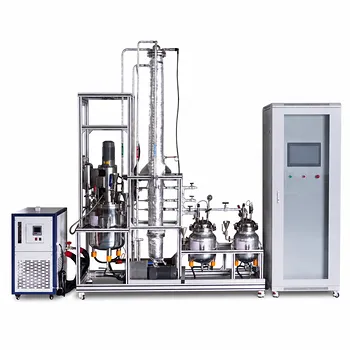
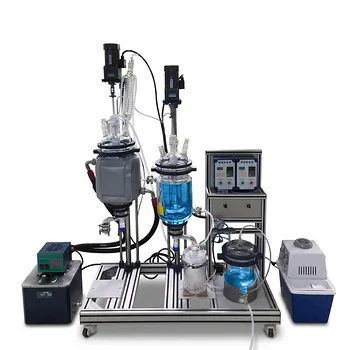
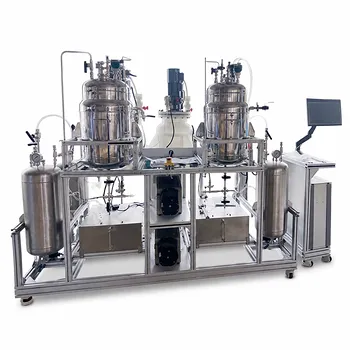
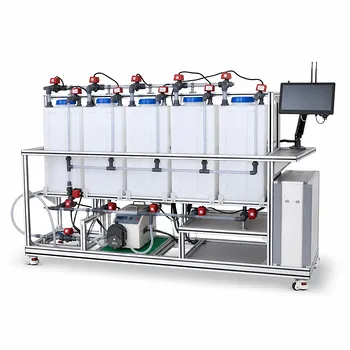
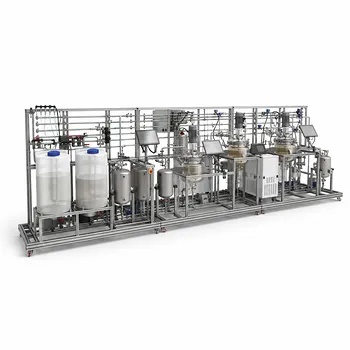
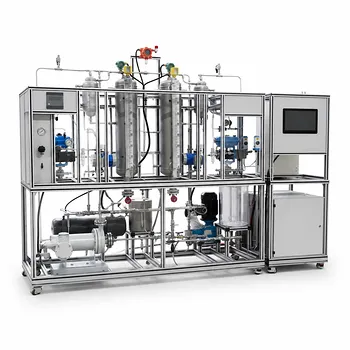
Need a robust pilot plant built to withstand extreme temperatures and corrosive acids? LABPARK designs and manufactures high-performance Educational and Vocational Unit Operations Pilot Plants in chemical engineering, bioprocess & biotech, and environmental & water treatment. We help universities, research institutes, and enterprises select the perfect metallurgy—from Hastelloy to Titanium—to ensure safety, durability, and precise experimental data.
Maximize your lab's safety and research capabilities today. Contact our engineering experts now to custom-design your next pilot plant.
Related Products
- Carbon Material Thermal Pretreatment Multiphase Separation Educational Pilot Plant
- Polymerization Granulation and Pellet Processing Educational Unit Operations Pilot Plant
- Constant Pressure Filtration Educational Unit Operations Pilot Plant
- Potassium Salt Thermal Dissolution and Crystallization Separation Educational Unit Operations Pilot Plant
- Ethyl Acetate Synthesis Unit Operations Pilot Plant for Practical Training
People Also Ask
- What challenges do gravity transitions present for pressure control in multiphase separation pilot plants?
- How does steady-state multiplicity affect the operation and safety of exothermic reactions within a CSTR pilot plant? - Guide
- What parameters to monitor transitioning from Batch to CSTR? Master Pilot Plant Setup
- Why is temperature regulation via a cooling jacket a critical feature in CSTR pilot plants used for laboratory training?
- How to select the right unit operations pilot plant for liquid separation? A complete guide.