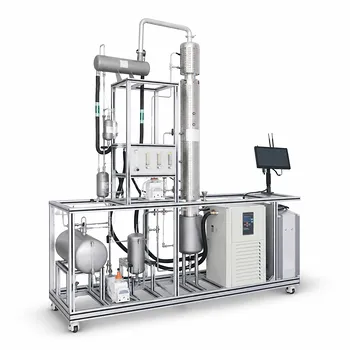
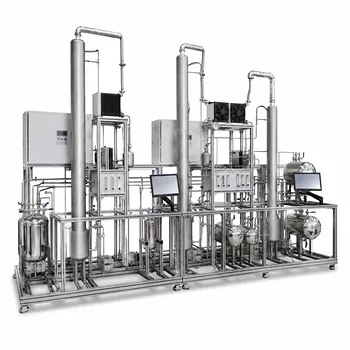
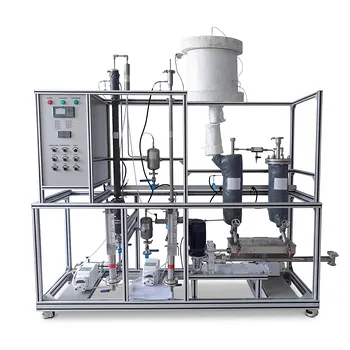
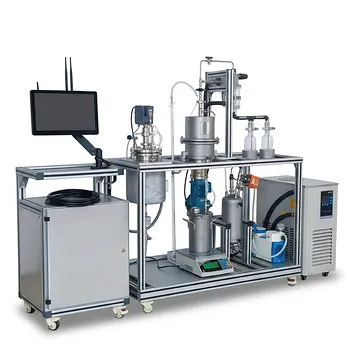
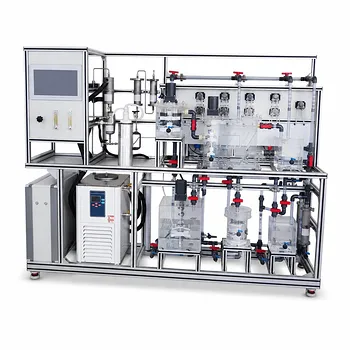
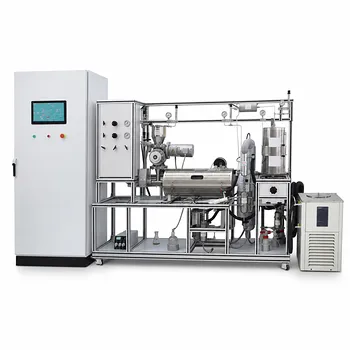
Here’s the fundamental reality: optimizing distillation and solvent recovery is the single most effective lever for controlling cost, quality, and environmental footprint in chemical manufacturing. Pilot-scale plants transform this abstract theory into intuitive, physical understanding—they are the irreplaceable bridge between a computer simulation and a safe, profitable industrial process.
While distillation is an energy-intensive necessity, most of the true cost comes from inefficiency. Optimization is not just about purity; it’s about minimizing thermal degradation, preventing hazardous vapor release, and slashing energy bills. Pilot-scale training ensures operators don't just run a process—they understand the physics well enough to safely fix it when things go wrong.
The Economic and Safety Imperatives of Distillation Optimization
The goal of distillation is simple separation, but the real-world execution is fraught with hidden costs. Optimization is critical because small errors in pressure, temperature, or flow multiply into massive financial and safety liabilities at scale.
Preventing Catastrophic Product Loss
At larger industrial scales, unit operations take significantly longer. This extended residence time exposes heat-sensitive materials to a dangerous risk: thermal degradation. You can spend weeks synthesizing a high-value product, only to destroy it in the final purification step because the reboiler was too hot or the vacuum failed. Optimization ensures you understand the thermal stability limits of your compound, allowing you to lower boiling points via vacuum control rather than overcooking your product.
Mitigating Explosion and Overpressure Hazards
Solvent recovery specifically involves vaporizing massive volumes of flammable liquids. The primary risk here is the buildup of flammable vapors—especially with low boiling point solvents like diethyl ether—and excessive pressure spikes. An unoptimized, open-loop system is a bomb waiting to go off. Proper design uses closed-loop configurations, highly efficient cooling condensers to prevent vapor escape, and failsafe pressure relief. Optimizing these parameters isn't just an engineering metric; it's a critical safety measure.
Reducing the E-Factor and Waste
Separation is inherently material-intensive. Without optimizing parameters like cycle times and solvent ratios, you generate massive amounts of toxic waste, dramatically increasing your E-factor (the ratio of waste to product). By precisely controlling reflux and feed locations, you maximize product recovery from every drop of solvent. This minimizes hazardous waste storage and disposal costs, directly protecting both the environment and the bottom line.
The Indispensable Role of Pilot Plants in Vocational Training
A desktop simulation can predict an ideal steady state, but it fails to capture the chaotic, non-linear reality of physical hardware. Pilot plants are not just smaller versions of refineries; they are diagnostic tools that teach operators how to think.
Visualizing Simulation Convergence Failures
In process simulation software, distillation column convergence is a notoriously common headache. Models fail due to infeasible specifications, like demanding impossible purity levels or miscalculating the minimum reflux ratio. On paper, this looks like an error code. On a pilot plant, a student physically sees the consequence: the column floods, or the temperature profile collapses. Training on a physical fractional distillation unit allows a student to adjust the reflux ratio or feed preheating and watch the system stabilize, directly linking the mathematical model to physical reality.
Mastering the Mechanics of Debottlenecking
Industrial "debottlenecking" often means upgrading column internals to increase throughput. A simulation won't tell you how it feels to handle structured packing versus random packing during an emergency shutdown. A pilot plant teaches students how to physically test these materials by measuring critical parameters like pressure drop, flooding points, and mass transfer efficiency. This hands-on experience ensures that when a student becomes an engineer, they know how a physical modification in the column translates to energy savings and capacity increases.
Demystifying Complex Architectures
Take the extractive distillation process, for example. It requires a complex two-column setup: one column receives an extraction solvent to break the azeotrope and draw off a pure component, while a second solvent recovery column recycles the expensive solvent. In a simulation, switching these streams is effortless. In the physical world, a student must balance the solvent-to-feed ratio precisely to avoid contaminating the distillate or losing solvent in the bottoms. Operating this closed loop teaches the critical skill of managing interconnected unit operations and recycling efficiency safely.
Understanding the Trade-offs and Pitfalls
Optimization isn't about maximizing every variable to its limit. The most critical lesson a pilot plant teaches is the art of compromise.
Purity vs. Energy Cost
There is a point of diminishing returns. Driving a separation from 99.0% purity to 99.9% purity does not cost 1% more energy—it might cost 50% more. It requires a much higher reflux ratio, which burns vastly more steam and cooling water. Trainees on pilot units learn to feel this physical reality as they watch utility meters spike in exchange for marginal purity gains, teaching them to target the sweet spot that balances specification requirements with economic reality.
The Danger of Improper Technology Transfer
A dangerous pitfall is ignoring the conditions that made the pilot process work. A common failure mode is improper technology transfer: for example, running a process that was successful under vacuum at atmospheric pressure at the production scale. The result is a dramatic temperature spike that can instantly ruin a batch. Pilot education instills a rigor about maintaining critical process parameters (temperature and pressure) across scales.
The Learning Curve of Complex Packing
While high-performance packing can solve a capacity bottleneck, it is also more sensitive to distributor design and fouling. A pilot plant allows students to intentionally "break" the column with a poor liquid distribution setup, revealing how quickly mass transfer efficiency can plummet. It teaches that advanced internals require advanced operational discipline.
Making the Right Choice for Your Training Goals
Your specific training objective will dictate how you should utilize a pilot-scale distillation plant. The value lies not just in running the unit, but in designing the experiment.
- If you are focusing on process safety and hazard analysis: Run the solvent recovery module with low-boiling solvents to visually demonstrate vapor capture and condensation rates under vacuum. Use this to drill for emergency shutdowns and pressure relief testing.
- If you are focusing on scale-up dynamics and stability: Conduct distillation stability studies with heat-sensitive materials. Vary the vacuum levels to map out temperature limits and physically witness the onset of thermal degradation at the reboiler.
- If you are focusing on energy efficiency and cost reduction: Perform a packing swap experiment. Quantify the pressure drop and flooding point differences between random and structured packings at identical boil-up rates to calculate energy savings.
- If you are focusing on advanced process troubleshooting: Deliberately cause a simulation convergence issue in software by setting an infeasible reflux ratio, then attempt to recreate that scenario on the physical pilot plant to correlate the error code with real-world column dynamics (like weeping or flooding).
The ultimate goal of a pilot plant is not to avoid mistakes, but to make them safely and cheaply enough that the lesson never needs to be repeated at production scale.
Summary Table:
| Optimization Focus | Industrial Risk / Impact | Pilot Plant Training Value |
|---|---|---|
| Thermal Degradation | Product loss due to excessive heat/residence time | Vacuum control & heat stability testing |
| Vapor & Pressure Hazards | Explosion risks from flammable solvents | Closed-loop configurations & safety relief training |
| Waste & E-Factor | High disposal costs & environmental impact | Reflux ratio & feed location optimization |
| Simulation Failures | Column flooding & temperature collapse | Physical troubleshooting of convergence errors |
| Column Internals | Poor packing selection leading to inefficiency | Hands-on pressure drop & flooding point tests |
Elevate Chemical Engineering Training with LABPARK Pilot Plants
Bridging the gap between theory and industrial reality requires hands-on experience. LABPARK provides state-of-the-art Educational and Vocational Unit Operations Pilot Plants in chemical engineering, bioprocess & biotech, and environmental & water treatment. Designed specifically for universities, research institutes, and enterprises, our systems empower students and operators to master process safety, distillation optimization, and troubleshooting in a controlled, real-world environment.
Ready to enhance your curriculum or workforce training program? Contact LABPARK today to discover our customized pilot-scale solutions!
Related Products
- Continuous Sieve-Plate Distillation Pilot Plant for Unit Operations Laboratory Education
- Multi-Functional Special Distillation Educational Pilot Plant
- Multi-Modal Distillation Unit Operations Training Pilot Plant
- Continuous Batch Extractive Distillation Educational Pilot Plant
- Green Anhydrous Ethanol Purification Extractive Distillation Unit Operations Training Pilot Plant
People Also Ask
- How does catalyst water concentration affect distillation pilot plant design? Key separation train choices.
- What are the primary reflux ratio control strategies? Master Distillation Unit Operations
- Why is vacuum operation capability an essential feature for a distillation unit operations pilot plant? Unlock Efficiency
- How can real-time carbon number prediction improve distillation pilot plants? Optimize control.
- How to select the right activity coefficient model (Wilson, NRTL, UNIQUAC) for distillation pilot plants?