Here's the straightforward answer: modified polyacrylonitrile (PAN) is preferred because its surface can be engineered to be superhydrophilic, reducing the water contact angle from around 46° to as low as 4°. This extreme attraction to water creates an invisible hydration layer that freely passes clean water while aggressively repelling oil, grease, and fats – the very contaminants that cripple unmodified membranes. For pilot plant operators, this translates to drastically less fouling and a maintenance routine as simple as flushing with hot water, not harsh chemicals.
While unmodified PAN is already somewhat hydrophilic, only by modifying it to achieve near-zero contact angles do you unlock the two decisive advantages for pilot-scale oily wastewater treatment: sustained permeability in the face of heavy organic loads and a chemical-free, hot-water cleaning protocol that keeps operators safe and simplifies experimental runs.
Understanding the Real Problem in Oily Wastewater
Why Ordinary Membranes Fail Against Oil
All membrane operators know the enemy: organic fouling. Oils, fats, and grease are sticky, hydrophobic substances. On an unmodified surface, these substances readily adsorb, spread out, and block the pores. Once a film of oil binds to the membrane, water permeability plummets and transmembrane pressure spikes. Restoring performance then demands aggressive chemical cleaning – a process that is hazardous, time-consuming, and can degrade the membrane itself.
The Critical Metric: Water Contact Angle
The primary reference highlights water contact angle as the tell-all number. Think of it as the angle between a water droplet and the membrane surface. A high angle means the surface dislikes water (hydrophobic). A low angle means it loves water (hydrophilic). Unmodified PAN has a contact angle of about 46°, which is decent but not enough to prevent oil from winning the surface battle. The breakthrough comes from modifying that surface to achieve a 4° contact angle—essentially complete wetting in an instant.
The Superhydrophilic Advantage in Detail
How a 4° Surface Repels Oil
An extremely hydrophilic surface doesn't just attract water; it binds a tightly held film of water molecules. This hydration layer acts as a perfect, self-replenishing barrier. Water passes through this layer and into the membrane pores without obstruction. Oil, on the other hand, cannot displace the bound water. It gets physically and energetically repelled. The oil droplets never get the chance to stick, which keeps the membrane performing at its original flux for far longer than any conventional alternative.
Chemical-Free Cleaning: The Pilot Plant Game-Changer
Pilot operations are about testing, refining, and frequently changing conditions. The need for hazardous citric acid, caustic soda, or surfactant soaks disrupts this workflow. The reference is explicit: modified PAN membranes can be cleaned simply by flushing with hot water. Hot water lowers the viscosity of any oil that may have temporarily settled and rinses it away, restoring permeability without chemical handling, without special PPE protocols, and without the risk of chemically altering the membrane's skin layer. This means shorter downtime between experiments and cleaner data.
Direct Impact on Operational Safety and Simplicity
For a pilot plant, simplicity equals speed and safety equals compliance. Eliminating chemical storage, dosing pumps, and neutralization steps for cleaning cycles directly reduces the complexity of the skid. An operator can perform a clean-in-place cycle with nothing more than a heated water tank and a pump. This is a massive reduction in the potential for human error and workplace accidents, which is especially critical in research environments where staff may rotate frequently.
Understanding the Trade-offs
The Thin Line Between High Performance and Fragility
No technology is without its cautionary notes. The primary reference gives a clear, powerful picture of the benefits, but any pilot operator must ask: how stable is that 4° contact angle over hundreds of cycles? Modifications designed to create extreme hydrophilicity can sometimes be surface coatings that, if not perfectly robust, may wear away over time. The hot water flush, while gentle, still imposes thermal cycling stresses. You must verify that the modified surface retains its wetting benefits over the entire planned duration of the pilot.
When Hot Water Isn't Enough
The claim that hot water flushing replaces all chemical cleaning is bold. In a pilot plant treating real, variable wastewater streams, you might encounter emulsified oils, high-salinity brines that deposit inorganic scales, or biofilms that a hot water flush cannot fully remove. While the oil repulsion is exceptional, a prudent operator will still plan for occasional, targeted chemical maintenance if the feedwater profile changes unexpectedly. Don't confuse a simplified cleaning regimen with a maintenance-free membrane.
The Cost of the Modification Step
While the reference focuses on technical performance, you must consider acquisition cost. The chemical or plasma treatment needed to transform standard PAN into a 4°-contact-angle membrane adds a processing step. For large-scale pilots that will transition to full-scale plants, understanding whether the modification cost is offset by reduced chemical and labor expenses over the membrane's lifetime is a core economic question you need to answer with your own data.
Applying This Knowledge to Your Pilot Plant
Making the Right Choice for Your Project
Your decision should hinge on the specific drivers of your ultimate full-scale design. Match the membrane to the problem you are trying to solve first.
- If your primary focus is maximizing run time between cleaning: Modified PAN is the clear winner. The anti-oil fouling property will keep your transmembrane pressure low and your flux stable for extended periods, generating production data that conventional membranes could never achieve.
- If your primary focus is eliminating operator exposure to chemicals: Choose the modified membrane. The hot-water-only protocol is a decisive safety advantage in a tight pilot plant, removing respiratory and skin hazards entirely.
- If your primary focus is evaluating long-term robustness under harsh feeds: Include unmodified PAN as a control. Run both side-by-side to measure exactly how the 4° surface degrades under your specific thermal, chemical, and abrasive conditions. The data will justify or reject the modification cost.
- If your primary focus is testing cleaning regimen extremes: Challenge the hot-water claim. Test hot water only on the modified membrane and document any residual fouling. Then test a mild, membrane-compatible surfactant to see if a purely chemical-free cleaning program is truly feasible for your specific oil emulsion.
The jump from a 46° to a 4° contact angle is not just a numerical improvement—it fundamentally changes how you operate, maintain, and design your water treatment process. Ground your pilot plant around this principle, and you'll gain clarity on both the technology's potential and its practical limits.
Summary Table:
| Feature | Unmodified PAN Membrane | Modified PAN Membrane |
|---|---|---|
| Water Contact Angle | ~46° (Moderately Hydrophilic) | ~4° (Superhydrophilic) |
| Fouling Resistance | Low; oil easily adsorbs and blocks pores | High; hydration layer repels organic fouling |
| Cleaning Protocol | Demands aggressive chemical cleaning | Simple, chemical-free hot water flush |
| Operational Safety | Lower; requires chemical storage & PPE | Higher; simplifies system and reduces risk |
Scale Your Water Treatment Research with LABPARK
Are you looking to optimize your water treatment experiments, evaluate membrane performance, or train the next generation of engineers?
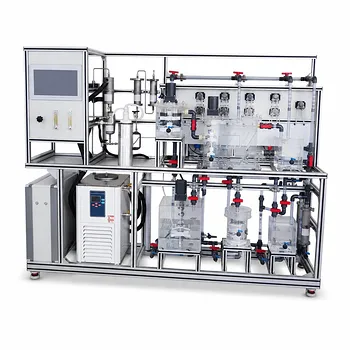
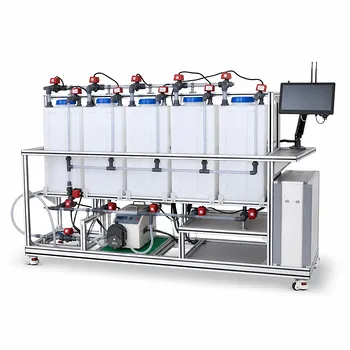
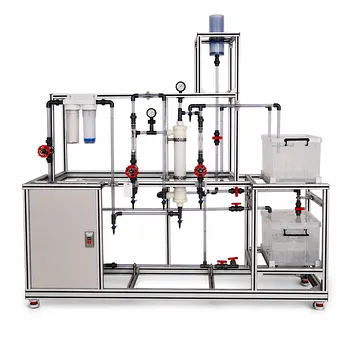
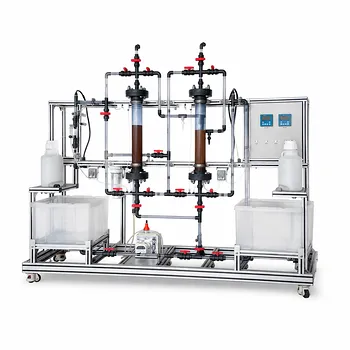
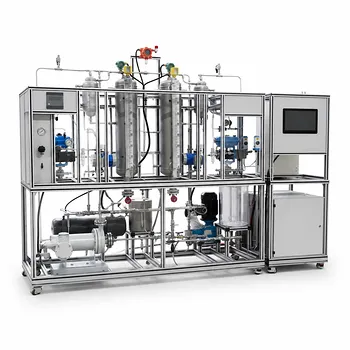
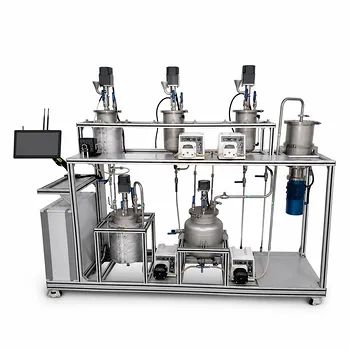
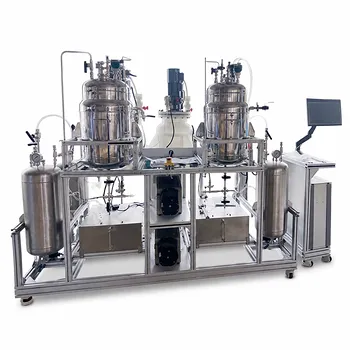
LABPARK provides state-of-the-art Educational and Vocational Unit Operations Pilot Plants in chemical engineering, bioprocess & biotech, and environmental & water treatment for universities, research institutes, and enterprises. Our robust pilot skids are engineered to help you safely test advanced membranes, streamline cleaning protocols, and generate precise, reliable data.
Ready to elevate your laboratory capabilities? Contact LABPARK today to find the perfect pilot plant solution for your institution!
Related Products
- Solid Waste Pyrolysis and Refining Educational Pilot Plant for Unit Operations
- Dual-Mode Rectification Pilot Plant for Practical Training Unit Operations
- Thermal Desorption Exhaust Gas and Tail Water Treatment Educational Pilot Plant
- Electrochemical Water Treatment Educational Unit Operations Pilot Plant
- Multi-Functional Special Distillation Educational Pilot Plant
People Also Ask
- How do educational unit operations pilot plants bridge theory and design? Bridge the Engineering Gap
- How do educational unit operations pilot plants address safety and waste management when scaling up?
- When to transition from PID to adaptive control in pilot plants? Key process indicators.
- Why is the chemical plant startup schedule crucial? De-risk scale-up with pilot plants.
- Why Compare Predicted and Experimental Excess Enthalpy? Key to Accurate Pilot Plant Scale-up