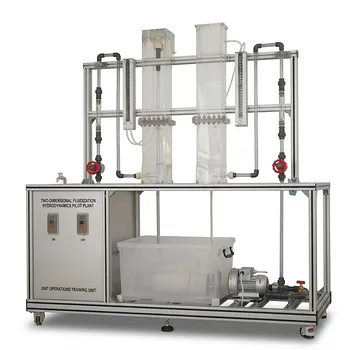
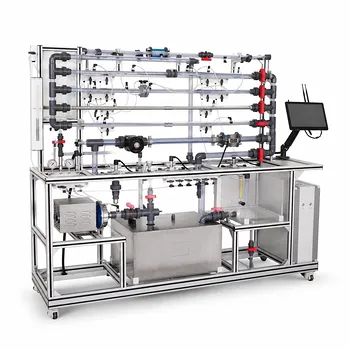
Theoretical perfection on a computer screen often shatters against the unyielding realities of physical equipment. Unit operations pilot plants are essential teaching tools because they force students to confront the non-negotiable, real-world constraints—like flooding limits, pressure drops, and spatial restrictions—that pure mathematical optimization ignores. This visceral experience transforms a student’s mindset from chasing a single numerical ideal to mastering the multi-objective trade-off between economic efficiency, safety, operability, and reliability—the true heart of industrial process design.
Chemical engineers must design plants that work, not just plants that look perfect on a spreadsheet. Pilot plants teach that safety, controllability, and equipment limits are not afterthoughts but foundational design drivers, making the balance between theory and reality a learned instinct rather than an abstract concept.
How Theory Fails Without Physical Context
A process simulation can deliver a flawlessly optimized reflux ratio or reactor temperature profile in seconds. Yet those numbers assume idealized fluid dynamics, perfect mixing, and no heat loss. The real world, however, imposes messy, physical boundaries that mathematics alone cannot foresee.
The Illusion of an Unconstrained Optimum
When students optimize a distillation column purely on a simulator, they might push the reflux ratio to maximize purity without ever seeing a downcomer flood. The software rarely flashes a warning that the required vapor velocity will physically blow liquid into the wrong tray. This creates a dangerous illusion—that the “best” design is simply the one with the highest calculated efficiency.
The Physical Walls You Can’t Ignore
A pilot-plant column has a finite diameter and a visible downcomer. As students increase boil-up rates, they can literally witness entrainment or hear the tell-tale rumble of incipient flooding. They learn that every piece of equipment has a hard ceiling—set by pressure drop, material strength, or even ceiling height for lifting—that defines the true feasible operating window. These boundaries are the starting point for real design, not the simulation’s unconstrained optimum.
Bridging the Gap Between Model and Reality
Pilot plants do more than just validate a computer model; they expose the hidden physics that models simplify. This verification loop is the foundation of safe scale-up and genuine understanding.
Validating the Hidden Losses
A simulation may assume adiabatic walls or lumped mass transfer coefficients. A pilot-plant experiment immediately reveals heat loss to the surroundings, fouling buildup on a heat exchanger, or the dampening effect of piping volume on control response. Collecting actual mass and energy balances teaches students that empirical data is the final arbiter, not the simulation’s prediction.
Scaling Laws Are Not Linear
A reaction that runs smoothly in a beaker can die in a 100-liter pilot reactor because mixing and heat transfer do not scale linearly. The pilot plant sits at the critical kilo-lab scale where fluid dynamics, residence time distribution, and heat removal rates start to behave differently. Working at this scale instills a healthy respect for the non-intuitive ways physics shifts with size, making students cautious about simply “multiplying by 100” from a lab recipe.
The Real Curriculum: Multi-Objective Trade-offs
Once a student feels the constraints, the educational focus shifts from single-objective optimization to the art of balancing competing demands. This is where pilot plant training becomes truly transformative.
Safety and Operability as Non-Negotiable Constraints
An economically “optimal” design that operates right at the edge of a pressure safety valve’s set point is a design waiting to fail. In a pilot plant, students experience how reducing a safety margin to save a fraction of a percent in energy can lead to instability or an automated shutdown. They learn that a process must be inherently stable and safe before it can be optimized, embedding a safety-first mindset that no lecture can instill.
Control and Flexibility vs. Peak Efficiency
A distillation column optimized for a single, steady-state feed might run beautifully in a simulation. On a pilot plant, a slight change in feed composition or cooling water temperature reveals how brittle that design is. Students discover that real plants need turndown capability, robust control schemes, and enough flexibility to handle upstream upsets. This teaches them to value operational reliability—a plant that runs consistently at 95% capacity—over a theoretical peak of 100% that crumbles under minor variations.
Understanding the Trade-offs of Pilot-Plant Education
No educational tool is perfect, and pilot plants themselves carry inherent limitations that are themselves valuable lessons.
Cost, Time, and Scale Fidelity
Running a pilot distillation column for an eight-hour lab period is expensive and yields data from a single operating point. The scale is still smaller than commercial, meaning some phenomena (like large-scale piping resonance or full-plant heat integration dynamics) remain unseen. However, this constraint teaches students the economic reality of experimentation—you must design tests that maximize learning from a limited number of runs, a skill directly transferable to industrial R&D.
The Danger of Over-Correction
Just as a simulation can be too optimistic, a poorly instrumented or badly scaled pilot plant can provide misleadingly pessimistic data. Students can learn to overdesign safety factors if they don’t understand how to distinguish between a real scaling issue and an artifact of the pilot unit. This highlights the need for critical thinking when interpreting any physical data.
Making the Right Choice for Your Learning Goal
How you leverage a pilot plant depends on whether you are designing an educational curriculum, training operators, or validating a specific process. Here’s how to apply these insights:
- If your primary focus is building future-proof design intuition: Structure pilot-plant exercises around deliberate failures. Force students to find the flood point, induce a runaway, or starve a reboiler. The goal is to build a mental library of what “wrong” looks, sounds, and feels like.
- If your primary focus is validating a computational model: Run the pilot plant at multiple conditions and have students rigorously compare measured heat transfer coefficients, pressure drops, and yields against simulation outputs. Grade them on the discrepancy analysis, not on getting the “right” number.
- If your primary focus is teaching lean, modern manufacturing: Use a pilot plant with both batch and continuous modules. Have students measure the real residence time distribution and calculate the actual waste reduction from switching to continuous flow. Let them feel the startup and shutdown transient dynamics that textbooks never capture.
- If your primary focus is instilling an unshakable commitment to process safety: Design scenarios where a mathematically “optimal” set point triggers a real alarm or relief event on the pilot plant. Debrief the economic cost of the safety override versus the catastrophic cost it prevented.
The ultimate goal is not to replace theory but to temper it with the irreplaceable texture of physical reality, creating engineers who design processes that are not just optimal on paper, but excellent in operation.
Summary Table:
| Aspect | Theoretical Simulation | Pilot Plant Reality | Educational Value |
|---|---|---|---|
| Operating Window | Unconstrained, idealized optimums | Hard physical limits (flooding, pressure drop) | Teaches students to respect physical boundaries |
| Process Scale | Linear scaling, perfect mixing | Non-linear scale-up, heat & mass losses | Prepares students for safe industrial scale-up |
| Design Priority | Peak efficiency and yield | Safety, operability, and control | Develops safety-first and robust design mindsets |
Bring Real-World Engineering to Your Lab
Bridging the gap between theoretical models and physical reality requires the right training tools. LABPARK provides state-of-the-art Educational and Vocational Unit Operations Pilot Plants in chemical engineering, bioprocess & biotech, and environmental & water treatment. Designed specifically for universities, research institutes, and enterprises, our pilot plants help future engineers master process safety, scale-up dynamics, and operational constraints through hands-on learning.
Ready to elevate your curriculum or R&D capabilities? Contact LABPARK today to discuss your custom pilot plant requirements!
Related Products
- General Purpose Cosmetics Production Unit Operations Training Pilot Plant
- Multi Pump Fluid Transport Process Piping Unit Operations Training Pilot Plant
- Multi-Functional Drying Educational Unit Operations Pilot Plant
- Fixed-Bed Chemical Reaction and Gas Dust Tar Removal Unit Operations Pilot Plant
- 100L Continuous Loop Hydrogenation Educational Unit Operations Pilot Plant
People Also Ask
- How do deviations in estimating latent heat impact pilot plant thermal systems? Avoid hardware mis-sizing.
- Why is the chemical plant startup schedule crucial? De-risk scale-up with pilot plants.
- When to transition from PID to adaptive control in pilot plants? Key process indicators.
- Why Compare Predicted and Experimental Excess Enthalpy? Key to Accurate Pilot Plant Scale-up
- How to study gasification in pilot plants? Compare exit gas composition & efficiency