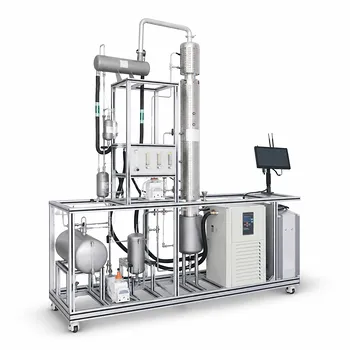
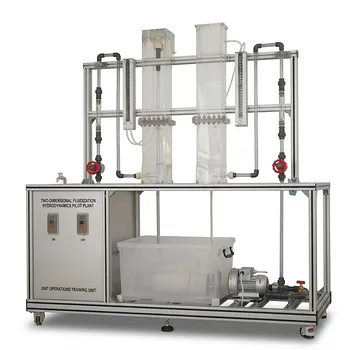
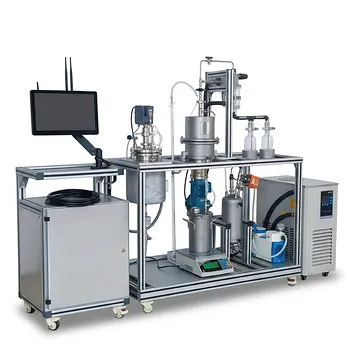
The most dangerous engineer is one who has only ever known a single mode of operation. The essential reason vocational pilot plants must feature both batch and continuous unit operations is that modern chemical manufacturing is no longer a binary choice between the two; it is a deeply interconnected hybrid landscape. Exposing students exclusively to one philosophy leaves them blind to the operational dynamics, scale-up physics, and economic drivers of the other. A dual-mode pilot plant is the only way to build a practitioner who can intuitively bridge the gap between the laboratory and the production floor, regardless of whether they are making high-value pharmaceuticals or bulk petrochemicals.
The core educational imperative isn’t just to teach two separate techniques, but to teach the critical decision-making framework for when and why to use them. The pilot plant is the crucible where a student learns that batch processing solves the problem of flexibility and precision, while continuous processing solves the problem of volume and efficiency—and that modern plants often demand a synthesis of both.
Bridging the Gap: Why Scale-Up Demands a Dual Approach
The fundamental purpose of a pilot plant is to de-risk the leap from chemistry to commerce. Restricting that plant to a single mode creates a dangerous blind spot regarding how reactions physically behave at scale.
The Non-Linear Reality of Scale-Up
Chemical reactions do not scale linearly. Heat transfer, mass transfer, and fluid dynamics behave fundamentally differently in a large vessel compared to a beaker.
A student operating a batch reactor pilot plant can physically measure how a mixing dead zone creates a hot spot during an exothermic reaction, a problem invisible in a small flask. Conversely, a continuous reactor system immediately demonstrates how a tube-length-to-diameter ratio alters residence time distribution. Without access to both, the student is memorizing theories rather than witnessing the physics.
The Pilot Plant as a Fortune-Saver
Jumping directly from bench-scale chemistry to a commercial facility is financially reckless. Pilot plants validate chemical economics, including raw material utilization and by-product handling.
A dual-system pilot hall allows students to compare the manual purification steps of a batch specialty chemical process against the steady-state automation of a continuous "assembly line." This direct comparison teaches future engineers how to write the design specifications for full-size equipment, ensuring that yield and safety are not adversely affected by scale.
Empirical Validation vs. Theoretical Models
Commercial reactor size cannot be determined by theoretical kinetics alone. The design must be verified and adjusted based on empirical data.
This is the pedagogical sweet spot. In a single lab session, a student can run a batch distillation, observing composition changes over time, and then switch to a continuous distillation column to study the same separation at equilibrium. This instant contrast between transient and steady-state kinetics provides a depth of understanding that a simulation or a single-mode plant can never match.
Decoding the Process: What Each Mode Teaches You
Beyond scale-up, batch and continuous operations cultivate fundamentally different engineering mindsets. A comprehensive education requires fluency in both.
The Batch Mindset: Mastering Transient States
Batch processing is the domain of versatility and precision over time. It teaches the engineer to master scheduling, recipe-based control, and cleaning validation.
In a pilot plant, batch operations like tray drying or batch crystallization give students the hands-on experience of tracking a drying rate curve or managing a supersaturation profile. This is critical training for the fine chemicals and pharmaceutical sectors, where multiproduct plants (MPPs) require engineers to manage diverse production schedules and strict sterilization changeovers without cross-contamination.
The Continuous Mindset: The Pursuit of Steady-State
Continuous processing trains the engineer to eliminate inventory waste, work-in-process (WIP), and downtime. It is the philosophy of lean manufacturing.
Operating a continuous fluid bed dryer or a continuous reactor system forces students to grapple with real-time process control loops and PID tuning to maintain product uniformity. They learn how a well-designed continuous train achieves 90-95% utilization, drastically reducing the equipment footprint and operating costs compared to a batch holding tank farm. This is the mechanical intuition required to run a modern, high-volume petrochemical plant.
Preparing for a Hybrid Industrial Reality
Perhaps the most critical reason for a dual-equipped pilot plant is that the industrial world does not operate in silos. The most efficient flowsheets often fuse the two modes.
From Fine Chemicals to Commodities
A graduate might work in a facility where pharmaceutical intermediates are produced in specialized batch reactors, requiring careful manual intervention, while the final, high-volume formulation is switched to a continuous tableting line.
Without exposure to both, the engineer lacks the vocabulary to understand the transition point. The pilot plant becomes the place where they internalize that batch is optimal for high-value, low-volume complexity, while continuous is optimized for high-volume efficiency.
The Integrator’s Mindset
The most recommended educational configuration is not two isolated units, but an integrated hybrid. For example, a batch reactor feeding a continuous downstream unit.
This teaches the most difficult industrial challenge: buffering a transient upstream operation into a steady-state downstream one. Seeing a surge tank between a batch reactor and a continuous distillation column transforms a student from someone who knows textbook definitions into an engineer who intrinsically understands residence time distribution and supply chain logic in real time.
Understanding the Trade-offs and Educational Constraints
Objectivity demands acknowledging that a "dual-mode" pilot hall is not a panacea. There are significant trade-offs to this approach that a well-designed curriculum must mitigate.
Financial and Spatial Footprint
The first constraint is cost. Batch pilot plants typically require lower initial capital investment for small-scale operations and are easier to clean.
Conversely, fully instrumented continuous systems with automated control loops are expensive and consume significant floor space. A program must balance the depth of a single pristine system against the breadth of two. Attempting to cram both into a limited area can result in poor learning outcomes on both sides if the equipment is too scaled-down to demonstrate realistic industrial dynamics.
The Complexity of Operations
Maintaining a dual-system plant increases logistical overhead. The cleaning protocols for a bio-pharma batch vessel are entirely different from the maintenance required to prevent clogging in a continuous micro-reactor.
There is a pedagogical risk of overwhelming students with two distinct operational disciplines before they have mastered either one. A curriculum must first build foundational competence in one mode—usually batch—to teach the fundamentals of unit operations, before layering in the flow and automation complexity of the continuous alternative.
The Risk of Superficial Learning
The danger of a dual-system lab is becoming a "jack of all trades, master of none." A student might demonstrate a batch crystallization and a continuous drying run without ever deeply analyzing the heat and mass transfer discrepancies between them.
The learning lies not in the demonstration, but in the deliberate comparison. The instructor must force the diagnostic question: "Why did we get a wider residence time distribution in the continuous unit, and how does that explain the purity spike we see in the batch unit at hour three?" Without that explicit comparison, the essential benefit is lost.
Making the Right Choice for Your Goal
Designing a vocational pilot plant program is a strategic decision. Your configuration must map directly to the workforce you are aiming to build.
- If your primary focus is simulative workforce readiness for modern chemical parks: Invest in an integrated hybrid system that connects a batch reactor to a continuous distillation column, forcing students to master the critical buffer zone between transient and steady-state operations.
- If your primary focus is deep, foundational research on specific processes: Prioritize unit-specific flexibility, using a highly versatile batch setup with multiple vessel configurations alongside a dedicated continuous tubular reactor to isolate and study specific kinetic phenomena without compromise.
- If your primary focus is training operators for the highly flexible specialty chemical sector: Use batch modules like spray dryers and batch reactors as the heavy training emphasis, but retain a single well-instrumented continuous module specifically to teach the principles of lean manufacturing and waste reduction.
Choosing to teach only one mode is choosing to teach only half of the chemical engineering reality. The essential synthesis—the ability to select the right physics for the right economics—only emerges when students are empowered to run a batch and a continuous process side-by-side and then, critically, be asked to explain the difference.
Summary Table:
| Feature | Batch Operations | Continuous Operations |
|---|---|---|
| Process Focus | Versatility, transient states & recipe control | Steady-state, lean production & automation |
| Key Lessons | Heat/mass transfer limits, cleaning validation | PID tuning, residence time distribution |
| Best Suited For | High-value, low-volume (e.g., pharma) | High-volume, efficient commodities |
Equip Your Lab for the Future of Chemical Engineering
Empower your students and researchers to master both batch and continuous processes. LABPARK provides state-of-the-art Educational and Vocational Unit Operations Pilot Plants in chemical engineering, bioprocess & biotech, and environmental & water treatment.
Whether you represent a university, research institute, or enterprise, our systems bridge the gap between classroom theory and industrial reality. Contact LABPARK today to customize the ideal pilot plant configuration for your training and research needs!
Related Products
- Continuous Batch Extractive Distillation Educational Pilot Plant
- Continuous Sieve-Plate Distillation Pilot Plant for Unit Operations Laboratory Education
- 100L Continuous Loop Hydrogenation Educational Unit Operations Pilot Plant
- Multi Pump Fluid Transport Process Piping Unit Operations Training Pilot Plant
- Multi-Reactor Educational Pilot Plant for Reaction Engineering Unit Operations
People Also Ask
- Wilson vs. UNIQUAC: How to Choose the Right Thermodynamic Model for Your Pilot Plant
- How to Configure a Distillation Pilot Plant? Key Steps for Multi-Mode Setup
- Why use non-ideal VLE calculations in distillation pilot plants? Ensure accurate scale-up & purity
- How does the feed thermal state influence distillation pilot plant design and utility consumption?
- How to Integrate Spectroscopy in Distillation Pilot Plants for Advanced Process Control