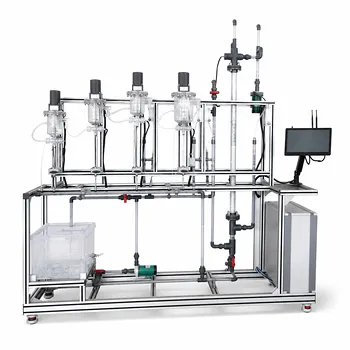
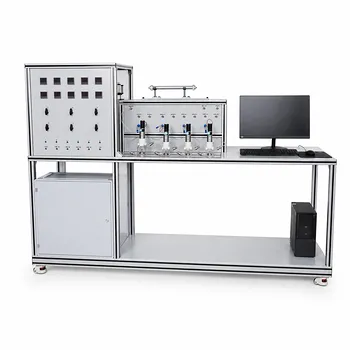
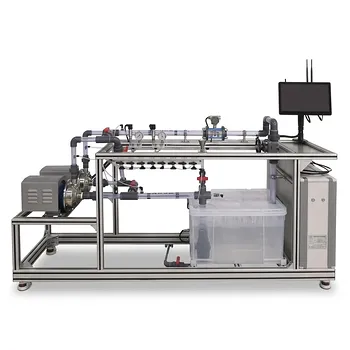
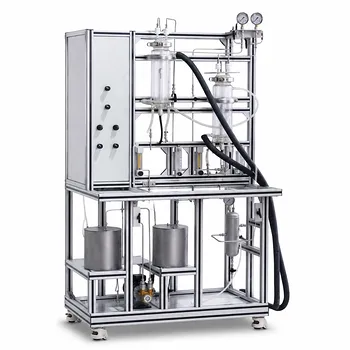
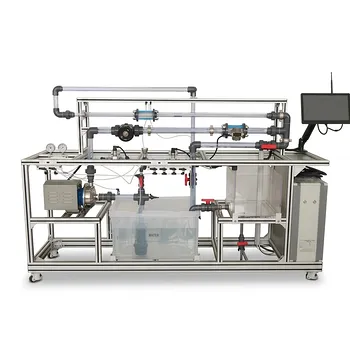
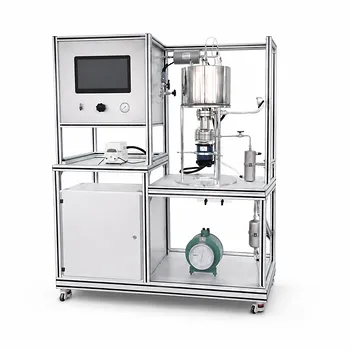
The simplest answer is that Centrifugal Partition Chromatographic Reactors are rarely chosen for pilot plants because they force educators to teach the reactor’s finicky mechanics instead of the core chemical engineering principles. A Fixed Bed Chromatographic Reactor uses a robust, solid-packed bed that any student can quickly understand and operate. The CPCR, by contrast, demands a precise, often delicate balance of centrifugal force, column geometry, and immiscible liquid phases—a combination that is inherently harder to operate, model, and maintain in a teaching environment that thrives on simplicity and repeatability.
In educational settings, a reactor’s pedagogical value collapses when operational complexity overtakes learning time. The CPCR’s liquid-liquid stationary phase delivers high capacity, but the difficulty of designing, stabilizing, and troubleshooting that system makes the solid-packed FBCR—and even the more advanced SMBR—the overwhelmingly practical default.
The Primary Challenge: Complexity That Disrupts Learning
An educational pilot plant needs to illuminate reaction engineering, not obscure it. The CPCR’s core design introduces three layers of difficulty that defeat that purpose.
The Intricate Dance of Liquids and Rotation
Maintaining the higher-density stationary phase inside a CPCR column is a continuous physical balancing act. It requires a precise combination of centrifugal force and column geometry to keep one liquid phase stationary while the mobile phase flows through it. A minor variation in pump flow, rotational speed, or even room temperature can destabilize the interface, causing phase carryover and data loss. Students end up troubleshooting the hydrodynamic stability of a spinning liquid column rather than analyzing reaction kinetics.
Stationary Phase Selection: A Non-Trivial Chemistry Problem
In an FBCR, the stationary phase is a solid catalyst or adsorbent packed into the column—one component, one phase, no ambiguity. A CPCR replaces that with an immiscible liquid stationary phase that must act as both the reaction medium and the chromatographic selector. Selecting the right pair of liquids is far from straightforward; the phases must remain chemically compatible with the reaction, exhibit minimal mutual solubility under operating conditions, and maintain a stable density difference under g-forces. This pre-experiment design hurdle often blocks the quick turnaround expected in a standard teaching lab.
Operational, Modeling, and Maintenance Overhead
The dynamic nature of a CPCR makes it harder to model with simple mass balance equations. A first-principles model must couple multiphase hydrodynamics with reaction kinetics, centrifugal force fields, and mass transfer coefficients that change with rotational radius. In contrast, an FBCR can be approximated with plug-flow or axial-dispersion models that undergraduates can solve in a spreadsheet. Maintenance is equally burdensome: a CPCR’s rotating seals, precision bearings, and liquid-phase degassing requirements introduce failure points that a fixed-bed column simply does not have.
Why Fixed Beds Excel in the Educational Setting
The FBCR’s dominance is not about being low-tech; it is about being the highest-throughput tool for delivering conceptual understanding.
Mechanical Simplicity and Robustness
A fixed bed chromatographic reactor operates by feeding a reaction mixture through a single, stationary packed column. There are no rotating seals to wear, no liquid-liquid interfaces to stabilize, and no need for cyclones or filtration systems to capture catalyst fines. This mechanical simplicity translates directly into less downtime and more usable lab hours—an essential metric in any educational curriculum.
Straightforward Kinetic and Equilibrium Studies
FBCRs are ideal for laboratory-scale feasibility studies. By running the column in pulse or step injection modes, students can directly measure reaction kinetics, adsorption equilibrium constants, and breakthrough curves without the confounding variable of a second moving liquid phase. The supplementary references highlight this strength perfectly: FBCRs allow for the rapid determination of reaction kinetics and adsorption equilibrium, making them the go-to platform for teaching core reactive chromatography concepts.
A Clear Scale-Up Pathway to SMBR
The solid-phase, packed-bed principle of an FBCR extends naturally into continuous mode through the Simulated Moving Bed Reactor. An SMBR still relies on solid catalyst/adsorbent, but it simulates counter-current movement by periodically switching ports. For a pilot plant, this creates a logical teaching arc: first master batch-mode reactive chromatography on an FBCR, then scale the understanding to the more efficient continuous SMBR. The CPCR, with its liquid-liquid platform, cannot easily bridge into that widely used industrial approach.
Understanding the Trade-offs
An honest assessment must acknowledge that CPCR systems are not inferior in all respects—they solve a specific problem, but at a cost that educational pilot plants cannot justify.
Advantage: High Stationary-Phase Capacity Without Solid Supports
The primary selling point of a CPCR is its high stationary-phase capacity because it uses a liquid rather than a solid. Without solid supports, there is no risk of irreversible catalyst fouling or adsorption of valuable products onto the solid matrix. For certain reactive separation chemistries—especially those involving thermally sensitive biomolecules—this liquid-liquid environment can be highly attractive. However, this advantage rarely outweighs the pedagogical friction in a standard teaching facility.
The Hidden Cost: Downtime and Difficult Troubleshooting
In education, reliability is a pedagogical feature. A reactor that fails overnight due to a phase inversion or an air bubble in the centrifugal loop drains instructor time and student confidence. CPCR systems are highly sensitive to the slightest contamination or flow disturbance. By contrast, troubleshooting a poorly packed FBCR column is a teachable moment: students can repack it, adjust the feed, and learn about channeling in a single lab session. The CPCR’s failure modes are often too cryptic for that kind of productive debugging.
Making the Right Choice for Your Pilot Plant Goals
Your selection should directly serve the learning outcomes you prioritize. Consider the following recommendations:
- If your primary focus is teaching fundamental reaction kinetics and chromatographic principles: Choose an FBCR. Its solid-packed bed, straightforward modeling, and rapid experimental turnaround ensure that students engage with the science, not the hardware’s survival.
- If your primary focus is demonstrating continuous, high-efficiency reactive separation for scale-up training: Opt for an SMBR. It retains the solid-phase simplicity you trust from the FBCR while introducing the process intensification concepts that bridge academia and industry.
- If your primary focus is niche research on liquid-liquid reactive systems where solid supports are detrimental: A CPCR may be justified, but only as a dedicated research rig—not as a shared teaching unit. The steep learning curve and maintenance demands will consume disproportionate resources in a multipurpose educational lab.
Ultimately, the best pilot plant reactor is not the one with the most elegant separation physics on paper; it is the one that runs reliably enough for your students to learn the physics, repeat the experiment, and leave with confidence.
Summary Table:
| Feature | Centrifugal Partition Chromatographic Reactor (CPCR) | Fixed Bed Chromatographic Reactor (FBCR) |
|---|---|---|
| Phase System | Liquid-Liquid (Immiscible phases) | Solid-Liquid (Solid packed bed) |
| Complexity | High (requires balancing centrifugal force & flow) | Low (straightforward operation) |
| Modeling | Complex (multiphase & centrifugal dynamics) | Simple (standard plug-flow/dispersion models) |
| Maintenance | High (rotating seals, precision bearings) | Minimal (no moving parts) |
| Best For | Niche liquid-liquid research | Standard educational labs & scale-up training |
Build a More Reliable Chemical Engineering Lab with LABPARK
Choosing the right reactor technology is critical to ensuring your students focus on learning core principles rather than troubleshooting hardware.
LABPARK design and provides state-of-the-art Educational and Vocational Unit Operations Pilot Plants in chemical engineering, bioprocess & biotech, and environmental & water treatment. Built specifically for universities, research institutes, and enterprises, our robust pilot plants—including FBCR and Simulated Moving Bed Reactors (SMBR)—ensure maximum uptime, easy modeling, and repeatable experimental results.
Ready to upgrade your lab's training capabilities? Contact LABPARK today to find the perfect pilot plant solution for your institution.
Related Products
- Multi-Stage Stirred Tanks in Series Residence Time Distribution and Mixing Performance Determination Educational Pilot Plant
- Residence Time Distribution and Reactor Flow Characteristics Determination Educational Pilot Plant
- Gas Phase Mixing and Residence Time Distribution Determination Educational Unit Operations Pilot Plant
- Centrifugal Pump Performance Determination Educational Unit Operations Pilot Plant
- Photocatalytic Membrane Separation and Degradation Unit Operations Pilot Plant
People Also Ask
- How does MRF model impeller rotation in CFD? Key Boundary Conditions Explained
- How can a CSTR pilot plant demonstrate reactor staging? Visualize volume savings.
- How does steady-state multiplicity affect the operation and safety of exothermic reactions within a CSTR pilot plant? - Guide
- What parameters to monitor transitioning from Batch to CSTR? Master Pilot Plant Setup
- Why is temperature regulation via a cooling jacket a critical feature in CSTR pilot plants used for laboratory training?