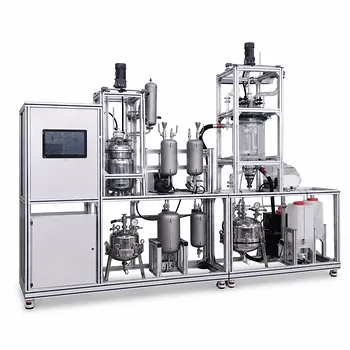
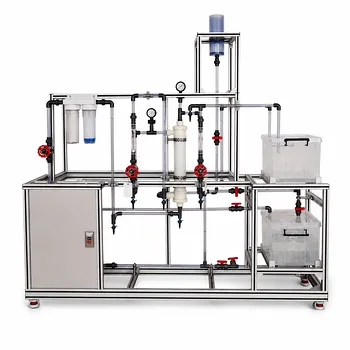
The future of green bioprocessing demands hands-on mastery of high-pressure, solvent-free separation. Supercritical fluid extraction (SFE) pilot plants are essential because they transform abstract thermodynamics into a tangible engineering skillset. Students directly manipulate temperature and pressure to observe real-time shifts in solvent density, diffusivity, and solvating power, gaining critical experience in safe high-pressure operation, phase behavior, and the fundamentals of residue-free extraction.
SFE pilot plants are the critical bridge between academic theory and industrial green extraction. They provide a controlled environment where students learn that the separation lies not in a fixed blueprint but in their ability to modulate pressure and temperature—a lesson that equips them to design sustainable, energy‑efficient bioprocesses with zero toxic residues.
The Knowledge Gap in Green Bioprocessing Education
Theoretical lectures on mass transfer and thermodynamics rarely prepare students for the reality of extracting heat‑sensitive, high‑value compounds. SFE pilot plants fill this gap by making the invisible dynamics of supercritical fluids visible and controllable.
Turning Phase Behavior into a Tactile Skill
In a pilot plant, students are not just told that density changes with pressure—they watch separation efficiency spike as they tweak a valve. This direct connection between a process parameter and an outcome forges an intuitive understanding that no simulation can replicate.
Why Solvent‑Free Processing Matters Now
Traditional extraction leaves behind toxic residues that require costly purification. SFE using carbon dioxide eliminates this entirely. Training on a pilot plant ingrains the mindset of solvent recycling and waste prevention—core tenets of green chemistry that students will carry into industry.
Why Supercritical CO₂ is the Ideal Teaching Tool
Carbon dioxide above its critical point (31.1 °C and 73.8 bar) is the workhorse of SFE, and the pilot plant is where students truly grasp why.
Liquid‑Like Density, Gas‑Like Diffusivity
A supercritical fluid can reach densities of 400–900 kg/m³, rivaling liquids in solvent power, while retaining viscosities as low as 3–9 × 10⁻⁵ Pa·s and diffusivities around 0.2 × 10⁻³ m²/s. This combination yields mass transfer rates far faster than traditional liquid‑liquid extraction—a concept that becomes intuitive when students see rapid extraction times firsthand.
Complete Solvent Recovery with a Simple Pressure Drop
Depressurization instantly returns CO₂ to a gas, leaving no solvent residue in the product. This elegant separation of solvent from solute teaches a fundamental principle: process intensification through phase change, not chemical disposal.
The Crucial Role of Process Variables in Separation
SFE pilot plants are not just demonstration units; they are living experiments in optimization.
Pressure as a Solubility Dial
Because supercritical fluid density is exquisitely sensitive to pressure, students learn to use pressure as a selectivity tool. Raising the pressure can dissolve heavier fractions; lowering it precipitates specific compounds. This hands‑on fractionation training is invaluable for those entering the nutraceutical or pharmaceutical sectors.
Temperature and the Double‑Edged Sword
Unlike simple heating, raising temperature in a supercritical system can either increase or decrease solubility depending on the pressure regime. A pilot plant allows students to map this complex interplay, building a deep, practical command of extraction kinetics and thermal degradation thresholds.
Safety: The Non‑Negotiable Foundation of High‑Pressure Training
High‑pressure operations demand rigorous safety protocols, and the SFE pilot plant is the definitive classroom for this discipline.
Mastering Pressure Rating and Material Compatibility
Students learn to verify pressure ratings of every fitting, select materials that resist CO₂’s acidic tendencies in the presence of moisture, and follow emergency depressurization procedures. This hands‑on safety culture prepares them for careers where 500‑bar systems are routine.
Preventing Thermal Degradation of Bioactives
Heat‑sensitive compounds like polyunsaturated fatty acids or essential oils require careful temperature control. The pilot plant teaches students to balance extraction efficiency with product integrity, a skill directly transferable to enzymatic and pharmaceutical processing.
From Lab Bench to Industrial Scale: Bridging the Gap
SFE pilot plants mirror the unit operations of full‑scale facilities but at a size that invites experimentation and learning.
Understanding Extraction Kinetics Beyond Batch Mode
By running continuous or semi‑continuous experiments, students observe how flow rates, bed geometry, and pressure gradients interact to govern overall yield. This bridges the chasm between a lab‑scale Soxhlet extraction and an industrial high‑pressure column.
Mimicking Industrial Recovery and Solvent Recycling Loops
A complete pilot plant includes separators where the extracted product is collected as the CO₂ is vented, condensed, and recirculated. This closed‑loop operation teaches the energy balance of recycling, a critical lesson in sustainable engineering design.
Understanding the Trade-offs and Limitations
No technology is without boundaries, and an honest education demands that students face the real‑world constraints of SFE.
High Capital and Energy Investment
SFE systems require robust pumps, precise pressure control, and capital‑intensive construction. Students must be taught to weigh the green credentials of solvent‑free processing against the energy needed to compress and recycle supercritical CO₂—a nuanced economic and environmental calculus.
The Polarity Gap
Pure CO₂ is a non‑polar solvent, limiting its reach to compounds that do not require strong hydrogen bonding. A pilot plant often demonstrates the need for co‑solvents like ethanol, introducing students to the complexities of modifying solvent polarity without sacrificing the final product’s purity.
Scalability is Not Always Linear
What works in a 5‑liter extraction vessel does not simply multiply to a cubic‑meter system. The pilot plant becomes the testing ground for understanding mass transfer limitations, channeling, and pressure drops that emerge at scale, preventing costly mistakes in later process development.
How to Apply This to Your Educational Goals
Whether you are building a curriculum, procuring equipment, or directing a research group, the value of an SFE pilot plant must align with your specific learning objectives.
- If your primary focus is green chemistry principles: Use the pilot plant to demonstrate zero‑residue extraction and complete solvent recycling, cultivating a sustainability‑first mindset.
- If your primary focus is process engineering and scale‑up: Prioritize units that allow detailed manipulation of pressure, temperature, and flow rates, so students master the kinetic and thermodynamic trade‑offs.
- If your primary focus is bioprocess and pharmaceutical training: Select pilot plants that emphasize thermal control and gentle product recovery, enabling students to extract high‑value bioactive compounds without denaturation.
- If your primary focus is safety and industrial readiness: Ensure the system includes fail‑safe depressurization, robust material certification, and real‑time monitoring, transforming safety from a checklist into a practiced habit.
A supercritical fluid extraction pilot plant is not merely a piece of equipment; it is the engine that turns green separation science into a lived, practical discipline—one that students will carry forward to build a cleaner, more efficient bioprocessing industry.
Summary Table:
| Key Learning Area | Role of SFE Pilot Plant | Student Benefit |
|---|---|---|
| Phase Behavior | Real-time observation of density and pressure shifts | Hands-on mastery of thermodynamics |
| Solvent-Free Tech | Using supercritical CO2 with zero toxic residue | Practical application of green chemistry |
| Parameter Control | Tuning pressure & temperature for selectivity | Understanding extraction kinetics |
| Operational Safety | Handling high-pressure systems & material compatibility | Development of industry-ready safety habits |
Equip Your Lab for the Future of Green Engineering
Are you ready to elevate your training program with hands-on, industrial-grade equipment? LABPARK provides premium Educational and Vocational Unit Operations Pilot Plants in chemical engineering, bioprocess & biotech, and environmental & water treatment.
Specially designed for universities, research institutes, and enterprises, our systems bridge the gap between academic theory and real-world industrial practice.
Contact LABPARK today to find the perfect pilot plant solution to empower your students and researchers!
Related Products
- Supercritical High-Gravity Flash Evaporation Educational Unit Operations Pilot Plant
- Educational Rotary Disc Liquid-Liquid Extraction Pilot Plant
- Comprehensive Liquid-Liquid Extraction Pilot Plant for Engineering Education
- Gallium and Indium Selective Extraction Educational Pilot Plant
- Multi-Functional Special Distillation Educational Pilot Plant
People Also Ask
- How is the heat transfer area calculated for an evaporation unit operations pilot plant during experimental design? Guide
- How to select educational evaporator pilot plants for thermal & scaling solutions? Complete Guide
- What is the practical significance of Kb in pilot plant evaporation? Master process design.
- How to Connect Benchtop Evaporation to Pilot Plants in Chemical Engineering Education
- How are Dühring plots applied in evaporation pilot plants? Practical guide to boiling point prediction