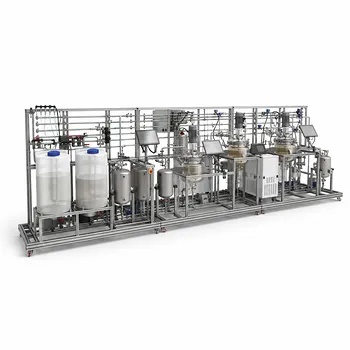
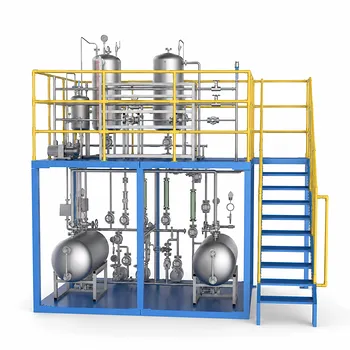
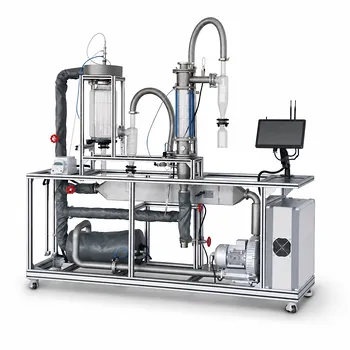
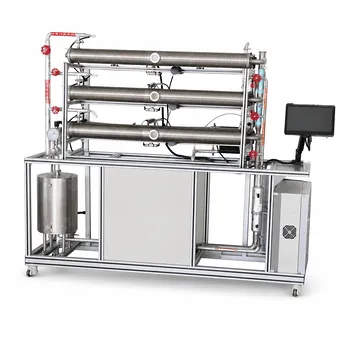
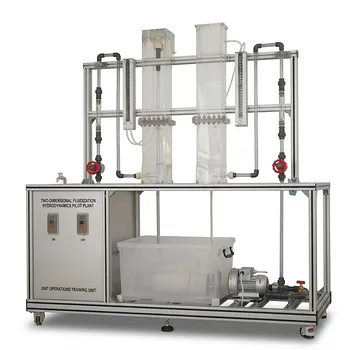
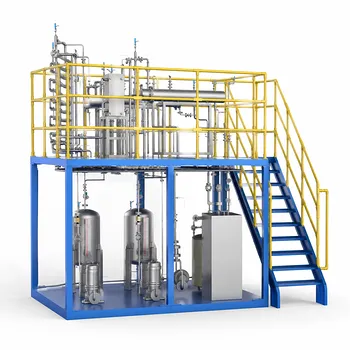
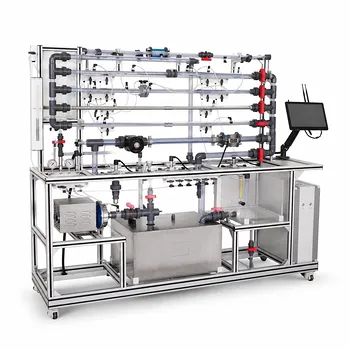
Here’s the sobering reality: exothermic runaway reactions represent one of the most lethal and financially catastrophic hazards in the chemical process industries, and teaching engineers to prevent them is a non-negotiable educational priority. Unit operations pilot plants serve as the essential bridge between theoretical hazard awareness and true operational mastery. They compress industrial-scale threats into a controlled laboratory setting, allowing students to intentionally trigger, measure, and mitigate the thermal and kinetic conditions that lead to reactor rupture, giving them the visceral, data-driven judgment that no textbook can provide.
While classroom theory explains why a reaction can explode, the unit operations pilot plant shows how to stop it. It is the educational crucible where monitoring reaction enthalpy, calculating adiabatic temperature rise, and executing emergency safety protocols become a learned reflex, not just a concept.
Why Runaway Reactions Command a Central Role in Education
The Inherently Unforgiving Nature of Thermal Runaway
A runaway reaction, often triggered by polymerization, nitration, sulfonation, or hydrolysis, is not a simple temperature spike. It is a self-accelerating thermal loop. As the reaction rate increases with temperature, it generates even more heat, leading to violent boiling, rapid gas evolution, and potentially a catastrophic vessel rupture.
This positive feedback loop gives an operator minimal time to intervene. Understanding this thermodynamic trap is a core competency because the consequence of failure is not a spoiled batch but a destroyed facility and loss of life.
Moving Beyond Theoretical Kinetics to Safety-Critical Classification
True competency requires classifying risks, not just describing them. Pilot plants enable students to measure the process temperature (Tp) and the maximum temperature of the synthesis reaction (MTSR). With this data, they calculate the adiabatic temperature rise and categorize a process into Stoessel criticality classes (1 to 5).
This classification transforms a vague "dangerous reaction" into a quantifiable safety profile. It forms the engineering basis for selecting every subsequent layer of protection, from relief valve sizing to interlock logic.
How Pilot Plants Transform Hazard Knowledge into Operational Skill
Creating a Controlled Sandbox for Industrial-Scale Danger
A unit operations pilot plant shrinks the industry to a benchtop. Using a scaled-down jacketed reactor with integrated safety relief systems, students can safely recreate the exact process deviations that trigger industrial accidents.
They can simulate a cooling water failure or an agitation loss and watch the real-time temperature and pressure data spike. This direct experience of a potential runaway—in a setting where an automated interlock or a burst disk handles the consequence—builds the intuitive grasp of reaction thermodynamics that reading about it never can.
Instrumentation as a Teacher: Seeing the Invisible Enthalpies
Reaction enthalpy is invisible in a textbook. In a pilot plant, it becomes a violent, measurable event. Advanced instrumentation—real-time temperature sensors, pressure transmitters, and flow controllers—turns the reactor into a teaching tool that logs every thermodynamic shift.
Students learn to monitor heat transfer parameters and heat of reaction parameters by varying cooling fluid flow rates and feed concentrations. They physically observe the temperature-conversion profile shift, validating why criteria like Morbidelli-Varma yield more realistic safe operating boundaries than older, overly conservative methods. This shows them how to optimize reactor throughput without compromising the safety margin.
From Data to Safeguard Design: The HAZOP Mindset
Collecting empirical kinetic data is only the first step. The crucial leap happens when students use that data to fit reaction rate equations and determine rate constants. This validated kinetic model becomes the foundation for designing emergency relief systems and automatic safety backup systems.
This hands-on loop—experiment, model, design—directly translates to the professional requirement of running a HAZOP (Hazard and Operability) study. A student who has sized a relief valve based on their own pilot-plant data understands the severe responsibility behind that calculation in a way a purely theoretical engineer cannot.
Applying a Full Spectrum of Prevention and Mitigation Strategies
Pilot plants demonstrate that managing a runaway is not a single action but a layered strategy. For highly exothermic processes where the adiabatic temperature rise exceeds 50°C, students learn to control the hazard by precisely managing dosing rates and maximizing active cooling from refrigeration jackets.
For gas evolution hazards, the emphasis shifts to understanding gas formation kinetics and ensuring the equipment's venting capacity is perfectly matched to the reaction. They implement the critical support tactics—nitrogen purging to inert the headspace, proper grounding for static electricity, and monitoring flammability limits—that prevent a thermal event from cascading into a vapor cloud explosion.
Understanding the Trade-offs and Limitations
A pilot plant is a faithful but simplified representation of reality. Its smaller volume means a much higher surface-area-to-volume ratio, which amplifies heat loss and can mask the true, uninsulated adiabatic behavior of a full-scale reactor. This can lead to an overly optimistic safety assessment if not critically analyzed.
Furthermore, raw pilot-plant data can be noisy or influenced by sensor lag. Students must learn to distinguish a real inflection point in the reaction kinetics from an instrument artifact. The plant is a tool for testing a hypothesis, not a crystal ball, and the most critical skill it teaches is the educated interpretation of the data, including its uncertainties.
Making the Right Choice for Your Learning and Development Goals
The unit operations pilot plant is an unparalleled educational asset, but your focus within it should match your desired outcome.
- If your primary focus is mastering process safety fundamentals: Prioritize exercises that calculate the MTSR and adiabatic temperature rise. Classify your reaction on the Stoessel scale and then design the cooling and relief systems to match that classification.
- If your primary focus is optimizing reactor operation with safety: Deliberately map the stability boundaries using different runaway criteria (e.g., Morbidelli-Varma). Vary your heat transfer and reaction parameters to see exactly where the transition from safe to runaway occurs, defining the most productive, yet still safe, operating window.
- If your primary focus is industrial-scale hazard mitigation: Dive into the layered protection strategies. Practice not just the reaction engineering, but the integration of inerting systems, gas venting capacity analysis, and the logic for automated interlocks that shut down feeds.
The ultimate goal is not to memorize a set of safety rules, but to cultivate an unshakeable, data-driven instinct for where thermal danger originates and exactly how to engineer it out.
Summary Table:
| Key Focus Area | Educational Objective | Pilot Plant Practical Application |
|---|---|---|
| Criticality Classification | Understand Stoessel classes (1-5) | Measure process temperature (Tp) and MTSR to calculate safety margins |
| Runaway Simulation | Learn thermal feedback loop dynamics | Safely simulate cooling or agitation failures in a controlled reactor |
| Thermodynamic Data | Calculate reaction enthalpy & kinetics | Monitor real-time heat transfer, temperature-conversion profiles, and pressure spikes |
| Safeguard Design | Master HAZOP and emergency relief | Size relief valves, program automated interlocks, and design gas venting systems |
Bring Process Safety to Life in Your Lab
Equip your students, researchers, and engineers with the hands-on skills needed to prevent and manage complex chemical hazards. LABPARK provides high-quality Educational and Vocational Unit Operations Pilot Plants in chemical engineering, bioprocess & biotech, and environmental & water treatment. Designed specifically for universities, research institutes, and enterprises, our advanced training systems offer a safe, data-rich environment to master reaction kinetics, HAZOP methodologies, and emergency protocols.
Ready to elevate your engineering curriculum or research capabilities? Contact LABPARK today to find the perfect pilot plant solution for your facility.
Related Products
- General Purpose Cosmetics Production Unit Operations Training Pilot Plant
- Multi Pump Fluid Transport Process Piping Unit Operations Training Pilot Plant
- Multi-Functional Drying Educational Unit Operations Pilot Plant
- Fixed-Bed Chemical Reaction and Gas Dust Tar Removal Unit Operations Pilot Plant
- 100L Continuous Loop Hydrogenation Educational Unit Operations Pilot Plant
People Also Ask
- Why is the chemical plant startup schedule crucial? De-risk scale-up with pilot plants.
- How do deviations in estimating latent heat impact pilot plant thermal systems? Avoid hardware mis-sizing.
- When to transition from PID to adaptive control in pilot plants? Key process indicators.
- Why Compare Predicted and Experimental Excess Enthalpy? Key to Accurate Pilot Plant Scale-up
- How to study gasification in pilot plants? Compare exit gas composition & efficiency