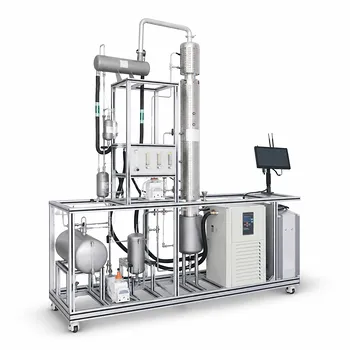
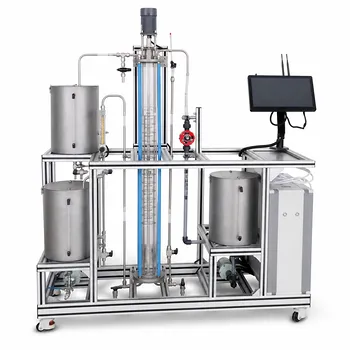
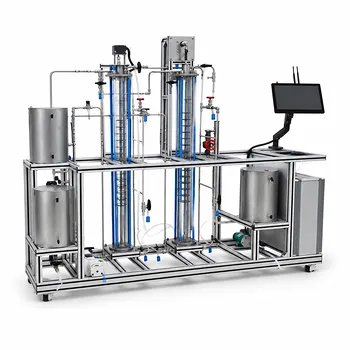
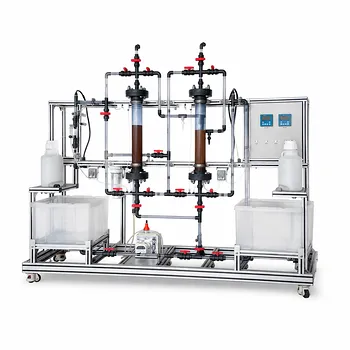
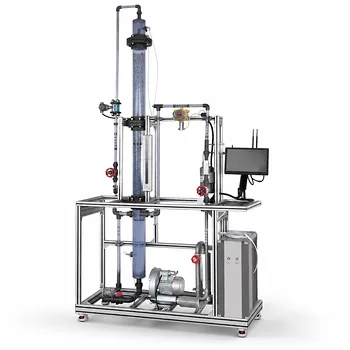
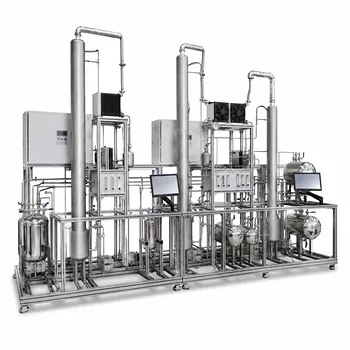
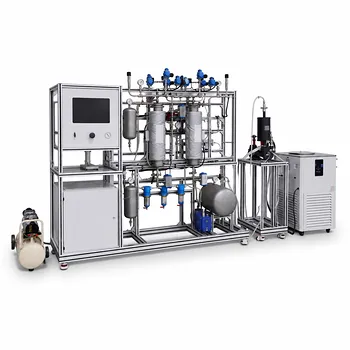
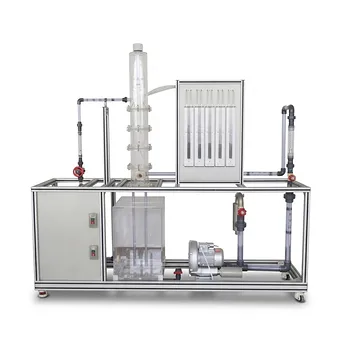
The most effective evaluation starts by aligning column internals with your specific teaching objectives. Instead of asking which internal is “better,” educators should first define the mass transfer principles they want students to observe, measure, and internalize. Tray columns excel at making multi-stage separation and hydraulic phenomena visible, while packed columns shine when demonstrating continuous contact, low pressure drop, and Height Equivalent to a Theoretical Plate (HETP) concepts. The ideal pilot plant either provides modular, interchangeable internals or a dual-column setup so students can directly compare the two.
The core takeaway: The choice between tray and packed internals is not a one-size-fits-all decision—it’s a curriculum design tool. Educators should select the internal that best showcases the specific fundamental phenomena they want to teach, and whenever feasible, aim for a modular or dual-column system that lets students discover the performance differences firsthand.
Why Educational Objectives Drive the Internal Selection
Every column internal emphasizes a different set of chemical engineering fundamentals. The right choice for a teaching lab is the one that makes those fundamentals tangible.
The Teaching Strengths of Tray Columns
Tray columns give students a stage-by-stage view of separation. They can directly observe weeping, entrainment, and flooding—hydraulic phenomena that are abstract in theory but become intuitive when seen in action.
These units are excellent for teaching multi-stage separation calculations, plate efficiency, and the impact of weir height or downcomer design on operation.
Because trays are easier to clean and can handle fouling or solids-laden streams, they are forgiving in a student lab environment where process fluids may vary.
The Learning Advantages of Packed Columns
Packed columns are the natural platform for continuous contact mass transfer concepts. Students measure pressure drop across the bed and calculate HETP, directly linking packing characteristics to separation performance.
They demonstrate low pressure drop operation, making them ideal for vacuum distillation experiments or processes where a low liquid holdup is critical for safety.
For the many teaching labs that run small-diameter columns (under 0.6 meters), random or structured packing is usually the more cost-effective and easier-to-install option.
Beyond the Column Type: Critical Engineering Considerations
Educational value is not the only factor. A well-rounded evaluation weighs practical constraints that affect how the pilot plant will live in the laboratory.
Diameter and Scale
For small-scale educational pilot plants, packed columns dominate because they are simpler to fabricate and offer lower capital cost per unit of separation.
Tray columns become more practical and pedagogically rich when the column diameter allows visual access to the plates. At very small diameters, tray fabrication and maintenance become disproportionately cumbersome.
Process Safety and Chemical Compatibility
Low liquid holdup in packed columns reduces the inventory of hazardous chemicals, which can be a significant safety advantage in a teaching lab.
However, if experiments involve suspended solids or polymerizing fluids, trays are the safer, more cleanable choice. Packing can foul and lose efficiency quickly under those conditions.
Cost and Maintenance
The cost structure differs sharply: tray column internals are priced based on column diameter (with fabrication complexity factors for bubble cap, valve, or sieve types), while packing is priced per unit volume of material.
For teaching labs, long-term maintenance and visual inspection ease often favor tray columns. Packed columns require careful handling to avoid channeling and maldistribution, which can degrade student experiments without obvious visual cues.
Understanding the Trade-offs
This is where objectivity matters most. Each internal type carries inherent limitations that educators must accept or mitigate.
Tray columns can exhibit lower separation efficiency per unit height than packed columns, requiring a taller column for the same separation task. They also have a more limited operating range (turndown ratio) before hydraulics fail, and the visual observation advantage requires transparent column sections that may limit temperature or pressure ranges.
Packed columns suffer from reduced transfer efficiency at low liquid loads because the packing surface may not be fully wetted. They are not recommended for fluids that contain solids or are prone to polymerization. Additionally, the packing itself can be a higher-cost consumable if damaged or contaminated.
The modular compromise: A pilot plant with interchangeable internals—or a facility that runs both tray and packed columns side by side—is the only way to bypass this trade-off entirely. This setup lets students generate comparative data on efficiency, pressure drop, and hydraulics, which is the ultimate learning experience.
Making the Right Choice for Your Course Goals
Use your specific teaching priorities as the deciding factor. The following recommendations will guide a confident selection.
- If your primary focus is visualizing hydraulics and understanding stage-wise contact: Choose a tray column with transparent sections so students can see weeping, entrainment, and flooding in real time.
- If your primary focus is teaching HETP concepts and continuous mass transfer with low pressure drop: Invest in a packed column with multiple pressure taps and the ability to swap between different packing types.
- If you must cover both concepts on a limited budget and space: Prioritize a single modular unit that allows you to switch between a short tray section and a packed bed. This lets students run back-to-back experiments with the same column shell.
- If your course emphasizes process safety and hazardous material handling: Lean toward a packed column for its low liquid holdup, but verify that your experimental fluids are free of solids or fouling tendencies.
A thoughtful evaluation always returns to one principle: the best column internal is the one that turns abstract theory into a measurable, visible, and discussable experience for your students.
Summary Table:
| Feature | Tray Columns | Packed Columns |
|---|---|---|
| Primary Teaching Focus | Stage-by-stage separation & visual hydraulics (flooding, weeping) | Continuous mass transfer & HETP concepts |
| Visual Observation | Excellent (visible tray behavior in transparent sections) | Limited (closed bed structure) |
| Pressure Drop | Higher pressure drop | Low pressure drop (ideal for vacuum distillation) |
| Liquid Holdup | Higher liquid holdup | Lower liquid holdup (safer for hazardous chemicals) |
| Fouling & Cleaning | Easy to clean, handles solids and varying fluids well | Prone to fouling, harder to clean and maintain |
| Small Scale Cost | Higher fabrication complexity and cost | Lower capital cost, easier to install at small diameters |
Empower Your Students with Hands-On Engineering Excellence
Choosing the right distillation setup is key to transforming abstract chemical engineering theories into clear, measurable learning experiences. LABPARK provides state-of-the-art Educational and Vocational Unit Operations Pilot Plants across chemical engineering, bioprocess & biotech, and environmental & water treatment.
Whether you need modular, interchangeable column internals or customized dual-column systems, we help universities, research institutes, and enterprises design the perfect laboratory setups to meet their curriculum and research goals.
Ready to upgrade your lab? Contact LABPARK today to consult with our experts and request a custom quote!
Related Products
- Continuous Sieve-Plate Distillation Pilot Plant for Unit Operations Laboratory Education
- Multi-Functional Special Distillation Educational Pilot Plant
- Multi-Modal Distillation Unit Operations Training Pilot Plant
- Continuous Batch Extractive Distillation Educational Pilot Plant
- Dual-Mode Rectification Pilot Plant for Practical Training Unit Operations
People Also Ask
- How does catalyst water concentration affect distillation pilot plant design? Key separation train choices.
- Why is vacuum operation capability an essential feature for a distillation unit operations pilot plant? Unlock Efficiency
- How can real-time carbon number prediction improve distillation pilot plants? Optimize control.
- How to select the right activity coefficient model (Wilson, NRTL, UNIQUAC) for distillation pilot plants?
- What are the primary reflux ratio control strategies? Master Distillation Unit Operations