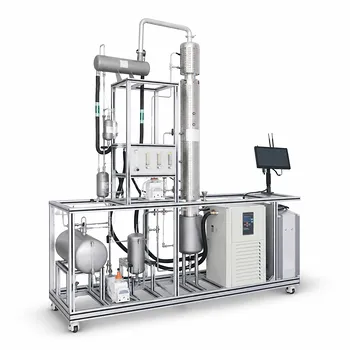
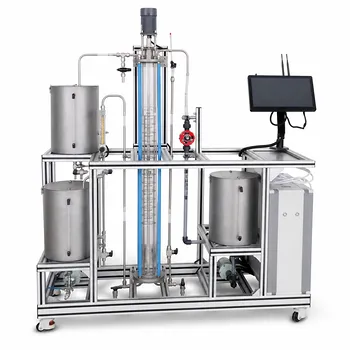
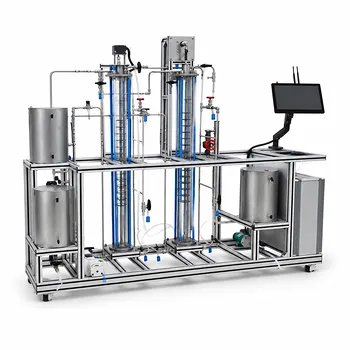
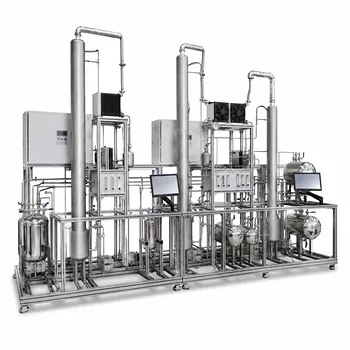
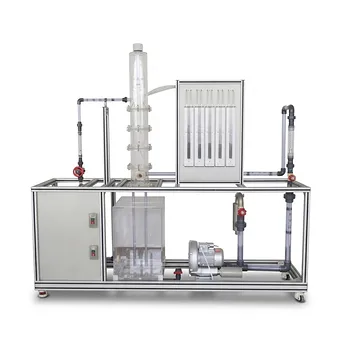
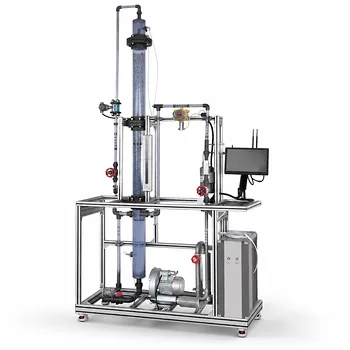
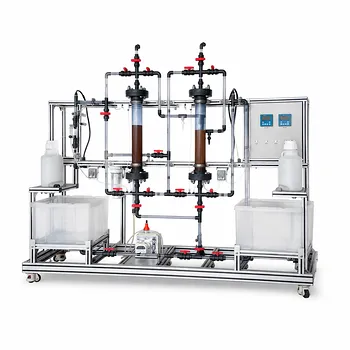
Batch distillation is the clear choice when flexibility and pedagogy collide. A batch distillation column pilot plant is preferred over a continuous system in educational and research settings whenever you need to process small or highly variable feed quantities, separate multi-component mixtures into multiple fractions using a single column, or teach dynamic, unsteady-state process behavior. Its ability to handle changing compositions with minimal hardware makes it the go-to tool for laboratories where the only constant is change.
The real question isn't just "when" but "why" — batch pilot plants thrive in environments that mirror research, development, and vocational training, where the learning objective is to understand transient behavior, not to simulate a factory floor. Continuous columns excel at demonstrating steady-state industrial scale, but batch distillers offer the ultimate versatility for exploring the fundamentals of separation science.
The Core Scenarios That Favor Batch over Continuous
The decision to select a batch distillation pilot plant over a continuous one hinges on the nature of the feed, the learning objectives, and the operational constraints of a teaching laboratory. These scenarios map directly to the inherent characteristics of batch processing.
When the Feed Comes in Small, Irregular Quantities
Batch columns are designed for campaign-based operation. If your raw materials are produced in batches or the pilot plant needs to process small volumes of material, a continuous column—which requires a steady feed stream—becomes impractical.
A single batch still can process a few liters of a custom mixture, making it ideal for R&D labs where test samples are precious and volumes are too low to justify the continuous system’s feed tanks, pumps, and control loops.
When Feed Composition and Purity Requirements Change Frequently
Batch distillation provides supreme operational flexibility. The same column can handle vastly different mixtures day after day simply by adjusting the reflux ratio and collecting fractions at different times. This is impossible in a continuous system, which is hard-wired to separate one specific binary mixture into two steady-state products.
For a training environment, this means a single batch pilot plant can be used for multiple student projects across different courses—processing alcohols one week and aromatic isomers the next—without any physical reconfiguration.
When Multi-Component Mixtures Must Be Separated into Several Pure Fractions
This is where batch distillation truly shines. A single batch column can separate a multi-component mixture into multiple high-purity fractions sequentially, distilling off components from lowest to highest boiling point over time.
A continuous column, by contrast, produces only two product streams (distillate and bottoms) simultaneously. To achieve the same multi-component separation continuously, you would need multiple columns in series—dramatically increasing cost, footprint, and complexity.
When Fouling or Solids-Laden Feeds Are Expected
Batch stills are naturally more robust against fouling. Feeds containing suspended solids, tars, or polymerizing agents are notorious for clogging the preheaters, distribution plates, and downcomers of continuous columns.
In a batch column, the residue remains in a simple reboiler, and the lack of delicate feed distribution hardware makes cleaning and maintenance straightforward. This is a practical, often overlooked, advantage for educational plants that may be used with unknown or experimental mixtures.
The Pedagogical Power of Transient Operation
Beyond the physical processing advantages, the batch column’s unsteady-state nature makes it an incomparable teaching tool. This is a deep need that transcends simple hardware selection.
Demonstrating Dynamic Process Behavior
Batch distillation is a non-stationary process where composition changes over time. As the run progresses, the temperature profile shifts, the distillate purity declines under constant reflux, and the column holdup redistributes.
This allows students to observe and control a true transient process—something a continuous column operating at steady state cannot provide. They learn to manipulate reflux ratio dynamically, trace temperature fronts, and understand the critical link between vapor-liquid equilibrium and time.
Simplifying Equipment and Reducing Cognitive Load
A batch pilot plant requires far less peripheral equipment than a continuous setup. There are no feed pumps, feed preheaters, or complex level control loops. This stripped-down architecture allows students to focus on the core separation phenomena—mass transfer, tray efficiency, and energy balances—without being overwhelmed by the auxiliary control systems.
Understanding the Trade-offs
No system is perfect. A batch distillation column is the right tool for many educational goals, but it’s critical to recognize what it doesn’t do well.
Not Representative of Large-Scale Industrial Production
The vast majority of high-volume chemical production relies on continuous distillation trains. If your educational program’s goal is to prepare students for an operator’s job at a petrochemical or commodities plant, a batch pilot plant alone will leave critical gaps in understanding steady-state control, material balance closure, and multi-column integration.
Inherent Energy Inefficiency
Batch distillation is thermodynamically less energy-efficient than continuous distillation for the same separation load. The repeated heating and cooling cycles, combined with the fraction-cutting process, consume more energy per unit of product. This isn’t typically a dealbreaker in a teaching lab, but it’s a limitation to be aware of when discussing industrial scalability.
Limited Throughput
A batch column is not a high-production machine. Its throughput is capped by the still’s volume and cycle time. This is precisely why it’s chosen for small-scale training, but it can frustrate attempts to simulate capacity-based debottlenecking exercises.
Making the Right Choice for Your Training Goal
Your selection should be driven by what you want your students or researchers to learn, not just by what the equipment can process. Use this goal-oriented guide to decide.
- If your primary focus is teaching dynamic process control and transient phenomena: Choose a batch distillation column. Its constantly changing composition and temperature profiles are a living textbook for unsteady-state operations.
- If your primary focus is demonstrating industrial-scale, high-volume separation and steady-state material balances: A continuous distillation column pilot plant—despite its higher complexity—will better mirror the real-world chemical engineering environment.
- If your primary focus is maximizing versatility in a small research or teaching lab with limited space and budget: The batch column is the undeniable winner. Its single-column, multi-fraction capability allows you to run dozens of different experiments without building a sprawling multi-unit facility.
- If your primary focus is handling challenging, unknown, or fouling-prone mixtures frequently: Opt for the batch still’s simple, cleanable design to avoid the maintenance headaches that continuous column internals would face.
The choice between batch and continuous is a choice between deep, flexible exploration and dedicated, steady-state simulation. Align the equipment’s transient nature with your curriculum’s learning outcomes, and you will select the tool that transforms theory into lasting insight.
Summary Table:
| Scenario / Feature | Batch Distillation Column Pilot Plant | Continuous Distillation Column Pilot Plant |
|---|---|---|
| Feed Quantity & Volume | Small, irregular, or campaign-based feeds | Large, continuous, and steady-state feeds |
| Mixture Complexity | Multi-component separation in a single column | Limited to binary separation per column |
| Operational Flexibility | High (adjust reflux/time for different mixtures) | Low (designed for specific steady-state feeds) |
| Fouling & Solids Handling | High resistance (simple reboiler, easy cleaning) | Low resistance (clogs preheaters and internals) |
| Pedagogical Value | Teaches dynamic, transient, unsteady-state process | Teaches steady-state operation & mass balance |
| System Complexity | Lower (no feed pumps, preheaters, or complex loops) | Higher (requires advanced auxiliary controls) |
Equip Your Lab with the Right Unit Operations Pilot Plant
Choosing between batch and continuous systems is critical to aligning your laboratory capabilities with your educational and research objectives. LABPARK provides state-of-the-art Educational and Vocational Unit Operations Pilot Plants in chemical engineering, bioprocess & biotech, and environmental & water treatment designed specifically for universities, research institutes, and enterprises.
Whether you need the dynamic flexibility of a batch distillation column or the industrial realism of a continuous pilot plant, our experts are here to help you design the perfect solution for your curriculum.
Contact LABPARK today to discuss your project requirements and receive a custom quotation!
Related Products
- Continuous Batch Extractive Distillation Educational Pilot Plant
- Continuous Sieve-Plate Distillation Pilot Plant for Unit Operations Laboratory Education
- Multi-Functional Special Distillation Educational Pilot Plant
- Multi-Modal Distillation Unit Operations Training Pilot Plant
- Dual-Mode Rectification Pilot Plant for Practical Training Unit Operations
People Also Ask
- Wilson vs. UNIQUAC: How to Choose the Right Thermodynamic Model for Your Pilot Plant
- How does the feed thermal state influence distillation pilot plant design and utility consumption?
- Why use non-ideal VLE calculations in distillation pilot plants? Ensure accurate scale-up & purity
- How to Configure a Distillation Pilot Plant? Key Steps for Multi-Mode Setup
- How to Integrate Spectroscopy in Distillation Pilot Plants for Advanced Process Control