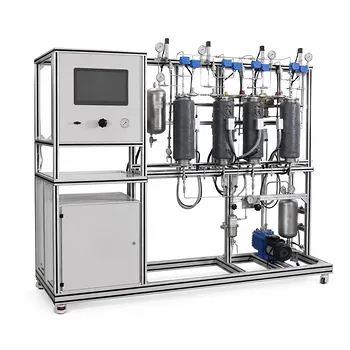
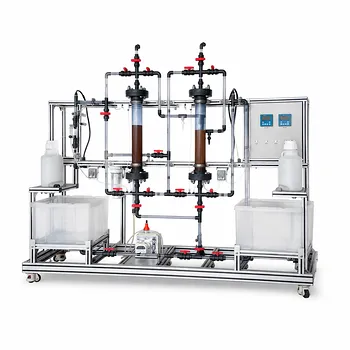
When designing or operating glass unit operations in a pilot plant, you must adhere to three non‑negotiable practices: use chemically resistant PTFE gaskets on all sealed joints, wrap all glass exteriors with protective plastic tape, and ensure the system has dedicated, adequately sized venting to atmosphere. These measures directly counteract the primary failure modes of glass—leakage at joints due to chemical attack, catastrophic shattering from mechanical impact, and dangerous pressure accumulation. However, safe operation of a glass pilot plant demands more than just these physical fixes; it requires embedding the equipment within a robust, multi‑layered safety culture that spans design review, operational procedures, and emergency planning.
The core challenge is that glass offers unmatched visibility and chemical inertness, but its brittleness and sensitivity to stress concentration create unique hazards. A safe glass pilot plant therefore marries specialised sealing and mechanical protection with a defense‑in‑depth safety philosophy—from inherent design choices through automatic shutdown interlocks to operator training—so that a single failure never cascades into a serious incident.
Understanding the Unique Risk Profile of Glass Equipment
Glass components such as distillation columns, absorption columns, and associated piping bring distinct hazards that steel equipment does not. Recognising these vulnerabilities is the first step in designing a safe system.
The Fragility Factor and Secondary Hazards
Glass fails suddenly and without plastic deformation. A minor bump, thermal shock, or even a propagating scratch can trigger catastrophic fracture. Unlike metal, there is no visible bulging or leakage warning before failure.
The consequences are magnified in pilot plants. A broken glass section can release toxic, flammable, or corrosive fluids directly into the laboratory space. Because pilot plants are often operated by students or rotating staff, the probability of an accidental impact is higher than in a dedicated production environment.
Pressure Sensitivity and the Illusion of Open‑Vent Safety
Many glass pilot plants are designed for low‑pressure or vacuum service. Even a slight overpressure—caused by a blocked vent, a runaway reaction, or a utility failure—can transform a glass column into a fragmentation hazard. Glass equipment does not stretch; pressure that would merely deform a metal pipe can shatter a glass one.
This is why the primary reference’s emphasis on adequate venting to atmosphere is vital. It is not a secondary feature but the primary overpressure defense. Without it, the equipment has virtually no pressure‑containment margin.
Chemical Compatibility and Joint Corrosion
While borosilicate glass is highly resistant to most chemicals, the weak point is always the sealing interface. Gaskets that swell, degrade, or creep can lead to leaks of hazardous substances. In a glass distillation column handling aggressive solvents or acids, an incompatible gasket can fail within hours, creating both a chemical exposure risk and a flammable atmosphere.
Foundational Sealing Practices for Glass Joints and Connections
The choice of gasket and the method of joint assembly determine whether a glass system remains leak‑tight over days of continuous operation.
Why PTFE Gaskets Are the Standard
PTFE (polytetrafluoroethylene) gaskets provide near‑universal chemical resistance and a wide temperature tolerance. They do not absorb solvents, swell, or become brittle in the presence of acids, bases, or organic mixtures commonly encountered in pilot‑scale unit operations. This makes them the default recommendation for glass‑to‑glass and glass‑to‑metal connections in educational and research plants.
However, PTFE has a notorious property: cold flow (creep). Under constant compressive load, it slowly deforms, which can relax the bolt tension on a flange. This means joints must be re‑torqued after initial thermal cycles and periodically inspected. A loose PTFE gasket loses sealing capability, inviting leaks.
Gasket Selection Beyond the Primary Reference
While the primary reference rightly prescribes PTFE, it does not mention the full range. For high‑temperature applications (>200°C) often found in advanced organic synthesis or thermal fluid heating, flexible graphite gaskets may be necessary, though compatibility with the process fluid must be verified. Envelope‑style PTFE gaskets (PTFE over an elastomer core) can offer better recovery but sacrifice some chemical resistance.
The ASME B31.3 Process Piping standard, referenced in your references, provides the framework for selecting gaskets, bolts, and flange ratings even in small‑bore glass piping. Operating pressures and temperatures must be derated for glass’s low tensile strength, but the joint design principles remain: a gasket must be compatible with the fluid and capable of maintaining a seal at the design pressure.
The Critical Role of Joint Alignment and Support
A sealing failure in a glass system is rarely the gasket’s fault alone. Misalignment, excessive pipe strain, or thermal expansion can unload a gasket and cause a leak. All glass piping must be independently supported so that no weight or bending moment is transmitted through the glass flanges. Flexible bellows or PTFE-lined expansion joints should be used where thermal growth is expected.
Additionally, sight glasses, pump seals, and instrument connections are all potential leak points. During design and operation, a systematic hazard identification (as recommended by the supplementary reference) should flag every joint and ask: “What happens if this seal leaks?” The answer must be met with secondary containment, ventilation, or interlock trips.
Mechanical Protection: Shielding Glass from Physical Impact
The primary reference’s instruction to wrap glass with protective plastic tape is a simple but highly effective layer of defense. Let’s unpack why it works and how to implement it properly.
The Function of Protective Plastic Tape
The tape acts as a sacrificial armor. A sharp blow that would shatter bare glass often just cracks the tape, leaving the glass intact. If the glass does break, the tape can hold the fragments together, reducing the spray of shards and fluid. It is not a substitute for proper guards, but a low‑cost, immediate mitigation.
The tape must be applied in overlapping layers to cover the entire glass exterior, including bends and connections. A transparent tape allows visual inspection of the glass for cracks, a distinct advantage. However, the tape also can hide developing fractures; operators must be trained to look for tape lifting or discoloration, which can signal underlying damage.
Beyond Tape: Physical Guards and Layout
For larger glass columns or areas with high personnel traffic, rigid polycarbonate shields or expanded metal guards should be installed. These provide impact resistance far beyond what tape can offer. In pilot plants, these guards must be easily removable for adjustment but interlocked to prevent operation without them.
Layout also matters. Locating glass equipment away from walkways, above eye‑level where tools might be carried, and behind transparent barriers are all inherent safety design choices that reduce the probability of impact accidents.
Pressure Management: Avoiding the Catastrophic Rupture
Venting to atmosphere is only the first step. A safe glass system must incorporate a full pressure‑management strategy that accounts for both normal operation and upset conditions.
Adequate Venting and Relief Sizing
“Adequate venting” means that the vent area must be sized to handle the maximum gas generation rate from any credible scenario: a blocked outlet, a runaway exothermic reaction, or the sudden introduction of a volatile component. An undersized vent can still allow pressure to build dangerously.
Use a relief valve or rupture disc in series with the vent line, especially if the pilot plant might operate with a closed‑off overhead system. The device must be set at a pressure well below the glass’s safe working limit, and its discharge must be directed to a safe location—ideally into a fume hood or a scrubber, never at face level.
Flame Arrestors and Inerting Considerations
When handling flammable solvents in a glass column, the vent becomes a potential ignition point. Install an in‑line flame arrestor to prevent a flashback from entering the column. The supplementary reference on reactor safety reinforces this: for pressure systems, safety vent systems and flame arrestors must be integrated.
Similarly, if the process can generate an explosive atmosphere, the entire glass system may need to be inerted with nitrogen. This introduces an additional sealing requirement: all joints must be gas‑tight not just for leak prevention but to maintain the inert blanket. A positive‑pressure inerting system also requires a separate relief path to avoid over‑pressurizing the glass.
Integrating the Multi‑Layered Safety Concept
The references advocate a multi‑layered safety concept:
- Inherent Safety (Design) – Choose the largest possible vent, locate the equipment behind shields, and select stable operating chemistries.
- Basic Process Control Systems – Use pressure sensors and temperature controllers to keep variables within safe windows.
- Critical Alarms and Human Intervention – Set high‑pressure alarms that demand immediate operator action.
- Automatic Safety Shutdown (Interlocks) – If pressure exceeds a critical limit, automatically shut off the heating supply and open an isolation valve to a vent.
- Pressure Relief Systems – The last resort: a relief valve or rupture disc that prevents the glass from shattering.
For a glass pilot plant, layer 4 and 5 are often the most cost‑effective additions because the equipment cannot be made inherently pressure‑resistant. Even a student‑operated distillation should have a hard‑wired high‑temperature cut‑off and a mechanical relief valve.
Operational Safety Procedures: The Human Layer
Even a perfectly designed glass plant can cause harm if operated without rigorous protocols. The supplementary references provide a thorough checklist of what must be in place.
Pre‑Run Safety Verification and Training
All operators must undergo hands‑on training specific to the glass equipment, cover emergency shutdown sequences, and sign safety commitments. Before any run, conduct a pre‑startup review: check gasket integrity, verify that all vents are unobstructed, test interlock function, and ensure PPE—including splash goggles, face shields, and chemical‑resistant gloves—is worn.
Special attention must be given to operations generating toxic or volatile gases: these must occur solely inside a functioning fume hood. The glass column may be totally enclosed, but sampling ports, vent lines, and potential leak points can still release vapors into the lab.
Emergency Shutdown and Response Planning
Every pilot plant must have a written, practiced emergency shutdown protocol. For glass systems, this typically means first cutting the heat source, then opening the vent fully, and isolating the feed. The protocol must also account for utility outages—loss of cooling water to a condenser, loss of power that stops a stirrer, loss of instrument air that fails a control valve—all of which can rapidly create an overpressure scenario.
A dedicated “all‑stop” button, easily accessible and hard‑wired to shut valves, should be part of the design. In the event of a major release, the procedure must specify how to contain the spill, evacuate the immediate area, and use emergency showers and eyewashes.
Routine Inspection and Maintenance
Glass joints can loosen due to thermal cycling and vibration. A daily walkaround inspection should check for discolored tape (which may indicate a chemical attack or crack), loose flange bolts, and any visible stress marks on the glass. PTFE gaskets should be re‑torqued after the first heat‑up, and a log kept. Waste disposal and cleanliness after a run prevent cross‑contamination and corrosion in the next session.
Understanding the Trade‑offs
The Durability‑Transparency Trade‑off
Glass’s main advantage—visual observation—comes at the cost of fragility. You cannot subject glass to the same pressures or mechanical shocks as a metal column. This restricts the range of experiments you can safely perform. For reactions with a high chance of pressure excursions, a metal reactor with sight glasses protected by shields is often a better inherent design.
Sealing Reliability vs. Ease of Assembly
PTFE gaskets are chemically inert but can require frequent retightening, especially after temperature swings. Over‑tightening, however, can crack a glass flange. This demands trained technicians who understand the delicate balance. In an educational setting, this can be a burden; therefore, consider using spring‑loaded compression fittings or bellows to maintain a constant seal force.
Protective Tape: Hidden Crack Risk
While protective tape prevents shattering, it can also mask the early stages of a crack. A rigorous inspection protocol with magnifying devices and a schedule for tape replacement must be in place. Relying solely on tape without other guards or pressure protections is dangerous.
Venting Adequacy and Environmental Release
Venting to atmosphere is essential, but it can release volatile organic compounds (VOCs) if no condenser or scrubber is in‑line. In many labs, environmental and health regulations require that the vent be connected to a local exhaust ventilation system. The challenge is to ensure that this connection does not accidentally apply a vacuum to the glass column, which can cause implosion. A pressure‑vacuum relief valve or a liquid seal bubbler solves this.
Making the Right Choice for Your Goal
Your specific priorities will shape how you implement these practices. Use the following guidelines as a decision framework based on the most common pilot plant objectives.
- If your primary focus is reliable chemical sealing: Choose PTFE gaskets as the baseline, but apply a structured retorquing schedule and invest in alignment supports to prevent joint relaxation. For extremely aggressive solvents, verify PTFE compatibility at operating temperature and consider envelope gaskets for better rebound.
- If your primary focus is protecting operators from glass shattering: Apply protective plastic tape to every glass surface and supplement with polycarbonate shields in high‑risk zones. Embed “do not operate without guards” into the daily checklist and interlock critical shields with the control system.
- If your primary focus is preventing overpressure failures: Size the vent for the worst‑case gas evolution, fit a relief device set at a fraction of the glass’s burst pressure, and install a flame arrestor if flammables are present. Always include a hard‑wired shutdown interlock triggered by high pressure or high temperature.
- If your primary focus is running a safe educational pilot plant: Integrate all of the above, but devote extra effort to written emergency procedures, mandatory safety training, and a physical emergency stop button. Make the plant’s operation transparent—students must understand why the tape and gasket choices matter, not just follow instructions.
- If your primary focus is meeting industrial design standards: Align all piping, gasket selection, and pressure rating with ASME B31.3, and use the multi‑layered safety concept as a framework for your design hazard analysis. Document the design basis for every relief and interlock function.
Glass pilot plants are extraordinary teaching and research tools—their transparency enables the kind of deep, intuitive understanding that no simulation can replace—but their safety is never a product of a single component; it is the product of a coherent, multi‑layered strategy that starts with PTFE gaskets and protective tape and ends in a culture where every student knows exactly what to do when the alarm sounds.
Summary Table:
| Safety Practice | Primary Function | Operational Key Point |
|---|---|---|
| PTFE Gaskets | Chemical-resistant sealing | Requires periodic retorquing due to cold flow (creep) |
| Protective Tape | Impact shielding & fragment control | Must be transparent to allow routine crack inspection |
| Dedicated Venting | Overpressure prevention | Size for worst-case gas load; pair with relief devices |
Upgrade Your Lab Safety with LABPARK
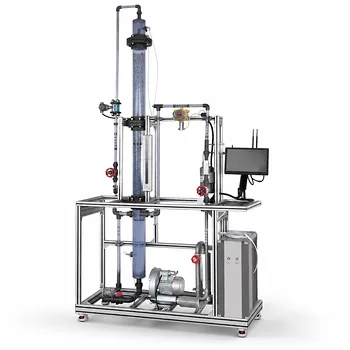
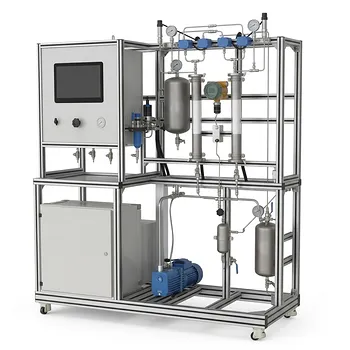
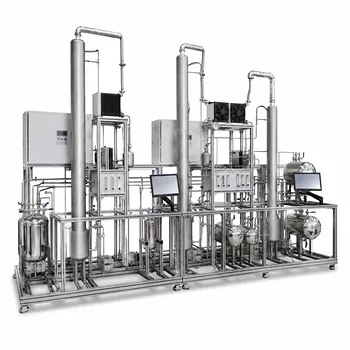
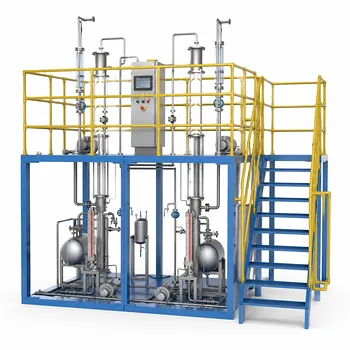
Building a safe, high-performance pilot plant requires the right equipment and engineering expertise. LABPARK provides state-of-the-art Educational and Vocational Unit Operations Pilot Plants in chemical engineering, bioprocess & biotech, and environmental & water treatment. Designed specifically for universities, research institutes, and enterprises, our systems integrate advanced safety, robust sealing standards, and clear process visibility to protect operators while delivering reliable research data.
Ready to design a safe, compliant pilot plant? Contact our experts today to discuss your project requirements!
Related Products
- Multi-Functional Special Distillation Educational Pilot Plant
- Multi-Modal Distillation Unit Operations Training Pilot Plant
- Continuous Sieve-Plate Distillation Pilot Plant for Unit Operations Laboratory Education
- Absorption and Desorption Educational Unit Operations Pilot Plant
- Packed Bed Absorption Educational Unit Operations Pilot Plant
People Also Ask
- Why does simple distillation yield higher efficiency than flash distillation? Key thermodynamic differences.
- How does double temperature difference control improve distillation pilot plants? Stabilize purity.
- Why is the acentric factor important in pilot plants? Fluid property prediction.
- How to Integrate Spectroscopy in Distillation Pilot Plants for Advanced Process Control
- How to Verify Distillation Boundary Lines & Composition Regions with Pilot Plants