The practical dividing line is pressure. When teaching students to choose gas-moving equipment for a pilot plant, instructors must anchor the decision on the required discharge pressure. Blowers are the clear choice for moderate pressure increases—typically 0.03 to 5 bar. Once the process demands a discharge pressure above 5 bar, a compressor becomes necessary, and the cost structure changes dramatically.
The decision between a blower and a compressor is a threshold, not a spectrum. Below ~5 bar, a blower offers a simple, low-cost solution. Above 5 bar, the equipment’s mechanical demands force the selection of a compressor, which carries a significantly higher capital cost driven by thicker pressure vessels, more complex internals, and a larger bare module factor. Instructors should train students to recognize this boundary and then use fluid power to estimate purchased costs and apply the correct bare module factor (Fbm) to understand total installed expense.
The Pressure Boundary: Where Blowers End and Compressors Begin
The first concept students must internalize is the clean pressure separation between gas-handling equipment. This isn’t arbitrary; it reflects the fundamental strength of materials and the purpose of the machine.
Defining the Operating Ranges
Fans generate extremely low pressure, less than 0.03 bar. They are not part of the blower-compressor discussion but provide the starting point for the full equipment hierarchy.
Blowers occupy the middle ground. Their designed discharge pressure spans from approximately 0.03 bar up to 5 bar. This makes them ideal for tasks like pneumatic conveying, aeration, or feeding gas into low-pressure reactors.
Compressors take over for any requirement above 5 bar. They are built to develop high pressure ratios, often taking suction from a much lower pressure and delivering to high-pressure storage, reactors, or injection systems.
Using Pilot Plant Data to Cement the Concept
A well-instrumented pilot plant makes this abstract boundary tangible. Students can plot flow rate versus discharge pressure for a given unit. The point where a typical rotary or centrifugal blower's performance curve can no longer meet the system's pressure demand—and where a compressor's curve must begin—is the operational decision point. The training unit should clearly show that blowers are not simply "small compressors"; they are a separate equipment class with a hard upper limit.
The Cost Reality: Why a Compressor is an Entirely Different Asset
The moment a student selects a compressor, the economic analysis fundamentally changes. An instructor’s duty is to make this cost escalation explicit and quantifiable.
The Structural Cost Driver
A compressor is dramatically more expensive than a blower for the same flow. This is not a small multiplier. The cost stems from three practical engineering demands:
- Thicker pressure-bearing walls to safely contain high pressures.
- Larger volumetric displacement (and thus larger machine casing) to handle the suction gas and compress it to high ratios.
- Intricate moving parts such as pistons, valves, diaphragms, or high-speed impellers with tight clearances, all manufactured to precise tolerances.
Teaching Cost Estimation with Bare Module Economics
To ground the cost discussion in real chemical engineering economics, introduce students to the estimation method using fluid power (in kW). The calculated fluid power correlates directly to the purchased equipment cost from vendor curves.
Then, instructors must drive home the impact of the bare module factor (Fbm). A simple blower system will have a modest Fbm. A compressor’s factor, however, is much larger and varies significantly based on two critical selections:
- Compressor type: Reciprocating piston, centrifugal, and diaphragm designs each have distinct Fbm values reflecting their different material intensity and auxiliary equipment (e.g., intercoolers, lubrication systems).
- Materials of construction: Moving from carbon steel to stainless steel for process compatibility multiplies the bare module cost because of the higher material expense and fabrication difficulty.
By running this calculation—estimating purchased cost from fluid power, then multiplying by the correct Fbm—students see not just that a compressor is “more expensive,” but how much more, and why a pilot plant’s budget might break if the pressure boundary is misjudged.
Beyond the Boundary: Guiding the Next-Level Compressor Selection
Once a student knows a compressor is mandatory, another layer of decision-making emerges. The instructor must connect the pilot plant’s operational goals to the specific compressor type, as this choice also influences cost and performance.
Mapping Compression Technology to the Process
Reciprocating compressors (both single and multi-stage) dominate when the process calls for high pressure ratios at low flow rates (often below 10 Mscfd, and discharge heads > 2000 psi). In the pilot plant, this is the right tool for high-pressure gas dosing or catalyst regeneration loops. Its cylinder clearance means students can also explore volumetric efficiency losses, a concept absent in centrifugal machines.
Centrifugal compressors are dynamic machines suited to higher flow rates and moderate-to-high pressures, with smooth operation and lower long-term maintenance. Their high-efficiency operation curve can be demonstrated directly, and since they lack cylinder clearance, they introduce no volumetric efficiency penalty—a clear, measurable advantage in a student exercise.
Rotary compressors fill a niche for moderate discharge pressure and low power consumption, while axial compressors push to the highest flow capacities but at lower pressure ratios. A dedicated pilot unit can demonstrate these trade-offs by varying the back-pressure and measuring energy consumption.
Connecting Type Selection Back to Cost
Each compressor type carries a different bare module factor. A diaphragm compressor, for instance, might be necessary when absolute cleanliness is required but comes with a much higher Fbm. Integrating this step teaches students that pressure is the first cut, but the nature of the compression task—flow, head, and material compatibility—defines the final cost structure.
A Systematic Decision Framework for Students
To prevent confusion, instructors should provide students with a repeatable, logical sequence. A flowchart-like mental model works best in the pilot plant lab.
Step-by-Step Evaluation
- Determine the system’s required discharge pressure.
- If the pressure is <0.03 bar, the task is not for a blower or compressor; select a fan.
- If the pressure is between 0.03 and 5 bar, a blower is the default choice. Proceed to size it using fluid power and a simple cost factor.
- If the pressure exceeds 5 bar, a compressor is mandatory.
- For a compressor, define the volumetric flow rate and pressure ratio. Use a performance envelope chart (flow vs. pressure) to shortlist the viable compressor types (e.g., reciprocating for low flow/high head, centrifugal for higher flow).
- From the shortlist, estimate purchased cost using fluid power (kW) for each candidate type.
- Apply the type- and material-specific bare module factor to arrive at the total installed bare module cost. This final number becomes the basis for economic comparison.
This framework transforms a potentially overwhelming equipment selection task into a series of clear, data-driven decisions.
Understanding the Trade-offs: Operational Nuances in Pilot Plant Design
No teaching exercise is complete without an honest discussion of the downsides and hidden complexities.
The Simplicity of Blowers is a Double-Edged Sword
A blower is mechanically simpler and far less expensive, but it cannot push beyond its pressure limit. Students might be tempted to oversize a blower to “squeeze out” a bit more pressure. This fails in practice because the pressure rise is limited by the machine’s fundamental design, and over-pressurizing can lead to failure or excessive recirculation. The instructor should demonstrate that once the 5-bar threshold is crossed, no amount of blower over-sizing is a substitute for a compressor.
Compressor Complexity Creates Hidden Skill Demands
Reciprocating compressors, while perfect for high-pressure, low-flow roles, introduce pulsating flow and require careful consideration of interstage cooling if multi-staging is needed. Centrifugal compressors are vulnerable to surge if the flow drops below a minimum stable point. These operational characteristics mean that in a pilot plant, a compressor also brings a higher training burden and more complex control strategies that the instructor must address.
The Cost of Simplification in Academic Settings
A pilot plant built only with blowers will be cheaper and easier to maintain, but it will fail to teach students the compressor-type selection criteria, polytropic efficiency calculations, and bare module cost estimation that industry demands. Conversely, a plant full of diverse compressors is a rich learning environment but can be prohibitively expensive. The instructor’s real-world task is to balance this trade-off, selecting just enough compressor diversity—perhaps one reciprocating and one centrifugal stage—to demonstrate the core principles without exploding the budget.
How to Apply This to Your Teaching Lab
Equip your students with goal-oriented heuristics. They will leave the pilot plant with a professional, actionable skill.
- If your primary focus is on low-pressure gas transfer (e.g., aeration, filtered air supply, non-pressurized feed): Teach the blower as the only economically sensible choice. Have them calculate fluid power and a basic cost, and explicitly state why a compressor is a wasteful over-design here.
- If your primary focus is on a high-pressure reaction loop or gas injection system: Walk them through the compulsory move to a compressor. Guide them through the performance envelope exercise to choose between reciprocating and centrifugal types, and then make the bare module factor calculation the capstone of their economic analysis.
- If your goal is to teach total cost of ownership and process economics: Run a single, side-by-side problem on paper first. Give them a pressure requirement at 3 bar (blower territory) and then 8 bar (compressor territory), and have them hand-calculate the purchased and installed costs for both. The staggering cost difference will cement the decision boundary more effectively than any lecture.
The act of selecting gas-moving equipment is an exercise in respecting physical limits and economic realities, and by guiding students through it with a clear, pressure-first method, you equip them to make confident, defensible engineering choices from their very first pilot plant project.
Summary Table:
| Parameter | Blowers | Compressors |
|---|---|---|
| Pressure Range | 0.03 to 5 bar | Above 5 bar |
| Relative Cost | Low capital & bare module cost | High capital cost (larger Fbm) |
| Key Applications | Aeration, pneumatic conveying, low-pressure feed | High-pressure dosing, reactor loops, injection |
| Common Types | Rotary, centrifugal | Reciprocating, centrifugal, diaphragm |
Bring Hands-On Gas Flow Training to Your Lab
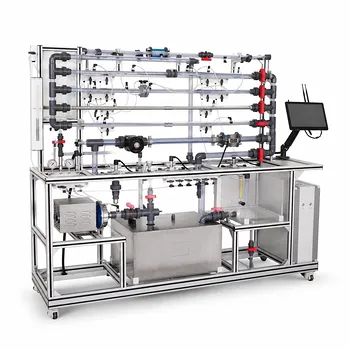
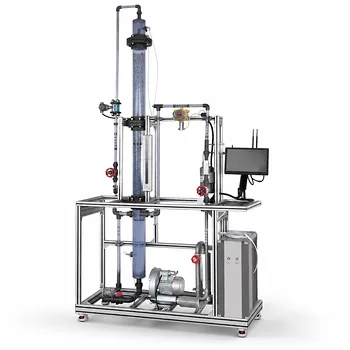
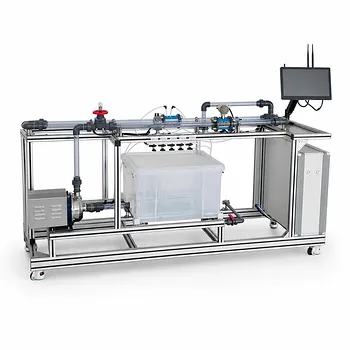
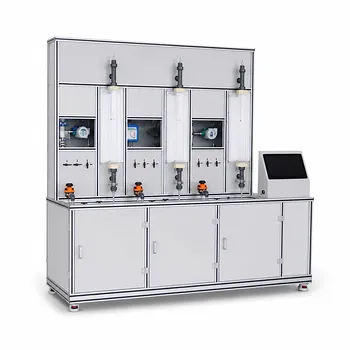
Equip your students with the practical skills they need to master equipment selection and process economics. LABPARK provides state-of-the-art Educational and Vocational Unit Operations Pilot Plants in chemical engineering, bioprocess & biotech, and environmental & water treatment for universities, research institutes, and enterprises. Our high-fidelity pilot units help bridge the gap between theoretical calculations and real-world industrial operations.
Ready to upgrade your laboratory training equipment? Contact us today to find the perfect pilot plant solution for your institution!
Related Products
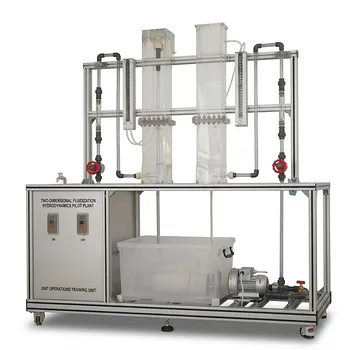
- Two-Dimensional Fluidization Hydrodynamics Educational Pilot Plant for Unit Operations Training
- Fluid Transport and Piping Dynamics Practical Training Unit Operations Pilot Plant
- Gas Phase Mixing and Residence Time Distribution Determination Educational Unit Operations Pilot Plant
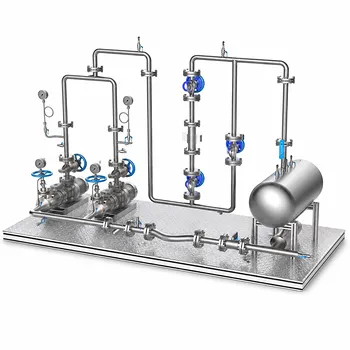
- Multi Pump Fluid Transport Process Piping Unit Operations Training Pilot Plant
- Quantitative Dosing and Liquid Flow Control Educational Unit Operations Pilot Plant
People Also Ask
- How do pilot plants simulate separation of heat-sensitive compounds? Scalable solutions.
- How can pilot plants validate fluidized bed reactor models? Bridging theory and reality.
- Why is it preferred to subcool and pump vapor rather than compress it? Pilot Plant Design Secrets
- What role do unit operations pilot plants play in reducing technical risks? De-Risk Your Scale-Up Process
- How are gauge pressure and absolute pressure calculated and distinguished during unit operations pilot plant experiments?