When designing a fluid transport module for a chemical engineering pilot plant, your first decision sets the rules for flow, pressure, and control.
Centrifugal pumps deliver high, uniform flow at low-to-medium heads and are the first choice for low-viscosity liquids. Positive displacement pumps—reciprocating and rotary—operate at low flow rates against high heads, handling viscous fluids easily. The core difference lies in their performance curves: a centrifugal pump’s flow drops as system pressure rises, while a positive displacement pump forces a nearly constant flow regardless of pressure, making system interaction and safe control radically different.
A pilot plant’s educational mission demands pumps that not only meet process conditions but also visually demonstrate fundamental principles. Centrifugal pumps teach the inverse relationship between flow and head, while positive displacement pumps reveal near-constant flow curves and the absolute necessity of never closing their discharge valve. Align your choice with the fluid’s viscosity, the required flow-head envelope, and the specific unit operation you want students to observe.
Understanding the Performance Divide
How Centrifugal Pumps Behave in a Pilot Module
Centrifugal pumps add velocity to a fluid and convert it to pressure.
They produce smooth, non-pulsating flow and are ideal for high flow rates, often seen in distillation or liquid-liquid extraction modules.
Their head-capacity curve shows a clear trade-off: as the pressure rise increases, the volume flow rate decreases.
However, they struggle with high-viscosity fluids, where efficiency drops sharply because the impeller cannot impart sufficient kinetic energy.
The Reciprocating Pump: High Pressure with a Pulse
A reciprocating pump uses a piston or diaphragm to displace a fixed volume each stroke, creating a pulsating flow.
It excels at low flow rates and extremely high discharge heads, making it suitable for precise metering or feeding high-pressure reactors.
These pumps can handle viscous liquids but cannot tolerate solid particles, which can score the cylinder or block valves.
The flow rate is set by stroke length and speed, not by system pressure—this is a key teaching point.
Rotary Pumps: Smooth Viscous Fluid Handling
Rotary pumps (gear, lobe, screw) trap fluid between rotating elements and casing, producing a relatively uniform flow.
They are highly efficient with high-viscosity liquids (oils, polymers) and deliver steady, low-volume streams at high heads.
Like all positive displacement types, their flow is fundamentally pressure-independent, making them perfect for demonstrating near-vertical performance curves.
The Characteristic Curves That Define Control
The Positive Displacement Vertical Wall
Plot flow rate against discharge pressure for any positive displacement pump, and you get a nearly vertical line.
The internal clearances cause only a minuscule slip with rising pressure, so the volume delivered per revolution stays almost constant.
In a pilot plant, this shows students why throttling the discharge is forbidden—pressure can spike instantly and damage equipment.
The Centrifugal Pump’s Sloping Response
A centrifugal pump’s characteristic curve slopes downward: higher flow comes with lower head, and vice versa.
This inverse relationship lets you control flow gently by adding system resistance, but it also means that a closed valve brings the pump to its maximum shut-off head, not a catastrophic failure.
Students learn that the actual operating point is the intersection of this pump curve with the system’s resistance curve.
Finding the Operating Point in Real Systems
The system curve includes static head (elevation/pressure differences) and dynamic losses that grow with the square of flow velocity.
On a graph, you plot both curves and find the intersection—that’s the only stable operating condition.
A pilot module with pressure and flow sensors lets students manipulate valve positions or pump speed and watch the operating point shift in real time.
Control Strategies You Must Teach
Safe Flow Regulation for Centrifugal Pumps
The most basic method is discharge valve throttling, which raises the system curve and reduces flow—simple but energy-wasteful.
A better educational example is variable speed control (VFD), which shifts the pump curve and follows affinity laws: power drops with the cube of speed, demonstrating real energy savings.
Bypass regulation is a third option, though it’s mainly used to prevent extremely low-flow operation rather than for efficiency teaching.
The Golden Rule: Never Throttle a Positive Displacement Pump
Because a positive displacement pump’s flow is practically fixed, closing its outlet valve simply forces pressure upward until something fails.
Pilot plant modules must prominently feature this safety lesson, protecting pumps, piping, and students.
Safe regulation is achieved via a bypass loop (returning excess fluid to suction—simple but inefficient) or by adjusting stroke length/speed (mechanically complex but highly efficient for metering duties).
Why Educational Modules Should Contrast Both Methods
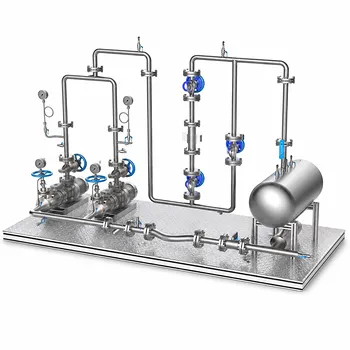
A purpose-built pilot plant can contain both pump types, each with its own set of control valves and instrumentation.
Students can then generate real performance curves for both, observe a centrifugal pump’s flow drop under throttling, and see the immediate pressure surge if they mistakenly close a PD pump’s valve (in a controlled, safe demonstration).
This hands-on contrast cements the theory of pump-system interaction.
Mapping Pump Types to Pilot Plant Applications
Handling Clean, Low-Viscosity Fluids
Standard single-stage or multi-stage centrifugal pumps (clean water pumps) cover most aqueous solutions and light solvents.
They deliver the high flow rates typical of cooling water loops, solvent extraction columns, or distillation reboilers.
Corrosive, Hot, and Hazardous Services
For acids, caustics, or hot oils, select corrosion‑resistant (F‑type) or oil‑type (Y‑type with cooling jackets) centrifugal pumps with appropriate mechanical seals.
If a fluid is toxic, flammable, or volatile, sealless magnetic drive pumps (C‑type) eliminate leakage risk.
In positive displacement territory, diaphragm pumps offer a sealless, leak‑free option for aggressive fluids at low flow, high head.
Slurries and Solids‑Laden Streams
Centrifugal pumps can be equipped with open or semi‑open impellers (P‑type) to handle slurries and suspended particles.
Positive displacement pumps, especially reciprocating types, are inherently unsuitable for solids—a critical design constraint to reinforce in any educational module.
Understanding the Trade‑offs
Efficiency and Energy Cost
Centrifugal pumps are most efficient near their best efficiency point (BEP), usually at high flow and moderate head.
Running far from BEP wastes energy and shortens seal life.
Positive displacement pumps maintain high efficiency across a wide pressure range but may demand more expensive motors and care with pulsation dampeners.
Maintenance and Complexity
Centrifugal pumps are mechanically simple, easy to maintain, and inexpensive to buy—ideal for a pilot plant running many parallel modules.
Reciprocating pumps require regular attention to valves, seals, and drive components.
Rotary pumps need tight clearances; abrasive fluids accelerate wear.
Pulsation and System Impact
Reciprocating pump pulsations can disturb flow‑sensitive instruments or cause vibration in downstream piping.
Pilot plants designed for precise residence‑time studies may prefer rotary pumps for their smooth delivery.
Centrifugal pumps naturally provide steady flow, a big advantage for demonstration of continuous unit operations.
Solids‑Handling Limitations
If a process involves crystallization or solids flux, the primary reference explicitly warns that reciprocating pumps cannot accept solid impurities.
Even rotary pumps can be damaged by hard particles unless specifically designed.
Centrifugal slurry pumps are often the only viable choice for particle‑laden streams.
Making the Right Choice for Your Pilot Plant Module
Your selection should reflect the specific process goal and the educational takeaway you want to highlight.
- If your primary focus is demonstrating large‑scale, low‑viscosity unit operations like distillation or solvent extraction: Choose a centrifugal pump to deliver high, steady flow rates with simple throttling or VFD control.
- If your primary focus is precise metering, high‑pressure conversion, or high‑viscosity fluids like polymer melts: A rotary pump will give smooth, pressure‑independent flow; a reciprocating pump adds the pulsation lesson but limits you to clean liquids.
- If your primary focus is teaching pump characteristic curves and the danger of dead‑heading: Install both a centrifugal and a positive displacement pump with transparent safety interlocks so students can safely explore the forbidden throttle scenario.
- If your primary focus is handling corrosive, hot, or hazardous materials: Match the pump type to the fluid—corrosion‑resistant or sealless centrifugal for high flow, sealless diaphragm PD for low‑flow, high‑head safety.
- If your primary focus is energy efficiency education: Use a VFD‑equipped centrifugal pump and let students calculate power savings using affinity laws, contrasting with an inefficient bypass on a PD pump.
By recognizing which performance envelope and control behavior align with your module’s mission, you turn a simple pump skid into a powerful, hands‑on lesson in chemical engineering fundamentals.
Summary Table:
| Pump Type | Flow Characteristic | Viscosity Suitability | Control Strategy | Educational Focus |
|---|---|---|---|---|
| Centrifugal | High & uniform flow, sloping curve | Low viscosity | Throttling & VFD control | Flow-head curves & affinity laws |
| Reciprocating (PD) | Low flow, high head, pulsating | Viscous (no solids) | Bypass loop & speed change | Precision metering & overpressure risks |
| Rotary (PD) | Low-medium flow, high head, uniform | High viscosity | Bypass loop & speed change | Constant flow & pressure independence |
Scale Up Your Chemical Engineering Labs with LABPARK
Selecting the right pump is essential for teaching core fluid dynamics and ensuring process reliability. LABPARK provides state-of-the-art Educational and Vocational Unit Operations Pilot Plants in chemical engineering, bioprocess & biotech, and environmental & water treatment. Designed specifically for universities, research institutes, and enterprises, our pilot plants feature transparent components, comprehensive instrumentation, and safety interlocks that help students and researchers safely master fluid transport.
Ready to elevate your laboratory capabilities? Contact LABPARK today to customize your pilot plant modules!
Related Products
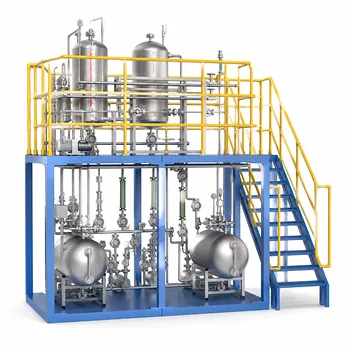
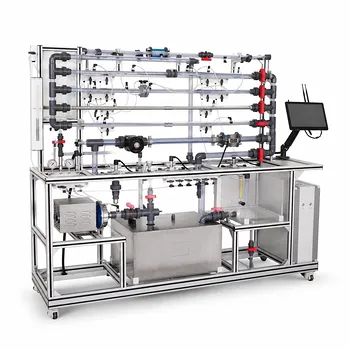
- Chemical Pipeline Assembly and Fluid Transport Practical Training Unit Operations Pilot Plant
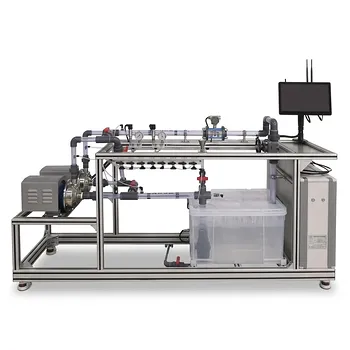
- Centrifugal Pump Performance Determination Educational Unit Operations Pilot Plant
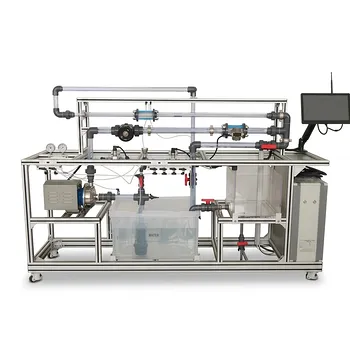
- Centrifugal Pump Performance and Orifice Flowmeter Calibration Educational Pilot Plant
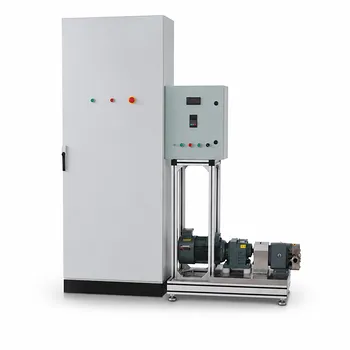
- Multi Pump Fluid Transport Process Piping Unit Operations Training Pilot Plant
- Residence Time Distribution and Reactor Flow Characteristics Determination Educational Pilot Plant
People Also Ask
- Why distinguish Newtonian & non-Newtonian fluids in pilot plants? Prevent design errors.
- Gear vs Centrifugal Pumps in Pilot Plants: How do operating characteristics and power requirements differ?
- How is shaft work (We) used to determine pump specifications? Optimize pilot plant fluid transport design.
- How to determine the operating point of a centrifugal pump in a pilot plant? A practical guide.
- How does fluid density affect pump head and pressure? Avoid Pilot Plant Motor Overload