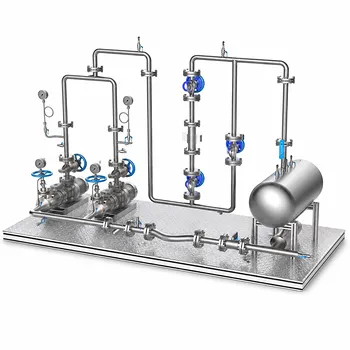
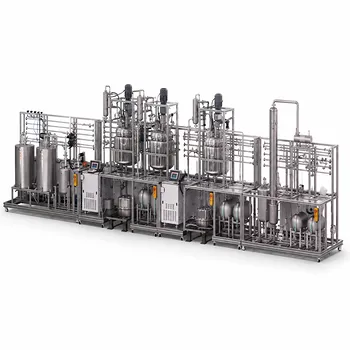
The specific process hazard penalties operator training must evaluate in pilot plants with pressurized vessels and rotating machinery are the heightened risks from pressure excursions, rotating equipment failures, low-temperature embrittlement, and uncontrolled exotherms.
These four penalty categories—drawn from formal hazard assessment frameworks like the Dow Fire & Explosion Index—define the core physical dangers of pilot-scale operations. Focusing training on them builds the diagnostic skills needed to spot seal seepage, manage thermal runaway, and prevent catastrophic vessel failures long before they manifest at production scale.
Pilot plant training isn't about memorizing a checklist—it's about teaching operators to instinctively interrogate the four most consequential hazard penalties: abnormal pressures, rotating machinery wear, brittle fracture risk at low temperatures, and heat-releasing reactions. Mastering these transforms a pilot plant from a small-scale apparatus into a high-fidelity safety simulator.
Why These Specific Hazard Penalties Matter in Training
Pilot plants are the bridge between laboratory synthesis and full-scale manufacturing. Without evaluating these targeted hazards, trainees miss the early warning signals that prevent industrial accidents.
The four penalties are not theoretical. They are the real-world failure modes that process safety frameworks like the Dow F&EI consistently penalize with the highest risk scores. Training operators to hunt for them builds a “hazard literacy” that generic safety talks cannot.
Pressurized Vessel Risks: Above and Below Atmospheric Pressure
Operating above atmospheric pressure creates the obvious risk of vessel rupture or catastrophic release if welds, gaskets, or relief systems fail. In a pilot plant, even small pressure excesses can blow out sight glasses or distort thin-walled heat-exchanger plates.
Equally dangerous—but often overlooked—is operation below atmospheric pressure. Vacuum conditions can pull air into the system, creating an explosive atmosphere if flammable vapors are present. Air infiltration can also catalyze unwanted oxidation reactions or form peroxides.
Training must drill operators to check for both overpressure and vacuum scenarios. That means verifying relief valve setpoints, monitoring nitrogen-purge integrity, and recognizing that a sudden vacuum draw can be a leading indicator of a condensing-steam hammer or a failed gasket.
Rotating Machinery Hazards: The Seal Failure Domino Effect
Pumps, compressors, and agitators introduce continuous wear and vibration. The primary penalty here is not the rotating part itself—it’s the seal degradation that triggers a cascade of secondary failures.
Every shaft seal, packing gland, and mechanical seal is a potential leak path. Minor seepage may release flammable, toxic, or corrosive process fluids. Over time, that leakage can corrode nearby structural supports, degrade electrical insulation, or create slip hazards.
Operators need to link machinery monitoring directly to process hazard evaluation. A slight increase in seal flush temperature, an unexpected pressure fluctuation at a pump discharge, or a change in vibration signature isn’t just a maintenance issue—it’s a leading indicator of a hazardous release.
Low-Temperature Embrittlement: A Hidden Material Danger
When carbon steel is chilled below its ductile-to-brittle transition temperature, it loses toughness and can fail without warning. This is a special hazard in pilot plants that run cryogenic reactions, use cold-traps with liquid nitrogen, or cycle between steam-out cleaning and freezing conditions.
The penalty is severe because the failure is sudden. A vessel or piping that looks normal at room temperature can shatter like glass under a minor impact or pressure surge at low temperature.
Training must teach operators to identify which equipment is constructed of low-temperature-rated materials, to track minimum design metal temperatures, and to understand that substituting a standard elbow or valve could introduce a brittle-fracture initiation point.
Exothermic Reactions: Managing Heat Release Safety
Heat-releasing reactions, especially those where the adiabatic temperature rise exceeds 50°C, carry a critical hazard penalty. In a pilot plant, this penalty is magnified because heat transfer surfaces may be limited and mixing less efficient than at lab scale.
The real risk is thermal runaway: a progressive release of heat that accelerates the reaction rate, builds pressure, and can overwhelm the cooling system. Gas evolution can compound the danger by raising pressure even further.
Operator training here focuses on reaction calorimetry fundamentals—recognizing when dosing rate is outpacing cooling capacity, understanding safe operating limits for temperature and agitation speed, and knowing when to trigger a quench or dump to a dump tank.
Understanding the Trade-offs When Training with Pilot Plants
While these hazard penalties are essential to evaluate, the pilot-plant training environment isn’t a perfect replica of full-scale process hazards. It’s important to recognize the limitations so that skills transfer correctly.
Scale-Down Can Mask Certain Hazard Dynamics
Smaller pipe diameters and lower energy inventories mean that a pilot-scale leak disperses more quickly and cools down faster than an industrial-scale release. Trainees might not experience the full thermal radiation or vapor-cloud explosion consequence unless the training explicitly bridges the gap through case studies or simulations.
Similarly, rotating machinery on a pilot scale runs with lower shaft power and smaller seal surface areas. The failure mode progression from a minor weep to a catastrophic seal blowout may occur on a different timeline, requiring instructors to artificially inject failure scenarios or use historical data to illustrate the speed of real-world escalation.
The Risk of Normalizing Reduced Safeguards
Because pilot plants operate with fewer inherent hazards in absolute terms, there’s a temptation to relax ancillary safety systems—perhaps using a less robust gas detection grid or a simpler emergency shutdown logic. If these compromises are not made transparent to trainees, they may form the wrong mental model about what “adequate” safety looks like.
The best training programs deliberately contrast the pilot plant’s simplified safety architecture with the comprehensive risk reduction measures required at full scale. This keeps the four hazard penalties centered in the mind, not the diluted implementation.
Making the Hazard Evaluation Training Stick
Bridging from hazard identification to instinctive operator judgment requires embedding these four penalty categories into every hands-on session, not just the classroom lecture. Use the following goal-oriented strategies to tailor the training emphasis.
- If your primary focus is mechanical integrity: Always link seal condition monitoring, low-temperature material selection, and pressure containment directly back to the rotating machinery and vessel breach penalty. Train operators to see a vibration spike as an early warning of a future hazardous release, not just a maintenance notification.
- If your primary focus is reaction safety: Make exotherm management and overpressure from gas evolution the centerpiece of every reaction-startup and shutdown drill. Use calorimetry data to illustrate exactly when cooling failure would cross the point of no return, and practice the emergency quench procedure until it’s reflexive.
- If your primary focus is process resilience against human error: Integrate these hazard penalties into HAZOP exercises on the pilot plant itself. Guide operators through guideword deviations—more pressure, no flow, reverse rotation—and have them trace each scenario back to a specific penalty and a specific monitoring point.
Training that evaluates these four penalties with unflinching realism turns a chemical engineering pilot plant into the most powerful safety tool an organization owns. It’s where operators learn not just to run a process, but to read its physical warning signals and act before the penalty becomes a catastrophe.
Summary Table:
| Hazard Penalty | Key Process Risks | Operator Training Focus |
|---|---|---|
| Pressure Excursions | Vessel rupture, vacuum collapse, air infiltration | Relief valve setpoints, nitrogen-purge integrity, vacuum safety |
| Rotating Machinery | Seal degradation, hazardous fluid leaks, vibration wear | Seal condition monitoring, leak detection, vibration analysis |
| Low-Temp Embrittlement | Sudden brittle fracture of carbon steel without warning | Material rating verification, tracking minimum design metal temp |
| Exothermic Reactions | Thermal runaway, gas evolution, catastrophic overpressure | Calorimetry basics, dosing control, emergency quench procedures |
Train Next-Gen Operators Safely with LABPARK Pilot Plants
Equipping your trainees with the skills to manage complex process hazards requires highly reliable, industry-standard equipment. LABPARK provides premium Educational and Vocational Unit Operations Pilot Plants in chemical engineering, bioprocess & biotech, and environmental & water treatment, specifically designed for universities, research institutes, and enterprises.
Our systems are engineered with advanced safety controls to help you teach risk management, pressure safety, and reaction kinetics in a controlled, realistic environment.
Ready to elevate your engineering lab or training program? Contact LABPARK today to discuss our customized pilot plant solutions!
Related Products
- Carbon Dioxide Hydrogen Methanol Synthesis Educational Unit Operations Pilot Plant
- Chemical Pipeline Assembly and Fluid Transport Practical Training Unit Operations Pilot Plant
- Fixed Bed Gas Solid Catalytic Reaction Educational Pilot Plant
- Multi Pump Fluid Transport Process Piping Unit Operations Training Pilot Plant
- Multi-Modal Distillation Unit Operations Training Pilot Plant
People Also Ask
- How do temp & pressure affect methanol synthesis pilot plants? Optimize equilibrium and catalyst performance.
- Why is a purge system necessary when operating a gas recirculation loop in a methanol synthesis pilot plant? (Guide)
- Why do modern methanol pilot plants operate at lower pressures? Catalyst & Feed Requirements Explained
- What are the operational requirements for catalyst activation? Safe Methanol Pilot Plant Operation
- Why is the chemical plant startup schedule crucial? De-risk scale-up with pilot plants.