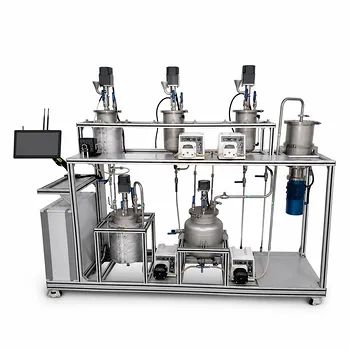
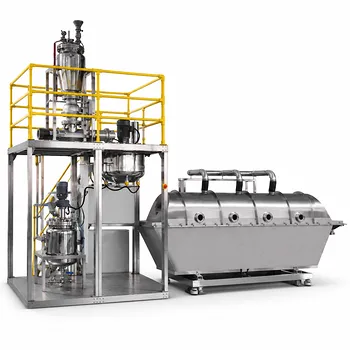
Anaerobic environment, temperature, pH, nutrient feed rate, and byproduct management form the non‑negotiable control foundation. A dark‑fermentation pilot plant must precisely regulate these variables because the hydrogen‑producing bacteria are extraordinarily sensitive to their surroundings, and any deviation can crash the yield or shift the metabolic pathway toward unwanted organic acids.
While dark fermentation shares many control loops with conventional bioprocessing, the unique demand is absolute anaerobiosis combined with hydrogen‑specific gas handling. The engineer’s real challenge is less about adding controls and more about preventing oxygen ingress while managing the inhibitory feedback loop of accumulating volatile fatty acids.
The Core Control Variables for Dark Fermentation Research
All microbial cultivations need a stable abiotic environment. Dark fermentation amplifies this requirement because the target microbes are strict anaerobes that live in a narrow operational window.
Maintaining Strict Anaerobic (and Dark) Conditions
The primary reference correctly prioritizes this, but it’s worth clarifying: “dark” refers to the metabolic pathway (light‑independent), not a sensitivity to photons. The real enemy is oxygen.
Dissolved oxygen is not a control variable here — it’s a contaminant. Unlike aerobic ethanol fermentations where you sparge sterile air, a hydrogen‑producing dark fermentation reactor must be sparged with an inert gas (usually nitrogen or recycled biogas) to flush out oxygen and maintain a negative redox potential.
The pilot plant must be hermetically sealed, with all ports, sampling lines, and sensors designed to be gas‑tight. Even a minor leak will poison the hydrogenase enzymes that catalyze H₂ production, as these enzymes are irreversibly damaged by oxygen.
Temperature: The Kinetic Throttle
Temperature dictates the maximum specific growth rate ($\mu_{max}$) of the microbial consortium. The supplementary references detail an Arrhenius‑type relationship: below the optimum, growth accelerates with temperature; above it, proteins denature and rates plummet.
For dark fermentation, typical mesophilic optima hover around 35–37°C, though thermophilic strains (55–60°C) are also researched for higher reaction rates and pathogen suppression. The pilot plant must employ a jacketed reactor with an automated cooling/heating water circulation loop. A temperature sensor inside the broth provides feedback to modulate the jacket fluid flow or temperature.
pH: The Metabolic Switchman
pH is arguably the most impactful lever because it directs the metabolic end‑products. Dark fermentation always co‑produces hydrogen with volatile fatty acids (acetic, butyric, propionic acids). As these acids accumulate, the broth acidifies, inhibiting the very bacteria that generate them.
The pilot plant must integrate a pH probe and automated dosing pumps that add a dilute alkali (commonly sodium hydroxide) on demand. Maintaining the pH within a narrow band — typically 5.5–6.5 for mixed cultures — prevents a metabolic crash and favors the butyrate‑type pathway, which yields more hydrogen than the propionate pathway. Letting pH drift uncontrolled is a classic pilot‑scale mistake that causes irreproducible results.
Nutrient Supply and Feed Rate
Hydrogen‑producing bacteria need a carbon source (glucose, sucrose, or hydrolysate from biomass) and essential growth factors. In batch mode, this is a fixed initial charge. But many research programs study fed‑batch or continuous operation to improve productivity.
For fed‑batch processes, the nutrient feed rate becomes a critical manipulative variable. Feed too fast and you trigger substrate inhibition or excessive acidogenesis; feed too slow and you starve the culture. The control system must allow programming of feed schedules based on time or real‑time signals like off‑gas hydrogen flow rate, as hinted at in the supplementary references’ mention of online estimation.
Agitation and Gas‑Liquid Mass Transfer
Agitation serves two roles: it keeps the microbial cells in suspension and enhances the transfer of dissolved hydrogen from the liquid phase to the gas phase. If H₂ remains supersaturated in the broth, it shifts the thermodynamic equilibrium, making further hydrogen production less favourable. The partial pressure of H₂ is a powerful feedback inhibitor.
Agitation speed must be controlled — usually via a variable‑speed motor on an impeller. However, high shear can damage fragile flocs or biofilms, and excessive mixing in a sealed vessel can pull a slight vacuum, risking oxygen ingress. Many pilot plants use a gentle mixing strategy coupled with gas sparging (of inert gas) to strip hydrogen efficiently.
Gas Handling and Measurement
Your hydrogen is a volatile output that must be collected, measured, and vented safely. This is a control challenge distinct from liquid‑phase parameters.
The pilot plant needs a gas‑tight headspace plumbed to a collection system, typically using displacement meters, mass flow meters, or a gas chromatograph with a thermal conductivity detector for online analysis. The total gas flow rate and composition (H₂, CO₂) provide real‑time feedback on metabolic health. Any fluctuation signals an upset in the reactor, making gas flow monitoring a de‑facto process control variable.
Foam Control
As protein‑rich substrates ferment and gases evolve, foaming can clog exit lines and pressure sensors. The supplementary references correctly list this. A mechanical foam breaker or antifoam dosing pump must be regulated, often triggered by a conductivity‑based foam sensor at the top of the reactor.
The Overlooked Variable: Byproduct Management
The primary reference uniquely stresses that the pilot system must “handle secondary separation” because organic acids accumulate. Product inhibition is the silent yield‑killer. In a continuous reactor, or across repeated batches, the acetate and butyrate levels can rise enough to inhibit further fermentation. Pilot plants investigating long‑term stability must therefore integrate a downstream separation unit — typically a membrane filtration or electrodialysis system — that removes organic acids without introducing oxygen. This is not a simple “control variable” but it must be part of the plant’s control philosophy if you aim for sustained production data.
Understanding the Trade‑offs
Precision control is not free, and every intervention carries a risk.
- Over‑dosing alkali can cause local pH spikes that denature enzymes near the addition port. You compromise between fast correction and gentle mixing.
- Aggressive gas sparging strips H₂ efficiently but dilutes it in the collection stream, making downstream purification or analysis harder. It also increases the risk of foaming.
- Tight temperature control through cooling jackets works beautifully at small scale, but in a pilot‑scale vessel with a large volume, temperature gradients can form. You trade off uniformity against the energy cost and complexity of multiple jacket zones.
- Byproduct removal systems add capital cost and complexity. Without them, your research can only study short‑term batch kinetics; with them, you risk altering the microbial community through cell washout if membrane‑based removal is used.
These trade‑offs mean the pilot plant must be flexible enough to let researchers deliberately perturb these variables and measure the outcome, not just hold a single operating point.
Making the Right Choice for Your Pilot‑Plant Design
Your control architecture must mirror your research objective. The variables are all important, but their priority stacking depends on what you are studying.
- If your primary focus is microbial strain screening: Prioritize anaerobic integrity and temperature control above all. Even a minor oxygen leak will make strain comparisons meaningless.
- If your primary focus is optimizing hydrogen yield from real waste streams: Invest your control effort into pH regulation and nutrient feed programming, because the variable composition of the substrate will constantly challenge the buffer capacity.
- If your primary focus is process scale‑up and techno‑economic assessment: You must close the loop on byproduct inhibition by integrating a separation stage, and monitor gas flow rate and hydrogen partial pressure as key performance indicators, not just endpoints.
Ultimately, a dark‑fermentation pilot plant is not merely a bioreactor with sensors; it is an integrated environment simulator. Only by mastering the interplay between oxygen exclusion, pH‑driven metabolic regulation, and product‑gas removal can you generate research data that translates into scalable biological hydrogen production.
Summary Table:
| Variable | Control Method | Impact on H2 Yield |
|---|---|---|
| Anaerobic State | Hermetic sealing & inert gas sparging | Prevents oxygen from poisoning hydrogenase enzymes |
| Temperature | Jacketed heating/cooling loop (35-37°C / 55-60°C) | Dictates growth rates and prevents protein denaturation |
| pH | Automated alkali dosing (5.5 - 6.5) | Avoids metabolic crashes; favors high-yield butyrate pathway |
| Byproducts | Downstream separation (membranes/electrodialysis) | Prevents volatile fatty acid feedback inhibition |
Accelerate Your Bio-Hydrogen Research with LABPARK
Scaling up dark fermentation requires absolute control. LABPARK provides advanced Educational and Vocational Unit Operations Pilot Plants in chemical engineering, bioprocess & biotech, and environmental & water treatment for universities, research institutes, and enterprises.
Our systems are built to handle precise pH dosing, strict anaerobic sealing, and automated temperature regulation, helping you generate reliable, scalable data for your green energy research.
Contact LABPARK today to customize your bioprocess pilot plant.
Related Products
- Bio-fermentation Ethanol Production Practical Training Unit Operations Pilot Plant
- Natural Product Extraction Unit Operations Training Pilot Plant
- Multi-Functional Special Distillation Educational Pilot Plant
- Continuous Batch Extractive Distillation Educational Pilot Plant
- High-Gravity Emulsification and Mass Transfer Educational Pilot Plant
People Also Ask
- Why Use PTFE & Hastelloy in Chemical Pilot Plants? Prevent Corrosion & Ensure Safety
- Why Compare Predicted and Experimental Excess Enthalpy? Key to Accurate Pilot Plant Scale-up
- Why is the chemical plant startup schedule crucial? De-risk scale-up with pilot plants.
- When to transition from PID to adaptive control in pilot plants? Key process indicators.
- Why must batch and fed-batch fermentation pilot plants be designed to accommodate changing rheological conditions?