The key to safe pilot plant operation starts before you ever run a single test. The precautions you take during the loading of packing materials determine whether your column operates efficiently or becomes a clogged, hazardous vessel. At its core, the answer is straightforward: use the wet loading method whenever possible, handle brittle materials with extreme care, and mechanically secure the bed after installation. Specifically, you should fill the column partially with water, pour the packing into that water layer to cushion the impact, and never let ceramic packing fall from a height greater than 0.5 meters. Once loaded, always install hold-down plates or bed limiters to prevent the bed from fluidizing during gas surges or pressure fluctuations.
A packed column’s long-term safety and performance are forged at the moment of loading. The "wet method" is your first line of defense against breakage and channeling. If process constraints force a dry load, lowering the packing in buckets is the only acceptable alternative to a shattered bed and a compromised pilot run.
Why Loading Precautions Are a Non‑Negotiable Safety Step
The loading phase is not a trivial preparation task. It is a high‑stakes operation where a single cracked ceramic saddle or a poorly supported bed can cascade into an operational and safety nightmare.
The Hidden Dangers of Damaged Packing
A broken packing piece is far more than just a loss of surface area. Fragments nestle between intact pieces, clogging the void spaces and creating unexpected pressure drops. In a pilot plant, that translates to distorted data, potential hot spots in reactive systems, and in extreme cases, a blocked column that can become a pressure vessel hazard. This is why every loading precaution is, at its heart, a safety protocol.
What the Primary Reference Tells Us
The single most authoritative guidance for loading random packings like ceramic or metal rings comes directly from established chemical engineering unit operations practice. The rule is unambiguous: employ the wet method as your default. Pour the packing into a column already filled with water, and continually raise the water level so the packing always falls into liquid, not onto a hard bed of previously dumped material. This water cushion eliminates impact damage and simultaneously prevents air entrapment.
Mastering the Wet Loading Method
The wet method is far more than simply adding water to a column. Executed correctly, it becomes a fail‑safe mechanism that protects both your equipment and your data.
The Water Cushion Principle
The physics is simple but non‑negotiable. Fill the column with enough water to submerge the initial layer of packing. As you pour the packing, the water level must stay above the top of the rising bed. This ensures every piece decelerates in liquid rather than striking a solid surface. For ceramic packings—notoriously brittle—this is the only method that guarantees near‑zero breakage. For metal packings, it is the best way to avoid denting and deformation that can create uneven void spaces.
When Wet Loading Isn’t an Option
Some pilot‑scale processes cannot tolerate water contamination. If your chemistry reacts violently with moisture or your downstream purification loop cannot handle residual water, you must resort to a dry loading method. The concession here is severe. Instead of pouring, the packing must be lowered into the column in buckets or containers. The hard limit for any uncontrolled drop is 0.5 meters, and this applies strictly to ceramic materials. A fall from any greater height will cause microfractures that later disintegrate under liquid load and plug the column.
Securing the Bed: Post‑Loading Protections That Prevent Disaster
Loading precautions don’t end once the last piece of packing is in place. The column must be mechanically readied to survive the fluid dynamics it was built to study.
Hold‑Down Plates and Bed Limiters
A sudden gas surge or a poorly controlled startup can lift an entire packed bed like a piston. This fluidization event destroys the packing structure and can slam the bed against the column head with destructive force. The primary reference leaves no ambiguity: you must install hold‑down plates or bed limiters directly on top of the packing bed. These devices are your mechanical insurance policy, anchoring the bed and preventing the catastrophic movement that would otherwise require a full shutdown and reload.
The Broader Principle of Avoiding Dry‑Out
While the primary reference focuses on loading, the supplementary sources reinforce a critical point that starts during loading: never let air become trapped in the bed. In chromatographic and ion‑exchange columns, wet‑loading the resin or adsorbent and gently tapping the column wall eliminates air bubbles that later cause channeling and efficiency loss. For a random packing pilot column, the same principle applies—loading into water expels air and ensures the packing is fully wetted from the very first moment of operation, preventing dry spots that can ruin mass transfer data and create unpredictable pressure drops.
Understanding the Trade‑offs and Limitations
No loading technique is universal. The safe, correct choice depends on your packing material, process chemistry, and what you are trying to measure.
Wet vs. Dry: Balancing Protection and Process Purity
The wet method is the gold standard for physical protection. It is the only safe way to load ceramic packing and the best practice for metal. However, it introduces water. If your pilot plant is studying a water‑sensitive catalyst or an anhydrous reaction, you must accept the risk of a dry load and mitigate it through container lowering and strict height control. This is not an equal alternative; it is a calculated compromise where the packing’s physical integrity is always at risk. You must factor the potential for slight breakage into your data interpretation.
Common Pitfalls That Turn a Pilot Plant into a Maintenance Headache
- Pouring ceramic packing directly from a bag into an empty column. Even a 1‑meter drop can fracture saddles.
- Forgetting to maintain the water level during a wet load. If the water drains below the packing surface, the next batch you pour will strike dry, already‑placed packing and shatter it.
- Neglecting hold‑down plates because “the flow rates are low.” A momentary pressure spike during a pump failure or valve mis‑adjustment is all it takes.
- Assuming metal packing is indestructible. Thin‑walled metal rings can deform under impact, creating flat spots that drastically alter void fraction and pressure drop correlations.
Making the Right Choice for Your Pilot Plant Goal
Your loading protocol must be dictated by what you are trying to achieve and the materials you are handling. Use these decision points as your final checklist.
- If your primary focus is protecting brittle ceramic packing: Always, without exception, use the wet loading method and monitor the water level continuously throughout the pour.
- If your primary focus is studying a water‑sensitive process: Implement a dry load by lowering the packing in buckets, and enforce a strict 0.5‑meter maximum drop height for all ceramic pieces.
- If your primary focus is ensuring mechanical safety against pressure surges: Install a properly sized hold‑down plate or bed limiter immediately after loading, regardless of the method used.
- If your primary focus is training students or operators: Make the wet‑loading demonstration a core lesson; the visible principle of the water cushion and the immediate penalty of a dry drop (audible cracking) teach a lesson no lecture can replace.
Operational safety and packing integrity are not separate concerns; they are the same decision, made at the moment you fill the column. Treat that moment as the most critical step in your pilot plant protocol, and your column will reward you with reliable data and a hazard‑free run.
Summary Table:
| Loading Method | Recommended For | Key Precautions | Potential Risks |
|---|---|---|---|
| Wet Loading | Ceramic & metal packing (default) | Keep water level above the rising packing bed | Water contamination in sensitive processes |
| Dry Loading | Water-sensitive processes | Limit drop height to <0.5m; lower in buckets | Packing breakage, microfractures, channeling |
| Post-Loading | All pilot plant columns | Install hold-down plates or bed limiters | Bed fluidization and mechanical column damage |
Optimize Your Pilot Plant Performance with LABPARK
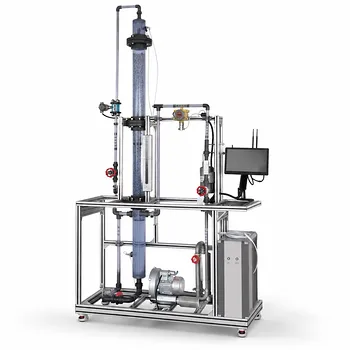
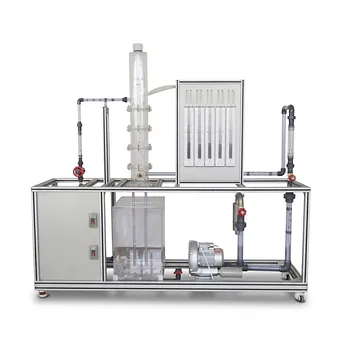
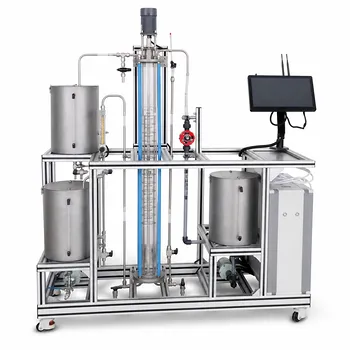
For universities, research institutes, and enterprises, maintaining operational safety and preventing equipment damage is critical. LABPARK provides state-of-the-art Educational and Vocational Unit Operations Pilot Plants in chemical engineering, bioprocess & biotech, and environmental & water treatment.
Our systems are engineered for safety, reliability, and precision. Contact LABPARK today to discuss your pilot plant needs and get expert guidance on equipment setup and operation!
Related Products
- Packed Bed Absorption Educational Unit Operations Pilot Plant
- Multimodal Absorption and Desorption Pilot Plant for Unit Operations Training
- Absorption and Desorption Educational Unit Operations Pilot Plant
- High-Gravity Emulsification and Mass Transfer Educational Pilot Plant
- Plate Column Hydrodynamics Tray Demonstration Educational Pilot Plant
People Also Ask
- How Do Flow Regimes Transition in Packed Bed Pilot Plants? Key Scale-up Insights
- How does reactant concentration determine absorption column control? Gas-film vs. dual-film.
- How is the packing height of an absorption column calculated? Master HTU & NTU Concepts
- How does the wall effect impact packed-bed conversion? Essential pilot plant scale-up tips.
- How does static vs. operating holdup affect pilot plant calibration? Avoid Critical Scale-Up Errors