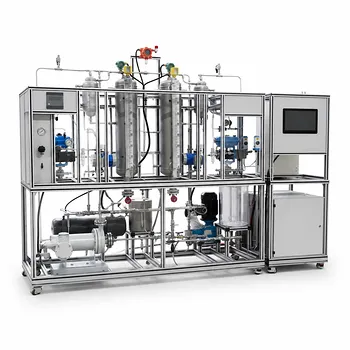
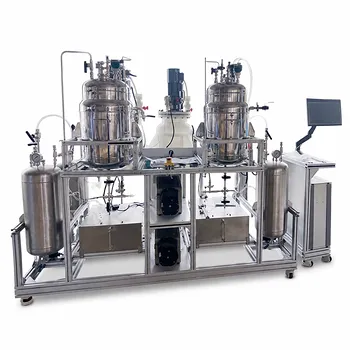
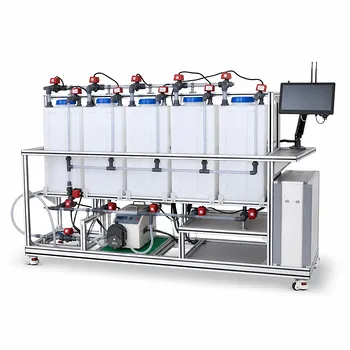
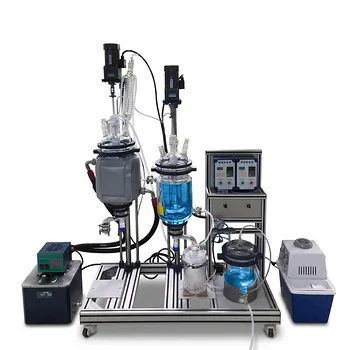
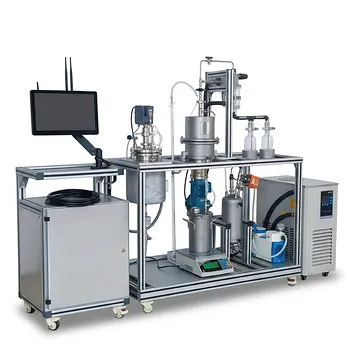
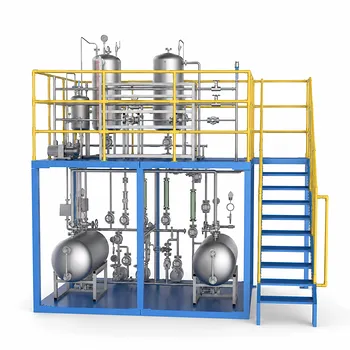
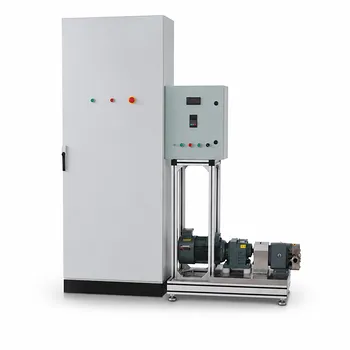
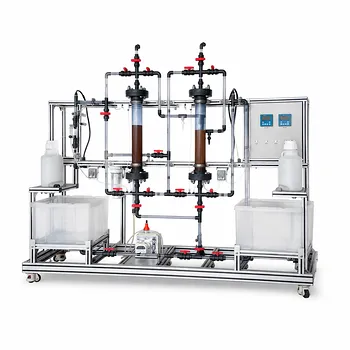
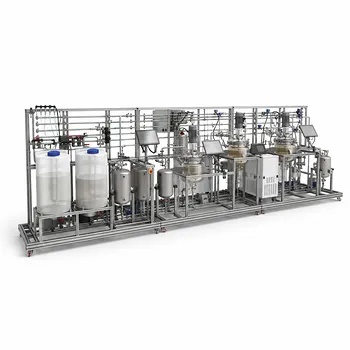
Magnesium electrolysis pilot units are miniature, high-temperature classrooms. They physically demonstrate how a lighter liquid metal—magnesium—is separated from a denser molten salt electrolyte by simply allowing it to float to the surface, where mechanical skimming or siphoning removes it. In a single bench-scale run, students witness density-based stratification, multiphase fluid dynamics, and the hands-on challenges of hot-metal harvesting.
At their core, these pilot units teach that effective metallurgical separation often relies not on complex equipment, but on mastering the fundamental interplay between density differences and the fluid motion that either helps or hinders clean phase disengagement. The real lesson is how to manage that interplay reliably at industrial temperatures.
The Core Principle: Density-Driven Phase Separation
The magnesium electrolysis cell is a near-perfect analog for any process where a product forms as a distinct liquid phase. The separation is initiated simply by the product being less dense than its surroundings.
Buoyancy as the Primary Separation Force
In the molten salt bath, metallic magnesium has a density lower than that of the chloride-based electrolyte. This straightforward density differential creates a net upward force. The liberated liquid metal droplets at the cathode become positively buoyant.
The Journey of a Magnesium Droplet
Once the metal nucleates at the cathode surface, it must detach and ascend. Pilot units let students observe that this journey is not just a gentle rise. It is a dynamic process governed by interfacial tension and the local electrolyte flow.
The Role of Fluid Dynamics
The velocity of the rising droplets depends on droplet size and the electrolyte's viscosity. Students learn that Stokes' Law approximations give a first-order understanding. However, in a real cell, convective currents from gas evolution at the anode and thermal gradients create turbulence that can either accelerate the rise or sweep fine droplets away from the collection zone.
Mechanical Harvesting: A Hands-On Engineering Problem
Separation is incomplete until the magnesium is physically removed from the bath. This is where pilot units force students to confront the messy, mechanical side of metallurgical unit operations.
Skimming and Siphoning Techniques
Because magnesium reacts violently with oxygen and moisture, simple ladling is not feasible. Pilot units typically employ a protected skimming tool or a heated siphon tube. The student learns to maneuver these tools to harvest the metal while minimizing the intake of the floating salt crust—electrolyte that clings to the surface.
Designing for Continuous vs. Batch Operation
A deeper principle taught is the design of the collection system for continuous flow. Unlike a laboratory crucible, an industrial cell often uses a well or catch basin into which the magnesium rises and from where it can be periodically tapped. The pilot unit demonstrates why the geometry of this collection zone directly controls the yield.
Understanding the Trade-offs in High-Temperature Separation
The clean separation of magnesium from its electrolyte is never perfect. The pilot unit becomes a vivid lesson in unavoidable compromises.
Fine Droplet Entrainment and Metal Loss
The very turbulence that enhances mass transfer at the electrodes also pulverizes the metal into a fine mist. These entrained micro-droplets lack the buoyancy to rise quickly. They remain suspended in the electrolyte, representing a direct loss of product and a recycling burden—a phenomenon that scaling laws from the pilot unit help quantify.
The Constant Battle Against Electrolyte Contamination
The harvested magnesium always carries some electrolyte impurities. The mechanical separation method directly impacts purity: rapid skimming traps more salt, while careful siphoning risks heat loss and metal freezing. Students learn to balance product purity against throughput.
Managing Heat and Reactivity
Every mechanical intrusion into the cell—sampling, skimming, or tapping—shunts heat out of the system. The pilot unit teaches that the separation device must be preheated to avoid thermal shock and must operate in an inert atmosphere to prevent the surface of the rising magnesium pool from bursting into a salt-entangling oxide fire.
How to Apply These Principles to Your Work
The lessons from a magnesium pilot cell are transferable to any lighter-than-mother-liquor separation, from aluminum smelting to slag cleaning.
- If your primary focus is maximizing product purity: Design the collection zone to allow the longest possible residence time for the floating layer, enabling entrained salt droplets to settle back down by density before you harvest.
- If your primary focus is optimizing yield and reducing metal loss: Minimize convective turbulence near the cathode by adjusting electrode spacing and current density, directly suppressing the formation of slow-rising fine droplets.
- If your primary focus is scaling up a new process: Use your pilot-unit data on droplet rise velocity and interfacial tension to build a dynamic similarity model, predicting how the separation behavior will change when the key dimension—the distance the metal must rise—scales up dramatically.
Grasping these physical and mechanical principles at the pilot scale gives you the intuition to design industrial processes where the metal harvest is not an afterthought, but a fundamental unit operation.
Summary Table:
| Separation Concept | Physical/Mechanical Mechanism | Key Engineering Lesson |
|---|---|---|
| Density-Driven Separation | Buoyancy-led rise of light liquid magnesium | Mastering phase disengagement based on density differences. |
| Fluid Dynamics | Droplet ascent influenced by viscosity & convection | Applying Stokes' Law and managing turbulence to reduce metal loss. |
| Mechanical Harvesting | Siphoning and skimming under inert atmospheres | Designing collection systems that prevent oxidation and contamination. |
| Process Trade-offs | Balancing skimming speed against salt carryover | Optimizing product purity versus overall throughput and yield. |
Bring Hands-On Metallurgical and Process Engineering to Your Lab
At LABPARK, we provide premium Educational and Vocational Unit Operations Pilot Plants in chemical engineering, bioprocess & biotech, and environmental & water treatment. Designed for universities, research institutes, and enterprises, our pilot plants bridge the gap between classroom theory and real-world industrial operations.
Ready to enhance your teaching and research capabilities? Contact LABPARK today to discuss your laboratory requirements and explore our tailored equipment solutions.
Related Products
- Alkaline Membrane Water Electrolysis Educational Pilot Plant Unit Operations Training System
- Water Electrolysis Hydrogen Production and Storage Educational Pilot Plant
- Electrolytic Hydrogen Production Educational Unit Operations Pilot Plant
- Electrolyte Distillation Purification and Formulation Educational Pilot Plant
- Electrochemical Water Treatment Educational Unit Operations Pilot Plant
People Also Ask
- How do chemical engineering pilot plants demonstrate electrolysis? Bridge Theory & Industrial Scale
- How do alkaline and PEM electrolysis technologies differ in pilot plant operations?
- Why is the selection of electrode materials critical when configuring or operating educational electrolysis pilot plants?
- Bipolar vs Monopolar Electrolysis: Key Configuration Details to Analyze in Pilot Plants
- Which Electrolysis Pilot Plant Parameters Ensure Safety & Efficiency? Key Controls Explained