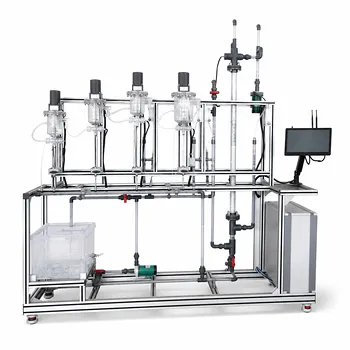
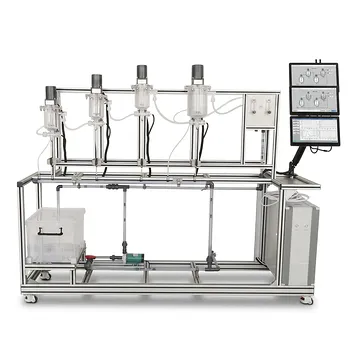
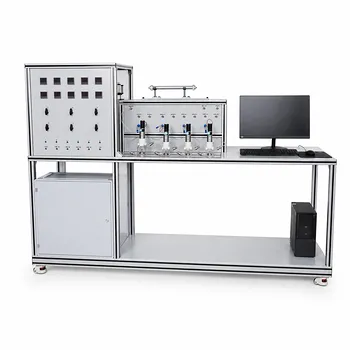
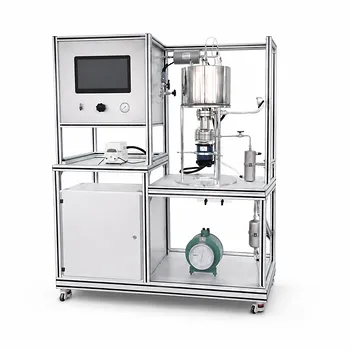
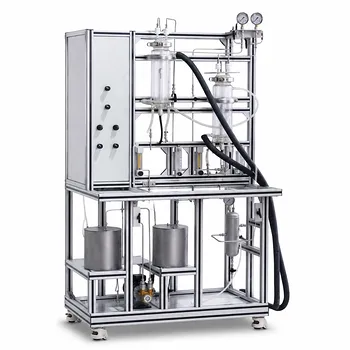
Transitioning from batch to microstructured continuous reactors is not primarily a technology swap—it is a strategic, multi-dimensional transformation. Pilot plants facing this shift must simultaneously solve for advanced process control integration, catalyst stabilization in tight geometries, organizational retraining, and a fundamental redesign of the chemistry itself to thrive under steady-state flow. These challenges converge into a single imperative: the pilot plant must become a benchmarking and learning platform that proves continuous processing can match or exceed batch reliability while delivering faster, safer, and more sustainable results.
The heart of the transition lies in acknowledging that microstructured reactors demand more than new hardware. They force a convergence of process engineering, economics, and human factors. A successful pilot plant must deliver real-time control, demonstrate reliable continuous operation at intermediate scale, and upskill teams—all while generating the data needed to validate a departure from decades of batch-centric thinking.
The Multi-Layered Challenges of Moving to Continuous Microreactors
Technical Integration: Sensors, Controls, and Interface Standards
A microstructured reactor cannot function as an isolated device. A pilot plant must create an ecosystem where large-capacity apparatus, standardized docking platforms, and bus interfaces allow rapid reconfiguration.
Real-time process control is non-negotiable. Unlike batch vessels where a single temperature probe suffices, continuous microreactors require inline sensors that monitor critical quality attributes (CQAs) second by second. The pilot plant has to integrate these sensors with feedback loops that maintain steady-state conditions—otherwise deviations cascade instantly due to minimal hold-up volume. Without this, the system shifts from control to chaos.
Interface standardization becomes the hidden bottleneck. Docking stations and communication protocols must be designed so that researchers can swap micromixer types, separation units, or catalyst cartridges without rewiring the entire plant. This is a process engineering challenge, not an equipment catalogue purchase.
Overcoming Catalyst and Mass Transfer Limitations at Scale
Reactions that proceed smoothly at a few grams often fail when translated to continuous microchannels. The reason is twofold: altered mass and heat transfer and catalyst mechanical fragility.
When flow is confined to sub-millimeter dimensions, residence time distribution narrows dramatically—a huge advantage—but mass transfer limitations can shift unpredictably. Reactions with very short half-lives, previously plagued by 10–20% degradation during slow batch mixing and phase separation, now demand contact times under three minutes. The pilot plant must prove that a static mixer followed by a rapid centrifugal separator can preserve yield where batch failed.
Catalyst deactivation and spalling are critical threats. Under high flow rates, catalytic coatings on supports like FeCrAlY metallic felts risk detachment, plugging the very channels that make the reactor effective. The pilot plant must replicate the necessary support pretreatment—calcination at ~890°C to form an adhesive aluminum oxide layer—and the ball-milling, dip-coating, and nitrogen-purging steps used to secure submicron catalyst particles. Unless catalyst longevity is demonstrated at pilot scale, any scale-up is fictional.
Organizational and Educational Hurdles
Retraining for Continuous Flow and Interdisciplinary Work
Moving from batch to continuous is not intuitive. Operators and researchers ingrained with “add ingredient A, wait, add B” logic must now visualize steady-state kinetics, mass balances across unit operations, and the “first in, first out” rule. A pilot plant must double as a training ground.
The interdisciplinary gap is real. Process engineers, analytical chemists, and control system experts must collaborate in real time—something batch environments often isolate. The pilot plant becomes the only place where a technician learns to tune a volumetric feeder while simultaneously monitoring a centrifugal separator’s output, all guided by a common CQV dashboard. Without such hands-on experience, the organizational inertia to revert to batch becomes overwhelming.
Shifting the Validation Mindset from Batches to Real-Time Quality
Regulatory and quality paradigms are among the most stubborn obstacles. Traditional three-batch validation gives way to Continuous Quality Verification (CQV) and Continued Verification. In a continuous setup, a “batch” is no longer a physical volume but a time segment defined by stable process conditions.
Pilot plants must demonstrate that real-time release (RTR) is achievable by correlating inline sensor data with product quality. This requires the plant to run extended campaigns proving that critical quality attributes remain within design space boundaries hour after hour. If the pilot plant fails to generate that proof, the entire business case for continuous manufacturing collapses under regulatory uncertainty.
Process Engineering: Redesigning Chemistry Around Flow
Process Intensification and Eliminating Non-Value-Added Steps
You cannot simply pump a batch recipe into a microchannel and expect success. The chemistry must be tailored for continuous flow, which often means eliminating steps entirely. For example, a Friedel-Crafts acylation that required extraction, washing, and phase separation in batch can, with a solid zeolite catalyst in a fixed bed, become a single continuous reaction–distillation loop.
The pilot plant must benchmark this intensification directly against the batch alternative. It becomes a multi-scale platform where a stirred-vessel reactor is physically replaced by a static mixer–centrifugal separator combination, allowing side-by-side yield, purity, and productivity comparisons. Only then can the economic and sustainability gains become tangible.
Understanding the Trade-offs
Embracing microstructured continuous reactors is not a panacea. The pilot plant must expose the limitations honestly.
- Higher initial complexity: Integrating docking interfaces, inline analytics, and advanced control loops requires capital and specialized expertise that a batch plant rarely needs.
- Catalyst stability risk remains high: Even with careful preparation, spalling can still plug channels under prolonged operation, especially with slurries or solids-forming reactions.
- Not all reactions fit: Some chemistries with very slow kinetics or heavy fouling may never benefit from microchannel residence times, and the pilot plant must identify those red lines early.
- Organizational resistance: The validation shift and interdisciplinary demands can create friction; the pilot plant’s role as a change-management tool is as vital as its technical function.
Making the Right Choice for Your Pilot Plant Goals
How you prioritize these challenges depends entirely on what you need the pilot plant to achieve.
- If your primary focus is process development and scale-up: Invest first in the sensor integration and data acquisition backbone—without real-time CQA data, you cannot generate credible design-space models for commercial equipment.
- If your primary focus is operator training and cultural change: Design modular, student-friendly workflows that allow side-by-side batch-versus-continuous experiments. Let the organizational learning drive the technical choices, not the other way around.
- If your primary focus is economic justification: Rigorously benchmark process intensification gains. Use the pilot plant’s multi-scale tools to quantify the elimination of unit operations, solvent reduction, and yield preservation that continuous operation delivers over a classic daisy-chained batch line.
Ultimately, the pilot plant that successfully transitions to microstructured continuous reactors will be the one that treats the shift not as an equipment replacement, but as a living demonstration of a new operational philosophy—one where data, people, and process design converge.
Summary Table:
| Challenge Category | Key Obstacles | Pilot Plant Focus & Solutions |
|---|---|---|
| Technical Integration | Sensor feedback loops, docking interfaces | Standardized modular platforms & inline CQA monitoring |
| Catalyst & Mass Transfer | Catalyst spalling, channel clogging, flow dynamics | Validating catalyst coatings & rapid phase separation |
| Organizational Shift | Interdisciplinary gaps, legacy batch validation | Retraining staff on flow kinetics & implementing CQV |
| Process Engineering | Redesigning chemistry, flow-specific scaling | Benchmarking process intensification directly against batch |
Ready to transition your facility or curriculum from batch to continuous processing? LABPARK provides advanced Educational and Vocational Unit Operations Pilot Plants in chemical engineering, bioprocess & biotech, and environmental & water treatment. Designed specifically for universities, research institutes, and enterprises, our modular systems help your teams master real-time control, hands-on flow chemistry, and process validation. Contact us today to build your custom pilot plant solution!
Related Products
- 100L Continuous Loop Hydrogenation Educational Unit Operations Pilot Plant
- Residence Time Distribution and Reactor Flow Characteristics Determination Educational Pilot Plant
- Micro-Scale Gas-Solid Catalytic Reaction Educational Pilot Plant
- Multi-Stage Stirred Tanks in Series Residence Time Distribution and Mixing Performance Determination Educational Pilot Plant
- Multi Functional Catalytic Reaction and Reactor Evaluation Educational Unit Operations Pilot Plant
People Also Ask
- How to study gasification in pilot plants? Compare exit gas composition & efficiency
- Why Use PTFE & Hastelloy in Chemical Pilot Plants? Prevent Corrosion & Ensure Safety
- How do deviations in estimating latent heat impact pilot plant thermal systems? Avoid hardware mis-sizing.
- Why is the chemical plant startup schedule crucial? De-risk scale-up with pilot plants.
- Why Compare Predicted and Experimental Excess Enthalpy? Key to Accurate Pilot Plant Scale-up