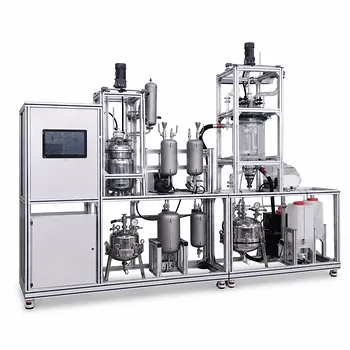
Chlor-alkali pilot plants are engineered to illuminate every critical variable that governs industrial brine electrolysis. Researchers and students use them to study current density, cell voltage, electrode efficiency, membrane separation, temperature, pH, differential pressure, and the cascade of side reactions that degrade product purity and consume energy. These scaled-down systems replicate real-world conditions, enabling precise measurement of how each parameter interacts—from electrical energy input to the quality of the chlorine, hydrogen, and caustic soda output.
The core purpose of a chlor-alkali pilot plant is to transform abstract electrochemical laws into tangible, controllable variables. By systematically altering electrical parameters (voltage, current) and process conditions (temperature, pH, pressure), you uncover the exact levers that determine energy consumption, product purity, and long-term cell durability—insights essential for both safe operation and process optimization.
The Electrochemical Heart: What You Measure at the Cell Level
This category targets the fundamental electrical and electrode-driven phenomena that dictate conversion efficiency and energy use.
Mapping Current Density and Cell Voltage
Current density—the current per unit electrode area—is the primary driver of reaction rate and gas production. Pilot plants allow you to adjust it while logging the corresponding cell voltage.
Cell voltage is not a single number; it’s the sum of decomposition voltage, ohmic drops across the electrolyte and membrane, and overvoltage at both electrodes. By changing current density and electrode material, students can decompose this voltage into its components and directly calculate the energy consumption per ton of product.
Quantifying Electrode Efficiency and Overvoltage
Electrode efficiency is tested by comparing the actual cell voltage to the thermodynamic minimum. Pilot setups often feature interchangeable electrodes—such as graphite, iron, or Dimensionally Stable Anodes (DSA) like titanium coated with RuO₂-TiO₂.
This allows a direct study of how different materials lower overvoltage. A lower overvoltage means less electrical energy wasted as heat, directly improving the overall operation’s profitability.
Validating Faraday’s Laws and Current Efficiency
The pilot plant makes Faraday’s laws tangible: the mass of substance produced is proportional to the charge passed. You measure the actual volume of chlorine and hydrogen evolved, then compare it to the theoretical yield.
This ratio is the current efficiency, typically reduced from 100% by competing side reactions. Monitoring this metric reveals exactly how much productive current is lost to unwanted chemistry.
The Process Engineer’s Levers: Critical Operating Conditions
Beyond pure electrochemistry, stable and safe operation depends on fluid and thermal parameters.
Controlling Temperature for Ion Mobility
The feed brine is typically preheated to 75–80°C, aiming to maintain the electrolyzer cell at around 95°C.
Higher temperatures increase ion mobility and lower the electrical resistance of the electrolyte and membrane. However, excessive heat can accelerate side reactions and damage membrane polymers, making temperature control a delicate balancing act.
Regulating pH to Suppress Chlorate Formation
Hydrochloric acid is dosed into the brine to maintain a low pH of 3–5. This neutralizes hydroxyl (OH⁻) ions that back-migrate from the cathode chamber.
Without this acidity, the OH⁻ reacts with chlorine to form hypochlorite and eventually chlorate (NaClO₃), a serious impurity that represents a loss of both product and efficiency. The pilot plant’s pH sensors and acid dosing loops demonstrate this critical in-line control.
Maintaining Differential Pressure for Safety
The most critical safety parameter is the differential pressure between the anode and cathode chambers. The anode side is kept under a slight negative pressure (-20 to -30 Pa) to prevent toxic chlorine leaks.
Simultaneously, the cathode side maintains a positive pressure to block air ingress and eliminate the risk of forming a flammable hydrogen-oxygen mixture. Pilot plants use integrated sensors and control valves to automate this life-critical balance.
Unmasking the Hidden Enemy: Side Reactions and Their Impact
The gap between theoretical and actual performance is filled by parasitic chemistry that pilot plants are uniquely positioned to study.
Tracking Oxygen and Chlorate By-Products
Even under ideal conditions, water molecules can oxidize at the anode to form oxygen. This not only reduces chlorine purity but aggressively oxidizes graphite anodes, drastically shortening their life.
Simultaneously, the formation of hypochlorous acid and chlorate consumes the desired chlorine product. A pilot plant equipped with analytical instruments lets you measure these by-products in real time, proving why the switch to corrosion-resistant DSA anodes is essential for industrial viability.
Linking Side Reactions to Current Efficiency
Every molecule of chlorate or oxygen formed represents a diversion of electrons away from producing chlorine and caustic soda. By analyzing the product streams, you can tie the measured current efficiency loss directly to the concentration of these impurities, making a quantitative case for the tight process controls required.
Understanding the Trade-offs
Every operational choice in a chlor-alkali pilot plant involves a compromise that reveals the constraints of real-world design.
- Raising the temperature lowers electrical resistance (reducing energy costs) but accelerates the rate of all side reactions and stresses the expensive ion-exchange membrane.
- Increasing the current density boosts production rate but simultaneously raises cell voltage (increasing energy per unit product) and the rate of wasteful oxygen evolution.
- Operating at a lower brine pH suppresses chlorate, but too much acid can attack the membrane’s functional groups and degrade the anode coating over time.
- Tightening the differential pressure control enhances safety, but excessively sensitive interlocks can cause frequent, cost-intense production trips that stress the membrane.
Studying these conflicting effects on a pilot scale transforms raw theory into an intuitive understanding of industrial optimization.
Making the Right Choice for Your Learning or Research Goal
The parameters you prioritize depend entirely on the operational insight you seek.
- If your primary focus is fundamental electrochemistry: Focus on current density–overvoltage relationships using different electrode materials to directly calculate Tafel slopes and energy efficiency.
- If your primary focus is industrial process safety: Prioritize the automation of differential pressure control, gas scrubbing unit functionality, and the logic behind the automated shutdown protocols.
- If your primary focus is product purity and process optimization: Center your experiments around brine pH control, temperature cascading, and analytical measurement of chlorate and oxygen in the product streams.
- If your primary focus is materials science and electrode durability: Conduct long-duration runs comparing graphite and DSA anodes under identical conditions, tracking both voltage creep and physical degradation.
The chlor-alkali pilot plant hands you a controlled microcosm of a billion-dollar industry; every sensor reading and sample analysis is a direct line to understanding how electrochemical science becomes chemical engineering reality.
Summary Table:
| Parameter Category | Key Variables Studied | Operational Impact |
|---|---|---|
| Electrochemical | Current density, cell voltage, overvoltage, current efficiency | Dictates reaction rate, energy consumption, and electrode performance. |
| Process Conditions | Temperature, pH, differential pressure | Optimizes ion mobility, prevents side reactions, and ensures safe operation. |
| Side Reactions | Oxygen and chlorate formation | Measures impurity levels and quantifies loss of product yield. |
Are you looking to bridge the gap between electrochemical theory and industrial application?
LABPARK provides state-of-the-art Educational and Vocational Unit Operations Pilot Plants in chemical engineering, bioprocess & biotech, and environmental & water treatment. Specifically engineered for universities, research institutes, and enterprises, our systems enable hands-on training and precise process optimization.
Contact LABPARK today to find the perfect pilot plant solution for your educational or research needs!
Related Products
- Alkaline Membrane Water Electrolysis Educational Pilot Plant Unit Operations Training System
- Electrolytic Hydrogen Production Educational Unit Operations Pilot Plant
- Electrolyte Distillation Purification and Formulation Educational Pilot Plant
- Water Electrolysis Hydrogen Production and Storage Educational Pilot Plant
- Methane Cracking Educational Unit Operations Pilot Plant
People Also Ask
- How do chemical engineering pilot plants demonstrate electrolysis? Bridge Theory & Industrial Scale
- How do composite membranes affect NaOH production? Key factors for high current efficiency.
- What are the core parameters of water electrolysis efficiency? Master them with pilot plants.
- Gap-Electrode vs. Zero-Gap Membrane: Key Design Choices for Water Electrolysis Pilot Plants
- How do alkaline and PEM electrolysis technologies differ in pilot plant operations?