The key lesson is that how you remove heat determines your process efficiency and economics.
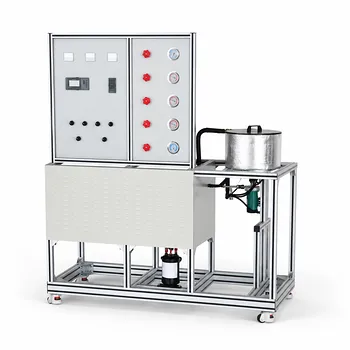
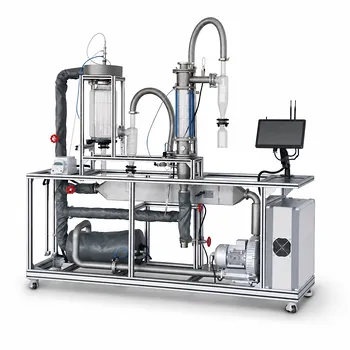
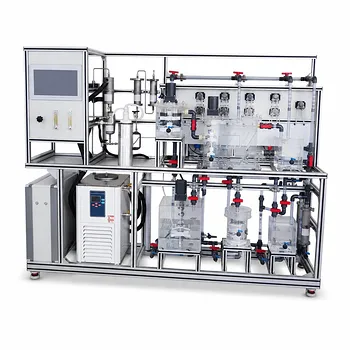
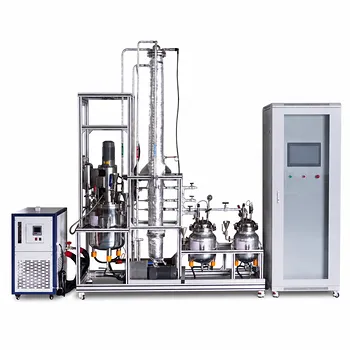
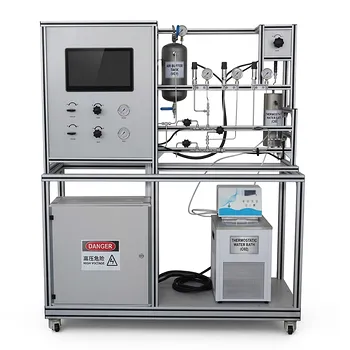
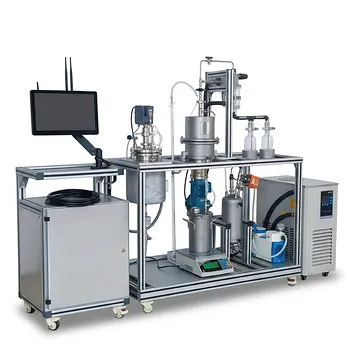
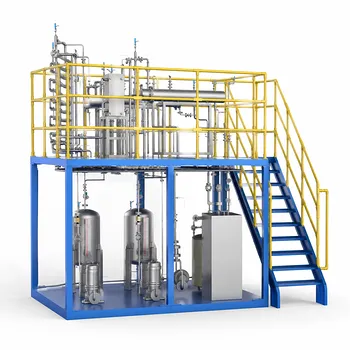
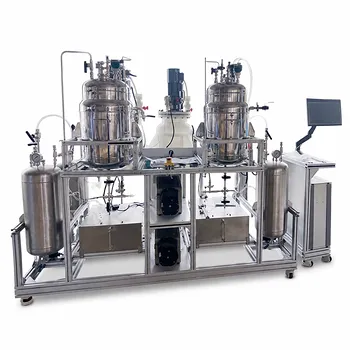
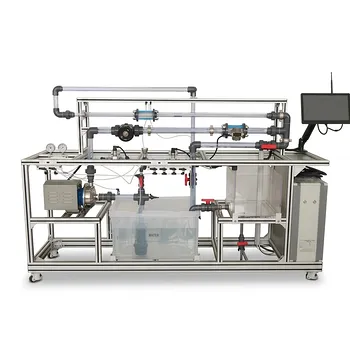
A chemical engineering pilot plant equipped with both direct quench and indirect cooling options provides a hands-on platform to teach essential heat integration design principles. Students can contrast rapid temperature quenching with cold bypass gas against controlled heat recovery using interbed heat exchangers. By measuring temperature profiles, flow rates, and utility loads, they observe how these methods affect reaction pathway steering, energy quality, and process sustainability.
The pilot plant transforms abstract thermodynamics into tangible design insights: indirect cooling preserves high-grade energy for steam generation, aligning with pinch analysis, while quench sacrifices thermal quality for lower capital cost. The side‑by‑side comparison teaches engineers to evaluate trade‑offs between energy recovery, equipment complexity, and operational resilience—the core skills of heat integration.
Teaching the Thermodynamics of Reactor Cooling
How Temperature Profiles Govern Reaction Yield
In exothermic equilibrium reactions, the temperature trajectory across catalyst beds dictates product yield. Too much cooling slows kinetics, while insufficient cooling pushes the reaction away from equilibrium.
On the pilot plant, varying the bypass gas flow (quench) or utility flow (indirect) instantly shifts the temperature profile.
Students plot the measured temperatures against the maximum rate and equilibrium curves. They see that indirect cooling can keep the profile closer to the optimal path, maximizing reaction driving force without quenching high‑grade heat. This turns “reaction engineering” theory into a visible, adjustable phenomenon.
Visualizing the Path from Equilibrium to Optimization
Direct quench injects cold gas, abruptly dropping temperature but destroying exergy through mixing. The resulting temperature trajectory often deviates from the ideal, reducing conversion per pass.
Indirect cooling, however, extracts heat at the highest temperatures between beds, so the reaction can continue near the optimum. Students can calculate the lost work from quench mixing and quantify the improved approach to equilibrium with interbed exchangers. The pilot plant thus teaches that reactor cooling strategy is a primary lever for process optimization and energy conservation.
Applying Pinch Analysis to the Pilot Plant Data
Calculating Energy Targets from Live Measurements
Pinch analysis is the backbone of systematic heat integration.
With the pilot plant, students measure stream temperatures and heat capacity flow rates (CP) for both quench and indirect configurations. They then construct composite curves, identify the pinch point, and determine the theoretical minimum utility targets. Comparing these targets to actual utility consumption reveals the energy penalty of direct quench: all that sensible heat is simply discarded.
Verifying the CP Rules Above and Below the Pinch
Correct heat exchanger network design must obey the CP inequality rules.
On the pilot plant, students can reconfigure exchangers to test:
- Above the pinch: (CP_{\text{hot}} \le CP_{\text{cold}}) must hold, otherwise an exchanger temperature cross occurs.
- Below the pinch: (CP_{\text{hot}} \ge CP_{\text{cold}}) is required.
By deliberately violating these rules and observing the resulting temperature cross, the pilot plant gives a visceral understanding of thermodynamic feasibility.
Understanding the Trade‑offs Between Quench and Indirect Cooling
Capital Cost vs. Energy Efficiency
Direct quench is simple: add a mixing point, no large exchanger. This means lower investment and faster construction.
Indirect cooling requires multiple shell‑and‑tube or plate exchangers between beds, raising capital expenditure significantly. However, the pilot plant measures the difference: the indirect configuration can generate high‑pressure steam, often turning the waste heat into a revenue stream. This tangible comparison teaches the fundamental trade‑off between CAPEX and OPEX.
Operational Robustness and Fouling Control
Heat integration is not just about thermodynamics; mechanical reliability matters.
The pilot plant can demonstrate staged cooling—a venturi quench followed by a countercurrent indirect exchanger. In processes with condensing tars or oils, the quench cools the hot gas and creates a liquid wash that prevents tube fouling in the downstream exchanger. Students see that a well‑designed heat integration strategy must also solve operability problems, not just balance energy.
Designing Utilities According to Pinch Rules
Avoiding Cross‑Pinch Heat Transfer
The cardinal rule: never use a cold utility above the pinch, and never use a hot utility below the pinch.
On the pilot plant, intentionally mis‑routing utilities (e.g., sending cooling water to a stream above the pinch) causes a sharp increase in overall energy demand. The live data makes the energy penalty of cross‑pinch transfer unmistakable.
Selecting the Most Cost‑Effective Utility
With indirect cooling, the captured heat can be matched to the most appropriate utility. Students evaluate whether the temperature level justifies high‑pressure steam generation, medium‑pressure steam, or boiler feed water preheating.
This teaches the principle of utility cascading: match utilities according to the process temperature requirement and avoid using high‑grade heat for low‑grade duties.
Making the Right Choice for Your Process Design
When translating these pilot‑plant lessons to industrial design, the insights are directly actionable:
- If your primary focus is maximizing energy efficiency and steam export: Choose indirect interbed cooling and apply pinch analysis to optimize the exchanger network. The pilot plant confirms that high‑grade heat can be seamlessly recovered for power generation.
- If your primary focus is minimizing capital expenditure for a grassroots plant: A quench‑only configuration may be viable, but use pilot data to quantify the energy penalty and the resulting lower product yield. The cost advantage must be weighed against the lifetime operating loss.
- If your process has severe fouling potential (e.g., tar condensation): Implement a staged approach—venturi quench to cool and wash, followed by an indirect exchanger. The pilot plant shows how the condensate scours tube surfaces, preventing plugging while still generating steam.
- If your goal is to teach fundamental heat integration principles: The side‑by‑side pilot plant is unmatched. It delivers real‑time confirmation of pinch rules, CP matching, and the path‑dependent nature of heat and work, converting classroom theory into confident engineering judgment.
By mastering these principles on a pilot scale, you gain the ability to design heat‑integrated processes that balance efficiency, cost, and resilience—the true mark of process optimization.
Summary Table:
| Feature | Direct Quench Cooling | Indirect Interbed Cooling |
|---|---|---|
| CAPEX | Low (no large heat exchangers) | High (multiple interbed exchangers) |
| Energy Recovery | Low (destroys exergy by mixing) | High (preserves heat for steam generation) |
| Pinch Compliance | Often violates pinch rules | Aligns with pinch & CP inequality rules |
| Best For | Lower initial capital investment | Maximizing efficiency & revenue from heat |
Bring Thermodynamics to Life in Your Lab
Looking to equip your students or research team with hands-on process optimization tools? LABPARK provides premium Educational and Vocational Unit Operations Pilot Plants in chemical engineering, bioprocess & biotech, and environmental & water treatment.
Our pilot plants allow universities, research institutes, and enterprises to:
- Bridge the gap between thermodynamic theory and practical application.
- Simulate real-world industrial scenarios like pinch analysis and utility cascading.
- Train engineers on cutting-edge process control and energy efficiency.
Ready to upgrade your laboratory's capabilities? Contact LABPARK today to discuss your custom pilot plant configuration!
Related Products
- Educational Compression Refrigeration Performance Determination Unit Operations Pilot Plant
- Multi-Functional Drying Educational Unit Operations Pilot Plant
- Multi-Functional Special Distillation Educational Pilot Plant
- 100L Continuous Loop Hydrogenation Educational Unit Operations Pilot Plant
- Dual Mode Heat Transfer Pilot Plant for Unit Operations Training
People Also Ask
- Why is distinguishing between elastic and plastic deformation critical? Prevent tablet capping.
- How is unsteady-state flow analyzed & taught? Master Transient Systems in Unit Ops
- What are the differences between set-point, servo, and program control? Master unit operations training.
- How to use pilot plants to estimate gas compression costs? Master scale-up economics.
- How do students monitor and control cycles of concentration to prevent scale in cooling tower pilot plants?