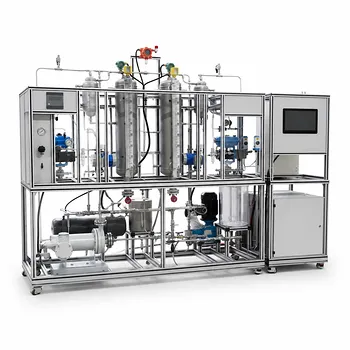
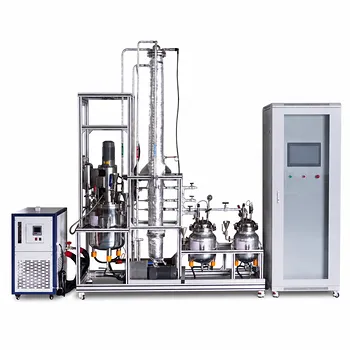
Protecting people and planet begins with robust containment, precise control, and failsafe automation. To prevent accidental spills and meet environmental regulations, pilot plants must integrate multi-layered safety designs: smart control systems with interlocks and alarms that override human error, physical infrastructure that directs any leak to a centralized wastewater collector, and materials that resist corrosion under aggressive chemical conditions. These features work together to keep hazardous substances inside the process and out of the surrounding environment.
The fundamental goal is zero unplanned release. Achieving it requires not just a single barrier, but a defense-in-depth strategy—automated safety controls, physical containment, and material integrity—backed by fail-safe power and thoughtful layout. When all layers align, the pilot plant becomes a self-contained, compliant unit that even anticipates the failures before they happen.
Critical Design Features for Spill Prevention and Compliance
Every component from the control logic to the pipe routing must actively reduce risk. The following features form the backbone of a regulatory-compliant pilot plant.
Intelligent Control Systems and Safety Interlocks
Human error is the most common trigger of spills. Modern control systems act as an autonomous safety net that catches mistakes before they cause overflows.
High- and low-level alarms on tanks and reactors trip when process variables (level, flow, pressure, temperature) deviate from safe ranges. Paired with automatic shutdown sequences, these alarms stop pumps or close valves instantly to halt a developing spill.
Interlock systems prevent operator missteps by enforcing a logical sequence. For example, a transfer pump cannot start unless the receiving vessel’s inlet valve is confirmed open and its level sensor shows capacity—eliminating the chance of overfilling from a forgotten step.
Remote-operated cut-off valves on all critical feed and discharge lines allow rapid isolation of a leak from a safe location. In an emergency, operators or automated safety logic can segregate the entire pilot plant block without entering the hazard zone.
Physical Containment and Leak Direction
Even the best controls can fail. Physical design must assume a leak will occur and guarantee it stays captured.
Sloped floors and drip pans under pumps, sampling points, and discharge outlets direct any drips or gushers into a centralized wastewater collection system. Instead of reaching a floor drain that leads to the environment, the spill is routed to a holding tank for treatment.
Containment bunds around chemical storage and process skids provide secondary containment volume—typically 110% of the largest vessel—to capture catastrophic tank ruptures. The plumbing from bunds also feeds into the centralized wastewater header, never to stormwater.
Sampling stations deserve special attention. Because operators regularly interact with them, these points must include fail-closed sample valves, local containment trays, and direct piping to the collection system so that a forgotten open sample port simply drains back into process-side containment.
Material Integrity Under Aggressive Conditions
Spills often start as microscopic leaks from corrosion or material incompatibility. Selecting the right materials prevents slow degradation from turning into a sudden failure.
Reactor and seal materials must match the chemical stream. In advanced oxidation processes that use chlorine, chlorinated solvents, or photo-catalysis, standard stainless steel can pit and crack. High-nickel alloys, PTFE-lined components, and chemically resistant elastomers (e.g., FFKM) are often mandatory.
For photochemical or UV-based reactors, the need for transparent walls (quartz or glass) creates a heat-dissipation challenge. These materials have poor thermal conductivity, so exothermic reactions can create hot spots that stress seals. Integrating active cooling in the annular space and reflective coatings on non-transparent outer walls both preserves the reaction’s efficiency and protects the fragile containment barrier from thermal shock.
Fail-Safe and Redundancy Systems
Compliance requires that no single-point failure causes a spill. Redundancy and backup systems keep the plant safe even when components break.
Redundant sensors for critical variables (tank level, line pressure) ensure a single sensor failure won’t disable the safety trip. The control system votes 2oo3 (two out of three) or similar logic so that a faulty reading does not halt production nor mask a real hazard.
Backup power supplies maintain all safety functions during electrical outages. At a minimum, fail-safe valve positions default to closed; motorized valves and actuators must be powered by an uninterruptible power supply (UPS) or spring-return mechanism so they move to the safe state without active energy.
Fail-safe design extends to software: if the controller loses communication, all critical outputs revert to a predefined safe condition—pumps stop, drain valves open to collection, and isolation valves close.
Building Sustainability into the Safety Framework
Containment is about keeping hazards in; sustainability is about keeping resources in use. Smart integration of both makes compliance a natural outcome.
Closed-Loop Systems That Prevent Waste, Not Just Spills
Recirculating process water and solvents eliminates the continuous bleed that often leads to chronic leaks. A closed-loop water system with inline treatment recycles the same volume, drastically reducing the amount of liquid that could ever escape.
Heat recovery heat exchangers lower energy demand and also dampen thermal stress on equipment, indirectly prolonging seal life. Stopping a pump seal failure before it happens is as much a sustainability win as a spill-prevention measure.
Real-Time Waste-Reduction Monitoring
Embedded flow meters and conductivity sensors across recycle lines let operators see exactly how much water, solvent, or energy is being conserved. This transparency builds a culture of careful handling—when students or operators can quantitatively link their actions to environmental impact, they become more vigilant about spill risks and sub-optimal operation.
Understanding the Trade-offs and Pitfalls
No design is perfect. Knowing the downsides helps you invest wisely.
Over-instrumentation can create false trips. Too many alarms that trigger on transient spikes lead to nuisance shutdowns, which operators eventually bypass or ignore—destroying the safety culture. Every alarm must be justified and have a clear, documented response.
Centralized collection systems add complexity. Routing all potential leak points into one header makes it essential that the collection tank and its pumping system are themselves fail-safe and never overflowed during a rain event if any outdoor connections exist.
Closed-loop sustainability features must not compromise containment. A heat exchanger that recovers energy is excellent, but if it introduces a new flange gasket that isn’t compatible with an aggressive trace chemical, you’ve created a silent leak point. Material compatibility must be verified across the entire loop, not just the main reactor.
Failsafe default positions need careful thought. A spring-closed valve on a reactor drain line is safe for a leak, but if it slams shut during a power loss while the reactor is full and heating, it could trap an overpressure event. Each failsafe decision must be evaluated for all credible failure scenarios, not just spill scenarios.
Making the Right Choice for Your Pilot Plant’s Mission
Your specific priorities will determine which features get the most attention. Use this goal-based guide to focus your design.
- If your primary focus is ironclad regulatory compliance: Build defense-in-depth with redundant sensors, interlocked controls, secondary containment bunds, and a centralized leak-collection system that all report to a safety management system. Document every failsafe action.
- If your primary focus is protecting students and researchers: Prioritize remote valve operation, clear physical separation between operators and hazardous lines, and extremely visible alarms tied to automatic shutdowns. Fail-safe spring-return valves and UPS-backed shutdowns are non-negotiable.
- If your primary focus is demonstrating zero-liquid-discharge sustainability: Layer closed-loop water and solvent recycling on top of the spill-containment core. Instrument the recycle loops heavily so operators see resource conservation in real time; that mindset reinforces careful, spill-avoiding operation.
- If your primary focus is working with corrosive photo-catalytic processes: Invest heavily in material selection (quartz, high-nickel alloys, specialized elastomers), active reactor cooling, and double-walled containment on all piping that carries UV-exposed fluids. Do not rely on a single layer of corrosion protection.
Safety and compliance are not a checklist—they are a design philosophy. By weaving intelligent controls, physical containment, and material resilience into the very layout of your pilot plant, you create a system that protects its operators and the environment as naturally as it runs its reactions.
Summary Table:
| Design Feature | Primary Function | Key Components |
|---|---|---|
| Intelligent Controls | Prevent operator errors & automate shutdowns | Alarms, safety interlocks, remote cut-off valves |
| Physical Containment | Capture and route leaks to holding tanks | Sloped floors, drip pans, 110% volume containment bunds |
| Material Integrity | Prevent corrosion-induced leaks and degradation | High-nickel alloys, PTFE-lined pipes, FFKM seals, active cooling |
| Fail-Safe Systems | Maintain safety during power or system failures | Redundant sensors, UPS backup, default-closed valves |
Secure Your Research with Compliant Pilot Plants
At LABPARK, we design and supply state-of-the-art Educational and Vocational Unit Operations Pilot Plants for chemical engineering, bioprocess & biotech, and environmental & water treatment.
Whether you are a university, research institute, or enterprise, our systems integrate multi-layered safety controls, robust material compatibility, and advanced spill containment to ensure strict regulatory compliance and protect your personnel.
Ready to elevate your facility's safety and capabilities? Contact LABPARK today to discuss your custom pilot plant requirements with our engineering team.
Related Products
- Electrochemical Water Treatment Educational Unit Operations Pilot Plant
- Thermal Desorption Exhaust Gas and Tail Water Treatment Educational Pilot Plant
- Ion Exchange Water Purification Educational Pilot Plant for Engineering Unit Operations
- Water Electrolysis Hydrogen Production and Storage Educational Pilot Plant
- Alkaline Membrane Water Electrolysis Educational Pilot Plant Unit Operations Training System
People Also Ask
- What design features do educational electrochemical pilot plants utilize to manage gas liberation and water loss?
- How can unit operations pilot plants show lead-acid concentration vs state of charge? Real-time monitoring guide.
- How do educational electrochemical pilot plants scale up electrolysis? Master industrial engineering.
- How to Estimate Sulfate in Water Treatment Pilot Plant Deposits: Gravimetric Guide
- How can foaming be managed during steam generation experiments in water treatment unit operations pilot plants? Tips