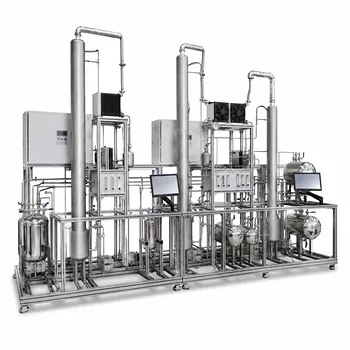
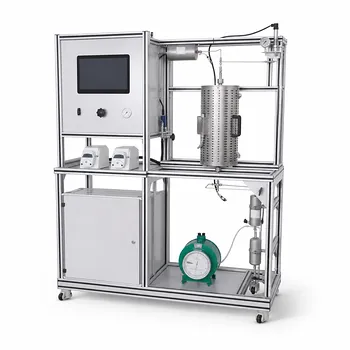
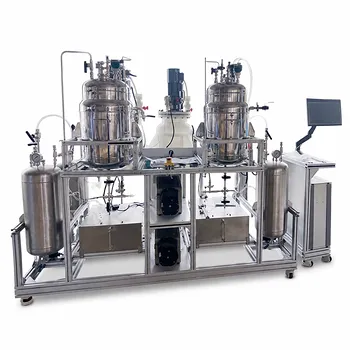
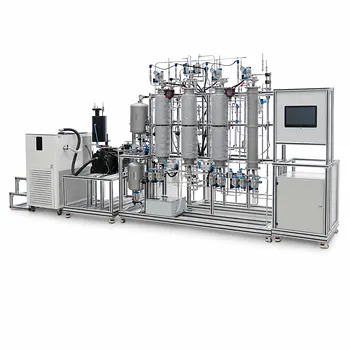
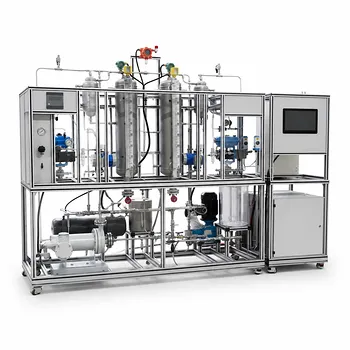
Preventing catalyst poisoning in an etherification pilot plant isn’t just about protection — it’s about replicating industrial viability. The critical design elements are a raw material pretreatment section with a water washing column and guard beds to strip out metal ions and amines, a sacrificial guard bed at the reactor inlet to capture irreversible poisons, and integrated regeneration capabilities (or swing reactor setups) to manage coking. Together, these features shield the fragile ion-exchange resin, sustain a high conversion of isobutene (typically >98%), and generate reliable kinetic data.
A resilient pilot plant design defends against catalyst poisoning through a layered strategy: upstream purification eliminates ionic and basic contaminants, a sacrificial bed traps any irreversible intruders, and controlled regeneration counters coke deposition. This mirrors the operational logic of a full-scale MTBE unit, making the pilot a true training ground for industrial practice.
The Vulnerability of Ion-Exchange Resin Catalysts
Strong acid cation-exchange resins like Amberlyst-15 are the workhorses of etherification, but their active sulfonic acid sites make them extremely sensitive to poisons. Without dedicated design countermeasures, a pilot plant becomes a catalyst graveyard rather than a reliable data source.
Metal Ions and Amines: The Silent Killers
Metal cations (Na⁺, Ca²⁺, Fe³⁺) irreversibly exchange onto the resin’s active sites, permanently neutralizing acidity.
Basic amine compounds neutralize the acid sites through simple protonation, effectively shutting down the catalytic function even at ppm levels.
Both poison types can hitchhike into the plant via the C4 hydrocarbon feed, accumulating silently if no pretreatment exists.
Why Pilot Plants Are Uniquely at Risk
Industrial units process massive, pre-treated feed streams, but pilot plants often draw from smaller, less-consistent sources.
A single batch of contaminated feed can permanently deactivate the entire laboratory-scale catalyst charge, invalidating weeks of experimental work.
The economic and time impact of this failure far outweighs the upfront cost of incorporating poisoning defenses.
Critical Design Elements for Poisoning Prevention
To build a pilot plant that teaches proper unit operations and protects catalyst integrity, three design elements must be woven into the process flow. Each targets a distinct deactivation mechanism.
1. Raw Material Pretreatment Section: Water Washing and Guard Beds
This is the first and most fundamental line of defense. Before the C4 feed touches the reactor, it must be cleaned of ionic and basic poisons.
A water washing column uses a countercurrent flow of deionized water to dissolve and extract water-soluble metal salts and amines. This step mimics the industrial practice of feed purification and immediately removes the bulk of the poison load.
Downstream of the water wash, specialized guard beds containing activated alumina or molecular sieves polish the feed. They adsorb any residual traces of impurities that slipped through the water column, ensuring the ion-exchange resin sees a near-zero poison concentration.
This combination is directly drawn from the primary reference: it demonstrably prevents the precipitous activity loss that occurs when raw feed contacts the resin.
2. Sacrificial Guard Beds for Irreversible Poisons
Even with upstream purification, trace-level irreversible poisons can still reach the reactor. The solution is a sacrificial layer of resin placed directly at the reactor inlet.
This guard bed acts as a chemical shield. It sacrifices its own active sites to trap any residual metal ions or strongly basic species before they can contaminate the working catalyst downstream.
The sacrificial bed is replaced periodically, while the main catalyst charge remains protected. This design is especially critical when feed source variability is expected, as it provides a fail-safe against unexpected upset conditions.
3. Addressing Coking: Regeneration Systems and Swing Reactors
Ion-exchange resins can foul by coking—the deposition of heavy organic byproducts that block pores and active sites. This is a physical, not chemical, deactivation mechanism.
A design with controlled regeneration capability—for example, a system for careful low-temperature coke combustion under inert gas dilution—allows the resin to be rejuvenated in place. This teaches operators the intricacies of safe regeneration procedures.
Alternatively, a swing reactor arrangement solves the coking problem by design. Two parallel reactors are installed; while one is online for etherification, the other undergoes offline regeneration. This ensures uninterrupted continuous operation, a key lesson for translating pilot data to commercial scale.
Understanding the Trade-offs
Each protective design element adds complexity, cost, and operational overhead. However, in a pilot plant context, the trade-off is almost always in favor of inclusion because data integrity and educational value are the primary deliverables.
Pretreatment Adds Complexity but Protects Data Integrity
Installing a water wash column and guard beds increases the equipment count and requires monitoring of water-hydrocarbon interfaces.
Yet, skipping this step means you are testing the catalyst’s tolerance to poisons, not its intrinsic etherification kinetics. The resulting data becomes irrelevant for scale-up.
Sacrificial Beds Introduce Consumables and Monitoring
A sacrificial guard bed is an ongoing operational expense and demands a protocol for recognizing breakthrough of poisons.
The benefit is immense: it insulates the core experimental catalyst from feed upsets, preserving a consistent baseline for parameter studies like temperature or space velocity variation.
Regeneration Capabilities Increase Capex and Operational Expertise
Adding regeneration infrastructure or a swing reactor significantly raises the pilot plant’s initial cost and requires rigorous safety procedures.
But for processes where coking is inevitable, this design element is the only way to achieve steady-state performance over a full campaign, a prerequisite for a meaningful techno-economic evaluation.
How to Apply This to Your Pilot Plant Goals
The specific combination of design elements you implement must align with what you need the pilot plant to teach you or prove. A one-size-fits-all answer does not exist, but the following guidelines can steer your engineering decisions.
- If your primary focus is catalytic fundamentals and intrinsic kinetics: A minimal design with a robust water washing column and sacrificial guard bed is often sufficient. This strips out poison noise without the added complexity of regeneration.
- If your primary focus is demonstrating long-term commercial viability: Include the full suite—pretreatment, sacrificial bed, and a swing reactor system. This replicates the operational rhythms of a plant and generates lifetime deactivation data that is credible for investors.
- If your primary focus is operator training and process safety: Incorporate a controlled regeneration system. The procedures for safe coke burn-off and bed change-out are among the most valuable operational lessons a pilot plant can deliver.
- If your primary focus is screening harsh or variable feedstocks: Ensure the pretreatment section is oversized and the sacrificial bed is easily accessible for frequent replacement. This flexibility is cheaper than replacing the main catalyst charge after every trial.
Designing a pilot plant that actively prevents catalyst poisoning is not an optional extra; it is the single most effective way to turn a simple reactor into a reliable, industrial-learning tool.
Summary Table:
| Design Element | Main Function / Mechanism | Target Impurity | Key Benefit for Pilot Plants |
|---|---|---|---|
| Water Washing Column | Countercurrent extraction using DI water | Water-soluble metal salts, amines | Removes bulk ionic/basic contaminants |
| Guard Beds (Alumina/Sieves) | Adsorption polishing downstream of wash | Trace metal ions, residual amines | Protects resin from trace impurities |
| Sacrificial Inlet Bed | Chemical shielding (sacrifices active sites) | Irreversible poisons, bypass leakage | Insulates core catalyst, preserves data |
| Regeneration / Swing Reactor | In-situ coke burn-off or parallel switching | Coking, heavy organic polymer deposits | Ensures steady-state, continuous operation |
Optimize Your Research with LABPARK Pilot Plants
Are you looking to scale up your chemical processes without the risk of catalyst deactivation? LABPARK designs and manufactures state-of-the-art Educational and Vocational Unit Operations Pilot Plants in chemical engineering, bioprocess & biotech, and environmental & water treatment.
We help universities, research institutes, and enterprises build resilient, highly customizable pilot systems equipped with advanced pretreatment, guard beds, and regeneration systems to ensure data integrity, operator safety, and long-term viability.
Contact LABPARK today to discuss your pilot plant requirements and get a customized engineering solution!
Related Products
- Ethyl Acetate Synthesis Unit Operations Pilot Plant for Practical Training
- Bio-fermentation Ethanol Production Practical Training Unit Operations Pilot Plant
- Green Anhydrous Ethanol Purification Extractive Distillation Unit Operations Training Pilot Plant
- Green Anhydrous Ethanol Refining Practical Training Pilot Plant
- Ethylbenzene Dehydrogenation Educational Unit Operations Pilot Plant
People Also Ask
- How do pilot plants demonstrate esterification? Visualizing Chemical Engineering Equilibrium
- Why is the chemical plant startup schedule crucial? De-risk scale-up with pilot plants.
- When to transition from PID to adaptive control in pilot plants? Key process indicators.
- Why Use PTFE & Hastelloy in Chemical Pilot Plants? Prevent Corrosion & Ensure Safety
- How to study gasification in pilot plants? Compare exit gas composition & efficiency