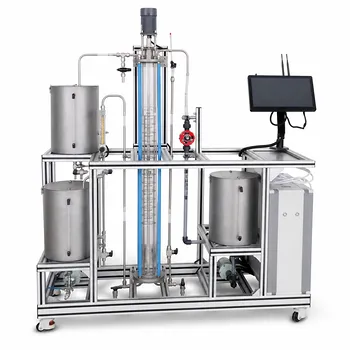
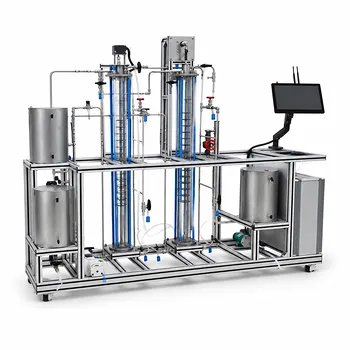
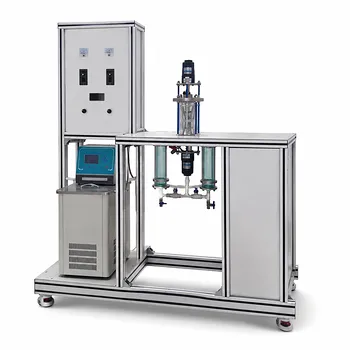
Stable emulsions are the silent killers of extraction efficiency. When a liquid-liquid extraction pilot plant hits a stubborn emulsion, the phase separation grinds to a halt. You can systematically study and resolve it using a combination of chemical methods (adding inorganic salts or adjusting pH), physical interventions (elevating temperature, filtering the rag layer), and mechanical approaches (employing centrifugal separators or modifying agitator behavior). Each method can be tested at pilot scale to uncover not just which fix works, but why the emulsion formed in the first place.
Pilot-scale extraction can magnify emulsion stability due to higher mixing energy, precipitation near solubility limits, and agitator blade positioning. A pilot plant becomes your proving ground to evaluate chemical salting‑out, pH swings, heat, centrifugation, filtration, and operational tweaks – all while diagnosing the root cause to prevent recurrence at commercial scale.
Why Pilot Plants Face Harder Emulsions Than Lab Glassware
The Mixing Power Gap
Laboratory separatory funnels use gentle shaking. A pilot plant typically delivers a much higher power per volume of mixing. This intense agitation shears droplets into an extremely fine dispersion – excellent for mass transfer, but a nightmare for coalescence. You can study how varying the agitation speed directly impacts droplet size distribution and phase settling time, finding the sweet spot where extraction efficiency meets separability.
Precipitation at the Limits
Pilot operations often push temperature or solvent composition near their upper or lower solubility limits. When a phase approaches that edge, tiny precipitated product particles or salt crystals can form. These ultrafine solids migrate to the liquid-liquid interface and act as a mechanical barrier, locking droplets apart. Testing whether an emulsion disappears after gentle filtration directly confirms if particulates are the stabilizing culprit.
Agitator Blade Position Matters
The vertical location of the agitator blade relative to the phase boundary determines which liquid becomes the dispersed phase. An emulsion that is stable when the organic phase is dispersed in water can become unstable if you flip the continuous phase by simply moving the blade. A pilot plant lets you adjust impeller position and observe the immediate impact on emulsion persistence and phase clarity.
Chemical Methods You Can Evaluate on a Pilot Plant
Salt Addition (Salting-Out)
Dissolving inorganic salts (such as sodium chloride or sodium sulfate) into the aqueous phase increases its ionic strength. This does three things simultaneously: it raises the density difference between phases, boosts interfacial tension, and reduces the solubility of water in the organic solvent. All three accelerate droplet coalescence. Pilot-scale tests allow you to measure the exact salt concentration needed to break the emulsion without causing product loss or side reactions.
pH Adjustment
Many emulsions are stabilized by surface-active molecules that carry a charge. Adding a small amount of acid (or base) can neutralize that charge, collapsing the emulsion rapidly. This is especially effective for alkaline‑induced emulsions in reactive extraction. A pilot plant with inline pH monitoring lets you correlate pH shifts with phase clarity in real time, quantifying the precise window where separation becomes clean.
Demulsifiers and Solvent Composition Changes
Sometimes a simple dilution of the organic phase with a low‑boiling solvent (like ether in a laboratory‑equivalent test) reduces density and helps droplets rise. Specialized demulsifier chemicals – although rarely used in pharmaceutical or high‑purity applications – can also be screened. Modifying the solvent‑to‑feed ratio changes the overall composition and can push the system away from the emulsion‑prone zone, all measurable under controlled pilot conditions.
Physical and Mechanical Methods at Your Disposal
Heat and Temperature Control
Increasing the operating temperature lowers the continuous phase viscosity, allowing droplets to settle or rise faster. Mild heating (often up to 50°C in organic‑aqueous systems) can also reduce the solubility of stabilizing surfactants and soften interfacial barriers. A pilot plant with a jacketed vessel or heat exchanger lets you quantify settling time versus temperature and identify the point of diminishing returns before risking thermal degradation.
Centrifugal Separation
When gravity alone is too slow, a high‑speed centrifuge applies hundreds of g‑forces to tear the emulsion apart. This mechanical method is particularly valuable for feeds with very low density differences or high viscosity. Testing an in‑line centrifuge on your pilot skid provides the data needed to size a commercial centrifugal separator and verify that the separated phases remain stable under downstream conditions.
Filtration and Rag Layer Removal
The stubborn “rag” layer at the interface is often a collection of solid stabilizers. Passing the emulsion through a filter media, a mesh coalescer, or even gentle glass‑wool rotation can physically remove those particulates. Once separated, the bulk phases often settle cleanly. Pilot‑scale filtration tests reveal the required pore size, pressure drop, and whether the filtered solids contain valuable product that should be recovered.
Operational Adjustments: Agitation and Phase Ratio
Before adding any chemical, you can often fix an emulsion by tuning the process itself. Reducing the agitation speed can transform a tight, stable cream into a fast‑separating dispersion. Likewise, adjusting the organic‑to‑aqueous ratio can flip the continuous phase or move the system away from a critical composition. A pilot plant quantifies the relationship between these levers and the resulting emulsion stability.
Understanding the Trade-offs and Pitfalls
Chemical Additives Can Contaminate Product
Salts, acids, or demulsifiers can leave behind residues that compromise final product purity or catalyze unwanted side reactions. If your extraction feeds a pharmaceutical or fine‑chemical process, every added chemical must be scrutinized for downstream removal. The pilot plant is the place to verify that a “break” doesn’t become a purification headache.
Heating May Degrade Heat-Sensitive Compounds
Temperature increases speed up settling, but they also accelerate decomposition of thermally labile products or increase solvent evaporation. A 5°C improvement in separation can be offset by a 2% yield loss. Pilot‑scale stability studies under realistic heat loads tell you exactly where that boundary lies.
Mechanical Methods Add Complexity and Cost
Centrifuges require capital, maintenance, and careful sealing – especially with flammable solvents. Filtration systems need regular cartridge changes and can clog rapidly if solids loading is underestimated. Each mechanical addition must prove its worth against simpler chemical alternatives through measured pilot data.
Mistaking Symptom for Root Cause
The greatest pitfall is to break the emulsion without understanding why it formed. If you jet salt or heat into every batch but never adjust the over‑agitation or the precipitation‑prone solvent composition, the emulsion will return at commercial scale. A pilot plant provides the diagnostic window to connect cause and effect, not just apply a quick fix.
Making the Right Choice for Your Extraction Process
Your pilot plant is the ideal platform to test multiple remedies side‑by‑side and map them against your specific process constraints. The right choice depends on your ultimate goal:
- If your primary focus is resolving a one‑off upset quickly: Start with fast chemical methods like salting‑out or pH adjustment, combined with a mild temperature increase to accelerate settling while you diagnose root causes.
- If your primary focus is designing a robust, continuous commercial process: Prioritize addressing the origin of the emulsion – optimize agitator tip speed, install online density meters to flag precipitation, and evaluate in‑line coalescers or centrifuges for a permanent mechanical safeguard.
- If your primary focus is ensuring product purity and yield: Favor non‑invasive physical methods (gentle heating, filtration of the rag layer) over chemical additives, and use pilot tests to confirm that no added salts or acids carry through to the final product.
A pilot plant is not just a scaled‑up laboratory funnel – it is a truth‑telling device for emulsions. By methodically applying and measuring each chemical and physical lever, you unlock a separation strategy that will survive the journey from pilot to production.
Summary Table:
| Method Type | Specific Actions | Key Benefits | Main Trade-offs |
|---|---|---|---|
| Chemical | Salting-out, pH adjustment, demulsifiers | Rapid phase separation, targets charged stabilizers | Risk of product contamination, downstream removal cost |
| Physical | Temperature control (heating) | Lowers viscosity, speeds up droplet settling | Potential thermal degradation of labile compounds |
| Mechanical | Centrifugation, filtration (rag layer removal) | High separation force, removes solid stabilizers | High equipment cost, maintenance, complex operation |
Scale Up with Confidence: Partner with LABPARK
Stable emulsions shouldn't stall your research or production scale-up. LABPARK offers specialized Educational and Vocational Unit Operations Pilot Plants in chemical engineering, bioprocess & biotech, and environmental & water treatment. Tailored for universities, research institutes, and enterprises, our pilot skids empower you to study phase behavior, optimize separation efficiency, and diagnose emulsion root causes in a controlled, measurable environment.
Ready to elevate your process design? Contact our technical experts today to discover how LABPARK can transform your extraction capabilities.
Related Products
- Educational Rotary Disc Liquid-Liquid Extraction Pilot Plant
- Comprehensive Liquid-Liquid Extraction Pilot Plant for Engineering Education
- Gallium and Indium Selective Extraction Educational Pilot Plant
- Ternary Liquid-Liquid Equilibrium Educational Pilot Plant
- Liquid-Liquid Mass Transfer Coefficient Determination Educational Pilot Plant
People Also Ask
- How do density and IFT affect liquid-liquid extraction pilot plants? Optimize Column Performance
- In a liquid-liquid extraction pilot plant, how is a ternary-phase diagram utilized to determine solvent feed requirements?
- How are ternary phase diagrams and LLE data applied in extraction experiments? Optimize Pilot Plant Scale-up
- How Do Selectivity & Distribution Coefficients Influence LLE Pilot Plant Solvent Choice?
- How to Validate BIPs for LLE Pilot Plants? Steps to Align Simulations with Reality