The golden rule of pneumatic control valve selection is simple, yet non-negotiable: the valve must fail to the safest state for your process. In a pilot plant, you choose an air-to-open (fail-closed) valve whenever a failure that leaves the valve open could cause overheating, overpressure, or a runaway reaction—such as on a steam line to a heat exchanger. Conversely, you select an air-to-close (fail-open) valve when a failure that shuts the valve would create a hazard—like a cooling water supply to a reactor that must never be interrupted. The decision is governed entirely by a failure-mode hazards analysis; operational considerations such as controller tuning or maintenance practices come second and always serve the chosen safety direction.
The core takeaway: air-to-open means “fail‑closed,” and air-to-close means “fail‑open.” Your facility’s safety analysis dictates which failure position prevents injury, equipment damage, or environmental release—no other factor overrides this. Once the safe state is locked in, you configure the controller and the installation to preserve that safety function under all conditions.
The Overriding Criterion: Fail‑Safe State
The valve’s failure position is not a performance preference—it is a risk‑mitigation mandate. Pilot plants often handle energetic materials or high temperatures, so a utility loss must drive the system to a known, controlled condition.
Why Failure Position Defines Valve Action
Pneumatic control valves use a spring‑and‑diaphragm actuator that sets the “resting” position when supply air is lost.
- Air‑to‑open (AO): The spring drives the valve shut on air failure. The valve is fail‑closed.
- Air‑to‑close (AC): The spring drives the valve open on air failure. The valve is fail‑open.
This mechanical default overrides all control logic. In a safety review, you ask: “If the valve sits in its failed state, is the result an immediate danger?” The answer dictates the valve action.
Applying the Fail‑Safe Principle to Heating Services
Any stream that adds heat to a reactor, column, or heat exchanger presents a thermal‑runaway risk if uncontrolled.
Steam, thermal oil, and fuel‑gas valves must be air‑to‑open (fail‑closed).
If instrument air drops, the valve slams shut, instantly cutting the heat source. This prevents overheating, exothermic decomposition, or tube rupture. The primary reference explicitly cites reactor heating lines and furnace fuel supplies as mandatory AO designs.
Applying the Principle to Cooling and Safety Services
Cooling streams (chilled water, cooling water, brine) often remove heat from exothermic reactions or condense volatile vapors. Loss of cooling can be catastrophic.
Reactors’ cooling‑water inlet valves must be air‑to‑close (fail‑open).
Upon air failure, the valve opens fully, maintaining maximum cooling capacity. The supplementary references stress this ensures the reactor can reject heat and avoid thermal runaway, even when the control system is dead. The same logic applies to reflux condensers or any emergency cooling loop.
Balancing Both in Complex Pilot Plant Streams
Some services can switch roles—for instance, a tempered‑water loop that sometimes heats and sometimes cools.
In such cases, perform a worst‑case failure analysis for each operating mode. If any scenario demands a specific fail position for safety, that position must prevail. Often an additional safety‑shut‑off valve is installed in series with the control valve to provide a hard fail‑safe layer if the control valve’s default action could ever become ambiguous.
The Operational Imperative: Controller Configuration
After the valve’s fail‑safe action is chosen, the complementary instrumentation must be set up to maintain negative feedback. This is the primary operational duty that follows directly from the safety choice.
Matching Controller Action to Valve Action
Once you know whether the valve is AO or AC, you must set the controller to direct‑acting or reverse‑acting accordingly.
In a negative‑feedback loop, an increase in the process variable must produce a controller output that moves the valve in the correct direction. For example, if a reactor temperature rises, the controller on an AO steam valve must send a decreased signal to close the valve (reverse‑acting controller). Swapping the controller action without changing the valve action would create positive feedback and immediate instability—exactly what you must avoid.
Avoiding Common Configuration Pitfalls
A mismatch is surprisingly common during commissioning, especially when a valve is replaced or a loop is re‑ranged. Always verify that a step‑test reveals the correct corrective action. Document the valve action and the required controller action on the P&ID and in the loop‑foldback diagram; this makes operator training and troubleshooting far safer.
Installation and Maintenance: Ensuring Reliability
Even a perfectly chosen fail‑safe valve can become a hidden danger if it’s installed poorly or neglected. The supplementary references provide clear guidelines that serve the deep need of long‑term operational integrity.
Practical Installation Best Practices for Any Valve Action
- Accessibility: Mount the valve where the handwheel, positioner, and stem are visible and reachable, so operators can act quickly during an emergency.
- Environmental protection: Keep the actuator away from high‑vibration sources and maintain at least 200 mm clearance from high‑temperature pipes to prevent diaphragm aging.
- Piping integrity: Install bypass lines with isolation valves so the safety valve can be maintained without stopping the process. Flush lines thoroughly before startup to prevent debris from lodging in the seat.
- Periodic inspections: Regularly check stem packing, diaphragm seals, and air connections; a leaking diaphragm can allow the spring to fail‑safe prematurely or, worse, prevent it from acting when needed.
These practices ensure that the valve’s designed fail‑safe behaviour actually occurs when the instrument air fails.
Understanding the Trade‑offs
Choosing a valve purely for safety can create tensions with controllability or flexibility. Acknowledging these trade‑offs is essential for honest engineering.
When Safety Demands a Less‑Than‑Ideal Control Characteristic
The fail‑safe choice may force you to accept a valve that normally operates very close to its seat or at an extreme opening, reducing control resolution. For example, an AO valve on a low‑flow heating stream might operate almost fully open during normal run, leaving little room for modulation. The response is not to weaken the safety choice but to select a properly sized trim, use a valve positioner, or split the range with a smaller secondary block valve.
Operational Complexity When Pilot Plant Duties Change
A rig originally built for a mild endothermic reaction may later be repurposed for a heat‑sensitive exothermic system. The original AO heating valve may now be a hazard because the new coolant loop wasn’t specified. Every time the process chemistry or utility assignment changes, the fail‑safe analysis must be repeated. This adds administrative burden but is non‑negotiable for continued safe operation.
Making the Right Choice for Your Goal
Your specific pilot‑plant mission will guide how you implement these principles.
- If your primary focus is student training and demonstrating industrial fail‑safe philosophy: Use the heating/fuel (= AO) and cooling/vent (= AC) rule of thumb exactly as practiced in industry. Then build in the controller‑action exercise—it cements the connection between safety, mechanics, and control logic.
- If your focus is maximising protection for high‑hazard experiments (e.g., high‑pressure exothermic reactions): Add an independent safety shut‑off valve with a spring‑return actuator in series with the control valve, configured to cut off the hazardous stream on a hard‑wired safety signal. This layer decouples control from safety and provides an unambiguous final element.
- If your focus is uptime and rapid maintenance turnaround: Invest in robust installation—bypass loops, dual isolation valves, easily removable actuator units—and schedule quarterly checks on the actuator spring and diaphragm. A well‑maintained fail‑safe valve never fails in the wrong direction.
Ultimately, the air‑to‑open vs. air‑to‑close decision is a distillation of engineering ethics: protecting lives and equipment comes first, and every other operational detail exists to support that uncompromising priority.
Summary Table:
| Valve Action | Fail-Safe State | Typical Application | Key Safety Function |
|---|---|---|---|
| Air-to-Open (AO) | Fail-Closed (FC) | Heating utility / Fuel supply | Cuts off heat source to prevent runaway reactions or overheating |
| Air-to-Close (AC) | Fail-Open (FO) | Cooling water / Emergency vent | Maintains critical heat removal even during loss of utility air |
Secure Your Process with LABPARK
Designing safe and reliable chemical systems requires the right equipment and engineering expertise. LABPARK provides state-of-the-art Educational and Vocational Unit Operations Pilot Plants in chemical engineering, bioprocess & biotech, and environmental & water treatment for universities, research institutes, and enterprises.
Ready to equip your facility with compliant, fail-safe pilot systems? Contact our engineering experts today to discuss your application needs!
Related Products
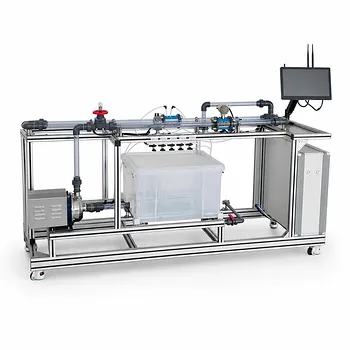
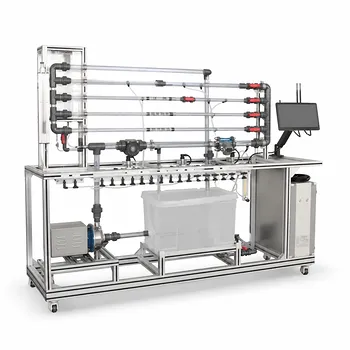
- Orifice and Venturi Flowmeter Calibration Educational Pilot Plant for Fluid Mechanics Laboratory
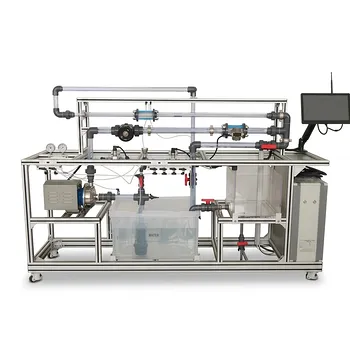
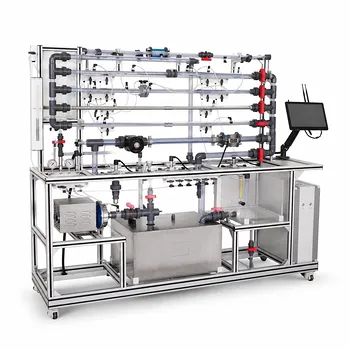
- Centrifugal Pump Performance and Orifice Flowmeter Calibration Educational Pilot Plant
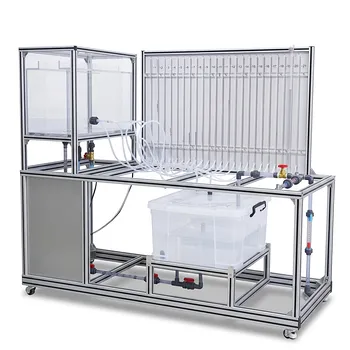
- Bernoulli Equation Demonstration Unit Operations Pilot Plant
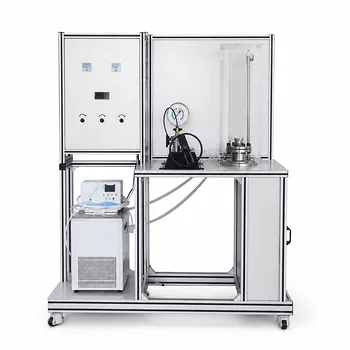
- Carbon Dioxide PVT Curve Determination Educational Unit Operations Pilot Plant
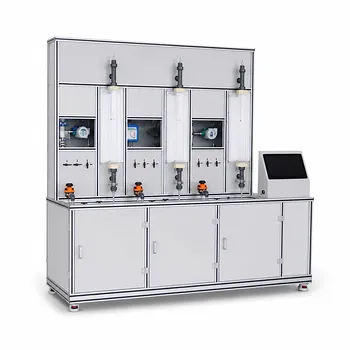
- Quantitative Dosing and Liquid Flow Control Educational Unit Operations Pilot Plant
People Also Ask
- What is the difference between static and stagnation pressure? Master Pilot Plant Flow Measurement
- How do pilot plants demonstrate siphon pressure variations? Visualizing Bernoulli's Energy Balance
- How do fluid mechanics training pilot plants facilitate the visualization and calculation of laminar and turbulent flows?
- How to update chemometric calibration models in pilot plants? Best practices for process engineers.
- Why are the laws of similitude critical in fluid flow pilot plants? Scale Up Safely