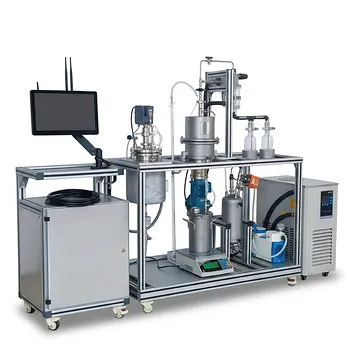
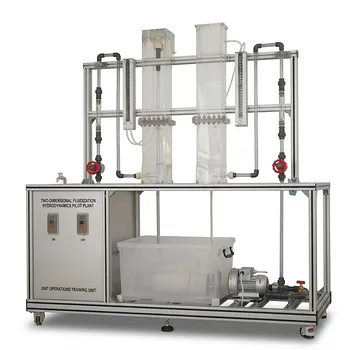
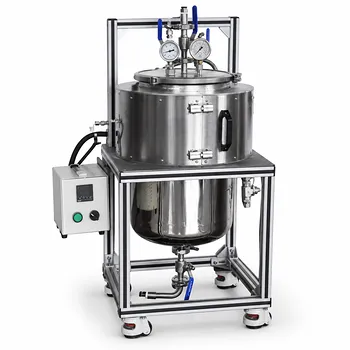
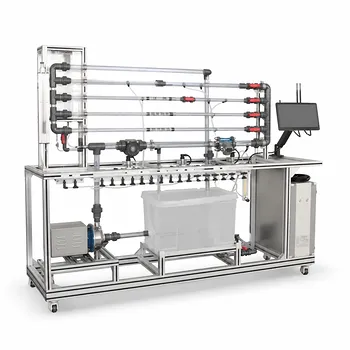
Borosilicate glass is the de facto material for chemical engineering unit operations pilot plants because its unique composition directly solves the three biggest challenges in these systems: extreme temperature swings, aggressive chemical exposure, and the need for immediate visual process insight. By loading the glass structure with high levels of silica (SiO₂ > 70%) and boric oxide (B₂O₃ > 8%), manufacturers create a material that shrugs off thermal shock, resists attack from most acids and solvents, and fails safely by cracking into large, blunt pieces instead of shattering into dangerous shards. This combination makes it the foundational material for reactors, columns, and piping in both industrial pilot plants and educational units.
The defining material characteristics of borosilicate glass—an exceptionally low coefficient of thermal expansion, broad-spectrum chemical durability, and a safe failure mode—make it the preferred choice for pilot-scale chemical processes where thermal cycling, visibility, and operator safety are non-negotiable. However, its brittleness and incompatibility with hydrofluoric acid or hot, concentrated alkalis must be carefully managed.
Why Composition Dictates Performance
The atomic-scale structure of borosilicate glass is what separates it from ordinary soda-lime glass. Understanding this link is the key to seeing why it performs so reliably in pilot plant environments.
The Role of Silica and Boric Oxide
Ordinary soda-lime glass derives its structure mainly from a silica network disrupted by sodium and calcium oxides. Borosilicate glass replaces a significant portion of those disruptive alkali ions with boric oxide (B₂O₃), often exceeding 8% by weight.
This substitution creates a stronger, more homogeneous network. The boron atoms integrate into the silica lattice, forming a rigid, low-expansion structure. As a result, the glass can experience rapid, uneven heating without building up the internal stresses that would fracture a typical window or bottle glass.
Low Thermal Expansion in Practice
The practical outcome is an exceptionally low coefficient of thermal expansion. Borosilicate glass can be heated on one side while the other remains cool without fracturing.
This property is critical for unit operations like distillation or reaction calorimetry. A column jacket fed with steam can quickly heat the inner wall, while the bulk fluid remains cold. Soda-lime glass would crack almost instantly under that differential, while borosilicate glass maintains its structural integrity.
The Safety and Visibility Advantage
Beyond thermal resilience, two other characteristics make borosilicate glass indispensable for pilot-scale chemical engineering work.
Cracking Instead of Shattering
When borosilicate glass finally fails under extreme mechanical or thermal stress beyond its design limits, it does not explode into a cloud of razor-sharp fragments. Instead, it develops large, radiating cracks, and the pieces remain relatively large and blunt.
This failure mode dramatically reduces the risk of injury in a laboratory or pilot plant bay. Combined with common safety measures—such as wrapping glass columns in protective plastic tape to contain any fragments—it makes the material far more operator-friendly than alternatives.
Uncompromised Visual Monitoring
The glass’s transparency enables immediate, direct observation of fluid dynamics. Engineers can visually confirm flooding in a distillation column, detect weeping on trays, spot phase separation in a liquid-liquid extractor, or monitor the color changes signaling a reaction endpoint.
For educational pilot plants, this visibility is a primary pedagogical tool. Students connect textbook theory to real phenomena only when they can see the vapor bubbles, droplet formation, or catalyst fluidization. No opaque metal or polymer alternative can replicate this.
Chemical Durability and Its Limits
Borosilicate glass earns its place in corrosive service, but its resistance is not universal. A clear-eyed view of its chemical compatibility is essential for safe plant design.
Resistance to Most Acids and Solvents
The silica-rich, low-alkali surface resists leaching and corrosion from the vast majority of acids used in pilot plants, including hydrochloric, sulfuric, and nitric acids at moderate concentrations and temperatures. It also withstands organic solvents without swelling or dissolving.
This broad compatibility allows a single plant to handle diverse chemistry campaigns without frequent material changes. Reactors and piping can be cleaned and reconfigured, knowing the glass will not degrade or contaminate the next batch.
The Non-Negotiable Exceptions
The primary reference correctly flags two families of chemicals that will destroy borosilicate glass. Hydrofluoric acid (HF), even in dilute form, aggressively attacks silica by forming silicon tetrafluoride gas, eating through the glass structure. Strong alkaline solutions (hot, concentrated NaOH or KOH) disrupt the silica network by hydrolyzing Si-O bonds, progressively thinning walls and creating stress points.
Any pilot plant process that involves these reagents, even intermittently, must use alternative materials—such as PTFE, certain stainless steels, or nickel alloys—for those specific sections.
Understanding the Trade-Offs
No material is perfect, and borosilicate glass is no exception. Recognizing its inherent weaknesses is critical to applying it correctly.
Brittleness and Mechanical Fragility
Borosilicate glass is a ceramic, meaning it exhibits no plastic deformation before failure. A sharp impact, an unevenly tightened flange, or an unexpected thermal gradient beyond its rating will cause a crack.
Plant design must isolate glass components from vibration, pipe strain, and thermal expansion mismatches with metallic supports. Proper training in assembly and tightening torques is non-negotiable, as a single over-stressed joint can shatter an entire glass section.
Pressure Limitations
Borosilicate glass is generally limited to operation at or near atmospheric pressure. While thick-walled components exist for slight vacuum or low positive-pressure services, they are not designed for high-pressure reactions.
Any process that requires containment of several bar of pressure must move to metal autoclaves or reinforced vessels. The glass simply cannot sustain the hoop stress, and a pressure-induced failure would be catastrophic. A pilot plant must incorporate adequate venting and pressure relief to prevent accidental pressurization.
Making the Right Choice for Your Pilot Plant
Whether you are specifying a new unit operations skid or upgrading an existing teaching plant, align your material choice with your primary goal.
- If your primary focus is safe visualization of internal flows and reactions: Borosilicate glass is irreplaceable. Prioritize design for low-pressure operation, install protective tape wrapping, and train all operators on correct flange assembly to manage brittleness.
- If your primary focus is broad chemical compatibility across multiple acid-based campaigns: Borosilicate glass is an excellent starting point, but rigorously audit your chemical inventory for any trace of HF or hot concentrated caustic. Substitute with fluoropolymer or alloy components for those specific circuits.
- If your primary focus is high-temperature processing up to several hundred degrees Celsius without thermal shock failure: Borosilicate glass will outperform any transparent polymer and most standard metals in thermal cycling. Just ensure your system stays within the glass’s operational temperature limits and avoids abrupt quenching.
- If your primary focus is a robust, high-pressure, or impact-heavy industrial environment: Borosilicate glass alone is insufficient. You will need to shift to metal alloys, potentially incorporating only small sight-glasses for limited visibility, while designing the core reactor and piping for pressure containment and mechanical durability.
Understanding exactly where borosilicate glass excels—and where it demands caution—lets you build a pilot plant that is simultaneously safe, insightful, and reliable.
Summary Table:
| Characteristic | Key Feature | Pilot Plant Benefit | Limitations |
|---|---|---|---|
| Thermal Resistance | Low expansion coefficient | Shrugs off thermal shock, prevents cracking | Avoid rapid extreme quenching |
| Chemical Durability | Silica-rich, low-alkali structure | Resists most acids & organic solvents | Attacked by HF & hot alkaline solutions |
| Safety & Visibility | Cracks instead of shattering; transparent | Safe failure mode; clear visual monitoring | Brittle; limited to low-pressure use |
Optimize Your Process and Training with LABPARK
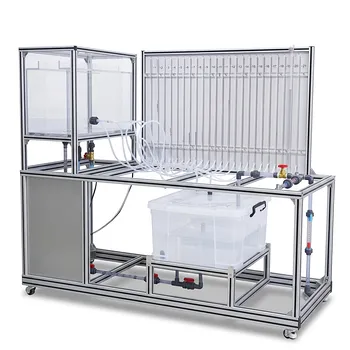
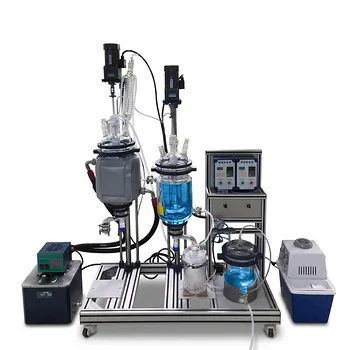
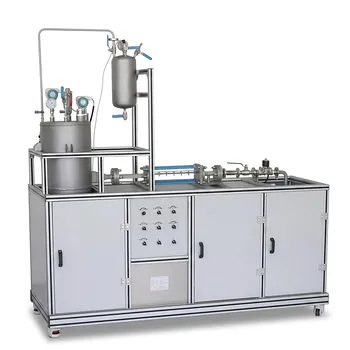
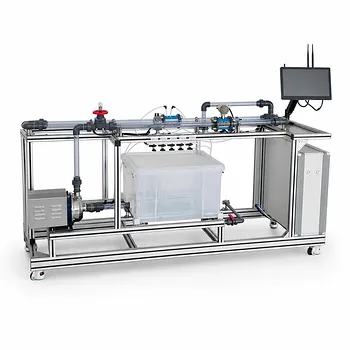
At LABPARK, we design and manufacture premium Educational and Vocational Unit Operations Pilot Plants in chemical engineering, bioprocess & biotech, and environmental & water treatment. Tailored for universities, research institutes, and enterprises, our pilot plants leverage high-performance borosilicate glass to deliver unmatched visibility, safety, and chemical resistance for your hands-on operations.
Ready to elevate your research and teaching capabilities? Contact us today to find the perfect pilot plant solution for your facility!
Related Products
- Multi-Functional Special Distillation Educational Pilot Plant
- Rising and Falling Film Evaporation Educational Unit Operations Pilot Plant
- Bernoulli Equation Demonstration Unit Operations Pilot Plant
- Constant Pressure Filtration Educational Unit Operations Pilot Plant
- Multifunctional Membrane Separation Educational Pilot Plant with Ultrafiltration, Nanofiltration, Reverse Osmosis
People Also Ask
- Why does simple distillation yield higher efficiency than flash distillation? Key thermodynamic differences.
- Why is the acentric factor important in pilot plants? Fluid property prediction.
- How Batch vs Continuous Configuration Affects Distillation Pilot Plant Versatility & Footprint
- How to Integrate Spectroscopy in Distillation Pilot Plants for Advanced Process Control
- How to Estimate Distillation Pilot Plant Tray Efficiency? O'Connell's Correlation Guide