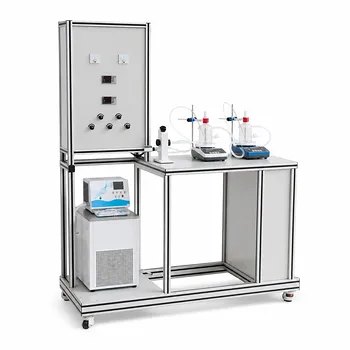
The heart of distillation design lies in reliable phase equilibrium data.
When choosing between a dynamic VLE still and an ebulliometer for a unit operations lab or pilot plant, the decision reduces to one core question: do you need complete, directly measured vapor–liquid equilibrium data, or is a faster, more economical, model‑based approach sufficient? A dynamic VLE still delivers real‑time pressure–temperature–composition (P‑T‑x‑y) data for both liquid and vapor phases—the gold standard for rigorous column design. An ebulliometer measures only P‑T‑x, using thermodynamic models (such as the Gibbs–Duhem equation) to calculate the vapor composition, lowering cost and complexity at the expense of direct certainty.
The choice between a dynamic VLE still and an ebulliometer is fundamentally a trade‑off between obtaining complete, directly measured phase‑equilibrium data and adopting a less expensive, model‑dependent approach. For precise pilot‑plant distillation design, a dynamic VLE still is the definitive tool; for educational settings where budget and time are constrained, an ebulliometer paired with careful model selection can yield meaningful insight.
Why VLE Data Defines Your Distillation Pilot Plant
The Foundation of Column Design
Distillation columns separate components based on volatility differences, and these differences are quantified by vapor–liquid equilibrium. Every tray count, packing height, and reflux ratio calculation depends on knowing how vapor and liquid compositions relate at a given temperature and pressure.
Direct Measurement vs. Calculated Estimates
A dynamic VLE still gives you the bubble‑point (liquid composition, x) and dew‑point (vapor composition, y) simultaneously. An ebulliometer gives you the bubble point but forces you to infer the vapor composition using a model. The consequences of that inference ripple through the entire pilot‑plant design, influencing everything from column height to product purity.
Dynamic VLE Still and Ebulliometer: What Each Measures
Dynamic VLE Still: Full Composition Mapping
This apparatus recirculates both liquid and vapor until steady state is reached, then allows samples of each phase to be withdrawn and analyzed. The result is a complete P‑T‑x‑y data set. This is the most reliable input for process simulators and for sizing columns with minimal safety factors.
Ebulliometer: Bubble Point and Model‑Based Extrapolation
Ebulliometers boil a liquid mixture under precise temperature control, recording pressure and temperature as the composition changes. The vapor composition is not measured—it’s calculated by integrating the measured P‑T‑x data with a thermodynamic model, often the Gibbs–Duhem equation. This reduces hardware complexity but shifts the burden of accuracy to the model you choose.
Key Selection Criteria
Data Accuracy and Design Rigor
If your pilot plant aims to scale to a commercial unit, an error in VLE data is enormously costly. Direct measurement minimizes uncertainty. Model‑based extrapolation can hide systematic errors, especially for non‑ideal mixtures such as azeotropes or associating species. For associating mixtures, picking the wrong thermodynamic model—say, a composition‑independent Marek‑Standart approach instead of a concentration‑dependent Jenkins and Gibson‑Robinson model—can lead to badly mispredicted vapor compositions. When an ebulliometer is your only source, validating the model against independent data is not optional.
Budget and Laboratory Infrastructure
Ebulliometers are significantly less expensive and simpler to run. They typically need only a temperature‑controlled boiling flask and a pressure sensor. Dynamic VLE stills demand recirculation pumps, precise sampling ports, and often a gas chromatograph for composition analysis, which drives up both upfront cost and maintenance demands.
Educational and Research Objectives
In a unit operations lab, incorporating both types of equipment is a powerful teaching strategy. Students can directly compare the measured y‑values from a VLE still with the model‑predicted y‑values from an ebulliometer run on the same mixture. They see, firsthand, the trade‑offs between experimental complexity, cost, and thermodynamic modeling fidelity. When paired with a batch distillation pilot plant—where transient temperature and composition changes are visible—this combination deepens understanding of how VLE data translates into real column behavior.
Throughput and Time Constraints
If you need to screen many binary pairs quickly, an ebulliometer’s rapid cycle may outweigh the need for absolute precision. For the final design of a pilot plant’s critical separation, however, a slower but definitive dynamic VLE still run is well justified.
Understanding the Trade-offs and Common Pitfalls
The Model‑Dependency Trap
The largest pitfall with an ebulliometer is using it without verifying the underlying model. Gibbs‑Duhem integration assumes the chosen model captures all non‑idealities correctly; for highly non‑ideal or azeotropic systems, this can introduce design flaws that propagate into an undersized column or unrealistic energy demands.
Sampling Errors in Dynamic Stills
Dynamic VLE stills, while data‑rich, are not immune to error. Improper sampling—such as drawing liquid or vapor too quickly—can disturb the steady state and produce misleading composition data. Rigorous operating procedures are essential to realize the instrument’s full value.
Over‑ or Under‑Investing
It is a mistake to assume you always need a dynamic VLE still. If your goal is to teach phase‑equilibrium principles or to screen ideas quickly, an ebulliometer is perfectly adequate and will free up resources for other equipment. The key is to avoid designing a column on ebulliometer data alone for a final, production‑scale process.
How This Fits into Your Broader Unit Operations Lab
Linking to Distillation Pilot Plant Design
Accurate VLE data feeds directly into reboiler sizing, condenser duty calculations, and column diameter selection. If you base a thermosyphon reboiler design on an underestimated relative volatility from ebulliometer data, you risk a capacity shortfall in the pilot plant. On the training side, an ebulliometer’s quick turnaround allows more experimental iterations on a batch distillation pilot plant, reinforcing the critical link between phase equilibrium and separation performance.
Reinforcing Thermodynamic Understanding
Students and researchers who use both instruments learn that thermodynamic models are not just abstract equations—they become the lens through which incomplete data is interpreted. That understanding is essential for anyone who will later design, operate, or troubleshoot a real distillation column.
Making the Right Choice for Your Goal
After assessing your primary objective, use the following guidelines to select your VLE measurement approach:
- If your primary focus is precise pilot‑plant scale‑up and rigorous column design: Choose a dynamic VLE still. The direct P‑T‑x‑y data reduces design uncertainty and avoids the ambiguity of model‑dependent extrapolation.
- If your primary focus is educational training on phase equilibrium principles and you have a limited budget: An ebulliometer is a pragmatic choice. Validate at least one run against a known mixture to confirm your thermodynamic model, and use the comparison to teach model limitations.
- If your primary focus is high‑throughput screening of many solvent pairs: Start with an ebulliometer for speed, but always confirm the top candidate with a dynamic VLE still before finalizing the pilot plant design.
By aligning your equipment choice with your data needs, your budget, and your educational or research goals, you build a laboratory that generates reliable, scalable insights—not just numbers.
Summary Table:
| Feature | Dynamic VLE Still | Ebulliometer |
|---|---|---|
| Data Measured | Complete P-T-x-y phase data | P-T-x data only |
| Vapor Composition (y) | Directly measured | Calculated using thermodynamic models |
| Design Reliability | High (ideal for rigorous scale-up) | Moderate (dependent on model accuracy) |
| Cost & Complexity | High (requires sampling & analysis) | Low to Moderate (simpler operation) |
| Best Suited For | Precise pilot-plant distillation design | Educational labs & rapid solvent screening |
Optimize Your Distillation Setup with LABPARK
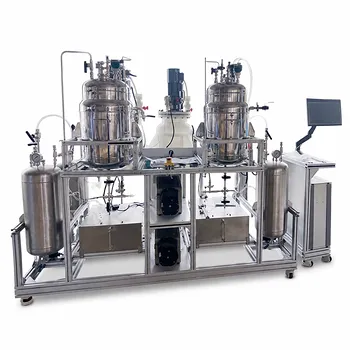
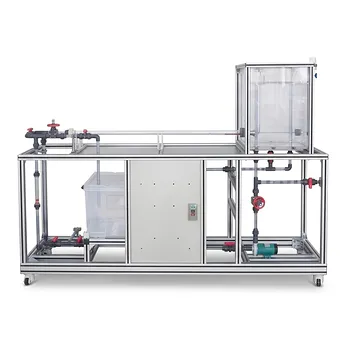
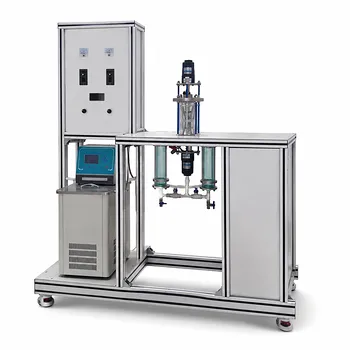
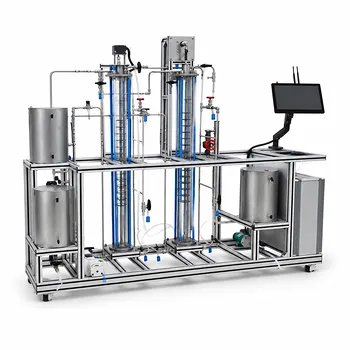
Building a high-performance chemical engineering laboratory requires the perfect balance of precision, durability, and educational value. LABPARK provides premium Educational and Vocational Unit Operations Pilot Plants in chemical engineering, bioprocess & biotech, and environmental & water treatment.
Designed specifically for universities, research institutes, and enterprises, our systems bridge the gap between thermodynamic theory and industrial practice. Whether you need to source a high-precision dynamic VLE system or equip a comprehensive unit operations laboratory, our expert team is ready to deliver tailored solutions for your curricula or research goals.
Ready to elevate your research and training capabilities? Contact LABPARK today to discuss your equipment needs and get a customized quote!
Related Products
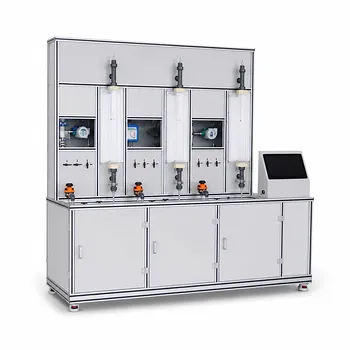
- Rising and Falling Film Evaporation Educational Unit Operations Pilot Plant
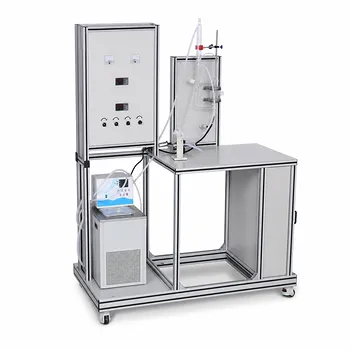
- Binary System Vapor Liquid Equilibrium Data Determination Educational Unit Operations Pilot Plant
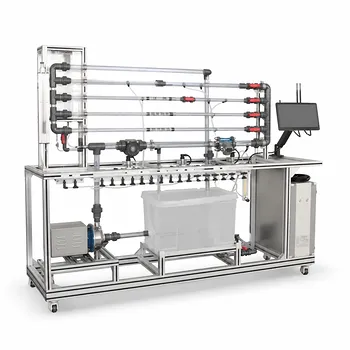
- Fluid Friction Resistance Determination Educational Unit Operations Pilot Plant
- Two Phase Flow Pattern Velocity Resistance Measurement Educational Pilot Plant
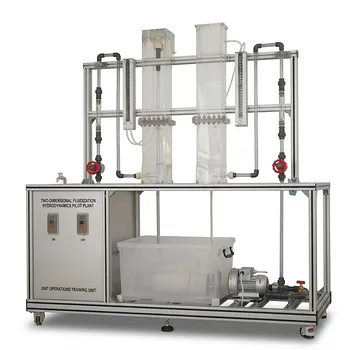
- Two-Dimensional Fluidization Hydrodynamics Educational Pilot Plant for Unit Operations Training
People Also Ask
- How do educational unit operations pilot plants bridge theory and design? Bridge the Engineering Gap
- How do educational unit operations pilot plants address safety and waste management when scaling up?
- How is the heat transfer area calculated for an evaporation unit operations pilot plant during experimental design? Guide
- How to select educational evaporator pilot plants for thermal & scaling solutions? Complete Guide
- What are the structural characteristics & applications of rising-falling film evaporators in unit operations training?