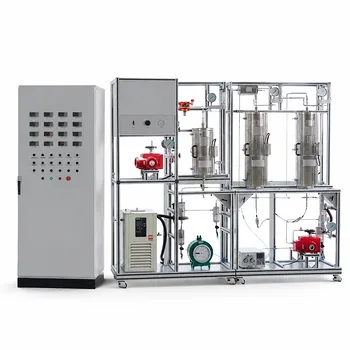
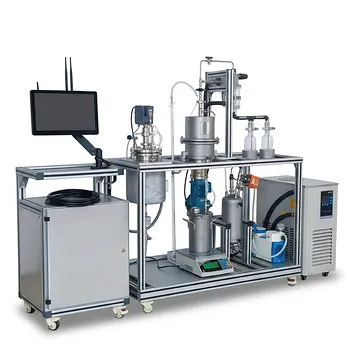
The single biggest difference between a biorefinery pilot plant and a traditional petroleum refining pilot plant is the sheer range of unit operations required to handle a solid, wet, oxygen-rich, and highly variable feedstock. While a petroleum pilot focuses on perfecting a tight cluster of continuous, high-temperature chemical processes with a stable hydrocarbon stream, a biorefinery pilot must behave like a modular Swiss Army knife—integrating mechanical pretreatment, biological fermentation, thermochemical conversion, and multi‑stage separations, all engineered to cope with corrosive intermediates and high separation costs.
A petroleum pilot plant polishes a handful of mature chemical transformations on a consistent feed; a biorefinery pilot plant must first invent the “refinery” itself, combining biology, chemistry, and tough separation science into one flexible, robust platform. The core challenge is no longer just catalysis—it is taming the variability and oxygen that biomass brings.
The Nature of the Feedstock Drives Unit Operation Requirements
Petroleum refineries process a relatively constant, energy‑dense hydrocarbon liquid. This simplicity allows pilot plants to fixate on reaction chemistry, because the feed’s physical behavior is predictable. Biomass destroys that assumption from the first step.
Biomass is solid, low‑density, and wet. A biorefinery pilot must start with size reduction (grinders, chippers), drying, or torrefaction—unit operations that simply do not exist in an oil pilot. These mechanical steps are not trivial; they determine downstream handling, flowability, and energy efficiency.
The water and oxygen content rewrites the rulebook. High water forces dewatering and evaporation stages before many thermochemical processes. High oxygen makes the intermediates corrosive (organic acids, aldehydes) and thermally unstable. This demands specialized materials of construction—stainless steels, alloys, or coatings—that a petroleum pilot can largely forgo.
Feedstock variability is the norm. Corn stover, wood chips, and municipal waste behave differently batch to batch. The pilot plant must therefore include flexible feed‑handling and blending systems, analytical suite for rapid compositional analysis, and control strategies that adapt to shifting properties. In a petroleum pilot, you set a crude slate and run; in a biorefinery pilot, you are constantly characterizing and adjusting.
Conversion Unit Operations: Adding Biology to Chemistry
A petroleum pilot plant’s reaction section is built around homogeneous, continuous‑flow catalytic processes: fluid catalytic cracking, hydrocracking, reforming, alkylation. These are fundamentally chemical and thermal. A biorefinery pilot must house a much broader toolkit because the feedstock cannot be upgraded by chemistry alone.
Biochemical conversion requires sterile, living environments. Fermentation and enzymatic hydrolysis bring in a suite of bioreactors that never appear in petroleum pilots. Based on the biological system, you might install:
- Airlift loop fermenters for shear‑sensitive cells, where gentle circulation matters more than intense mixing.
- Packed bed or fluidized bed bioreactors for immobilized enzymes or cells, requiring support media and careful fluid distribution.
- Hollow fiber bioreactors when you need high‑density cell growth with integrated product removal.
- Mechanically stirred photobioreactors if the route goes through algae or photosynthetic microorganisms, adding light sources to the engineering challenge.
Thermochemical pathways need robust solids handling. Pyrolysis, gasification, and hydrothermal liquefaction reactors must deal with solid biomass, char, and ash. This brings in screw feeders, lock hoppers, cyclones, and hot‑gas filtration—unit operations that are rare in petroleum pilot halls, where coke management is usually simpler.
Deoxygenation is the universal step petroleum never faces. Biomass oxygen must be removed as water, CO₂, or CO. This means pilot plants incorporate hydrodeoxygenation, decarboxylation, or steam reforming units that are far more demanding than the mild hydrotreating used in oil refining. Catalysts must be stable against water and acidic species, and often the entire reaction section runs under unusual conditions.
Separation and Purification: The Heart of the Challenge
In petroleum refining, separation is largely distillation of a limited set of hydrocarbon fractions. In a biorefinery pilot, the product stream is a complex aqueous‑organic soup with sugars, acids, lignin, and hundreds of oxygenated compounds.
Distillation alone is insufficient. Many bio‑based molecules are heat‑sensitive, non‑volatile, or form azeotropes with water. The pilot plant must therefore integrate liquid‑liquid extraction, membrane filtration, adsorption, and centrifugation as core unit operations. For example, recovering fermentation products from a dilute broth often requires a membrane separation before distillation can even begin.
High separation costs drive the entire flowsheet design. Because biomass intermediates are often present at low concentrations in water, product concentration and purification can account for over 60% of total processing cost. A petroleum pilot can usually rely on simple phase splits; a biorefinery pilot must constantly evaluate novel separation sequences to make the economics work.
Deoxygenated intermediates must be purified before upgrading. Unlike petroleum’s straight‑run fractions, bio‑oils from pyrolysis contain tar and char that foul equipment. Filtration, solvent‑based deasphaltion, and catalytic stabilization units become mandatory before these streams ever see a hydrocracker.
Pilot Plant Design Philosophy: Flexibility vs. Robustness
Early R&D in biorefineries often uses mobile, repurposable analytics and temporary setups. As the process moves to a pilot plant, the requirements shift dramatically—and this shift is more extreme than in petroleum.
The biorefinery pilot is the bridge between discovery and reality. It must verify that lab‑scale conversion and separation ideas can scale, while still allowing for rapid process changes. This means the unit operations must be modular and reconfigurable—you might swap a packed‑bed bioreactor for a fluidized‑bed unit or test two different hydrodeoxygenation catalysts in parallel. Petroleum pilots are also flexible, but the envelope of variation is narrower because the chemistry is better understood.
Robustness and safety become paramount. As scale increases, biocontamination risks rise. For example, a self‑aspirating bioreactor might cut capital costs and energy, but its negative‑pressure intake raises contamination vulnerability if seals fail—a trade‑off that teaches the designer that every cost‑saving measure in a bioprocess pilot must be weighed against sterility. Similarly, the corrosive nature of biomass streams demands leak‑tight containment and emergency shutdown logic that a hydrocarbon pilot might not need.
Analytics must evolve from research to manufacturing‑grade. In a petroleum pilot, online gas chromatography and distillation analyzers are well established. In a biorefinery, the same instruments must now handle water‑laden, fouling streams, and often must be supplemented by rapid biochemical assays (HPLC, enzymatic kits). As the pilot matures, data systems shift from flexible research formats to robust, validated architectures ready for commercial scale‑up.
Understanding the Trade‑offs and Pitfalls
Designing a biorefinery pilot without accounting for these differences leads to projects that stall at the scale‑up gate. A few hard‑earned lessons stand out.
The “just add a separator” trap. Many developers assume the conversion step is the bottleneck, underestimating how much pilot plant real estate and capital must go to separation trains. Under‑designed separation capability produces data that makes the overall process look unviable—when the real problem was a poorly integrated pilot.
Corrosion is silent and fast. In a petroleum pilot, metallurgy is often carbon steel with selective upgrades. In a biorefinery pilot handling hot organic acids, even a few weeks of exposure can pit stainless steel. This forces the pilot design to include corrosion monitoring and more expensive alloys upfront, or risk losing months of data.
Contamination destroys biological campaigns. A single rogue bacterium in a fermenter can turn a three‑week continuous culture into wasted effort. The pilot plant must therefore incorporate clean‑in‑place systems, aseptic transfer protocols, and sterility verification—complexity that a purely chemical petroleum pilot never faces.
Lower energy density means larger vessels and higher utilities. Biomass has about one‑third the energy density of crude oil by volume. This can lull designers into thinking a simple volumetric scale‑up will work, only to discover that the resulting pilot is enormous and expensive. Clever solids handling, integrated heating loops, and intensification strategies become essential to keep the pilot footprint manageable.
Making the Right Choice for Your Pilot Plant Goal
If you are planning or evaluating a biorefinery pilot plant, your unit operation specification must directly follow your ultimate goal.
- If your primary focus is screening feedstock‑to‑product pathways: Prioritize modularity and a wide‑ranging analytical suite. Your pilot should allow rapid swapping of bioreactor types, separation modules, and deoxygenation catalysts, even if that increases footprint and capital.
- If your primary focus is scaling a specific, near‑commercial process: Invest heavily in robust materials of construction, dedicated corrosion monitoring, and fully integrated separations that mirror the envisioned commercial plant. Sacrifice some early‑stage flexibility for data reliability and long‑term operability.
- If your primary focus is reducing technical risk for investors: Design the pilot to demonstrate the entire integrated chain, with a clear eye on separation costs and energy balance. Include the “boring” but critical unit ops—dewatering, filtration, solvent recovery—that make or break the economics, even if they are less scientifically exciting.
- If your primary focus is training the next generation of bioprocess engineers: Build a pilot that deliberately exposes students to trade‑offs like self‑aspirating vs. traditional aeration, continuous vs. batch sterilization, and the impact of aspect ratio on mass transfer. The learning comes from comparing unit operations, not just running them.
Ultimately, the move from petroleum to biorefinery piloting is not a minor adaptation—it is a fundamental redesign of what a pilot plant must do. Acknowledge the new unit operations, plan for the relentless variability, and you will build a platform that truly bridges the valley of death from lab to market.
Summary Table:
| Feature | Petroleum Refining Pilot | Biorefinery Pilot |
|---|---|---|
| Feedstock | Stable, liquid hydrocarbons | Variable, wet, corrosive solid biomass |
| Primary Focus | High-temp chemical reactions | Pretreatment, fermentation, separations |
| Reactors | Catalytic, continuous-flow | Bioreactors (fermenters) & thermochemical |
| Separation | Mainly distillation | Extraction, membranes, chromatography |
| Materials | Mostly carbon steel | Highly corrosion-resistant alloys |
Bring Advanced Process Scale-Up to Your Institution with LABPARK
Transitioning from laboratory research to pilot-scale operation requires flexible, robust systems. LABPARK provides premium Educational and Vocational Unit Operations Pilot Plants in chemical engineering, bioprocess & biotech, and environmental & water treatment.
Designed specifically for universities, research institutes, and enterprises, our modular plants help you master complex processes like biomass pretreatment, fermentation, and advanced separations.
Ready to elevate your research and training capabilities? Contact LABPARK today to get started!
Related Products
- Bio-fermentation Ethanol Production Practical Training Unit Operations Pilot Plant
- Dual-Mode Rectification Pilot Plant for Practical Training Unit Operations
- Natural Product Extraction Unit Operations Training Pilot Plant
- Solid Waste Pyrolysis and Refining Educational Pilot Plant for Unit Operations
- Multi-Modal Distillation Unit Operations Training Pilot Plant
People Also Ask
- Why Use PTFE & Hastelloy in Chemical Pilot Plants? Prevent Corrosion & Ensure Safety
- Why Compare Predicted and Experimental Excess Enthalpy? Key to Accurate Pilot Plant Scale-up
- Why is the chemical plant startup schedule crucial? De-risk scale-up with pilot plants.
- When to transition from PID to adaptive control in pilot plants? Key process indicators.
- Why must batch and fed-batch fermentation pilot plants be designed to accommodate changing rheological conditions?